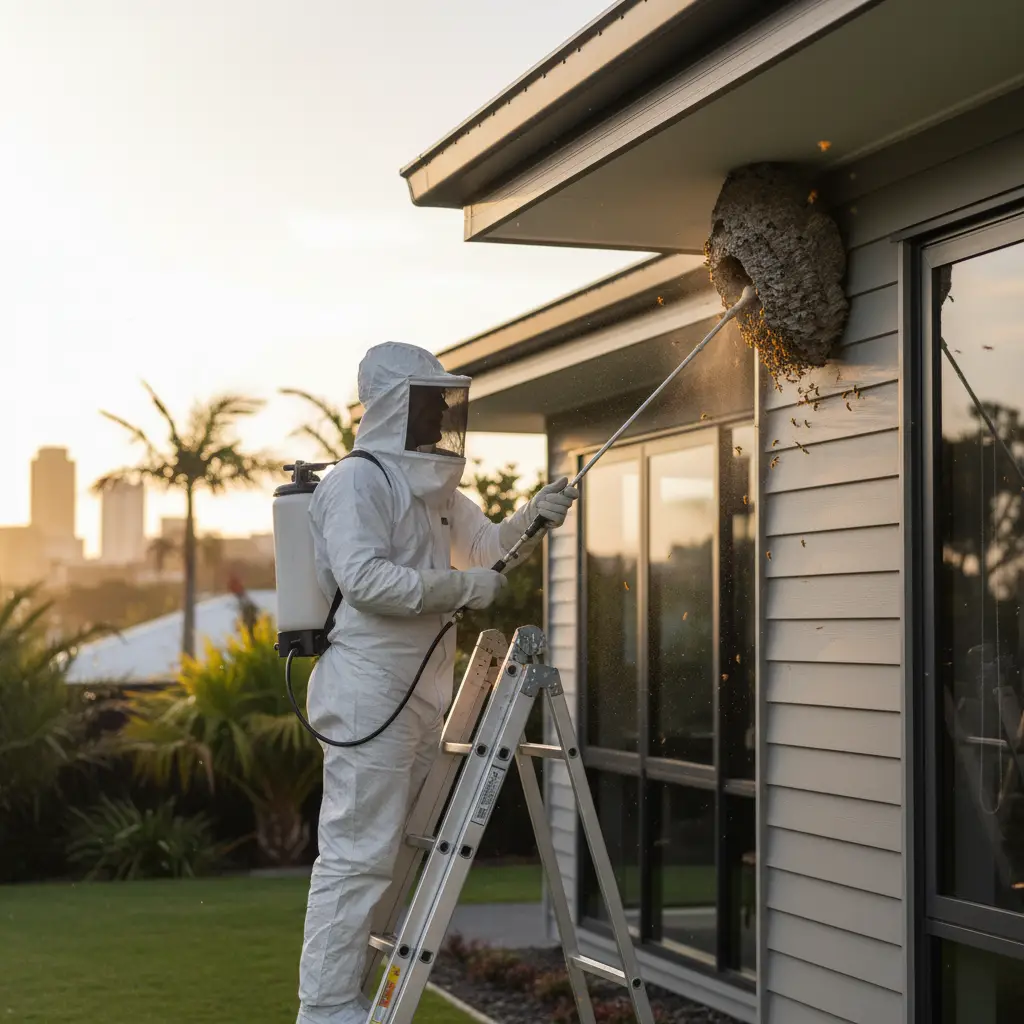
A wasp nest in ground NZ is typically established by invasive German or Common wasps, which utilize abandoned rodent burrows or soil cavities. To effectively remove these nests, you must apply a specialized insecticidal dust directly into the entry tunnel during late evening, avoiding vibrations that could trigger a defensive swarm.
Identifying Ground Nest Entry Points
Locating a subterranean wasp nest is often the most challenging aspect of Wasp & Bee Control Auckland in lush gardens. Unlike hanging Paper Wasp Control nests, ground nests are concealed beneath the surface, often utilizing old rodent burrows, hollows in tree roots, or cavities within retaining walls. The only visible evidence of a massive colony—which can house thousands of wasps—is often a single, inconspicuous hole in the earth.
To safely identify a nest, you must look for “flight lines.” On a warm, sunny day, observe your garden from a safe distance. You are looking for a steady stream of insect traffic returning to a specific spot on the ground. These wasps will be flying with purpose, often carrying food, and entering the ground directly. If you see wasps hovering aimlessly, they may simply be foraging; however, a concentrated highway of wasps appearing to vanish into the grass indicates an active nest entry point.

It is critical to distinguish between ground-nesting wasps and ground-nesting bees. In New Zealand, bumblebees often nest in the ground but are generally docile and beneficial pollinators. Wasps, specifically the Vespula species, are distinctly bright yellow and black with smooth bodies, whereas bumblebees are fuzzy and round. Misidentification can lead to the unnecessary destruction of beneficial insects.
Common Ground-Nesting Wasps in New Zealand
New Zealand has some of the highest densities of wasp biomass in the world. The two primary culprits responsible for ground nests in Auckland and the wider country are the German Wasp (Vespula germanica) and the Common Wasp (Vespula vulgaris). Both are introduced pests that have thrived due to a lack of natural predators and mild winters.
These species are social wasps, meaning they live in large, cooperative colonies. A single ground nest in late summer (February to April) can contain anywhere from 3,000 to over 10,000 individuals. Unlike honey bees, which die after stinging, these wasps can sting repeatedly. Their venom contains pheromones that mark the victim as a threat, inciting other members of the colony to join the attack.
According to the Department of Conservation (DOC), these pests also pose a significant threat to New Zealand’s native biodiversity, competing with native birds and insects for food sources like honeydew. Understanding the aggressive nature of these specific species highlights why professional caution is required when attempting removal.
The Dangers of Mowing Over Ground Nests
One of the most frequent causes of multiple wasp stings in Auckland is the accidental disturbance of a nest while mowing the lawn. Ground nests are extremely sensitive to vibration. The rumble of a lawnmower engine combined with the movement of the wheels over the soil sends shockwaves directly into the colony.
When a colony detects this vibration, the guard wasps positioned near the entrance release an alarm pheromone. This chemical signal triggers a mass exodus of soldier wasps ready to defend the hive. Because the mower is loud and the operator is often wearing ear protection, they may not notice the swarming insects until they are already being stung.
Why Vibration is a Trigger
Wasps evolved to defend their nests against badgers and other digging predators. Heavy vibration mimics a predator digging into the earth. Consequently, the response is immediate and overwhelming. If you suspect a nest is present in your lawn, do not mow the area. Cordon off a zone at least 3-5 meters around the suspected activity until the nest has been treated and confirmed dead.
Treatment Methods for Subterranean Colonies
Eliminating a wasp nest in the ground requires a different approach than treating a hanging nest. You cannot simply spray a liquid aerosol at the hole and hope for the best; the nest structure may be several feet away from the entrance tunnel, meaning contact sprays will never reach the queen.
Insecticidal Dusting (The Gold Standard)
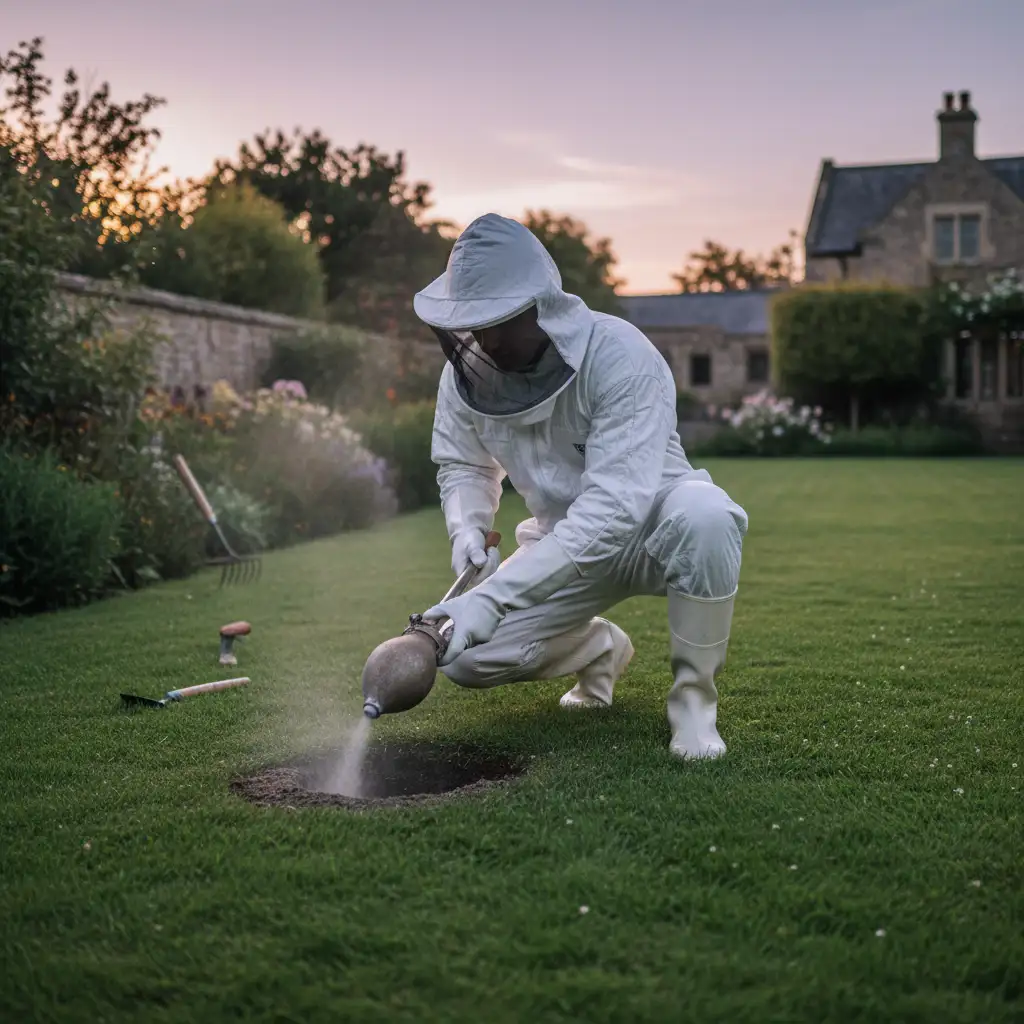
The most effective method for ground nest removal is the use of insecticidal dust (powder). This method uses the wasps’ biology against them. By puffing a specialized powder (often containing Permethrin or Carbaryl) into the entrance, you coat the workers as they enter and exit.
The wasps then carry this toxic dust down into the nest on their bodies. As they groom themselves and feed the larvae and the queen, the poison is distributed throughout the entire colony. This creates a “cascade effect” that typically eliminates the entire nest within 24 to 48 hours.
The “Do Not Block” Rule
A common mistake homeowners make is plugging the hole with dirt, rocks, or concrete immediately after spotting wasps. Never block the entrance to a live nest. If you seal the hole, the trapped wasps will become agitated and will simply dig a new exit—often surfacing in unexpected places, such as Wasp Nests in Wall Cavities or up through floorboards if the nest is near the house foundation. Furthermore, blocking the hole prevents the worker wasps from carrying the poison dust into the nest, rendering treatment ineffective.
Proper Timing for Treatment
Treatment should always be performed at dusk or night. During the day, the colony is active, with thousands of workers foraging. At night, the majority of the colony is inside the nest, and their activity levels are significantly lower due to cooler temperatures and lack of light. Using a red-filtered torch is advisable, as wasps cannot see red light well and are less likely to fly toward the source.
Environmental Warnings
Old “bush remedies” often suggest pouring petrol, diesel, or boiling water down the hole. Do not do this. pouring fuel into the ground is illegal in many areas due to soil and water table contamination. It is also a fire hazard and kills the surrounding vegetation permanently. Boiling water is rarely effective against a large, deep nest and will only serve to scald the grass and anger the wasps.
Keeping Children and Pets Safe in the Garden
Safety is paramount when dealing with aggressive pests. German wasps are notoriously aggressive and can inflict painful stings that may cause allergic reactions. If you have identified a nest but cannot treat it immediately, you must manage the risk, adhering to standards consistent with Wasp Control for Schools protocols.
- Exclusion Zones: Place visible markers (like stakes and caution tape or overturned buckets weighted with rocks) around the nest area to prevent children or pets from running over it.
- Food Management: Ensure outdoor rubbish bins are sealed tight. Wasps are scavengers and are attracted to proteins and sugars. Removing food sources reduces the number of foraging wasps near your home.
- Footwear: Enforce a “shoes on” rule in the garden until the problem is resolved. Stepping on a foraging wasp is a common way children get stung.
If a child or pet is stung, monitor them closely. While pain and swelling are normal, symptoms such as difficulty breathing, swelling of the face or throat, or dizziness require immediate medical attention. For more information on severe reactions, refer to Health Navigator NZ.
Post-Treatment Care and Prevention
After applying insecticidal dust, patience is required. You will likely see increased activity at the nest entrance immediately after treatment—this is normal. Do not approach the nest.
Wait at least 48 to 72 hours before inspecting the nest again. If activity has ceased completely, the colony is likely dead. Only once you are 100% certain there is no activity should you fill the hole with soil to prevent other pests from using the burrow. If activity persists after 3 days, a second application may be necessary, or the nest may be exceptionally large and require professional intervention.
In Auckland, professional German Wasp Nest Removal services often offer a guarantee for ground nest removal. If you are allergic, lack the proper protective gear, or if the nest is in a difficult-to-access location (like under a concrete slab or tangled in tree roots), calling an expert is the safest and most efficient choice.
People Also Ask
How do you get rid of a wasp nest in the ground?
The most effective way to get rid of a ground wasp nest is to apply an insecticidal dust (powder) into the entry hole at dusk. The worker wasps will track the dust into the nest, killing the queen and colony within 24-48 hours. Never seal the hole before the colony is dead.
Do ground wasps come back to the same nest?
No, wasps generally do not reuse old nests. The queens leave the nest in autumn to hibernate, and the old nest decomposes. However, if the ground conditions are favorable, a new queen may start a new nest nearby the following season.
Can I drown a wasp nest with water?
No, drowning a wasp nest with water is rarely effective and highly dangerous. Wasp nests often have complex drainage or air pockets, and the water will likely fail to kill the queen while triggering a massive, aggressive defensive swarm.
What is the best time of day to destroy a wasp nest?
The best time to treat a wasp nest is at night or late dusk. At this time, all the wasps are inside the nest, their activity is low, and they are less aggressive. Using a red light helps avoid attracting them.
How long does a wasp nest live in the ground?
In New Zealand, a wasp nest cycle typically lasts from spring through to late autumn. However, due to mild winters in areas like Auckland, some German wasp nests can overwinter and become massive, multi-season colonies.
Are ground wasps more aggressive?
Ground-nesting wasps, particularly German and Common wasps, are known to be very aggressive when their nest is disturbed. Because the nest is hidden, accidental disturbance (like mowing) often leads to multiple stings.