Borer treatment in Central Auckland involves the targeted application of residual insecticides and deep-penetrating wood preservatives to eradicate larvae within the timber of historic villas and bungalows. To effectively stop the infestation, professional pest control experts must treat sub-floor voids, roof cavities, and exposed native timber flooring, effectively breaking the lifecycle of the Common House Borer and protecting the structural integrity of older properties.
For homeowners in Central Auckland, the presence of wood-boring beetles is not merely a nuisance; it is a direct threat to the structural longevity and heritage value of their property. The unique architectural landscape of suburbs like Ponsonby, Grey Lynn, Mount Eden, and Parnell consists largely of timber-framed homes built between the 1880s and 1930s. While aesthetically stunning, these structures are prime targets for the Common House Borer (Anobium punctatum) and the Two-toothed Longhorn.
This comprehensive guide explores the intricacies of borer treatment specifically tailored for the Central Auckland environment, addressing the challenges of sub-floor access, the preservation of native timbers, and the necessary steps to secure your investment against these silent destroyers.
Understanding the Borer Threat in Central Auckland
Central Auckland’s climate and housing stock create a perfect storm for borer infestations. The region experiences high humidity levels throughout the year, which maintains the moisture content in timber that borer larvae require to thrive. Dry timber is generally resistant to attack, but the sub-floor environments of older homes often trap moisture, softening the wood and making it palatable for beetles.
The primary culprit in New Zealand is the Common House Borer. These beetles lay their eggs in the cracks, crevices, and old flight holes of timber. Upon hatching, the larvae bore into the wood, spending 2 to 4 years eating their way through the cellulose structure. It is this larval stage that causes the damage; by the time you see the adult beetle or the fresh flight holes, the internal damage has been accumulating for years.
In Central Auckland, the threat is compounded by the prevalence of sapwood in older constructions. While heart native timber (like Heart Rimu or Kauri) is naturally resistant, many villas utilize untreated sapwood for framing, floorboards, and weatherboards. Without intervention, borer can reduce this timber to dust, compromising floor joists and bearers to the point of structural failure.

Protecting Historic Homes: Ponsonby, Grey Lynn, and Beyond
The suburbs of Ponsonby and Grey Lynn are renowned for their high concentration of Victorian villas and Edwardian bungalows. These homes are cultural treasures, but they require specialized care. Unlike modern brick-and-tile homes, these historic structures are organic entities composed almost entirely of wood.
The Vulnerability of Heritage Architecture
In the early 20th century, construction standards were different. Damp-proof courses were primitive or non-existent, and ventilation was often insufficient by modern standards. Consequently, the sub-floor spaces of these homes often sit on damp volcanic soil, creating a microclimate that accelerates fungal decay and borer activity.
Treating these homes requires a delicate balance. The goal is to eradicate the pest without damaging the heritage fabric of the building. Standard fumigation techniques used in commercial settings are rarely appropriate for residential heritage zones. Instead, localized, low-toxicity treatments that penetrate the timber without staining or warping the wood are preferred.
Furthermore, many of these homes have undergone renovations that may conceal original framing behind Gib board. A comprehensive treatment plan must account for these hidden voids, often requiring injection treatments or access via roof spaces to ensure total coverage.
Preserving Native Timber Flooring
One of the most sought-after features in Central Auckland real estate is original native timber flooring. Whether it is the honey-gold hues of Kauri, the deep reds of Rimu, or the durability of Matai, these floors are irreplaceable. Borer infestation in flooring is not just a structural issue; it is an aesthetic disaster.
When borer attacks floorboards, they typically chew along the grain. In severe cases, this causes the boards to become “spongy” or brittle. If you step on a board and it flexes excessively or crunches, the internal matrix of the wood has likely been hollowed out.
Treatment vs. Replacement
Preservation is always the priority. Replacing original Kauri floorboards is incredibly expensive and often impossible due to the scarcity of the timber. Professional borer treatment can arrest the decay. By flooding the flight holes and coating the underside of the floorboards with a solvent-based insecticide, the lifecycle is broken. The solvent carries the active ingredient deep into the wood fibers, killing larvae inside.
For polished floors, treatment is usually applied from underneath (the sub-floor) to avoid damaging the finish. However, if the infestation is severe, top-down treatment may be necessary, followed by filling flight holes and refinishing the floor. This restoration process can add significant value to the property by securing the longevity of the original materials.
The Lifecycle of the Common House Borer
To defeat the enemy, one must understand it. The lifecycle of Anobium punctatum dictates the timing and method of treatment.
- Flight Season (October – March): Adult beetles emerge from the timber, leaving the characteristic 1-2mm round exit holes. They live only for a few weeks, during which they mate.
- Egg Laying: The female lays eggs in old flight holes, cracks, or end-grain of timber. She does not lay eggs on smooth, polished, or painted surfaces, which is why the underside of floorboards is the primary attack zone.
- Larval Stage (2-4 Years): The eggs hatch, and the larvae bore into the wood. This is the destructive phase. They create a labyrinth of tunnels, digesting the cellulose.
- Pupation: The larva constructs a pupal chamber near the surface of the wood, transforms into a beetle, and chews its way out, restarting the cycle.
According to Wikipedia, the distinct exit holes are actually the final stage of the infestation, meaning that visible holes indicate damage that has already occurred over several years.
Challenges with Sub-floor Access in Older Homes
Effective borer treatment relies heavily on coating the unpainted, raw timber found in the sub-floor. However, Central Auckland homes present unique logistical challenges regarding access.
The “Crawl Space” Reality
In many Ponsonby and Grey Lynn villas, the clearance between the ground and the floor joists can be minimal—sometimes less than 300mm. This makes it physically impossible for a technician to crawl under the house to spray.
Solutions for Limited Access
- Extension Lances: High-pressure spray wands that can reach several meters from an access point.
- Floor Trap Doors: Technicians may need to cut discreet access hatches in the flooring (usually inside wardrobes or under carpet) to insert spray nozzles.
- Deck Removal: In some cases, partial removal of deck boards is required to gain perimeter access.
It is crucial to hire a provider who understands these constraints. A lazy operator might simply spray what they can reach from the manhole, leaving 80% of the house untreated. A reputable Central Auckland specialist will have a strategy for reaching the “dead corners” where borer thrive undisturbed.
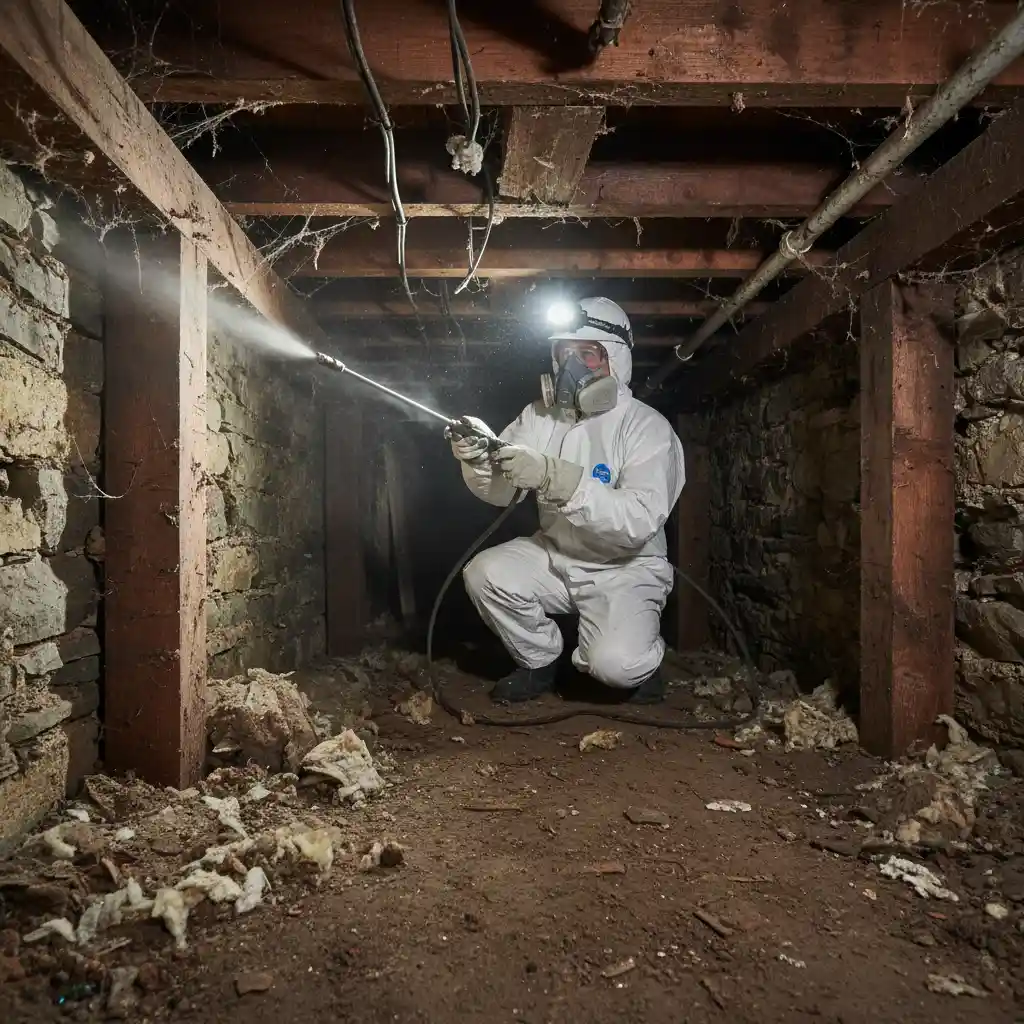
Professional Treatment Methodologies
There is no “one size fits all” solution. The treatment must be adapted to the severity of the infestation and the construction of the house.
1. Surface Spraying (Mist Application)
This is the most common method. A residual insecticide (often Permethrin-based) is mixed with a carrier fluid. In the past, diesel was used, but modern treatments use odorless, biodegradable solvents that penetrate timber rapidly without the lingering smell. This layer kills adults as they emerge and larvae as they attempt to bore in.
2. Injection Treatments
For structural beams or highly valuable furniture, injection is used. This involves injecting insecticide directly into flight holes using a syringe or pressurized aerosol. This floods the tunnels and kills larvae deep inside the wood.
3. Fogging
Fogging involves filling a roof void or sub-floor with a fine mist of insecticide. While effective for killing adult beetles during flight season, it does not penetrate the timber deeply enough to kill larvae. It is best used as a supplementary measure alongside surface spraying.
Case Studies from Central Auckland
To illustrate the importance of timely intervention, consider these scenarios typical of the local market.
Case Study A: The Renovated Bungalow in Mt Eden
A young couple purchased a 1920s bungalow. The pre-purchase inspection noted “historic borer damage.” Assuming it was inactive, they proceeded with renovations, laying expensive wool carpet. Two years later, they noticed fresh dust (frass) appearing along the skirting boards.
The Issue: The heat from the new central heating system accelerated the larval lifecycle. The “historic” damage was actually dormant or slow-moving active borer.
The Solution: The carpet had to be lifted in sections to allow for a full sub-floor flood spray. Had this been done prior to renovation, thousands of dollars in labor could have been saved.
Case Study B: The Ponsonby Villa Sale
A vendor in Ponsonby was preparing a villa for auction. The floorboards were original Kauri but were riddled with flight holes. To maximize sale value, the vendor commissioned a certified borer treatment.
The Outcome: The pest control company provided a certificate of treatment and a 10-year warranty. This documentation was presented to potential buyers, alleviating fears about structural integrity and helping the vendor achieve a premium price.
Prevention and Long-Term Maintenance
Treatment is the cure, but prevention is the shield. Once your Central Auckland home has been treated, maintaining an environment hostile to borer is essential.
Moisture Control is Key
Borer larvae prefer timber with a moisture content above 12%. By keeping your sub-floor dry, you naturally deter re-infestation.
- Vapor Barriers: Laying polythene sheeting over the ground in the sub-floor prevents rising damp.
- Ventilation: Ensure air vents in the foundation walls are not blocked by garden beds or decking. Cross-flow ventilation dries out the timber.
- Drainage: Ensure stormwater drains and downpipes are not leaking into the sub-floor area.
Regular inspections are also vital. We recommend checking for fresh flight holes (which appear lighter in color than old ones) every spring. For more information on timber preservation and moisture control, resources like BRANZ Build Magazine offer excellent technical advice for New Zealand homeowners.
In conclusion, owning a home in Central Auckland often means acting as a custodian of history. Borer treatment is a necessary aspect of this stewardship. By addressing infestations aggressively and maintaining a dry, healthy home, you ensure that the native timber heart of your property remains strong for generations to come.
People Also Ask
How much does borer treatment cost in Central Auckland?
The cost of borer treatment in Central Auckland typically ranges from $800 to $2,500 NZD, depending on the size of the home, the level of access to the sub-floor, and the severity of the infestation. Comprehensive treatments for large villas with difficult access may cost more.
When is the best time to treat borer in Auckland?
Borer treatment can be done year-round, but it is most effective before the flight season begins in October. Treating in winter allows the insecticide to penetrate the wood and be ready to kill adult beetles as they emerge in spring and summer.
Is borer treatment safe for pets and children?
Modern borer treatments are generally safe once dry. However, it is standard safety protocol for pets and children to vacate the property during the application and for 4 to 6 hours afterwards to allow the solvents to evaporate and the surfaces to dry completely.
How do I know if the borer in my house is active?
Active borer infestation is indicated by the appearance of fresh, light-colored flight holes and piles of fine dust (frass) beneath the timber. If the holes are dark and clogged with paint or wax, they are likely old and inactive.
Does house insurance cover borer damage?
Generally, standard home insurance policies in New Zealand do not cover damage caused by pests, vermin, or insects, including borer. This is considered a maintenance issue, which makes preventative treatment essential for protecting your asset.
How long does borer treatment last?
A professional borer treatment usually provides protection for at least 10 years. Many reputable Auckland pest control companies offer a warranty for this period, provided the sub-floor remains dry and well-ventilated.