Pest monitoring and identification in Auckland is the systematic process of regularly checking for, recording, and accurately identifying pest presence and activity within residential, commercial, or industrial properties. This proactive approach, focused on early detection, is critical for preventing widespread infestations, mitigating property damage, safeguarding public health, and implementing effective, targeted pest management strategies across the region.
Importance of Pest Surveillance
In Auckland’s diverse environment, ranging from bustling urban centers to lush natural landscapes, properties are constantly exposed to various pest threats. Effective pest surveillance is not merely a reactive measure but a foundational component of a comprehensive pest management strategy. Its importance cannot be overstated, acting as the first line of defense against potential infestations that can escalate rapidly if left unchecked.
Why Early Detection Matters
Early detection through vigilant monitoring allows property owners and managers to identify pest issues at their nascent stages. Catching pests early means smaller populations, less damage, and significantly easier and more cost-effective eradication. It prevents minor nuisances from becoming major, destructive, and expensive problems that can disrupt operations or compromise living conditions.
Health Risks and Property Damage
Many pests common in Auckland, such as rodents, cockroaches, and mosquitoes, are vectors for diseases that can pose serious health risks to humans and pets. From salmonella and leptospirosis spread by rodents to asthma triggers from cockroach allergens, the health implications are profound. Beyond health, pests like termites, borer, and even rodents can cause extensive structural damage to buildings, compromising their integrity and requiring costly repairs. Early detection prevents the prolonged exposure to these risks.
Economic Implications for Businesses
For businesses in Auckland, particularly those in hospitality, food service, retail, or healthcare, pest infestations can have devastating economic consequences. Reputational damage from a pest sighting can lead to lost customers and revenue. Fines for health code violations, product contamination, and operational shutdowns are also significant risks. Proactive pest monitoring safeguards a business’s brand, ensures compliance with regulations, and protects its bottom line by preventing costly disruptions and remediation.
Tools for Pest Monitoring
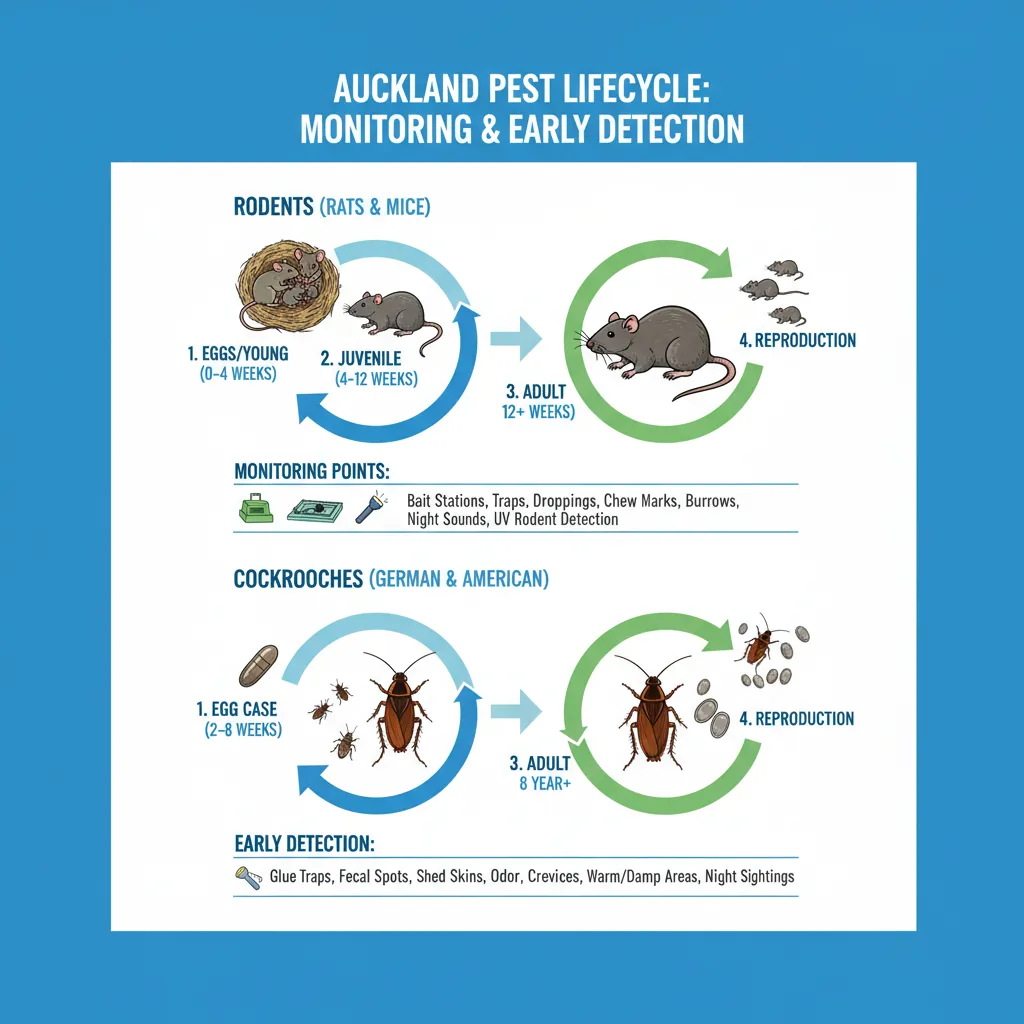
Effective pest monitoring relies on a combination of traditional techniques and modern technologies. The right tools enhance visibility, improve accuracy, and allow for a more systematic approach to pest surveillance. Integrating various tools provides a holistic view of pest activity, enabling more informed decision-making.
Visual Inspections
The most fundamental tool in pest monitoring is the thorough visual inspection. Trained eyes can spot subtle signs such as droppings, gnaw marks, shed skins, nests, or live pests themselves. Regular, systematic visual checks of high-risk areas, including kitchens, bathrooms, basements, attics, storage rooms, and exterior perimeters, are crucial. This requires attention to detail and knowledge of typical pest harborage areas.
Traps (Sticky, Pheromone, Snap)
Traps are invaluable for both monitoring and control. They serve as indicators of pest presence, population size, and entry points.
- Sticky Traps (Glue Boards): Excellent for capturing crawling insects like cockroaches, spiders, and even small rodents. They provide a visual record of what pests are present and where.
- Pheromone Traps: Specifically designed to attract particular insect species (e.g., moths, beetles) using synthetic sex pheromones. These are highly effective for early detection of specific pest invaders.
- Snap Traps/Bait Stations: Primarily used for rodent monitoring and control. While often associated with extermination, their initial placement helps confirm rodent activity and pathways before considering more aggressive control measures.
Remote Monitoring Technologies
Advancements in technology have introduced sophisticated remote monitoring systems. These often involve sensors placed in bait stations or strategic locations that detect pest activity (e.g., movement, entry/exit) and transmit data wirelessly to a central system. This allows for 24/7 surveillance without constant physical checks, providing real-time alerts and historical data for trend analysis. This is particularly useful in large commercial spaces or sensitive environments.
Environmental Sensors
Some pests are highly sensitive to environmental conditions. Sensors that monitor temperature, humidity, and moisture levels can provide early indicators of conditions conducive to pest proliferation. For example, high humidity can attract silverfish or encourage mould growth which in turn attracts fungus gnats. Identifying and rectifying these environmental factors is a preventative monitoring strategy.
Accurate Pest Identification Guide
Once pest activity is detected, accurate identification is the next critical step. Misidentification can lead to ineffective treatments, wasted resources, and continued infestations. Knowing precisely what pest you’re dealing with dictates the most appropriate and successful course of action.
Why Correct Identification is Crucial
Different pests respond to different treatments. For instance, an insecticide effective against ants might be useless against termites, which require specialized baiting or barrier systems. Incorrect identification can also lead to the unnecessary use of pesticides, potentially harming non-target organisms or the environment. Proper identification ensures that the chosen pest management strategy is tailored, efficient, and environmentally responsible.
Key Features for Identification
When trying to identify a pest, pay attention to specific characteristics:
- Size and Shape: Is it large or small? What is its overall body shape?
- Colour: What colour is it? Are there distinct markings or patterns?
- Number of Legs: Insects have six legs, spiders eight, centipedes and millipedes have many more.
- Antennae: Are they present? What shape and length are they?
- Wings: Does it have wings? How many? What do they look like?
- Body Segments: How many distinct body parts are visible (e.g., head, thorax, abdomen for insects)?
- Behaviour: How does it move? Where is it typically found? Is it active during the day or night?
- Damage: What kind of damage is it causing? Gnaw marks, holes, webbing, trails?
Using Resources: Guides, Experts
Several resources can aid in identification:
- Field Guides and Online Databases: Numerous guides, both physical and online, provide detailed descriptions and images of common pests. Websites from government agricultural departments or university extension services are often reliable.
- Local Pest Control Professionals: The most reliable method is often to consult with a professional pest control service in Auckland. They have the expertise, tools, and experience to accurately identify pests and recommend specific actions. Many services offer identification help as part of their consultation.
- University Entomology Departments: In some cases, university entomology departments can provide identification services, especially for unusual or difficult-to-identify specimens.
Interpreting Pest Activity Signs
Pests often leave behind tell-tale signs of their presence long before they are seen directly. Learning to interpret these signs is a vital part of pest monitoring and early detection. These indicators can reveal not only what type of pest is present but also the extent of the infestation and their common pathways.
Droppings and Urine Stains
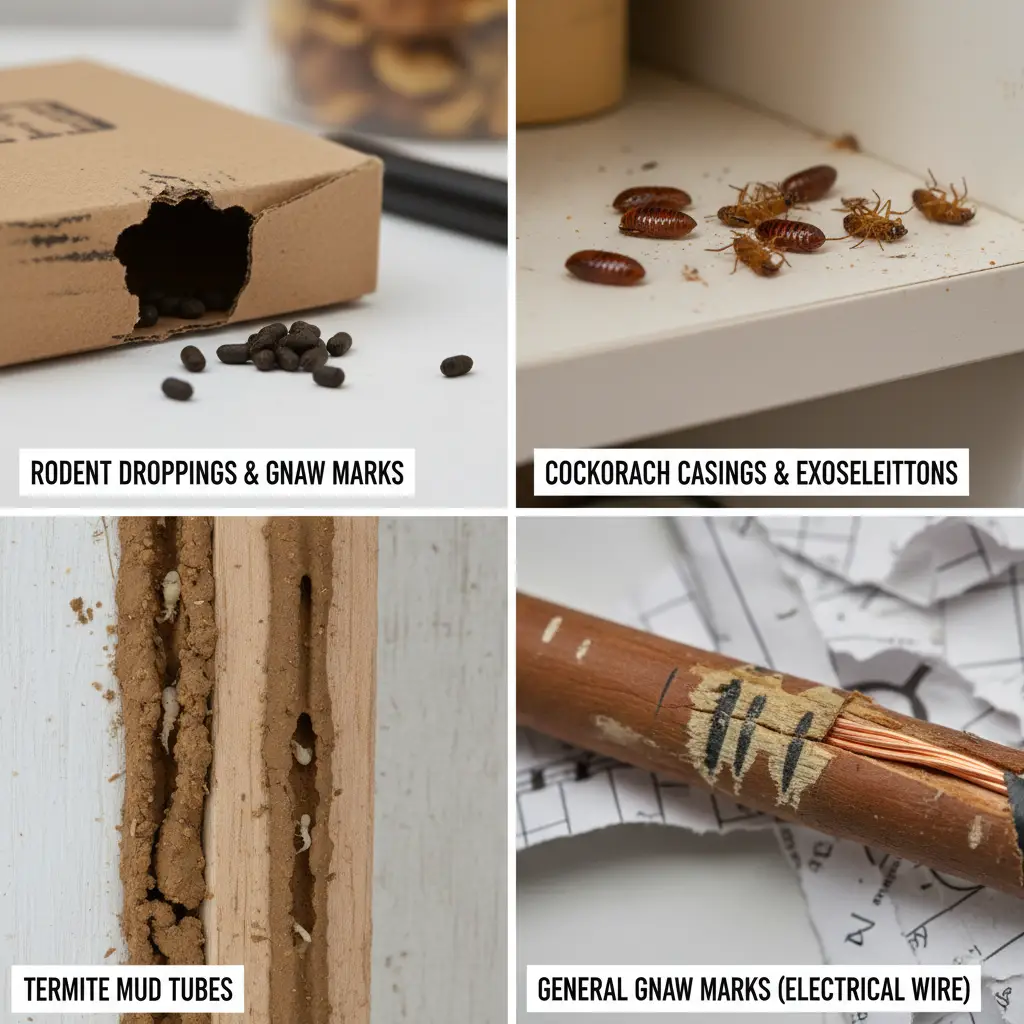
Faecal matter is one of the most common and definitive signs of pest activity. Rodent droppings vary in size and shape depending on the species (e.g., rice-grain for mice, larger pellet-like for rats). Cockroach droppings often resemble coffee grounds or black pepper. Urine stains from rodents may appear greasy or cause a distinct odour, especially in enclosed spaces.
Gnaw Marks and Damage
Rodents are notorious for gnawing to keep their incisors trimmed. Look for gnaw marks on food packaging, wiring, wooden structures, pipes, and furniture. The size and shape of the gnaw marks can help identify the type of rodent. Termites and borer beetles cause different types of damage, such as tunnels, exit holes, or weakened timber, often beneath the surface.
Nests and Harborage Points
Many pests build nests or establish harborage points in secluded, protected areas. Rodents create nests from shredded materials in attics, wall voids, or cluttered storage areas. Cockroaches prefer dark, warm, humid places like cracks and crevices, behind appliances, or inside cabinets. Wasps build nests under eaves or in wall cavities. Finding these points helps pinpoint the heart of an infestation.
Sounds and Smells
Pests can often be detected by sensory clues. Squeaking, scratching, or scurrying sounds from walls, ceilings, or attics are strong indicators of rodent activity, especially at night. Some pests emit distinctive odours: cockroaches can produce a musty smell, while a strong, pungent ammonia-like odour may indicate a significant rodent presence. The sweet, sickly smell of fermentation can also indicate large fly populations.
Integrated Pest Management (IPM) in Auckland
Integrated Pest Management (IPM) is an ecological approach to pest control that combines biological, cultural, physical, and chemical tools in a way that minimizes economic, health, and environmental risks. In Auckland, where environmental considerations are paramount, IPM offers a sustainable and highly effective framework for pest control. You can learn more about IPM principles from authoritative sources like the US Environmental Protection Agency (EPA).
What is IPM?
IPM is not a single pest control method but a series of pest management evaluations, decisions, and controls. It emphasizes a thorough understanding of pest biology and behaviour, focusing on long-term prevention. The core principles include:
- Prevention: Taking steps to prevent pest problems from occurring in the first place (e.g., sanitation, exclusion).
- Monitoring: Regular inspection and identification to detect pest presence and population levels.
- Thresholds: Determining an acceptable level of pest activity before intervention is needed.
- Control: Using the most effective and least-risk control tactics when thresholds are exceeded, prioritizing non-chemical methods first.
The Role of Monitoring in IPM
Monitoring is the cornerstone of any successful IPM program. Without accurate and consistent monitoring, IPM cannot function effectively. It provides the data necessary to:
- Identify specific pests.
- Determine pest distribution and population size.
- Assess pest life stages.
- Pinpoint environmental factors contributing to pest problems.
- Evaluate the effectiveness of control measures.
This data-driven approach ensures that interventions are timely, targeted, and appropriate, reducing the reliance on broad-spectrum pesticides.
Preventative Measures
IPM strongly advocates for preventative measures to create an environment less hospitable to pests. This includes:
- Exclusion: Sealing cracks, holes, and entry points in buildings; ensuring screens are intact; properly weather-stripping doors and windows.
- Sanitation: Regular cleaning, proper waste management, eliminating food and water sources, and reducing clutter.
- Habitat Modification: Removing standing water, trimming overgrown vegetation, and addressing moisture issues.
- Education: Informing residents and staff about their role in pest prevention.
Common Pests in Auckland and Their Identification
Auckland’s subtropical climate and urban-rural interface create ideal conditions for a wide array of pests. Understanding the common invaders and their specific identification markers is key to effective monitoring and control.
Rodents (Rats, Mice)
Identification:
- Rats (Ship Rat, Norway Rat): Ship rats are agile, excellent climbers, typically found in attics or high places, with slender bodies, large ears, and tails longer than their bodies. Norway rats are larger, stockier, usually found at ground level, with smaller ears and tails shorter than their bodies.
- Mice (House Mouse): Small, slender body, large ears, small eyes, pointed snout, and a uniform grey-brown colour.
Signs: Droppings (rice grain for mice, larger for rats), gnaw marks, greasy rub marks along walls, scratching sounds at night.
Insects (Cockroaches, Ants, Spiders, Flies)
- Cockroaches (German, American, Oriental):
- German Cockroach: Small (1.1-1.6 cm), light brown, two dark stripes behind the head. Fast breeders, often found in kitchens and bathrooms.
- American Cockroach: Large (3.5-5 cm), reddish-brown, yellow figure-eight pattern behind the head. Often found in basements, drains, or sewers.
- Oriental Cockroach: Medium (2.5-3 cm), dark brown/black, less common indoors but found in cool, damp places.
- Ants (Argentine, Black House, White-footed House):
- Argentine Ant: Small (2-3mm), light brown. Form huge colonies, trails along paths, invade homes for food/water.
- Black House Ant: Small (2.5-3mm), shiny black. Nest outdoors, forage indoors, often in kitchens.
- White-footed House Ant: Small (2-3mm), dark body, light-coloured feet. Forms large colonies, often found trailing on surfaces.
- Spiders (White-tail, Katipo, Redback, Daddy Long Legs):
- White-tail Spider: Dark grey/black, distinctive white spot on the tip of the abdomen. Often found indoors, especially in laundry or bathrooms. Their bites can be painful.
- Katipo/Redback Spiders: Recognizable by a red stripe on the back (Katipo) or red hourglass on the abdomen (Redback). Both prefer sheltered outdoor spots but can enter homes. Venomous.
- Daddy Long Legs: Very long, slender legs, small body. Harmless, often found in corners of rooms, basements.
- Flies (House Fly, Drain Fly):
- House Fly: Grey body with four dark stripes on the thorax. Common around food waste and decaying matter.
- Drain Fly (Moth Fly): Small, fuzzy, moth-like appearance. Breed in organic matter in drains, septic tanks.
Signs: Oothecae (egg casings), droppings (coffee ground-like), musty odour, nocturnal sightings.
Signs: Visible trails of ants, particularly around food sources or entry points.
Signs: Webs, sightings of the spiders themselves.
Signs: Adult flies, larvae in drains, maggots near decaying matter.
Termites and Borers
Identification:
- Termites (Drywood, Subterranean): Often mistaken for ants. Termites have straight antennae, a broad waist, and wings of equal length. Ants have elbowed antennae, a pinched waist, and unequal wing lengths.
- Borer: Larvae of beetles that tunnel through timber. Different species cause different sized holes and dust.
Signs: Mud tubes (subterranean termites), discarded wings (swarming termites), frass (termite droppings resembling sawdust), small exit holes in timber (borer), hollow-sounding timber.
Biting Insects (Mosquitoes, Fleas, Bed Bugs)
- Mosquitoes: Small, two-winged insects. Distinctive high-pitched buzz.
- Fleas: Small (1-3mm), dark, wingless, flattened bodies. Excellent jumpers.
- Bed Bugs: Small (4-5mm), flat, oval-shaped, reddish-brown. Hide in cracks and crevices, especially in mattresses and bed frames.
Signs: Itchy bites, buzzing sounds, presence near standing water.
Signs: Itchy bites on legs/ankles, pets scratching excessively, ‘flea dirt’ (flea faeces, appears as black specks) on pet bedding or carpets.
Signs: Itchy red welts, often in a line or cluster, on skin. Small blood spots or dark faecal stains on sheets/mattress. Shed skins.
Benefits of Early Detection
The emphasis on early detection in pest monitoring and identification is not just a best practice; it is a strategic imperative that yields numerous advantages for property owners and the wider community in Auckland.
Minimizing Structural Damage
Pests like termites, borer, and even rodents can inflict significant, irreversible structural damage over time. Termites can silently hollow out timber frameworks, compromising a building’s integrity. Rodents gnaw through electrical wiring, posing fire hazards. Early detection allows for prompt intervention, preventing the costly and extensive repairs that result from prolonged pest activity. This preserves the value and safety of the property.
Protecting Health and Safety
Many pests carry pathogens, allergens, and venoms that can severely impact human health. Cockroaches and rodents can contaminate food and surfaces with bacteria and viruses. Mosquitoes transmit diseases. Spiders, like the Katipo or Redback, have venomous bites. By identifying and addressing pest issues early, the risk of disease transmission, allergic reactions, and painful bites is drastically reduced, contributing to a healthier living and working environment for everyone.
Cost-effectiveness
While investing in regular pest monitoring might seem like an added expense, it invariably proves to be more cost-effective in the long run. Addressing a small, contained pest problem is far cheaper than tackling a full-blown infestation that requires extensive treatment, repairs, and potentially lost business or relocation expenses. Early detection avoids escalation, which directly translates to significant savings.
Environmental Benefits
Early and accurate pest identification allows for highly targeted treatment strategies. This often means using fewer pesticides, or opting for less toxic, non-chemical methods. When you know precisely what pest you’re dealing with and where it’s located, you can apply treatments with precision, minimizing impact on non-target organisms and the broader environment. This aligns perfectly with sustainable practices and the increasing focus on ecological responsibility in Auckland and beyond. You can find more information on New Zealand’s environmental regulations and best practices through the Ministry for the Environment.
Choosing a Professional Pest Monitoring Service in Auckland
While DIY monitoring can be a good starting point, for comprehensive and effective pest management, partnering with a professional pest monitoring service in Auckland is often the best course of action. Their expertise and resources ensure thorough detection and appropriate, compliant action.
What to Look For
When selecting a pest monitoring and identification service, consider the following:
- Local Knowledge: Do they have specific experience with Auckland’s unique pest challenges and environmental factors?
- Comprehensive Approach: Do they offer an integrated pest management (IPM) approach rather than just reactive spraying?
- Reputation: Check reviews, testimonials, and ask for references.
- Transparency: Do they clearly explain their processes, findings, and recommendations?
Experience and Certifications
Ensure the company and its technicians are properly licensed and certified according to New Zealand’s pest control regulations. Look for proof of ongoing training and adherence to industry best practices. Experienced professionals will have a deep understanding of pest biology and behaviour, critical for accurate identification and effective monitoring plan development.
Customized Plans
A reputable service will not offer a one-size-fits-all solution. They should conduct a thorough initial inspection to assess your specific property, identify potential risks, and then propose a customized monitoring and treatment plan tailored to your needs, whether for a residential home, commercial building, or industrial facility.
Ongoing Support
Pest management is an ongoing process. A good service will offer regular monitoring schedules, follow-up visits, and clear communication about findings and preventive advice. They should be available to address any new concerns promptly and provide documentation of their visits and treatments.
Conclusion
Pest monitoring and identification in Auckland is a fundamental practice for safeguarding health, protecting property, and maintaining a high quality of life. By understanding the critical importance of early detection, utilizing appropriate monitoring tools, and mastering accurate pest identification, residents and businesses can proactively manage pest threats. Embracing an Integrated Pest Management approach, supported by professional expertise when needed, ensures that any pest issues are addressed effectively, efficiently, and with minimal impact on our environment. Vigilance and informed action are your strongest allies in the ongoing battle against unwanted pests.
People Also Ask
What are the most common pests in Auckland I should monitor for?
In Auckland, you should primarily monitor for rodents (rats and mice), cockroaches (German, American, Oriental), various ant species (especially Argentine, Black House, and White-footed House ants), spiders (White-tail, Katipo, Redback), and biting insects like mosquitoes, fleas, and bed bugs. Termites and borers are also significant threats to timber structures.
Why is early detection of pests so important for properties in Auckland?
Early detection is crucial because it allows for prompt intervention when pest populations are small and localized, preventing minor issues from escalating into widespread, costly infestations. This minimizes structural damage, reduces health risks from disease-carrying pests and allergens, ensures cost-effective treatment, and often allows for more environmentally friendly pest management methods.
What are the key signs of pest activity I should look for in my Auckland home or business?
Key signs include pest droppings (varying by species), gnaw marks on wood, wires, or packaging, visible nests or harborage points, shed skins or insect casings, mud tubes (for termites), strange sounds (scratching, scurrying), and unusual odours (musty, ammonia-like). Regular visual inspections are vital to spot these indicators.
How can I accurately identify a pest if I only find droppings or damage?
Accurate identification often requires careful observation of the size, shape, and location of droppings, the specific pattern of gnaw marks, or the type of structural damage. You can use online pest identification guides specific to New Zealand or, for definitive identification, collect a sample (if safe) or take clear photos and consult with a professional pest control service in Auckland. They have the expertise to distinguish between similar-looking pest signs.
What is Integrated Pest Management (IPM) and how does it relate to monitoring in Auckland?
Integrated Pest Management (IPM) is a holistic, long-term approach to pest control that combines various strategies like prevention, exclusion, sanitation, and targeted, minimal-risk treatments. Monitoring is the cornerstone of IPM because it provides the essential data to identify pests, assess infestation levels, understand environmental factors, and determine if and when intervention is truly necessary, ensuring a sustainable and effective solution for Auckland properties.
When should I consider hiring a professional pest monitoring service in Auckland?
You should consider hiring a professional service if you suspect a significant infestation, struggle with accurate pest identification, want a comprehensive and ongoing pest prevention plan (especially for businesses), have recurring pest problems, or deal with pests that pose health risks or structural damage. Professionals in Auckland have specialized knowledge of local pests, access to advanced tools, and can implement effective, compliant solutions.