Borer treatment in Auckland properties refers to the specialized processes and solutions employed to eradicate wood-boring insects, commonly known as woodworms, from timber structures within homes and commercial buildings. These treatments are essential to prevent structural damage, preserve property value, and ensure the long-term integrity of wooden elements.
Identifying Borer Infestations
Recognising the early signs of a borer infestation is crucial for effective and timely intervention. Often, borers can cause significant damage discreetly before their presence becomes obvious. Understanding what to look for can save property owners considerable expense and stress.
What are Borers?
Borers are the larval stage of various types of beetles that feed on wood. In Auckland, the most common species encountered include the common furniture beetle (Anobium punctatum), which primarily attacks sapwood of hardwoods and softwoods, and the two-tooth longhorn beetle (Ambeodontus tristis), known for damaging native timbers like rimu and kahikatea. These pests lay eggs in timber, and the hatched larvae tunnel through the wood, weakening its structure over time. The lifecycle can be prolonged, sometimes lasting several years within the wood before adult beetles emerge.
Signs of Borer Activity
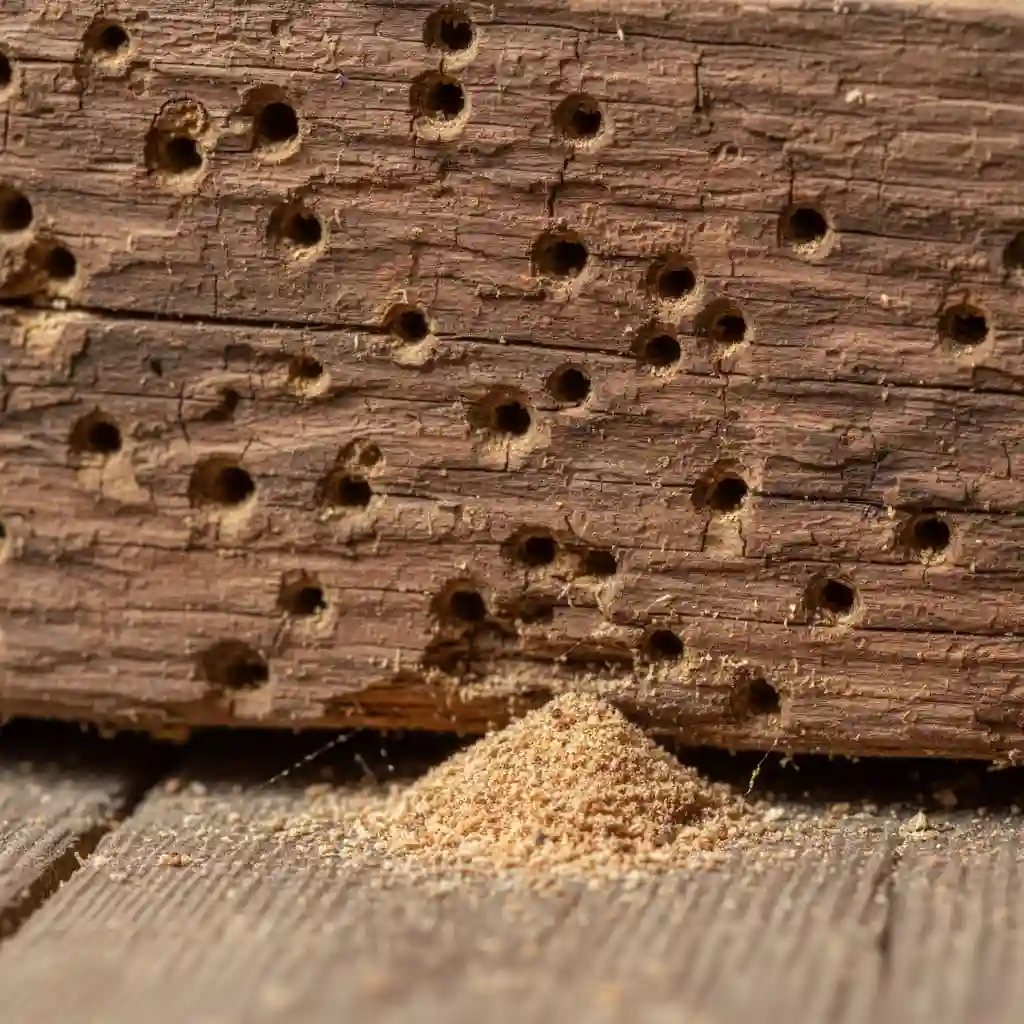
Identifying an active borer infestation involves looking for several tell-tale signs. The most common indicator is the presence of small, circular exit holes, typically 1-3mm in diameter for common furniture beetles, on the surface of wooden items or structural timbers. These holes are created when adult beetles emerge from the wood. Another critical sign is ‘frass’ – a fine, powdery sawdust-like material often found beneath exit holes or in crevices. Frass is essentially borer droppings and wood dust expelled by the larvae as they tunnel. Weakened or crumbling timber, especially around exit holes, is also a strong indicator, as is a faint tapping or scratching sound coming from within wooden structures, though this is less common for typical woodworm species.
Where to Look
Borers prefer dark, damp, and undisturbed environments, making certain areas of Auckland properties particularly vulnerable. Common locations for borer activity include subflooring, roof voids, basements, and areas with poor ventilation. Old wooden furniture, untreated timber in sheds or garages, and structural timbers in older homes are also prime targets. It’s important to inspect less visible areas, as infestations often begin in hidden spaces before spreading. Check the underside of wooden floorboards, rafters, joists, and any wooden objects stored in damp conditions.
Effective Borer Treatment Options
Once a borer infestation is confirmed, selecting the appropriate treatment method is paramount. Various options are available, ranging from targeted chemical applications to more extensive whole-structure interventions. The choice depends on the severity of the infestation, the type of borer, and the specific property characteristics.
Chemical Treatments
Chemical treatments are among the most common and effective solutions for borer infestations. These typically involve applying insecticides directly to affected timber surfaces. Residual sprays, often containing permethrin or bifenthrin, penetrate the wood pores and provide a long-lasting protective barrier. These chemicals kill emerging adult beetles and larvae feeding close to the surface, preventing further damage and reproduction. For deeper infestations or hard-to-reach areas, timber injection treatments can be used, where a specialised insecticide is injected directly into borer holes or drilled access points. In severe, widespread cases, particularly in historical or highly infested structures, fumigation may be considered. This involves tenting the entire building and introducing a gaseous pesticide to penetrate all wooden elements, eliminating borers at all life stages. However, fumigation requires vacating the property and is a more complex, costly procedure, typically reserved for extreme situations.
Non-Chemical Approaches
While chemical treatments are highly effective, non-chemical alternatives are also available for specific scenarios. Heat treatment involves raising the temperature of infested timber to a level lethal to borers, typically around 50-60°C, held for a sustained period. This method is often used for individual pieces of furniture or specific sections of timber where chemical application is not desired or feasible. Another non-chemical approach is timber replacement. For heavily damaged or structurally compromised sections of wood, simply replacing the infested timber with new, pre-treated wood can be the most practical and effective solution. This ensures immediate removal of the active infestation and reinforcement of the structure.
Choosing the Right Treatment
The selection of the most suitable borer treatment method requires careful consideration of several factors. The severity and extent of the infestation are critical; a minor, localised problem might only require spot treatment, while a widespread issue necessitates a more comprehensive approach. The type of timber involved also plays a role, as different woods react differently to treatments. Budgetary constraints, concerns about chemical exposure, and the desired treatment longevity are all factors that influence the decision-making process. Consulting with a professional pest control expert in Auckland is highly recommended to assess the situation accurately and recommend the most effective and safest treatment plan for your specific property. They can also advise on compliance with local regulations and environmental considerations.
Protecting Wooden Structures
Effective borer management extends beyond mere treatment; it encompasses proactive measures to protect wooden structures from future infestations. Prevention is always better than cure, and by implementing certain strategies, Auckland property owners can significantly reduce their risk.
Preventative Measures
Preventing borer infestations primarily involves creating an environment less attractive to these wood-boring pests. Moisture control is paramount, as borers thrive in damp conditions. Ensure proper ventilation in subfloors, roof voids, and other enclosed spaces to minimise humidity. Repair any leaks in plumbing, roofing, or gutters promptly to prevent timber from becoming wet. During new construction or renovation, using pre-treated timber is a highly effective preventative measure. Timber treated with approved preservatives deters borers and other wood-destroying organisms. Sealing cracks and crevices in external timber can also prevent adult beetles from laying eggs. Regular clearing of gutters and ensuring good drainage around the property perimeter will help keep foundation timbers dry. For more information on timber treatment standards, refer to official New Zealand building codes or industry guidelines such as those provided by the Building Performance. Building Performance NZ provides comprehensive resources on building standards.

Ongoing Maintenance
Even after successful treatment or initial preventative measures, ongoing vigilance is key to long-term protection. Regular inspections of all wooden elements, particularly in susceptible areas like subfloors and attics, should be part of routine property maintenance. Look for new exit holes, frass, or any signs of weakened timber. Early detection of a new or recurring problem allows for swift intervention before significant damage occurs. Promptly repair any damage to paintwork, varnishes, or other protective coatings on timber, as exposed wood is more vulnerable to borer attack. Maintaining a tidy garden, free of decaying wood piles or stumps close to the house, also reduces potential breeding grounds for borer beetles.
Post-Treatment Care
Following a borer treatment, certain steps can enhance its effectiveness and prevent recurrence. Ensure that any treated areas are kept dry and well-ventilated. If the treatment involved residual sprays, allow adequate drying time and avoid disturbing the treated surfaces. Regular monitoring of the treated areas for several months is advisable to confirm the treatment’s success and catch any lingering activity. Keep a record of the treatment date and the products used for future reference. For comprehensive guidance on pest management and related environmental concerns, the Environmental Protection Authority (EPA) New Zealand offers valuable resources.
Borer Inspection & Prevention
A proactive approach to borer management, combining professional inspections with diligent prevention, is the most effective way to safeguard Auckland properties from these destructive pests. Understanding the nuances of professional services versus DIY efforts is also important.
Professional Borer Inspections
Professional borer inspections are invaluable for Auckland property owners, especially for older homes or those in areas prone to timber pests. Experts have the knowledge and tools to identify borer species, assess the extent of an infestation, and pinpoint potential risk areas that might be overlooked by an untrained eye. A comprehensive inspection typically involves examining all accessible timber, including floorboards, joists, rafters, subfloor areas, and roof spaces. They can detect subtle signs of activity, such as barely visible frass or small exit holes, and distinguish between active and historical infestations. Regular professional inspections, perhaps every 2-3 years, can act as an early warning system, allowing for prompt, targeted treatment before problems escalate into major structural issues. These inspections are particularly vital before purchasing an older property, as they can reveal hidden problems.
DIY vs. Professional
While some minor borer issues in individual pieces of furniture might be tackled with DIY solutions, attempting to treat a widespread or structural borer infestation without professional help is generally not recommended. DIY products often lack the potency or application methods required to effectively penetrate timber and eradicate deep-seated larvae. Furthermore, identifying the correct borer species and understanding its lifecycle is crucial for choosing the most effective treatment, a task best left to experts. Professionals have access to industrial-grade products and specialised equipment, ensuring thorough coverage and deeper penetration into timber. They also possess the necessary health and safety certifications for handling potent insecticides, minimising risks to occupants and the environment. Misidentifying the problem or applying the wrong treatment can lead to recurring infestations and costly long-term damage.
Long-Term Borer Management Plans
For sustained protection against borers, especially in high-risk properties, a long-term borer management plan is essential. This involves a combination of ongoing preventative measures, regular professional inspections, and timely re-treatments as advised by experts. A management plan might include annual checks of vulnerable areas, scheduled re-applications of timber preservatives, and advice on improving ventilation or moisture control. Property owners should work collaboratively with their chosen pest control provider to develop a customised plan that addresses the specific risks and characteristics of their Auckland property. This proactive, continuous approach ensures that your wooden structures remain protected, preserving the value and safety of your investment for years to come.
People Also Ask
What are the common signs of borer infestation in Auckland properties?
Common signs include small, circular exit holes (1-3mm) on wooden surfaces, piles of fine sawdust-like frass underneath these holes, and sometimes weakened or crumbling timber. You might also hear faint tapping noises within infested wood, though this is less common for typical woodworm.
How much does borer treatment cost in Auckland?
Borer treatment costs in Auckland vary significantly depending on the extent of the infestation, the size of the area to be treated, the type of borer, and the specific treatment method chosen. Minor spot treatments might be a few hundred dollars, while extensive subfloor treatments or fumigation could range into thousands. It’s best to get a professional inspection for an accurate quote.
Is borer treatment safe for pets and children?
Reputable pest control companies use products that are safe when applied correctly. Most modern borer treatments have low toxicity to mammals. However, it’s always recommended to keep pets and children away from treated areas during application and drying periods. Professionals will provide specific safety instructions tailored to the chemicals used.
How long does borer treatment last?
The longevity of borer treatments varies. Many residual timber treatments offer protection for several years, often up to 5-10 years, by creating a chemical barrier in the wood. However, factors like moisture levels, re-exposure to untreated wood, and ongoing maintenance practices can influence effectiveness. Regular inspections are recommended to monitor long-term protection.
Can I treat borers myself, or do I need a professional?
For minor, localised infestations in non-structural items, DIY products might offer a temporary solution. However, for widespread or structural borer problems in your Auckland property, professional treatment is highly recommended. Professionals have the expertise to accurately identify the borer species, assess the damage, and apply industrial-grade treatments safely and effectively, ensuring comprehensive eradication.
What steps can I take to prevent borers from returning?
Preventative measures include ensuring good ventilation in subfloors and roof spaces, controlling moisture levels by fixing leaks promptly, using pre-treated timber for new construction or repairs, and regularly inspecting wooden structures. Maintaining a tidy yard free of decaying wood also helps reduce potential borer habitats.