Ant Control Auckland involves specialized pest management strategies designed to eradicate invasive species like White-footed House Ants and Argentine Ants common to the region. To effectively control these pests, professional exterminators utilize non-repellent transfer sprays and palatable gel baits that target the colony’s queen, ensuring complete nest elimination rather than temporary surface relief.
Understanding the Ant Invasion in Auckland
Auckland is uniquely positioned to be a haven for ants. The region’s temperate climate, high humidity, and lush vegetation create the perfect breeding ground for various ant species. For homeowners and business owners alike, an ant infestation is rarely a one-time event; it is often a seasonal battle that peaks during the warmer summer months and extends well into autumn.
Ants are social insects that live in complex colonies. When you spot a trail of ants marching across your kitchen bench, you are seeing only a tiny fraction of the population. The vast majority of the colony, including the queens and the developing larvae, remain hidden within wall voids, roof cavities, or underground nests in your garden. This hidden infrastructure is why superficial treatments fail to resolve the core issue.
In Auckland, the behavior of ants is driven by the search for moisture and food resources. As heavy rains drive them indoors seeking shelter, or droughts drive them inside seeking water, residential properties become prime targets. Understanding the biological imperatives of these pests is the first step toward reclaiming your home.
Common Ant Species in the Auckland Region
Effective treatment begins with accurate identification. Different species require different bait matrices and chemical formulations. In Auckland, we primarily deal with three dominant nuisance species.
The White-footed House Ant (Technomyrmex albipes)
This is arguably the most difficult ant to control in Auckland homes. Black in color with pale feet, they are notorious for their massive colony sizes, which can number in the millions. Unlike other ants, White-footed House Ants do not regurgitate food to one another (trophallaxis) as effectively. This makes traditional toxic baits slower to act. They often nest in wall voids and roof spaces, traveling along tree branches to access your home.
The Argentine Ant (Linepithema humile)
Argentine ants are aggressive and highly invasive. They are small, light brown, and form super-colonies. Instead of fighting with neighboring colonies of the same species, they cooperate, allowing them to cover massive territories. They are known to displace native insect populations and can be incredibly persistent in urban environments.
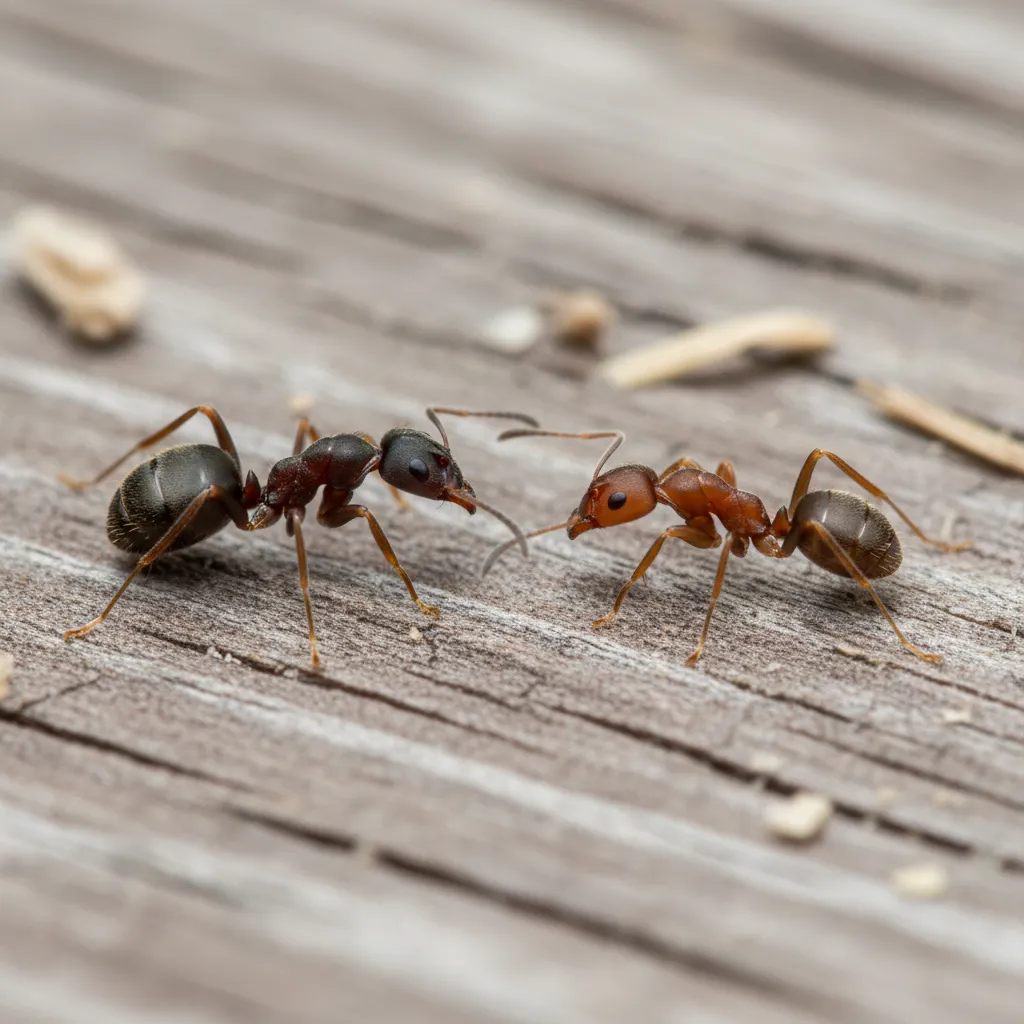
Darwin’s Ant (Dolanomyrma darwiniana)
Common in older Auckland properties, particularly where there is timber, Darwin’s ants are identifiable by the strong, unpleasant odor they emit when crushed. While less destructive than termites, they are a significant nuisance and can contaminate food sources rapidly.
For detailed scientific classifications and identification guides on these invasive species, you can reference Landcare Research (Manaaki Whenua), which provides extensive data on New Zealand’s pest biodiversity.
Why DIY Solutions Often Fail
Many Auckland homeowners attempt to tackle ant problems with supermarket bug sprays or hardware store bait stations. Unfortunately, these methods often exacerbate the problem due to a phenomenon known as “budding.”
Most over-the-counter sprays are repellents. When you spray a trail of ants, the chemical kills the ants it touches instantly. However, the stress signals sent by dying ants alert the rest of the colony to a threat. In response, the colony splits (buds) into multiple smaller sub-colonies to ensure survival. This results in the infestation spreading to different parts of the house, turning a kitchen problem into a bedroom and bathroom problem as well.
Furthermore, generic baits may not have the correct protein-to-sugar ratio required for the specific season or species. Professional pest control relies on non-repellent transfer insecticides. These products are undetectable to the ants. Workers walk through the treated area, pick up the active ingredient, and unknowingly carry it back to the nest, infecting the queen and the larvae. This “Trojan Horse” method is the only way to achieve total colony collapse.
Our Comprehensive Ant Eradication Process
To ensure a pest-free environment, we utilize a multi-stage Integrated Pest Management (IPM) approach tailored to the specific architecture of Auckland homes.
Step 1: Detailed Site Inspection
Our certified technicians begin by identifying the ant species. We trace trails to locate entry points, such as cracks in the foundation, gaps around plumbing pipes, or vegetation touching the roofline. We also assess environmental factors contributing to the infestation, such as standing water or unsealed food containers.
Step 2: Interior Gel Baiting and Residual Treatment
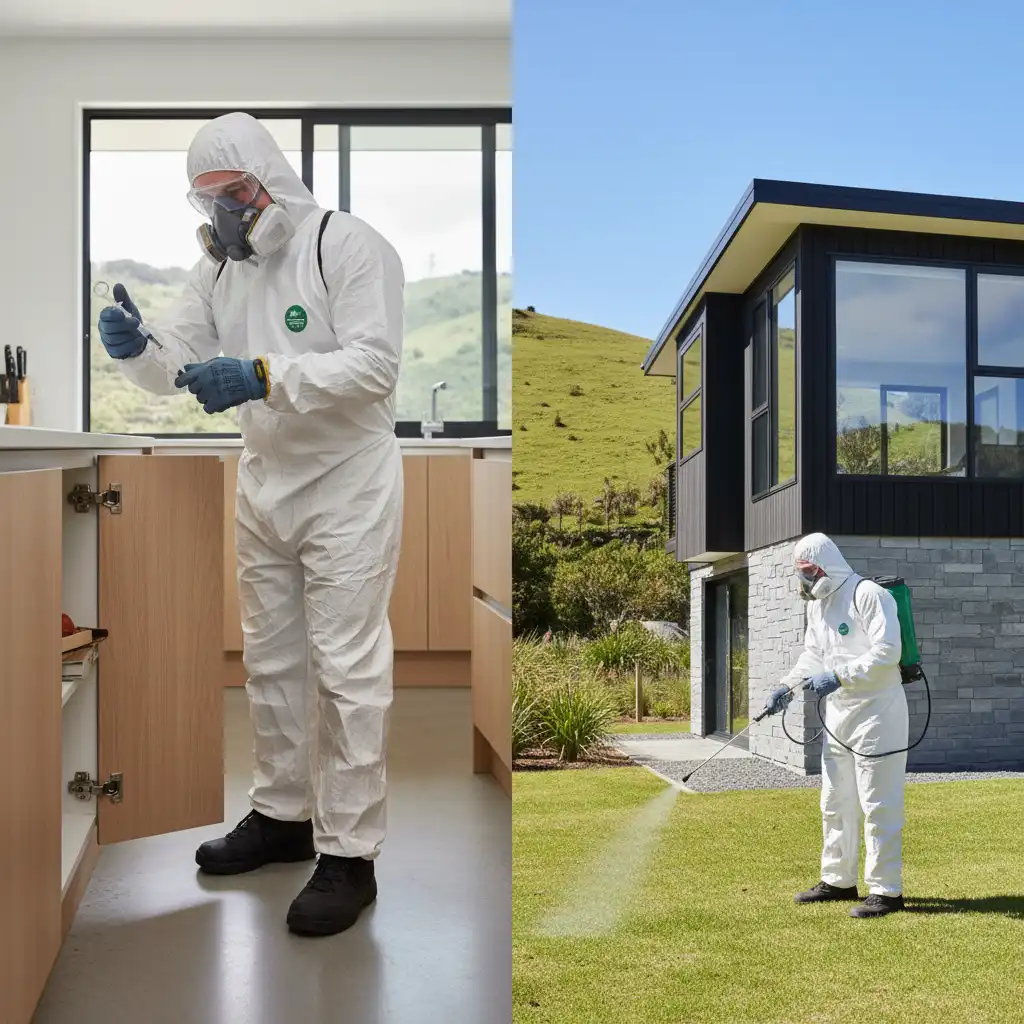
Inside the home, we apply high-palatability gel baits in discreet locations where ants forage. These baits are formulated to be irresistible to the specific species identified. Additionally, we may apply a non-repellent mist to baseboards and potential entry points. This creates a treated zone that allows ants to continue their behavior long enough to transfer the toxicant to the nest.
Step 3: Exterior Perimeter Defense
The majority of the ant colony usually resides outside. We apply a specialized residual barrier treatment around the foundation of your home, around window frames, and door sills. This creates a “termite-style” chemical zone that prevents re-entry. We also treat localized nesting sites found in garden beds or paving stones.
Safety Measures for Pets and Children
Safety is the primary concern for any residential pest control service. We understand that your home is a sanctuary for your children and pets. Our protocols are designed to minimize risk while maximizing efficacy.
Modern pest control technologies have moved away from the harsh organophosphates of the past. We utilize synthetic pyrethroids and indoxacarb-based products which have a high safety profile for mammals when used according to label directions.
- Targeted Application: We place gel baits in cracks, crevices, and hinges—areas inaccessible to curious toddlers or pets.
- Drying Time: Once liquid treatments dry (usually within 2-4 hours), they bond to the surface and present negligible risk to pets walking over them.
- Eco-Friendly Options: We select products that degrade naturally in the environment, reducing impact on the wider ecosystem.
We always recommend that occupants vacate the treatment area during the application and return only once surfaces are dry. This simple precaution ensures total safety. For more information on chemical safety standards, the Environmental Protection Authority (EPA) New Zealand provides consumer guidelines on hazardous substances used in domestic settings.
Commercial vs. Residential Ant Management
While residential services focus on comfort and peace of mind, commercial ant control is a matter of compliance and reputation.
Hospitality and Food Service
For Auckland cafes, restaurants, and food processing plants, a single ant sighting can lead to negative reviews or failed health inspections. Our commercial protocols involve:
- Documentation: Providing logbooks and service reports for audit compliance.
- Preventative Monitoring: Installing monitoring stations to detect activity before it becomes an infestation.
- After-Hours Service: Treating premises outside of business hours to avoid disruption.
Office and Retail
In office environments, ants often infest break rooms and server rooms (attracted to the heat of electronics). We provide discreet services that keep your workforce focused and your equipment safe.
Prevention Strategies for Long-Term Control
Professional treatment clears the infestation, but cultural changes prevent its return. To maintain an ant-free property in Auckland, consider the following:
- Vegetation Management: Trim tree branches and shrubs so they do not touch the exterior of the house. These act as “bridges” for ants to bypass ground-level treatments and enter through the roof.
- Seal the Envelope: Use silicone caulk to seal gaps around utility pipes, windows, and door frames.
- Sanitation: Clean up food spills immediately. Store sugar and pet food in airtight containers. Rinse recyclables before placing them in the bin.
- Moisture Control: Repair leaking taps and ensure gutters are clean. Ants are drawn to moisture sources.
Service Areas and Booking Information
We provide comprehensive ant control services across the entire Auckland region. Whether you are dealing with a White-footed House Ant invasion in a North Shore bungalow or Argentine ants in a South Auckland industrial unit, our mobile technicians are ready to deploy.
Our Service Zones Include:
- North Shore: Albany, Takapuna, Devonport, Glenfield.
- Central Auckland: CBD, Ponsonby, Mt Eden, Remuera.
- West Auckland: Henderson, Titirangi, Te Atatu, Massey.
- East Auckland: Howick, Pakuranga, Botany.
- South Auckland: Manukau, Papatoetoe, Pukekohe.
Don’t let ants take over your property. Contact us today to schedule a comprehensive inspection and treatment plan. Our friendly team is ready to restore comfort and hygiene to your home.
People Also Ask
How much does ant control cost in Auckland?
The cost of ant control in Auckland typically ranges from $180 to $350 for a standard residential treatment. This price varies based on the size of the property (number of bedrooms), the severity of the infestation, and the species of ant involved. Commercial properties require a customized quote based on square footage and frequency of service.
What is the most common ant in Auckland?
The White-footed House Ant (Technomyrmex albipes) is widely considered the most common and persistent nuisance ant in Auckland homes. They are notoriously difficult to control because they establish massive colonies and do not share food (trophallaxis) as readily as other species, requiring specialized baiting techniques.
How long does pest control for ants take to work?
Professional ant treatments typically take between 3 to 4 weeks to achieve full colony elimination. While you will see a significant reduction in activity within the first 48 hours, the “transfer effect”—where ants carry the slow-acting poison back to the queen—takes time to wipe out the entire nest.
Is ant spray harmful to dogs and cats?
When applied correctly by professionals, ant sprays are safe for pets once dry. Technicians use targeted application methods and advise keeping pets away from treated areas for 2 to 4 hours until the liquid has completely dried and bonded to the surface. Always inform your pest controller if you have pets.
Why do ants come back after spraying?
Ants often return after DIY spraying because store-bought sprays are repellents that cause “budding.” This splits the colony, causing ants to move to new areas. Furthermore, if the queen is not killed, she will continue to produce larvae. Professional treatments focus on killing the queen to prevent resurgence.
Do I need to leave the house for ant treatment?
Yes, it is standard safety protocol to leave the house during the interior spray treatment. You typically need to vacate for approximately 3 to 4 hours to allow the treatment to settle and dry. Pregnant women, young children, and people with respiratory issues should exercise extra caution.