Biological pest control in Auckland harnesses the power of natural predators, parasites, and pathogens to manage pest populations, offering an environmentally friendly alternative to chemical pesticides. This method focuses on restoring ecological balance, protecting beneficial insects, and integrating sustainable practices for long-term pest suppression in diverse environments from home gardens to commercial agriculture.
Understanding Beneficial Insects: The Foundation of Natural Pest Control
Biological pest control is fundamentally rooted in understanding the intricate relationships within an ecosystem, particularly the roles of beneficial insects. These unsung heroes of the garden and farm are natural enemies of common pests, working tirelessly to keep destructive populations in check. Recognizing and fostering these beneficial creatures is the first critical step toward establishing an effective and sustainable pest management strategy in Auckland.
What are Beneficial Insects?
Beneficial insects are broadly defined as any insect that provides a service valued by humans, primarily in agriculture and horticulture. In the context of pest control, this refers to species that prey upon, parasitize, or compete with pest organisms. They are a diverse group, ranging from tiny wasps to brightly coloured beetles, each playing a unique role in maintaining ecological equilibrium. Their presence signifies a healthy, balanced ecosystem, reducing the reliance on chemical interventions.
Categories of Beneficials: Predators, Parasitoids, and Pathogens
Beneficial insects typically fall into two main categories: predators and parasitoids. While biological control can also include entomopathogenic fungi, bacteria, and viruses (pathogens), insects are the most commonly recognized and utilized agents in direct pest management. Understanding the distinction between these groups is key to implementing effective biological control strategies.
Predators
Predators are free-living organisms that consume multiple prey individuals throughout their lifespan. They are often larger than their prey and actively hunt. Many common garden insects are potent predators, offering significant control over various pest species.
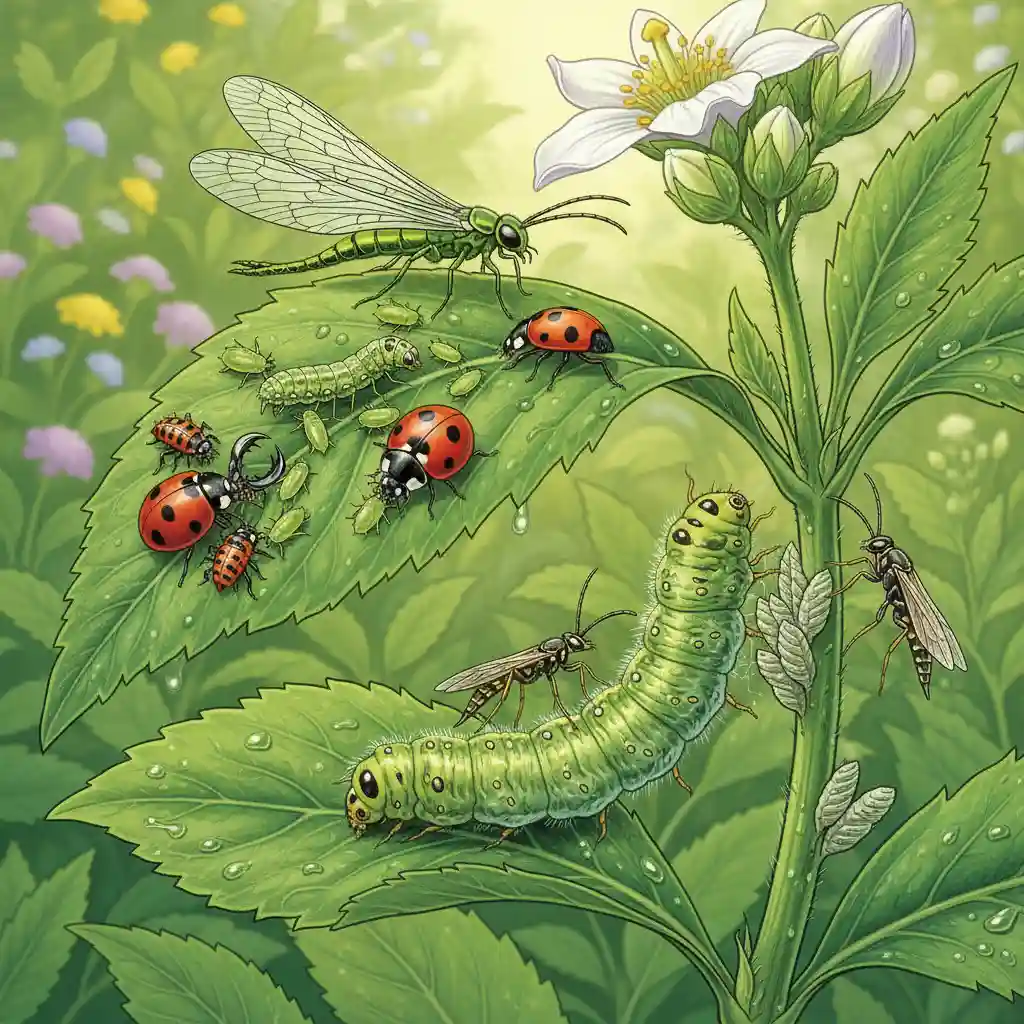
- Ladybugs (Coccinellidae): Both adult ladybugs and their larval stages are voracious predators of soft-bodied insects, especially aphids, but also mealybugs, scale insects, and spider mites. A single ladybug larva can consume hundreds of aphids during its development.
- Lacewings (Chrysopidae): Green lacewing larvae, often called ‘aphid lions,’ have formidable pincer-like jaws and are highly effective against aphids, thrips, whiteflies, spider mites, and small caterpillars. Adult lacewings typically feed on pollen and nectar, making them important pollinators as well.
- Hoverflies (Syrphidae): The larvae of many hoverfly species are predatory, resembling small, legless maggots that feed on aphids, especially common in Auckland gardens. Adult hoverflies are crucial pollinators, often mistaken for bees due to their striped abdomens.
- Predatory Mites (Phytoseiidae): These tiny arachnids are specialist predators of plant-feeding mites, such as spider mites, thrips, and even some small insect eggs. They are often released in greenhouses and indoor growing environments for targeted control.
- Ground Beetles (Carabidae): Nocturnal hunters, ground beetles prey on a wide range of soil-dwelling pests, including slugs, snails, cutworms, and various insect larvae. They are an excellent natural line of defense in garden beds and cultivated areas.
Parasitoids
Parasitoids are organisms that live in or on a host insect during their immature stages, eventually killing the host. Unlike parasites, a parasitoid typically consumes only one host individual to complete its development.
- Parasitic Wasps (Braconidae, Ichneumonidae, Chalcididae): These diverse families of wasps lay their eggs in or on the eggs, larvae, or pupae of pest insects. Once the egg hatches, the wasp larva consumes the host from the inside out. Famous examples include Aphidius wasps for aphid control and Encarsia formosa for whitefly control.
- Tachinid Flies (Tachinidae): These flies resemble houseflies but are often more bristly. They lay their eggs on or near the host, and the resulting larvae burrow into and consume the host. Many caterpillars, beetles, and true bugs are targets for Tachinid flies.
Identifying these beneficials in your Auckland garden or farm is the first step toward appreciating their ecological value. Resources from local agricultural extension services or specialist nurseries can assist in recognition.
The Ecosystem Balance
The presence of beneficial insects is a strong indicator of a healthy, balanced ecosystem. When populations of beneficials are robust, they provide a natural regulating mechanism for pest outbreaks. Disrupting this balance through broad-spectrum pesticide use can lead to secondary pest outbreaks, as natural enemies are often more susceptible to chemicals than the pests they target. Promoting biodiversity and understanding these intricate food webs are central to effective biological pest control.
Introducing Natural Pest Enemies: Strategic Release and Conservation
Beyond simply understanding beneficial insects, effective biological pest control in Auckland involves strategic methods to ensure their presence and efficacy. These methods generally fall into three categories: conservation biological control, augmentation biological control, and classical biological control, each with its own approach to introducing or enhancing natural enemy populations.
Conservation Biological Control: Creating a Habitat
This is often the most accessible and sustainable form of biological control. It focuses on modifying the environment to enhance the survival, reproduction, and effectiveness of naturally occurring beneficial insects. The goal is to make your garden or farm a more hospitable place for these allies.
Planting for Pollinators and Beneficials
Many beneficial insects, especially adult parasitoids and some predators (like adult lacewings and hoverflies), feed on nectar and pollen in addition to, or instead of, pests. Providing a diverse array of flowering plants, particularly those with small flowers accessible to tiny wasps and flies, will attract and sustain these beneficial populations. Examples include dill, fennel, coriander, alyssum, calendula, and various native New Zealand flowering plants.
Providing Water Sources and Shelter
Just like any other organism, beneficial insects need water and shelter. Shallow water dishes with stones for landing, or simply ensuring good soil moisture, can help. Ground beetles and spiders appreciate ground cover, mulch, and leaf litter for shelter. Hedgerows and uncultivated areas provide overwintering sites and refuge from disturbances.
Reducing Pesticide Use
This is perhaps the most critical aspect of conservation. Broad-spectrum pesticides kill beneficial insects alongside pests, disrupting the natural balance. Adopting an Integrated Pest Management (IPM) approach that prioritizes non-chemical methods, uses targeted pesticides only when necessary, and applies them judiciously, is paramount. Allowing a certain level of pest presence (the economic threshold) can also ensure a continuous food source for beneficials, preventing them from leaving your area.
Augmentation Biological Control: Mass Rearing and Release
Augmentation involves increasing the number of natural enemies by releasing commercially reared beneficial insects into an area. This is typically done when natural populations are insufficient to control a pest outbreak. There are two main types of augmentation releases:
Inoculative vs. Inundative Releases
- Inoculative Releases: Small numbers of beneficials are released early in the growing season, or when pest populations are low, with the expectation that they will establish, reproduce, and provide long-term control. This is common in greenhouses where environmental conditions are more controlled.
- Inundative Releases: Large numbers of beneficials are released to quickly overwhelm a high pest population, providing rapid but often short-lived control, similar to a chemical application. These releases may need to be repeated.
Where to Acquire Beneficials in Auckland
Several specialized nurseries and biological control suppliers in New Zealand, including those servicing the Auckland region, offer beneficial insects for sale. These typically include ladybug larvae, lacewing eggs, predatory mites (e.g., for spider mites and thrips), and parasitic wasps (e.g., for whiteflies and aphids). It’s crucial to purchase from reputable suppliers to ensure the insects are healthy, correctly identified, and delivered appropriately.
Classical Biological Control: Importing New Species
Classical biological control involves the deliberate introduction of exotic natural enemies to control an invasive, exotic pest. This is a highly regulated and complex process, primarily undertaken by government agencies like the Ministry for Primary Industries (MPI) in New Zealand. Before any new species can be introduced, extensive research is conducted to ensure it will not become a pest itself or negatively impact native species. Once approved and released, the hope is that the beneficial agent will establish a self-sustaining population, providing permanent control.
Rigorous Testing and Regulations
The testing phase for classical biological control agents can take many years, involving host specificity tests in quarantine facilities to confirm that the agent only attacks its target pest. This meticulous process is vital to prevent unintended ecological consequences, a lesson learned from past mistakes in biological introductions worldwide.
Applications in Gardens & Agriculture: Real-World Scenarios in Auckland
Biological pest control is not just a theoretical concept; it’s a practical and effective strategy widely applied across various scales in Auckland, from small urban gardens to large-scale commercial agricultural operations. Its versatility allows for tailored solutions depending on the specific pest, crop, and environment.
Home Gardens and Nurseries
For home gardeners in Auckland, biological control offers a chemical-free way to maintain healthy plants and abundant harvests. Nurseries, too, benefit from reduced chemical use, which protects sensitive plants and staff.
Aphid Control with Ladybugs/Lacewings
Aphids are a perennial problem for many garden plants. Releasing ladybug larvae or lacewing larvae is a highly effective method. These predators will actively seek out and consume aphid colonies. For long-term prevention, planting nectar and pollen-rich flowers around susceptible plants will attract wild populations of ladybugs, lacewings, and hoverflies.
Spider Mite Management
Spider mites thrive in hot, dry conditions and can quickly devastate plants. Predatory mites, such as Phytoseiulus persimilis, are specialist predators of two-spotted spider mites. They are commonly released in greenhouses and indoor growing areas, or on outdoor plants during warmer months, to keep mite populations under control.
Mealybug and Scale Insect Solutions
Mealybugs and scale insects are sap-sucking pests that can be difficult to manage. Certain parasitic wasps, like Leptomastix dactylopii for citrus mealybug, are highly effective. For scale insects, diverse predators like ladybugs (e.g., Cryptolaemus montrouzieri, the mealybug destroyer) and certain parasitic wasps play a crucial role. Horticultural oils can also be used in conjunction with beneficials, ensuring they are applied during periods when beneficials are less active or before their release.
Commercial Horticulture and Viticulture
In Auckland’s commercial sector, particularly for high-value crops like grapes, kiwifruit, and various vegetables, biological control is often integrated into comprehensive pest management plans to meet market demands for residue-free produce and sustainable growing practices.
Integrated Pest Management (IPM) Framework
Biological control is a cornerstone of Integrated Pest Management (IPM). IPM is a holistic approach that combines cultural, physical, biological, and chemical methods to manage pests in an economically and environmentally sound manner. For commercial growers, this means regularly scouting for pests and beneficials, setting action thresholds, and using biological agents as the first line of defence before resorting to targeted chemical sprays.
Case Studies (Brief Examples)
- Kiwifruit Orchards: Natural predators and parasitoids help manage pests like armoured scale and leafrollers, reducing the need for broad-spectrum insecticides.
- Vineyards: Predatory mites are widely used to control pest mites, such as vineyard rust mite and European red mite, on grapevines, crucial for maintaining fruit quality.
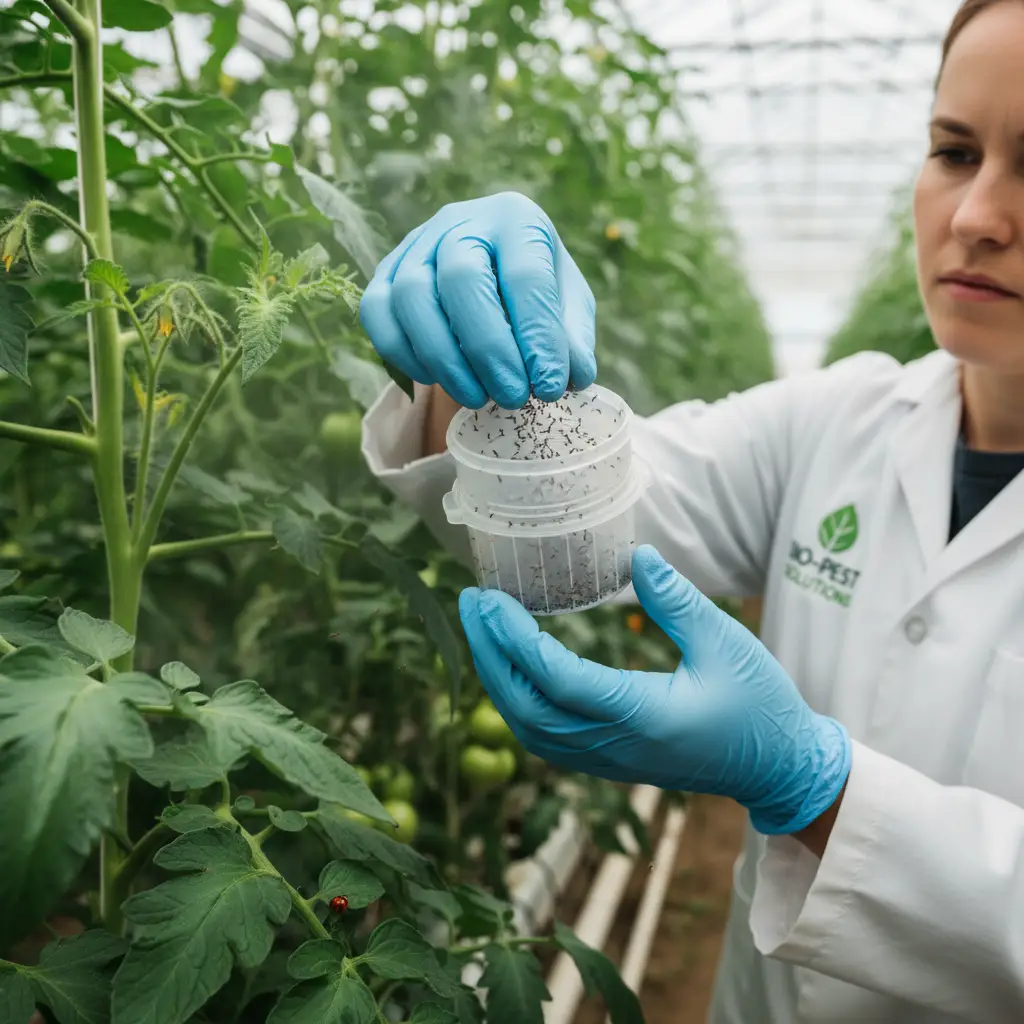
- Glasshouse Crops: Tomatoes, cucumbers, and capsicums grown in greenhouses extensively use beneficials like parasitic wasps for whiteflies (Encarsia formosa), predatory mites for thrips (Amblyseius cucumeris), and predatory bugs for generalist pests (Orius spp.).
Specific Pests and Their Natural Enemies in Auckland
Auckland’s temperate climate supports a wide range of pests and their natural enemies. Here are a few notable pairings:
- Woolly Aphid (on apples): The parasitic wasp Aphelinus mali was a classical biological control success story in New Zealand, effectively suppressing woolly aphid populations.
- Greenhouse Whitefly: The tiny parasitic wasp Encarsia formosa is a cornerstone of whitefly control in Auckland’s greenhouses, laying its eggs inside whitefly nymphs.
- Thrips: Predatory mites like Amblyseius cucumeris and predatory bugs such as Orius spp. are commonly deployed to manage thrips in various crops.
- Codling Moth: While challenging, native birds, predatory beetles, and specific parasitic wasps can contribute to reducing populations.

Pros and Cons of Biological Control: A Balanced Perspective
While biological pest control offers numerous advantages, it’s essential to approach it with a balanced understanding of its strengths and limitations. For residents and growers in Auckland, weighing these factors is crucial for making informed decisions about pest management strategies.
Advantages
The benefits of integrating biological control into pest management are significant and far-reaching, particularly in terms of environmental health and long-term sustainability.
Environmental Safety & Reduced Chemical Exposure
One of the most compelling advantages is the reduced reliance on synthetic chemical pesticides. This translates to less chemical runoff into Auckland’s waterways, safer environments for non-target organisms (including beneficial insects, birds, and aquatic life), and reduced exposure risks for people, pets, and wildlife. This aligns with a broader societal push towards more eco-friendly practices.
Long-Term Sustainability
Unlike chemical treatments that often require repeated applications, successful biological control can establish self-sustaining populations of natural enemies. Once established, these populations provide continuous pest suppression, leading to more stable pest management over the long term and reduced ongoing costs and effort.
Pest Resistance Management
Pests can develop resistance to chemical pesticides over time, rendering treatments ineffective. Biological control offers a natural alternative that does not induce such resistance, maintaining its efficacy over generations. This is a critical factor in preventing pest control ‘treadmills’ where increasingly potent chemicals are needed.
Specificity and Non-Target Impact
Many biological control agents are highly specific to their target pests, meaning they pose minimal to no threat to non-target organisms, including beneficial insects, pollinators, and other wildlife. This contrasts sharply with broad-spectrum chemical pesticides that can indiscriminately kill a wide range of insects, beneficial or otherwise.
Challenges and Considerations
Despite its many benefits, biological control is not a panacea and comes with its own set of challenges that need to be carefully managed.
Slower Action
Biological control typically works more slowly than chemical pesticides. It relies on the natural life cycles and population dynamics of the beneficial organisms, meaning it may take time for pest populations to decline significantly. This can be a challenge for managing acute, severe pest outbreaks where rapid action is required.
Environmental Factors
The efficacy of biological control agents is highly dependent on environmental conditions such as temperature, humidity, and rainfall. Extreme weather events or suboptimal conditions can reduce the effectiveness, survival, or reproductive rates of beneficial insects. This makes success more variable compared to chemicals, which often perform consistently across a wider range of conditions.
Cost and Availability
While long-term costs can be lower, the initial cost of purchasing and releasing beneficial insects can sometimes be higher than a single chemical spray. Furthermore, the availability of specific beneficial agents might be limited, especially for less common pests or in areas with fewer specialized suppliers. For Auckland, this means relying on New Zealand-based suppliers.
Expertise Required
Implementing effective biological control requires a good understanding of pest and natural enemy biology, life cycles, and ecological interactions. Correct identification of pests and beneficials, monitoring population levels, and knowing when and how to release agents are all crucial. This requires more knowledge and careful observation than simply spraying a chemical.
Regulatory Hurdles for New Introductions
For classical biological control (introducing new non-native species), the regulatory process is extremely stringent in New Zealand, as it is globally. This is to prevent the introduction of new invasive species that could cause unforeseen ecological damage. While necessary, this means new biological solutions for emerging invasive pests can take many years to research and approve, as highlighted by the work of institutions like Manaaki Whenua – Landcare Research.
In conclusion, biological pest control in Auckland represents a powerful, environmentally conscious approach to pest management. By understanding and strategically utilizing nature’s own solutions, we can cultivate healthier gardens, more sustainable farms, and a greener urban environment for all.
People Also Ask
What are the most common beneficial insects for gardens in Auckland?
In Auckland gardens, common beneficial insects include ladybugs (for aphids), lacewings (for aphids, thrips, whiteflies), hoverfly larvae (for aphids), and various parasitic wasps (for specific pests like whiteflies and mealybugs). Ground beetles also help control soil-dwelling pests.
Where can I buy beneficial insects in Auckland?
Beneficial insects can be purchased from specialized biological control suppliers and some horticultural nurseries that service the Auckland region. It’s recommended to find reputable New Zealand-based suppliers to ensure healthy and correctly identified insects.
Is biological pest control safe for pets and children?
Yes, biological pest control is generally considered very safe for pets, children, and wildlife as it relies on natural predators and parasites, eliminating the need for toxic chemical pesticides. There are no harmful residues or exposure risks.
How long does it take for biological control to work?
The speed of biological control varies. It typically takes longer than chemical sprays, often several days to weeks, for beneficial insect populations to establish and significantly reduce pest numbers. Consistent monitoring and suitable environmental conditions aid in faster results.
Can I use biological control with other pest control methods?
Biological control is often integrated into an Integrated Pest Management (IPM) strategy. This means it can be used alongside cultural practices, physical barriers, and targeted, softer chemical treatments that are less harmful to beneficial insects. Avoid broad-spectrum pesticides.
What plants attract beneficial insects to my Auckland garden?
To attract beneficial insects, plant a diverse range of flowering plants, especially those with small flowers. Examples include dill, fennel, coriander, alyssum, calendula, chamomile, and various native New Zealand flowering plants that provide nectar and pollen.