Biological pest control in Auckland involves using natural predators, parasites, and pathogens to manage pest populations, offering an eco-friendly and sustainable alternative to chemical pesticides. This method harnesses the power of nature to restore ecological balance, protecting plants while safeguarding biodiversity and human health.
Understanding Beneficial Insects
Biological pest control fundamentally relies on the intricate relationships within ecosystems, particularly the role of beneficial insects. These are organisms that naturally prey upon or parasitize common garden and agricultural pests, helping to keep their populations in check. For residents and growers in Auckland, identifying and encouraging these allies is a cornerstone of sustainable pest management.
What Are Beneficial Insects?
Beneficial insects encompass a wide range of arthropods that contribute positively to our environment, primarily by controlling pest species. Unlike generalist predators that might consume both pests and other beneficials, many beneficial insects are specialized, targeting specific pest groups. This specialization makes them highly effective and a precise tool in integrated pest management strategies. They are essential components of a healthy ecosystem, performing vital functions like pollination, decomposition, and, critically, pest suppression. Understanding their life cycles, habitats, and dietary preferences is key to successfully integrating them into any pest control plan.
Key Characteristics of Effective Biocontrol Agents
For an organism to be an effective biological control agent, it typically exhibits several crucial characteristics. Firstly, host specificity is often desired, meaning the agent primarily targets the pest without harming non-target organisms, including other beneficials or native fauna. Secondly, a high reproductive rate allows the beneficial population to increase quickly in response to rising pest numbers. Thirdly, good searching ability ensures they can locate dispersed pests efficiently. Lastly, adaptability to local environmental conditions, such as Auckland’s climate, is vital for their establishment and sustained effectiveness. These traits ensure the biocontrol agent can exert significant and lasting pressure on pest populations.
Common Beneficial Insects in Auckland
Auckland’s temperate climate supports a diverse array of beneficial insects that are readily available or can be attracted to local gardens and farms. Recognising these natural allies is the first step towards a more natural approach to pest management.
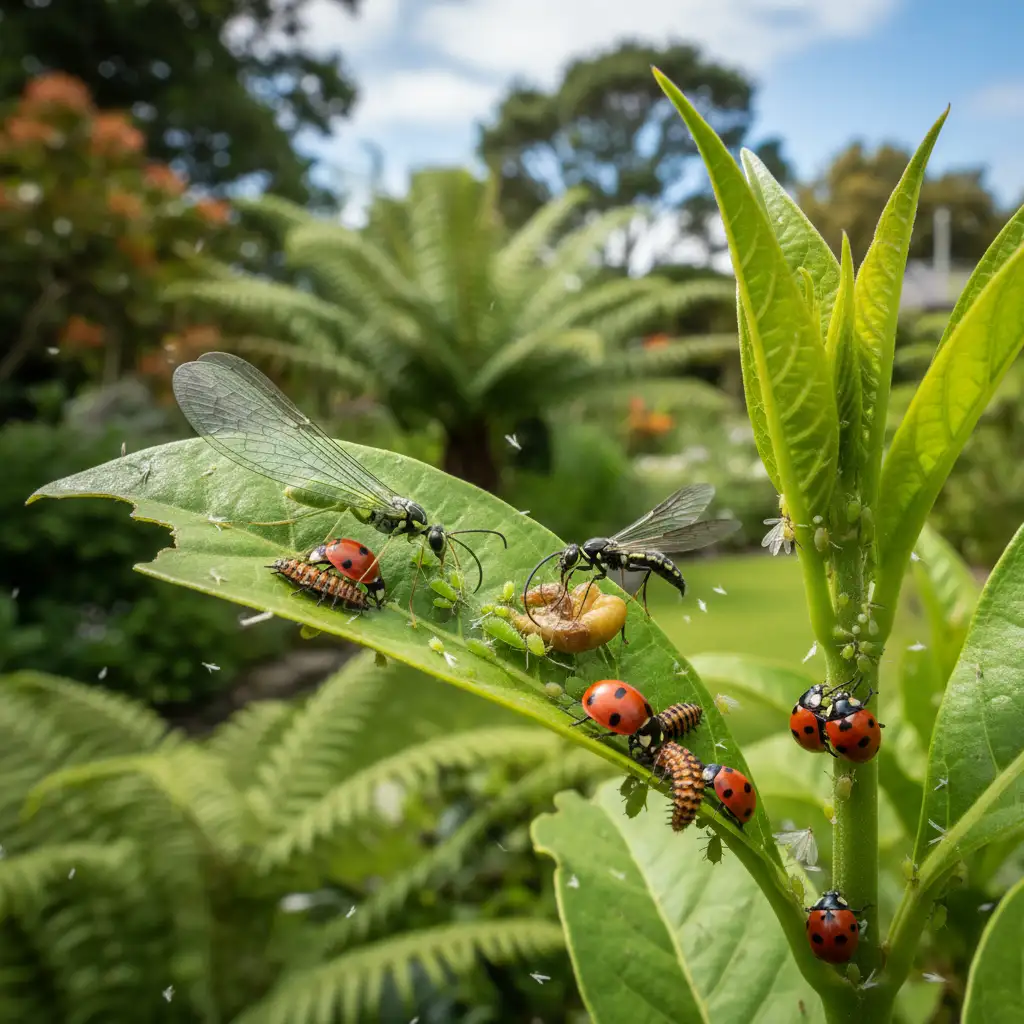
- Ladybugs (Coccinellidae): Both adult ladybugs and their larvae are voracious predators of aphids, scale insects, and mealybugs. A single ladybug larva can consume hundreds of aphids during its development. They are easily recognisable and a favourite among gardeners.
- Lacewings (Chrysopidae): Green lacewing larvae, often called ‘aphid lions’, are highly effective predators of aphids, thrips, mites, and small caterpillars. The adults typically feed on nectar and pollen, making them excellent pollinators as well.
- Predatory Mites (Phytoseiidae): These tiny mites are indispensable for controlling spider mites and other small pest mites. They are crucial in greenhouses and protected cropping systems but also thrive in outdoor environments when conditions are favourable. Specific species target different types of pest mites, offering tailored solutions.
- Hoverflies (Syrphidae): While adult hoverflies mimic bees and wasps and are important pollinators, their larvae are significant predators of aphids. They are often overlooked but play a critical role in aphid control in many ecosystems.
- Parasitic Wasps (e.g., Braconidae, Ichneumonidae): These tiny wasps lay their eggs inside or on the body of pest insects like aphids, caterpillars, and whiteflies. The developing wasp larva consumes the host from within, ultimately killing it. Evidence of their work can be seen in ‘mummified’ aphids, which are common in gardens.
Introducing Natural Pest Enemies
Implementing biological pest control involves more than just identifying beneficial insects; it requires a strategic approach to introduce, conserve, and augment their populations. There are three primary strategies for integrating natural enemies into a pest management plan, each suited to different scenarios and levels of intervention.
Augmentative Biological Control
Augmentative biological control involves the direct release of beneficial organisms into an area to suppress pest populations. This method is often used when natural enemy populations are insufficient to control a pest outbreak. It can be further divided into two types:
- Inoculative Releases: A small number of beneficials are released early in the season or when pest populations are low, with the expectation that they will reproduce and provide ongoing control. This aims to establish a self-sustaining population.
- Inundative Releases: A large number of beneficials are released to quickly reduce a high pest population. This provides immediate, but often temporary, control, similar to applying a pesticide, but with biological agents. This approach is common in greenhouses or for specific seasonal outbreaks.
Conservation Biological Control
Conservation biological control focuses on modifying the environment to protect and enhance existing populations of natural enemies. This is often the most sustainable and cost-effective approach. Strategies include:
- Providing Habitat: Planting diverse native flora, especially those that offer nectar, pollen, and sheltered overwintering sites for beneficials.
- Minimising Pesticide Use: Avoiding broad-spectrum pesticides that harm beneficial insects more than pests, or using selective pesticides with careful timing.
- Maintaining Ground Cover: Providing refuge for ground-dwelling predators like ground beetles and spiders.
- Water Sources: Offering shallow water sources for beneficials, especially during dry periods.
Classical Biological Control
Classical biological control involves the introduction of natural enemies from the native range of an exotic pest into a new area where the pest has become problematic. This is a long-term strategy, typically managed by government agencies, aiming to establish a permanent, self-sustaining population of the natural enemy. It is a highly regulated process, requiring extensive research and quarantine procedures to ensure the introduced agent is specific to the target pest and will not harm non-target native species. A notable example in New Zealand has been the introduction of specific parasitic wasps to control various invasive agricultural pests.
Sourcing and Releasing Beneficials
For Auckland gardeners and commercial growers interested in augmentative biological control, beneficial insects can be purchased from specialist suppliers. It’s crucial to select reputable suppliers who can guarantee the quality and health of the insects. Upon arrival, beneficials should be released according to the supplier’s instructions, often in the evening or on a cloudy day to protect them from immediate heat or strong sunlight. Proper handling and release techniques maximise their establishment and effectiveness. Researching the specific needs of the beneficials and the pests they target is essential for a successful release program. Ensuring the environment is welcoming, with appropriate food sources (like pollen and nectar for adults) and shelter, will significantly improve their retention and reproductive success. Further information on responsible biological control practices can often be found through organisations like the New Zealand Plant Protection Society or local agricultural extension services. For general information on pest control, visit the US EPA’s Natural and Safe Pest Control resources as a reference.
Applications in Gardens & Agriculture
Biological pest control is versatile, finding successful application across a spectrum of settings, from small urban gardens in Auckland to large-scale agricultural operations. The key to success lies in understanding the specific pest problems, the available beneficial agents, and how to create an environment conducive to their thriving.
Home Gardens and Urban Green Spaces
For home gardeners in Auckland, biological control offers an accessible and rewarding path to healthier plants without harsh chemicals. It promotes a biodiverse garden ecosystem. Strategies include:
- Planting for Diversity: Incorporating flowering plants that provide nectar and pollen for adult beneficial insects (e.g., dill, fennel, yarrow, cosmos, borage).
- Companion Planting: Using specific plant combinations that naturally deter pests or attract beneficials.
- Avoiding Systemic Pesticides: Many common garden pesticides are harmful to beneficial insects, even at low concentrations. Opting for organic or targeted solutions when necessary is crucial.
- Manual Pest Removal: Combining biological control with simple manual removal of larger pests to reduce immediate pressure.
- Observing and Learning: Regularly inspecting plants to identify pests and beneficials, learning to recognise the signs of a healthy ecosystem at work.
Commercial Horticulture and Viticulture
In commercial settings, biological control becomes a critical component of Integrated Pest Management (IPM) programmes. It helps growers meet consumer demand for sustainable produce and adhere to environmental regulations. Examples in Auckland and wider New Zealand include:
- Greenhouse Operations: Predatory mites for spider mites, whitefly parasites (e.g., Encarsia formosa) for whiteflies, and specific nematodes for fungus gnats are routinely used. The enclosed environment allows for precise control over conditions and predator populations.
- Orchards and Vineyards: Conservation of natural enemies through habitat management and careful selection of pesticides is paramount. Introducing beneficials like lacewings or predatory mites can target specific pests while maintaining overall ecosystem health. For instance, managing leafroller populations with parasitic wasps is a common strategy in some fruit crops.
- Arable Crops: Utilising natural enemies for slug control (e.g., parasitic nematodes) or aphid control in cereal crops.

Specific Pest-Host Relationships
Understanding these relationships is crucial for targeted biological control:
- Aphids: Ladybugs, lacewing larvae, hoverfly larvae, and parasitic wasps (e.g., Aphidius colemani) are all highly effective.
- Whiteflies: The parasitic wasp Encarsia formosa is a classic example, as are various predatory mites.
- Spider Mites: Predatory mites like Phytoseiulus persimilis are specialists.
- Caterpillars (e.g., Cabbage White Butterfly, Looper): Parasitic wasps (e.g., Cotesia glomerata) and certain predatory beetles or generalist predators.
- Mealybugs: The mealybug destroyer ladybird (Cryptolaemus montrouzieri) is a renowned specialist predator.
Creating a Predator-Friendly Environment
Beyond introducing beneficials, success hinges on making the environment attractive for them. This means: providing diverse flowering plants for nectar and pollen, ensuring water sources, creating sheltered areas (e.g., log piles, undisturbed garden corners), and most importantly, drastically reducing or eliminating broad-spectrum pesticide use. A robust ecosystem that supports a variety of life forms is inherently more resilient to pest outbreaks. Detailed information on plant species that attract beneficial insects in New Zealand can be found through local horticultural societies or agricultural research institutions such like Plant & Food Research New Zealand.
Pros and Cons of Biological Control
While biological pest control offers numerous advantages, it also comes with its own set of challenges and considerations. A balanced understanding of both is essential for its successful implementation, particularly in diverse environments like Auckland’s urban and agricultural landscapes.
Advantages of Adopting Biocontrol
The benefits of biological control are far-reaching, making it an attractive option for sustainable pest management:
- Environmental Safety: Perhaps the most significant advantage is the minimal environmental impact. Unlike chemical pesticides, biological control agents do not leave toxic residues, contaminate water sources, or harm non-target wildlife. They work within the natural ecosystem.
- Reduced Chemical Use: By relying on natural enemies, the need for synthetic pesticides is significantly reduced or eliminated, leading to healthier soil, water, and air quality. This also benefits the health of growers and consumers.
- Long-Term Sustainability: Once established, many biological control agents can provide ongoing, self-sustaining pest suppression, offering a more permanent solution than repeated chemical applications. It fosters a more resilient and balanced ecosystem.
- Resistance Management: Pests rarely develop resistance to their natural enemies, unlike the common problem of pesticide resistance, which forces constant development of new chemical solutions.
- Cost-Effectiveness: While initial costs for introducing beneficials can be a factor, in the long term, reducing pesticide purchases and application labour can lead to significant savings. Conservation biological control, by enhancing existing populations, is inherently cost-effective.
- Safety for Pollinators and Wildlife: Biological control is inherently safer for vital pollinators like bees and butterflies, as well as birds, lizards, and other beneficial wildlife, contributing to broader biodiversity.
Challenges and Considerations
Despite its advantages, biological control is not without its difficulties:
- Slower Action: Unlike fast-acting chemical sprays, biological control often takes time to establish and for pest populations to decline. It requires patience and a proactive approach rather than a reactive one.
- Specificity: While a benefit, high specificity can also be a challenge if multiple pest species are present, requiring a suite of different biological agents. Generalist predators might be less effective but cover more ground.
- Environmental Factors: The effectiveness of beneficial insects is highly dependent on environmental conditions such as temperature, humidity, and the availability of alternative food sources. Auckland’s variable weather can sometimes impact their performance.
- Initial Cost and Expertise: Purchasing and releasing beneficial insects can have an upfront cost. Furthermore, identifying pests and beneficials correctly, and understanding their ecological requirements, demands a certain level of knowledge and expertise.
- Integration Complexity: Successfully integrating biological control into a broader IPM strategy requires careful planning, monitoring, and an understanding of potential interactions with other pest management tools. For example, some ‘soft’ pesticides can still harm beneficials.
- Quality Control: The quality of commercially supplied beneficial insects can vary, impacting their efficacy. Selecting reputable suppliers is paramount.
Integrating with Other Pest Management Strategies (IPM)
The most successful approach to pest control in Auckland often involves Integrated Pest Management (IPM), where biological control is a core component. IPM combines various strategies – cultural, physical, mechanical, biological, and chemical (as a last resort) – to manage pests while minimising environmental impact. This holistic approach means: regular monitoring of pest and beneficial populations; using cultural practices like crop rotation and resistant varieties; employing physical barriers or traps; and only resorting to highly selective, low-impact pesticides when absolutely necessary and compatible with beneficial insect populations. Biological control provides the natural foundation upon which a truly sustainable pest management system can be built.

Biological pest control offers a powerful, sustainable, and eco-friendly pathway to managing pests in Auckland’s gardens and agricultural landscapes. By understanding and harnessing the power of natural predators, we can foster healthier ecosystems, reduce reliance on harmful chemicals, and cultivate a more resilient environment for future generations. Embracing these natural allies is not just a method of pest control; it’s a commitment to ecological balance and sustainable living.
People Also Ask
What is the main principle behind biological pest control?
The main principle behind biological pest control is to use living organisms (natural enemies) to reduce pest populations to economically or aesthetically acceptable levels. Instead of relying on synthetic chemicals, it leverages nature’s own mechanisms, such as predation, parasitism, and herbivory, to manage pests in an eco-friendly way.
Are beneficial insects safe for pets and children in an Auckland garden?
Yes, beneficial insects used in biological pest control are generally very safe for pets and children. Unlike chemical pesticides, they are non-toxic and do not leave harmful residues. Most beneficials like ladybugs or lacewings pose no threat and are part of a healthy, biodiverse garden ecosystem.
How long does it take for biological pest control to show results?
The time it takes for biological pest control to show results can vary. Inundative releases (large numbers of beneficials) might show rapid initial impact within days to a few weeks, while inoculative releases or conservation efforts (encouraging existing populations) may take several weeks to a full growing season to establish and provide consistent control. Patience and consistent monitoring are key.
Can I combine biological pest control with organic gardening practices?
Absolutely! Biological pest control is perfectly aligned with and often a core component of organic gardening practices. Organic gardening principles, which avoid synthetic pesticides and promote soil health and biodiversity, create an ideal environment for beneficial insects to thrive and effectively control pests naturally.
Where can I source beneficial insects in Auckland?
In Auckland, you can source beneficial insects from specialist horticultural suppliers who often ship live insects directly to consumers and commercial growers. It is recommended to research reputable suppliers online or consult with local garden centres and agricultural experts for reliable sources and guidance on specific beneficial species.
What are the most common pests targeted by biological control in New Zealand?
In New Zealand, biological control targets a wide range of common pests, including aphids, whiteflies, spider mites, mealybugs, thrips, and various caterpillar species (like leafrollers and cabbage whites). Specific parasitic wasps, predatory mites, ladybugs, and lacewings are frequently employed or encouraged to manage these prevalent garden and agricultural pests.