Borer Treatment Auckland refers to the professional application of specialized residual insecticides and timber preservatives designed to eradicate the Common House Borer (Anobium punctatum). Effective treatment in Auckland’s humid climate typically involves surface spraying of sub-floor and roof void timbers, alongside targeted injection for painted surfaces, to break the pest’s lifecycle and preserve the structural integrity of timber homes.
Protecting Auckland’s Timber Homes from Borer
Auckland is renowned for its rich architectural heritage, characterized by sprawling suburbs of colonial villas, bungalows, and art deco homes constructed primarily from native timbers. While these structures possess undeniable charm and historical value, they face a silent, pervasive threat: the Common House Borer (Anobium punctatum). In the humid, temperate climate of the upper North Island, these wood-boring beetles thrive, turning the structural skeleton of a home into dust if left unchecked.
The timber used in many of Auckland’s older homes—specifically the sapwood of Rimu, Matai, and Kahikatea—is particularly susceptible to infestation. While the heartwood of Kauri and Rimu offers some natural resistance, the sapwood (the outer living layer of the tree used in construction) is a prime food source for borer larvae. Over decades, untreated infestations can compromise floorboards, joists, bearers, and roof trusses, leading to significant structural failure and costly renovations.
For Auckland homeowners, borer treatment is not merely a cosmetic concern; it is a critical maintenance task required to preserve asset value. The region’s high humidity levels create the perfect moisture content within sub-floor timbers, accelerating the borer lifecycle. Unlike drier regions where timber may become too brittle for larvae to chew effectively, Auckland’s atmospheric conditions keep wood palatable for these pests year-round.
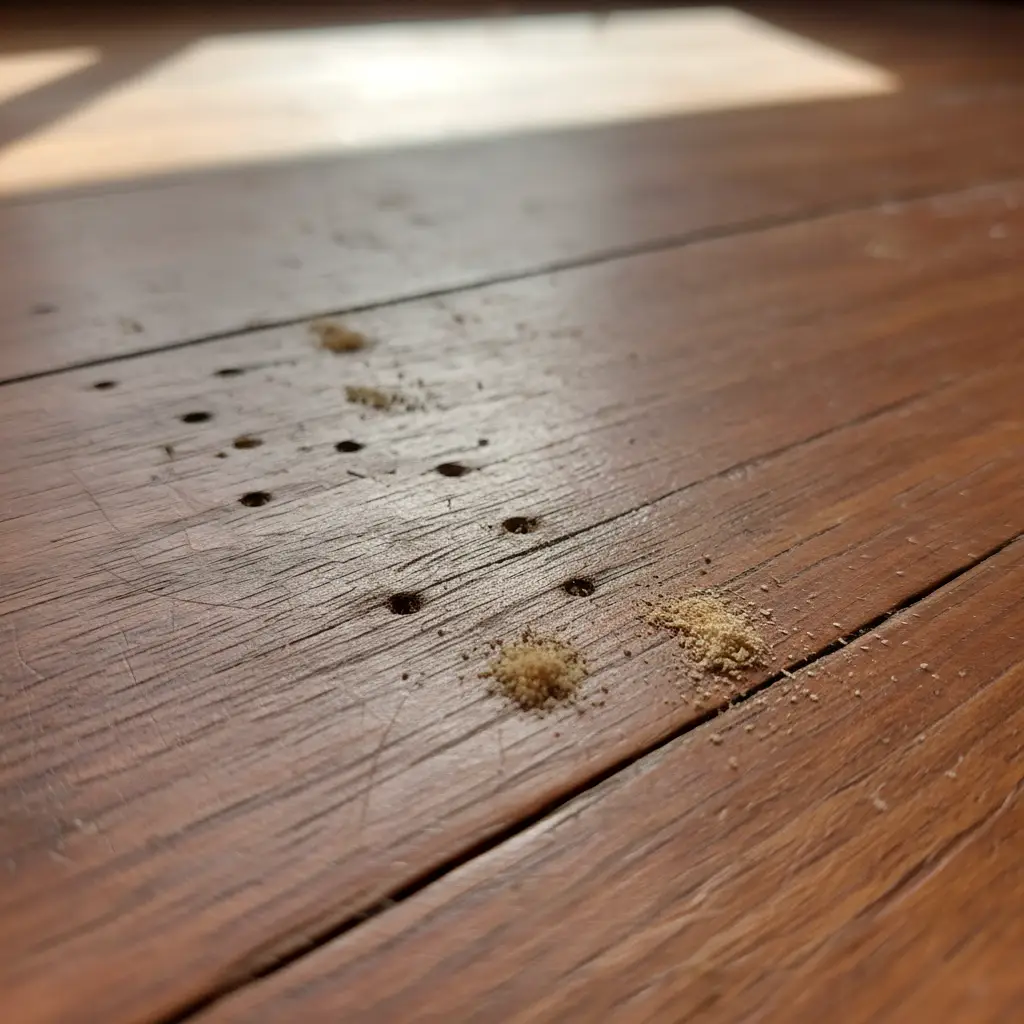
Signs of Active Borer Infestation
Detecting borer early is the key to minimizing damage. However, because the larvae live deep inside the wood for years, homeowners often do not notice an issue until the infestation is well-established. To determine if your Auckland property requires immediate treatment, you must look for specific indicators of activity.
1. Flight Holes
The most recognizable sign of borer is the emergence hole. These are small, round holes approximately 1mm to 2mm in diameter. These holes are created when the adult beetle chews its way out of the timber to mate. If the holes appear clean and fresh, with sharp edges, it indicates recent activity. Older holes may appear dark, clogged with paint, or weathered.
2. Frass (Borer Dust)
When the adult beetle emerges, it often pushes out a fine, powdery dust known as frass. In active infestations, you may find small piles of this dust on floorboards, shelves, or on the ground beneath sub-floor joists. This dust is essentially digested wood and is a clear signal that the timber is currently being consumed.
3. Live Beetles
During the flight season, which in Auckland typically runs from October to March, you may see the adult beetles. They are small (3-5mm), dark brown, and oval-shaped. They are often found on windowsills as they fly towards the light. Finding these beetles inside your home is a definitive confirmation of an active infestation.
4. Structural Weakness
In severe cases, floorboards may feel spongy or springy when walked upon. If a piece of timber crumbles easily when probed with a screwdriver, the internal structure has likely been honeycombed by larvae galleries, necessitating urgent replacement and treatment of surrounding areas.
Understanding the Borer Lifecycle
To understand why professional Borer Treatment in Auckland is structured the way it is, one must understand the lifecycle of the pest. Many DIY treatments fail because they only target the adult beetle, ignoring the larvae that cause 95% of the damage.
The lifecycle consists of four stages:
- Egg: The female beetle lays eggs in cracks, crevices, or old flight holes of unprotected timber.
- Larva: This is the wood-boring stage. The larvae hatch and bore into the wood, where they remain for 3 to 5 years (and sometimes longer in varied conditions). They eat the wood, creating a network of tunnels. This is where the structural damage occurs.
- Pupa: The larva constructs a pupal chamber near the surface of the wood to metamorphose into an adult.
- Adult: The beetle chews its way out (creating the flight hole), mates, lays eggs, and dies within a few weeks.
Because the larvae are protected deep within the timber, surface sprays do not kill them immediately. Instead, professional treatments are designed to break the cycle. When the adult beetle emerges, it contacts the treated surface and dies before it can mate. Alternatively, when larvae hatch from new eggs and attempt to bore into the wood, they ingest the toxin and die. This is why borer treatment is a long-term strategy rather than an instant fix.
For more detailed biological information on the Anobium punctatum, you can refer to authoritative sources such as Wikipedia’s entry on the Common Furniture Beetle.
Treatment Options: Spray vs Injection
In the Auckland pest control market, there are two primary methods for treating borer: Surface Spraying and Injection. The correct method depends entirely on the accessibility of the timber and whether the wood is bare, painted, or varnished.
Surface Spray Treatment (Mist Application)
This is the most common and cost-effective method for treating accessible, bare timber. It is highly effective for sub-floor areas (joists, bearers, underside of floorboards) and roof cavities.
- The Chemistry: Professionals use a synthetic pyrethroid insecticide (often Permethrin-based) mixed with a carrier agent that helps the chemical penetrate the wood fibers.
- The Mechanism: The spray coats the surface of the timber. It does not penetrate all the way to the core where the larvae are. However, it creates a lethal barrier. When an adult beetle emerges, it contacts the treated surface and dies. More importantly, it prevents re-infestation; any new eggs laid on the surface will result in larvae that die immediately upon trying to bore into the wood.
- Longevity: A high-quality professional application in a sub-floor environment can remain active for 10 years or more, provided the area is protected from direct weather and leaks.
Injector Treatment
Surface spray is ineffective on painted, varnished, or polished timber because the chemical cannot penetrate the sealant to reach the wood fibers. For visible floorboards, furniture, or painted weatherboards, injection is required.
- The Process: This is a labor-intensive process where a technician injects an insecticide solution directly into the flight holes using a syringe or pressurized nozzle.
- The Mechanism: The fluid travels through the labyrinth of tunnels (galleries) created by the larvae, soaking into the internal wood structure. This kills larvae inside the tunnels and saturates the wood to prevent future activity.
- Aesthetics: After injection, the excess fluid is wiped away. However, the flight holes remain and may need to be filled with wood filler and refinished by the homeowner if a smooth finish is desired.
Gas Fumigation
While less common for standard residential borer issues due to the high cost, gas fumigation involves tenting the entire structure and introducing a gas like methyl bromide or sulfuryl fluoride. This penetrates every pore of the house, killing all life stages, including eggs and deep-seated larvae. This is usually reserved for severe infestations of drywood termites or when preserving high-value antique furniture in a chamber, rather than general Auckland home maintenance.
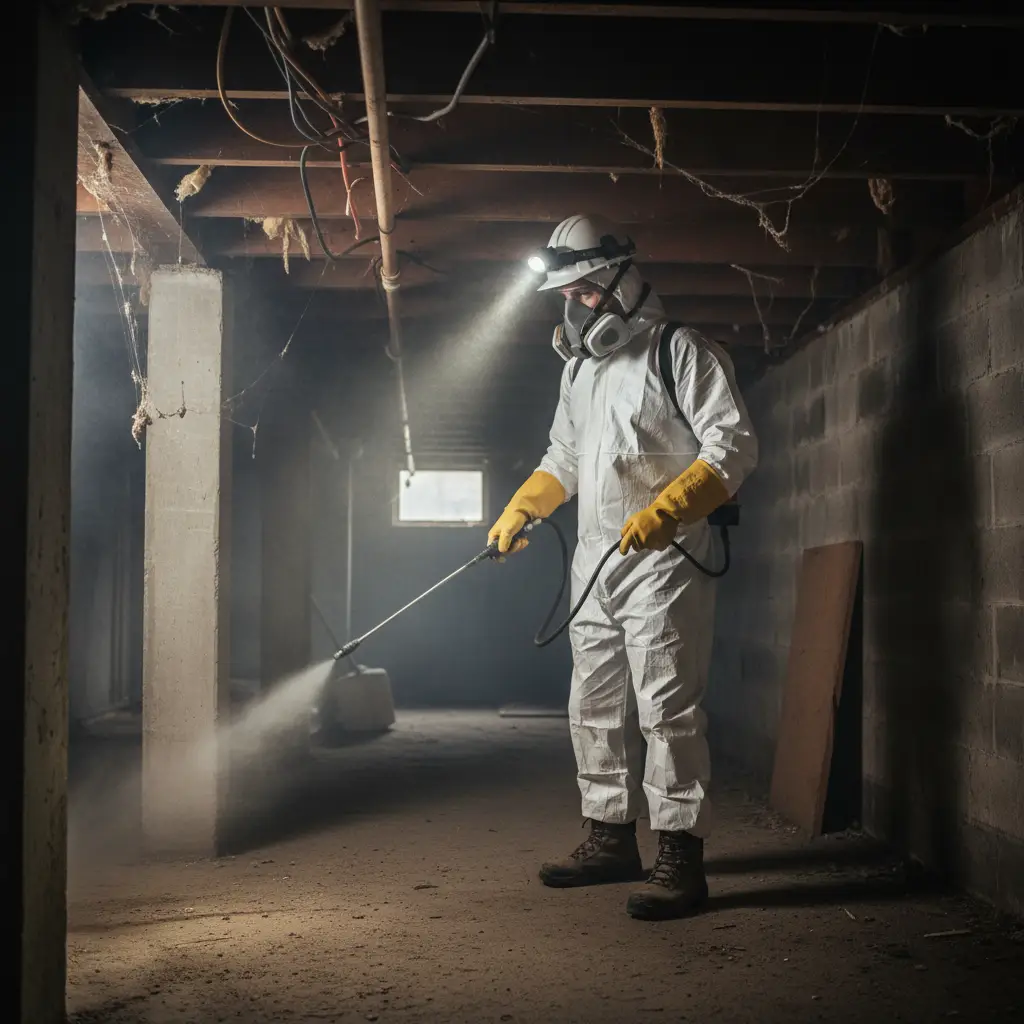
The Professional Application Process
Engaging a professional for borer treatment in Auckland ensures safety and efficacy. The process generally follows a strict protocol to ensure compliance with New Zealand safety standards.
1. Inspection and Assessment
A certified technician will inspect the property to identify the species of borer (Common House Borer vs. Native Two-toothed Longhorn) and the extent of the damage. They will determine which areas require spraying and which require injection.
2. Preparation
Before the treatment begins, homeowners must prepare the area. This usually involves:
- Clearing stored items from the sub-floor or roof void to allow access to timbers.
- Covering water tanks to prevent contamination.
- Removing pets and vacating the property for the duration of the treatment and the subsequent drying period (usually 4-6 hours).
3. Application
Using industrial-grade sprayers, the technician applies the residual insecticide. In the sub-floor, they ensure comprehensive coverage of all joists, bearers, and plates. For injection work, they methodically treat every visible flight hole.
4. Ventilation and Re-entry
Once the application is complete, the house must be ventilated. The carrier agents in the spray need time to evaporate. Homeowners are typically allowed to re-enter once the surfaces are dry and the air is clear, usually after half a day.
Long-term Warranties and Certification
When selecting a provider for Borer Treatment Auckland, certification is non-negotiable. The pest control industry in New Zealand is regulated to ensure the safe handling of hazardous substances.
PMANZ Registration
You should always choose a technician registered with the Pest Management Association of New Zealand (PMANZ). This ensures they have undergone proper training, adhere to the latest codes of practice, and carry the necessary liability insurance. You can verify a technician’s status via the PMANZ official website.
Understanding the Warranty
Most reputable Auckland companies offer a warranty on borer treatments, typically ranging from 5 to 10 years. However, it is crucial to read the fine print.
- Continuous Protection: Since the treatment works by killing beetles as they emerge, you may still see some flight holes or dust in the first season after treatment. This is the