Pest control Auckland CBD cockroaches requires a specialized approach utilizing Integrated Pest Management (IPM) to combat high-density infestations. To effectively eliminate these pests in urban environments, professional exterminators must employ a combination of gel baiting, insect growth regulators (IGRs), and residual spraying, specifically targeting the unique harboring areas found in commercial high-rises and apartment complexes.
The Unique Challenge of Cockroach Control in Auckland CBD
Managing pests within the heart of Auckland City differs vastly from residential suburban pest control. The Central Business District (CBD) presents a unique ecosystem where human density, aging infrastructure, and a high concentration of food service establishments create a perfect storm for cockroach proliferation. In this concrete jungle, pests do not simply live in nature; they thrive in the voids between our walls, the warmth of our server rooms, and the abundance of waste generated by thousands of residents and workers.
The primary driver of cockroach infestations in the CBD is the interconnected nature of the buildings. Unlike a standalone suburban home, a restaurant on Queen Street or an apartment in the Viaduct is physically connected to neighbors above, below, and to the sides. This connectivity allows cockroach populations to migrate rapidly. If one tenancy treats for pests but the neighbor does not, the infestation simply shifts location before returning. Consequently, pest control in Auckland CBD for cockroaches demands a strategic, often collaborative approach that goes beyond simple spraying.

Identifying the Culprits: German vs. American Cockroaches
Effective treatment begins with correct identification. In Auckland’s CBD, two primary species dominate the landscape, each requiring distinct eradication strategies.
The German Cockroach (Blattella germanica)
This is the public enemy number one for Auckland hospitality businesses and apartments. Small, light brown, and possessing two dark stripes on their pronotum, German cockroaches are domestic pests. They rely entirely on human structures for survival. They reproduce at an alarming rate; a single female can carry an ootheca (egg case) containing up to 40 eggs. They prefer warm, humid environments close to food and water, making commercial kitchens, dishwashers, and bathroom vanities their preferred habitats.
The American Cockroach (Periplaneta americana)
Often referred to locally as the “Gisborne cockroach” (though technically distinct, they are often confused by laypeople), these are significantly larger and reddish-brown. While German cockroaches infest kitchens, American cockroaches are often associated with drains, sewers, and basements. In the CBD, they often enter through older plumbing infrastructure or service ducts. Control for this species often involves treating the building’s perimeter and sewer access points rather than just the interior kitchen surfaces.
Challenges of Pest Control in Apartment Blocks
Auckland CBD has seen a massive surge in vertical living. However, apartment blocks act as vertical highways for pests. Treating a single unit in a 20-story complex is rarely sufficient for long-term control. The specific challenges include:
- Shared Utility Voids: Plumbing pipes and electrical wiring run through common voids that connect every floor. Cockroaches use these conduits to travel between apartments, bypassing locked doors and sealed windows.
- Transient Population: The CBD has a high turnover of tenants and short-term rentals. New occupants may unknowingly bring cockroaches in with their luggage or second-hand appliances, re-infesting a previously cleared building.
- Refuse Management: Centralized rubbish chutes and basement bin rooms provide an endless buffet for pests. If these areas are not sanitized regularly, they become breeding grounds from which cockroaches radiate upwards.
To combat this, professional pest controllers must use barrier treatments in wall cavities and advise on sealing entry points around pipe penetrations under sinks and behind appliances.
Commercial Kitchen Services in the CBD
For the hundreds of cafes, bars, and restaurants lining Queen Street, High Street, and the Britomart precinct, pest control is not just about hygiene—it is a regulatory requirement. The Food Act 2014 mandates that food businesses must ensure their food is safe and suitable. Evidence of cockroach activity can lead to poor food grading, fines, or immediate closure by Auckland Council environmental health officers.
Commercial kitchen services in the CBD differ from residential treatments in frequency and documentation:
Audit Compliance and Documentation
A simple receipt is not enough. Commercial clients require a comprehensive pest management file. This includes site maps indicating bait station locations, safety data sheets (SDS) for all chemicals used, and trend analysis reports showing pest activity levels over time. This documentation is critical during external food safety audits.
Food-Safe Treatment Protocols
You cannot simply spray broad-spectrum insecticides over food preparation surfaces. CBD pest control specialists utilize gel baits applied in cracks and crevices where food is not handled. These baits are highly attractive to cockroaches; they consume the poison and return to the nest. largely due to the “cascade effect,” where other cockroaches consume the poisoned carcass or faeces, spreading the lethal agent through the colony without contaminating the kitchen environment.
Discreet After-Hours Service for CBD Businesses
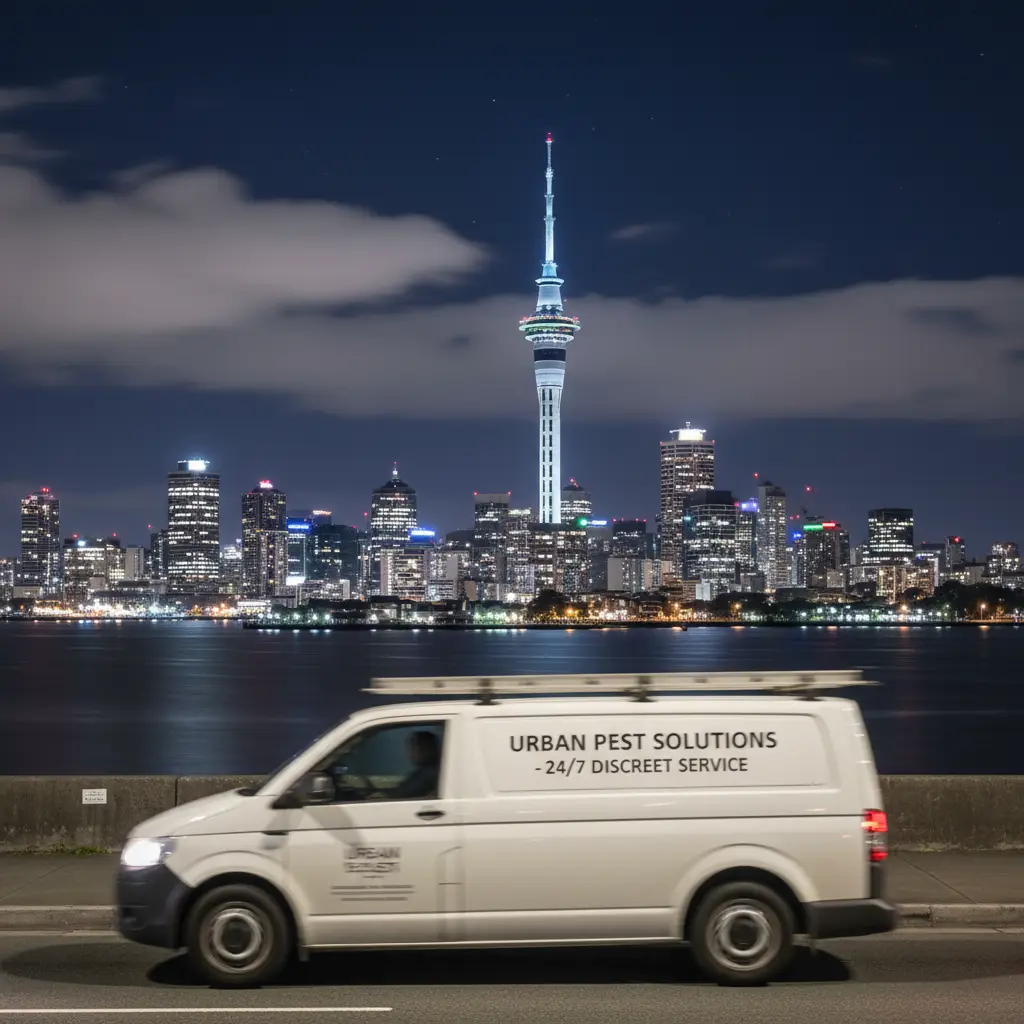
In the bustling Auckland CBD, perception is reality. Seeing a pest control van parked outside a high-end restaurant or a corporate office tower during lunch hour can be damaging to a brand’s reputation. Furthermore, applying treatments in an occupied office or busy kitchen is often logistically impossible due to health and safety regulations requiring vacancy during treatment.
Top-tier pest control providers in Auckland offer specialized after-hours services. This involves:
- Night Operations: Technicians deploying between 10:00 PM and 5:00 AM, ensuring the premises are treated when empty.
- Unmarked Vehicles: For highly sensitive clients, some firms offer service in vehicles without loud branding to maintain discretion.
- Rapid Re-entry Protocols: Utilizing advanced formulations that dry quickly and have low volatility, allowing staff to return to work the next morning safely without lingering odors or residues.
Body Corporate Pest Management Strategies
For building managers and Body Corporates, the most cost-effective and successful method of cockroach control is a coordinated, building-wide approach. Treating individual units ad-hoc is often a waste of levy funds, as it results in the “ping-pong” effect of pests moving between units.
A comprehensive Body Corporate strategy includes:
- Annual Preventative Sprays: Treating all common areas, hallways, stairwells, and bin rooms simultaneously.
- Opt-In Unit Programs: Offering residents a discounted rate to have their internal units treated on the same day as the common areas. This maximizes the coverage area and creates a massive barrier against infestation.
- Drain Maintenance: Regularly treating sumps and drains in basement carparks to prevent American cockroaches from entering the building foundation.
Integrated Pest Management (IPM) Methodologies
Modern pest control in Auckland CBD has moved away from the “spray and pray” mentality. Instead, experts use Integrated Pest Management (IPM). This is a sustainable, science-based approach that combines biological, cultural, physical, and chemical tools.
The Role of Insect Growth Regulators (IGRs)
Killing live cockroaches is only half the battle. If egg cases remain viable, the population will rebound in weeks. IGRs are synthetic hormones added to tank mixes or baits. They do not kill the insect immediately but disrupt its life cycle. Exposed nymphs become unable to molt into adults, and adults become sterile. This effectively breaks the reproductive cycle, leading to long-term colony collapse.
Flushing Agents
In deep harborages, such as behind heavy commercial ovens or inside motor housings, cockroaches can remain hidden from surface sprays. Technicians use flushing agents (often pyrethrum-based) to irritate the pests, forcing them out of hiding and across treated surfaces, ensuring they receive a lethal dose of the residual insecticide.
Prevention and Maintenance for Urban Environments
While professional intervention is necessary for infestations, prevention is the key to longevity. Residents and business owners in the CBD can significantly reduce the risk of re-infestation by adhering to strict sanitation and exclusion practices.
Exclusion: Seal cracks in skirting boards and gaps around plumbing pipes. In apartments, ensure the front door seal is tight to prevent pests from crawling in from the hallway.
Sanitation: Cockroaches can survive on grease splatters and crumbs. Regular deep cleaning behind appliances is vital. Do not leave pet food out overnight, and ensure all food storage containers are airtight. Cardboard boxes are a common transport mechanism for cockroach eggs—remove cardboard from the premises immediately after unpacking deliveries.
For authoritative advice on pest management and health risks, refer to resources provided by the Ministry of Health.
Frequently Asked Questions
How much does pest control for cockroaches cost in Auckland CBD?
The cost varies based on the size of the property and the severity of the infestation. Standard treatments for a CBD apartment typically range from $180 to $250 NZD. Commercial kitchens require on-site assessments for accurate quoting, often involving monthly contracts ranging from $100 to $300+ depending on frequency and scale.
Do I need to leave my apartment during cockroach treatment?
Yes, for standard spray treatments, you typically need to vacate the premises for 3 to 4 hours to allow the product to dry completely. However, if the technician uses only gel baits (common for minor infestations), you may be able to stay home during the process.
How long does it take to get rid of cockroaches completely?
While you will see a significant reduction within 24 to 48 hours, total elimination of a German cockroach infestation can take 3 to 6 weeks. This duration is necessary to break the egg cycle, as new nymphs hatch and are subsequently exposed to the residual treatment or baits.
Are the chemicals used safe for pets and children?
Professional pest control companies in Auckland use registered products that are safe for mammals once dried. It is crucial to keep pets and children away from treated surfaces until they are fully dry. Gel baits are generally placed in areas inaccessible to pets and children.
Why do I see more cockroaches after pest control?
This is a normal phenomenon known as the “flushing effect.” The treatment irritates the cockroaches, forcing them out of their hiding spots. This increase in visibility confirms the treatment is reaching the harborage areas; these pests will die shortly after exposure.
Can I treat a commercial kitchen myself?
While not strictly illegal, it is highly inadvisable and often ineffective. Commercial kitchens must adhere to the Food Act 2014, and DIY treatments rarely satisfy Food Control Plan audits. Professional pest controllers provide the necessary documentation and commercial-grade products required for compliance.