Commercial pest control for ants involves the strategic identification, treatment, and exclusion of invasive ant species within business premises. For Auckland businesses, this requires a multi-faceted approach utilizing professional-grade baits, non-repellent sprays, and structural proofing to eliminate colonies while adhering to strict Ministry for Primary Industries (MPI) food safety standards.
The Critical Importance of Commercial Ant Management
In the competitive business landscape of Auckland, reputation is everything. Whether you operate a high-end restaurant in the Viaduct, a bustling cafe in Ponsonby, or a corporate office in the CBD, the presence of ants can cause immediate and severe reputational damage. Unlike residential infestations, where the primary concern is nuisance, commercial ant infestations pose direct threats to revenue, regulatory compliance, and asset integrity.
Ants are vectors for disease, capable of mechanically transmitting pathogens such as Salmonella, E. coli, and Staphylococcus from contaminated waste areas directly to food preparation surfaces. In a commercial setting, a single sighting by a customer can lead to negative online reviews, while a sighting by a health inspector can result in closures or fines.
Furthermore, Auckland’s humid climate provides an ideal breeding ground for various ant species. The warm, moist environment allows colonies to thrive year-round, meaning businesses cannot rely on winter frosts to naturally curb populations. Effective management requires a proactive, professional strategy rather than reactive, over-the-counter measures.

Identifying the Threat: Common Ant Species in Auckland
Effective commercial pest control begins with correct identification. Different species require different bait matrices (sugar-based vs. protein-based) and treatment methodologies. In Auckland, businesses frequently encounter three primary invaders:
1. The Argentine Ant
Argentine ants are aggressive and form massive super-colonies. They do not fight with neighboring Argentine ant colonies; instead, they cooperate, allowing them to cover vast areas. They are notoriously difficult to control with DIY methods because spraying them often causes the colony to fracture and spread (budding), exacerbating the infestation.
2. The White-Footed House Ant
Common in Auckland offices and kitchens, these ants are known for nesting in wall voids and roof spaces. They are particularly troublesome because they do not share food via trophallaxis (regurgitation) as effectively as other species. This biological trait means that slow-acting toxic baits often fail to reach the queen, requiring specialized non-repellent surface treatments.
3. Darwin’s Ant
Often found in industrial areas and warehouses, Darwin’s ants release a strong, unpleasant odor when crushed. They are attracted to sweet substances and can quickly overrun break rooms and pantry areas.
Ant Control for Restaurants and Cafes
The hospitality sector faces the highest risk regarding ant infestations. The abundance of food, water, and heat in commercial kitchens creates a paradise for pests. Managing ants in these environments requires a delicate balance between aggressive eradication and strict food safety adherence.
The Contamination Risk
Ants are foragers. They travel from waste bins and drains to sterile countertops. In a café setting, an ant crawling across a pastry display is not just a lost sale; it is a potential health code violation. The Ministry for Primary Industries (MPI) mandates that food businesses must take all practicable steps to prevent pests from entering food handling areas.
Treatment Protocols for Hospitality
Professional pest control in restaurants typically avoids widespread spraying in favor of targeted gel baiting and exclusion techniques:
- Crack and Crevice Treatment: Applying gel baits into the tiny gaps where stainless steel meets tile, or behind splashbacks, keeping chemicals away from food surfaces.
- Perimeter Defense: establishing a chemical barrier around the building’s exterior to prevent foraging ants from entering.
- Sanitation Audits: Identifying unseen spillages (like syrup behind soda machines) that attract colonies.
Protecting Office Hygiene and Equipment
While offices may not handle raw chicken, they are not immune to ant issues. In fact, corporate environments face a unique set of challenges regarding commercial pest control for ants.
The Threat to Electronics
Certain ant species are attracted to the electromagnetic fields and warmth generated by servers, computers, and power strips. It is not uncommon for ants to nest inside electrical equipment, causing short circuits and hardware failure. In a modern office, the cost of replacing damaged IT infrastructure far outweighs the cost of preventative pest control.
Staff Morale and Hygiene
An office infestation can significantly impact staff morale. Employees expect a clean, safe working environment. Finding ants in the breakroom sugar jar or crawling across desks can lead to complaints and a perception of poor building management. Regular treatment of break rooms, kitchenettes, and sub-floor voids is essential to maintain a professional workspace.

Compliance with Food Safety Standards (MPI & FSANZ)
In New Zealand, commercial pest control is not the Wild West; it is a highly regulated industry, particularly when food is involved. Businesses must comply with the Food Act 2014 and standards set by Food Standards Australia New Zealand (FSANZ).
Documentation and Audit Trails
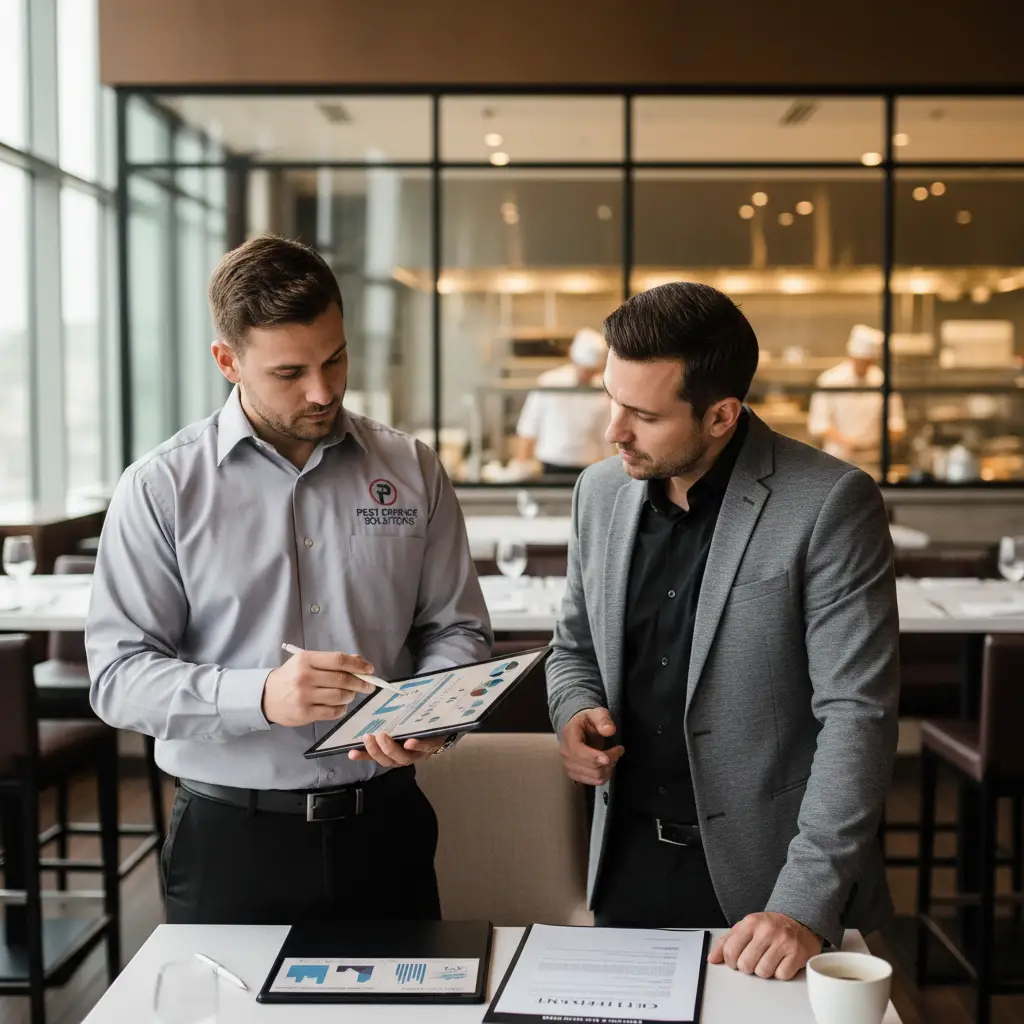
For commercial clients, the physical removal of ants is only half the service. The other half is documentation. Health inspectors require proof of a pest management plan. A professional commercial pest control provider will supply:
- Site Maps: Showing the location of all bait stations and monitoring traps.
- Safety Data Sheets (SDS): Detailed information on every chemical used on the premises.
- Service Reports: Logs of activity levels, treatments applied, and recommendations for structural repairs.
- Technician Licensing: Proof that the applicator is a certified Approved Handler.
Failure to produce these documents during an audit can result in a failing grade, regardless of whether pests are currently visible.
The Integrated Pest Management (IPM) Approach
Leading Auckland pest control firms utilize Integrated Pest Management (IPM). This sustainable approach moves beyond “spray and pray” tactics to focus on long-term prevention.
1. Inspection and Identification
The process begins with a thorough site survey to locate nesting sites, foraging trails, and entry points. Technicians identify the specific ant species to select the correct bait formulation.
2. Exclusion and Proofing
Chemicals alone cannot solve a structural problem. IPM involves sealing entry points such as gaps around pipe penetrations, cracks in the foundation, and ill-fitting door seals. This physical exclusion reduces the reliance on chemical treatments.
3. Strategic Treatment
When chemicals are necessary, they are applied surgically. This may involve:
- Non-Repellent Sprays: Applied to the exterior, these sprays do not kill ants instantly. Instead, ants walk through the treated area and unknowingly carry the active ingredient back to the nest, eliminating the colony from within (the “transfer effect”).
- Bait Stations: Tamper-resistant stations placed in strategic locations to monitor activity and deliver slow-acting toxicants.
The Value of Ongoing Maintenance Contracts
Ants are persistent. A single treatment may clear the current workers, but pupae hatching weeks later can restart the infestation. For commercial entities, ad-hoc pest control is inefficient and often more expensive in the long run.
Why Contracts are Essential
An ongoing maintenance contract ensures continuous protection. It shifts the focus from crisis management to preventative maintenance. Benefits include:
- Scheduled Visits: Regular inspections (monthly or quarterly) catch issues before they become infestations.
- Warranty and Call-backs: Most commercial contracts include free call-backs between scheduled visits if pest issues re-emerge.
- Budget Stability: Fixed monthly costs are easier to manage than unexpected emergency call-out fees.
- Relationship Building: A dedicated technician becomes familiar with your specific building layout and unique vulnerabilities.
For businesses in Auckland, where seasons dictate pest behavior, a maintenance contract ensures that your defense strategy evolves throughout the year—focusing on exterior barriers in summer and interior monitoring in winter.
Conclusion: Securing Your Business Reputation
Commercial pest control for ants is a non-negotiable aspect of facility management in Auckland. Whether protecting the hygiene of a restaurant, the electrical integrity of an office, or the compliance status of a warehouse, professional intervention is required. By leveraging Integrated Pest Management strategies and securing ongoing maintenance contracts, businesses can ensure that ants remain an outdoor curiosity rather than an indoor crisis.
Don’t wait for a customer to spot an ant on their plate. Proactive management is the key to operational excellence and peace of mind.
People Also Ask
How much does commercial ant control cost in Auckland?
Commercial ant control costs vary based on the size of the premises and the severity of the infestation. Generally, ongoing maintenance contracts range from $150 to $400+ GST per quarter for small to medium businesses. One-off treatments may cost between $250 and $500 depending on the method required (spraying vs. baiting).
Is commercial ant pest control safe for food preparation areas?
Yes, when performed by certified professionals. Technicians use food-safe gel baits and targeted application methods approved by MPI. They avoid aerosol sprays in open food areas and focus on crack-and-crevice treatments to ensure no chemicals come into contact with food or preparation surfaces.
How often should a business get pest control for ants?
For high-risk environments like restaurants and cafes, monthly or bi-monthly inspections are recommended. For offices and retail spaces, quarterly treatments are usually sufficient to maintain a protective barrier and monitor for activity.
Why do DIY ant treatments fail in commercial buildings?
DIY treatments often use repellent sprays that cause ant colonies to scatter and bud (split into multiple colonies), making the problem worse. Commercial buildings also have complex structures (suspended ceilings, wall voids) that store-bought products cannot reach effectively.
What is the hardest ant to get rid of in Auckland?
The Argentine Ant is widely considered the most difficult due to its massive super-colonies and aggressive behavior. The White-footed House Ant is also challenging because it does not share food easily, rendering many standard baits ineffective.
Can ants damage office equipment?
Yes. Ants are attracted to the heat produced by electronics. They can nest inside computers, servers, and power strips, leading to short circuits, hardware failure, and significant data loss or fire hazards.