The Common House Borer (*Anobium punctatum*) is a destructive wood-boring beetle prevalent in New Zealand that compromises untreated timber and furniture. To identify an active infestation, you must look for fresh, clean-cut flight holes approximately 2mm in diameter and piles of fine, gritty dust known as frass, which typically accumulate during the flight season from October to March.
What is the Common House Borer?
The Common House Borer, scientifically known as Anobium punctatum, is the most widespread wood-boring insect found in New Zealand homes. Often simply referred to as “borer,” this pest is responsible for the vast majority of insect damage found in structural timbers, flooring, and antique furniture across the country. While they are a global pest, the specific climate conditions in New Zealand—particularly the humidity levels found in regions like Auckland—create an ideal environment for them to thrive.
Understanding the nature of this pest is critical for homeowners, particularly those residing in older villas and bungalows built before the widespread use of treated timber in the 1960s. The damage is not caused by the adult beetle seen flying towards windows, but by the larvae (grubs) tunneling through the wood for years before emerging. If left unchecked, the structural integrity of a building can be severely compromised, leading to costly remediation efforts.
Visual Identification: Beetle vs. Larvae
Accurate identification is the first step in effective pest management. Many homeowners mistake other harmless insects for borer, or conversely, overlook the beetle assuming it is a harmless garden pest. To confirm the presence of the Common House Borer NZ, you need to recognize it in its two visible forms: the adult beetle and the larvae.
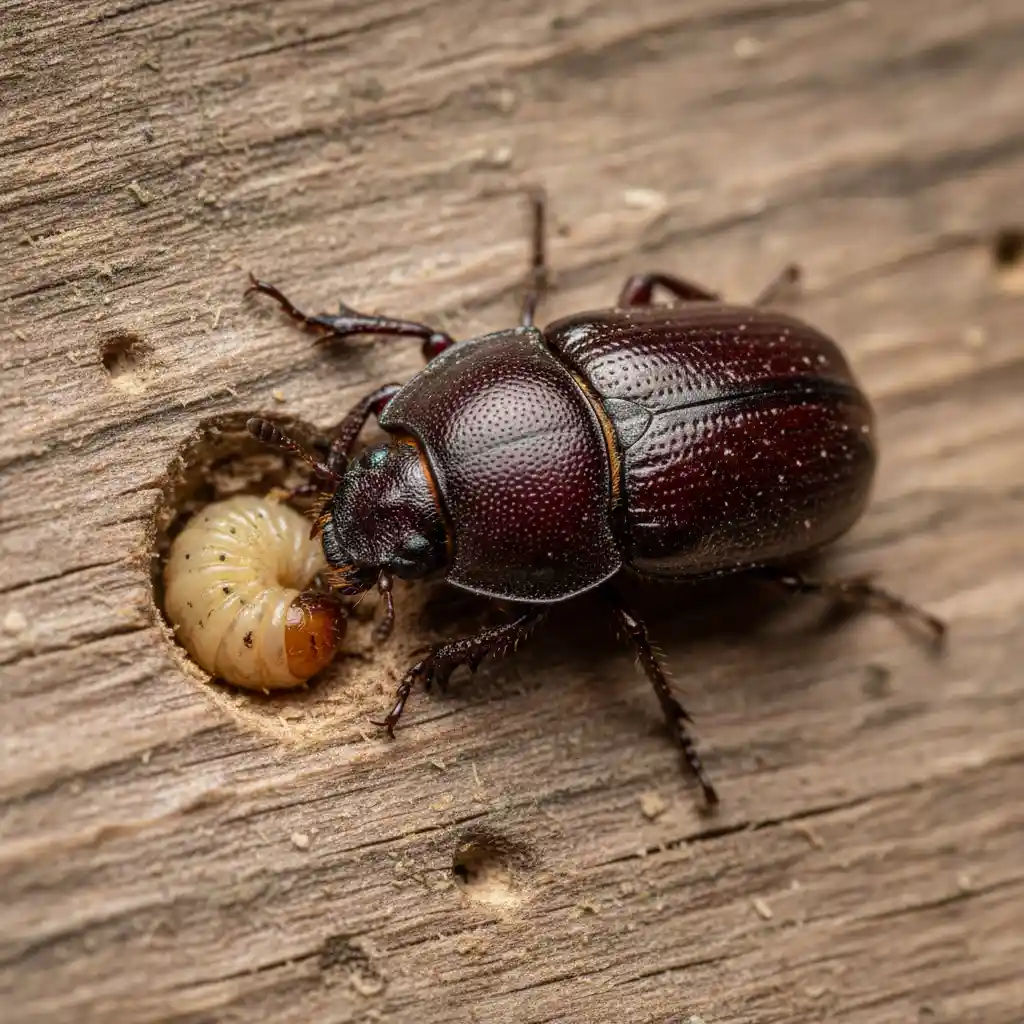
The Adult Beetle
The adult Anobium punctatum is a small, unremarkable beetle that is easily missed due to its size and color. Key identification features include:
- Size: They are small, typically measuring between 3mm and 5mm in length.
- Shape: The body is cylindrical and oval. When viewed from above, the head is concealed beneath a hood-like thorax (pronotum), giving it a “hunchbacked” appearance.
- Color: They range from reddish-brown to dark brown.
- Texture: The wing covers (elytra) have distinct rows of small pits or punctures running longitudinally, which is the origin of the species name punctatum.
- Behavior: Adults are strong fliers and are often found on window sills, attracted to light, during the flight season (late spring to summer).
The Larva (Grub)
You will rarely see the larvae unless you break open infested wood, as they spend their entire development phase inside the timber. However, identifying them is useful during renovations:
- Appearance: They are creamy-white, C-shaped grubs with a curved body.
- Features: They have powerful, dark brown jaws (mandibles) used for chewing through wood fibers.
- Size: A fully grown larva measures roughly 6mm to 7mm before pupating.
Identifying Flight Holes and Frass
Because the larvae live deep within the wood, visual confirmation of the pest usually relies on the evidence they leave behind upon exiting. The two most definitive signs of a Common House Borer infestation are flight holes and frass (borer dust).
Flight Holes
When the larva has pupated and metamorphosed into an adult beetle, it chews its way out of the timber to mate. The exit tunnel it creates is known as a flight hole.
- Shape and Size: The holes are perfectly round and measure approximately 1mm to 2mm in diameter. They look similar to a hole made by a dart or a small drill bit.
- Freshness: Fresh flight holes will appear clean and sharp-edged. The interior wood color (light yellow or brown) will be visible. Old flight holes tend to be dark, grey, or clogged with paint and grime.
- Density: In severe infestations, the surface of the wood may look like a sieve, with dozens of holes concentrated in one area.
Frass (Borer Dust)
Frass is the excrement and wood debris created by the larvae as they tunnel. When the adult beetle emerges, this dust is often dislodged from the exit hole.
- Appearance: To the naked eye, borer dust looks like fine, pale timber powder. However, under a magnifying glass, the frass of Anobium punctatum is distinctive—it consists of lemon-shaped or bun-shaped pellets. This distinguishes it from other wood-boring pests like the Lyctus borer, which produces a talc-like floury dust.
- Location: You will typically find small piles of this dust on the floor beneath infested furniture, on structural beams, or caught in spiderwebs near the timber.
- Testing for Activity: If you suspect active borer, place a sheet of black paper under the timber. If fresh, light-colored dust appears on the paper after a few days, the infestation is active.
Life Cycle of the Borer Beetle
To effectively control the Common House Borer in NZ, one must understand its life cycle. The damage is cumulative, meaning the population within a piece of timber can increase year after year if the life cycle is not broken.
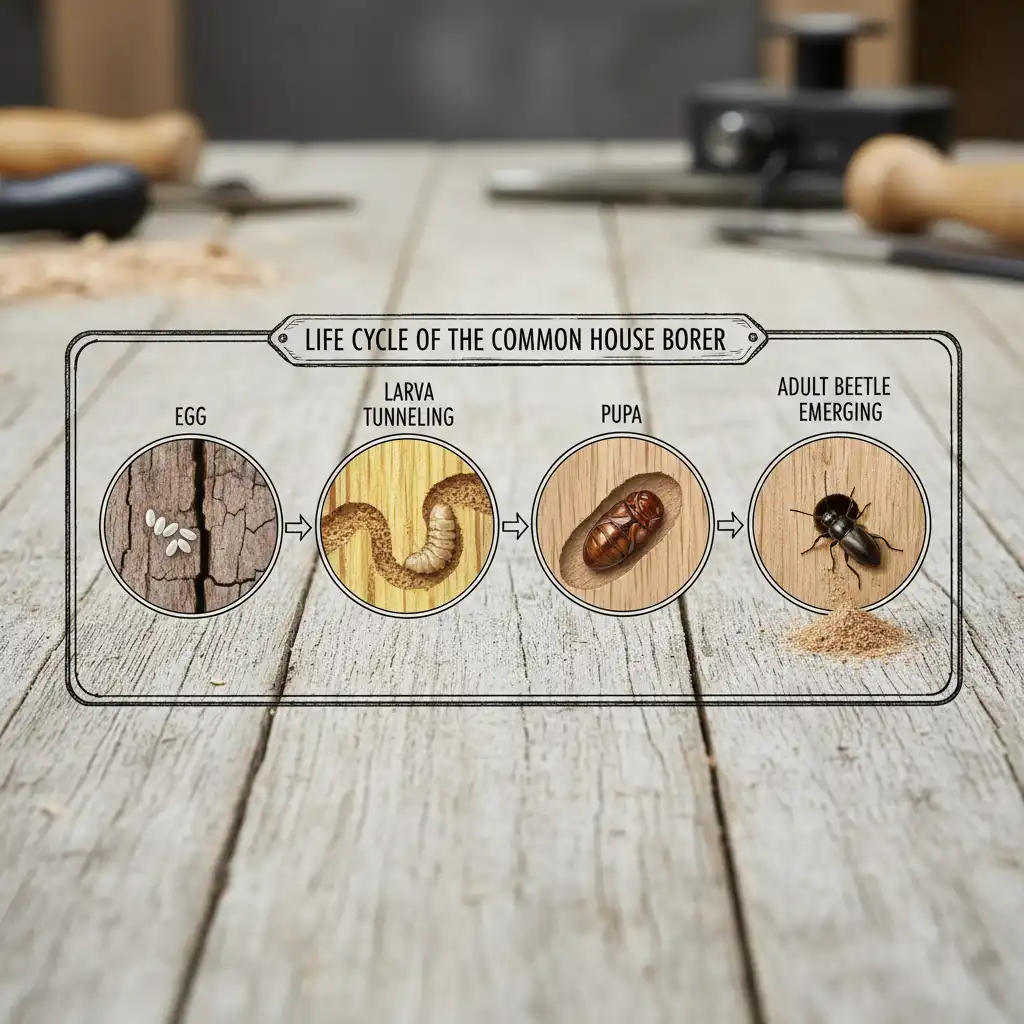
1. The Egg Stage
After mating, the female beetle lays her eggs in cracks, crevices, end-grain, or old flight holes of unfinished wood. She typically lays between 20 and 60 eggs. The eggs are barely visible to the naked eye. This usually occurs in the summer months.
2. The Larval Stage (The Destructive Phase)
The eggs hatch after a few weeks, and the tiny larvae immediately bore into the wood. This is the longest stage of the life cycle, typically lasting 2 to 4 years, although in dry conditions, it can last even longer. During this time, the larvae wander through the wood, digesting cellulose and compromising the timber’s strength. They tend to follow the grain but will cross it, creating a honeycomb of tunnels.
3. The Pupal Stage
When the larva is fully grown, it tunnels towards the surface of the wood and creates a small chamber just below the exterior. Here, it pupates, transforming from a grub into a beetle. This stage lasts for several weeks, usually in early spring.
4. The Adult Stage
The adult beetle chews through the thin veneer of wood remaining at the surface, creating the characteristic flight hole. In New Zealand, the flight season generally runs from October to March. The adults do not feed; their sole purpose is to find a mate and reproduce. They live for only 3 to 4 weeks. Once they have mated and the females have laid eggs, the cycle begins anew.
Which Timbers are Most at Risk in NZ?
Not all wood is equally appetizing to the Common House Borer. In the context of New Zealand architecture, specific timbers are highly susceptible, while others are naturally resistant.
Sapwood vs. Heartwood
The most crucial distinction is between sapwood (the outer, living part of the tree) and heartwood (the inner, dead core). Anobium punctatum predominantly attacks sapwood because it contains the starch and sugar required for the larvae’s development. Heartwood is generally too dense and lacks the necessary nutrients, although older heartwood can sometimes be attacked if it has begun to decay.
Native Timbers
- Rimu: This is the most common timber found in older NZ homes. The sapwood of Rimu is highly susceptible to borer attack. It is very common to see Rimu floorboards or weatherboards with borer damage restricted solely to the sapwood streaks.
- Matai: Similar to Rimu, Matai sapwood is vulnerable, though the heartwood is very durable.
- Kahikatea: This timber was often used for shelving and backing boards. It is notoriously susceptible to borer, often being reduced to powder in severe infestations.
- Kauri: While Kauri heartwood is resistant, the sapwood is vulnerable.
Exotic Timbers
- Radiata Pine: Untreated Radiata Pine is a feast for the Common House Borer. Modern construction uses treated pine (H1.2, H3.2, etc.) which contains preservatives like boron or CCA to prevent infestation. However, older homes may contain untreated pine framing.
For more detailed technical information on timber durability and treatment standards, reputable sources such as BRANZ (Building Research Association of New Zealand) provide extensive guidelines for property owners.
Distinguishing from Other NZ Wood Borers
While Anobium punctatum is the most common, it is not the only wood-boring insect in New Zealand. Correct identification ensures the right treatment method is applied.
The Two-Toothed Longhorn Borer (*Ambeodontus tristis*)
This native beetle is larger and more destructive than the Common House Borer. It attacks heartwood as well as sapwood, particularly in Rimu flooring and sub-floor framing. The flight holes are oval rather than round and are significantly larger (3mm x 6mm). The tunnels are also larger and packed tightly with frass.
The Native Powder Post Beetle (*Lyctus* species)
These beetles attack the sapwood of hardwoods (like Tawa or Oak). The frass is distinctively flour-like and smooth, lacking the gritty texture of the Common House Borer frass.
Environmental Factors: Dampness and Humidity
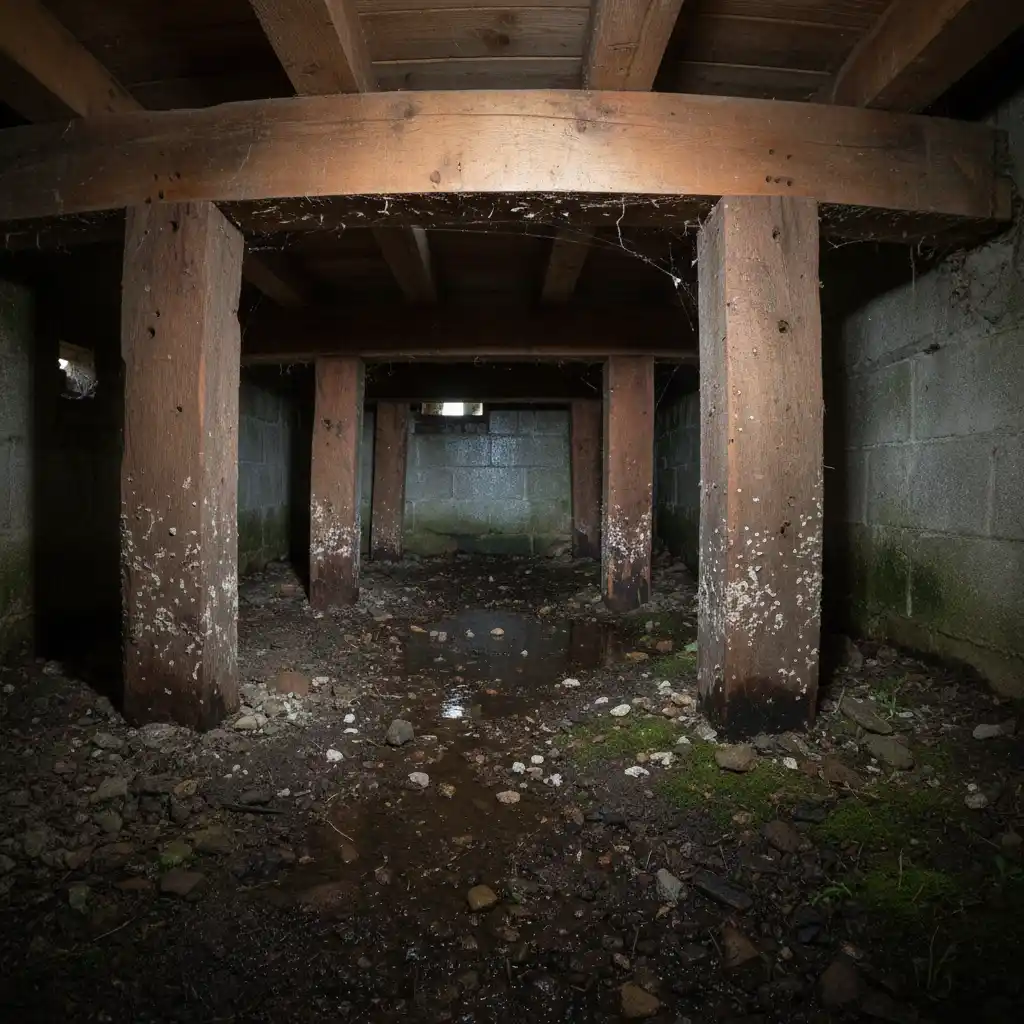
The survival of the Common House Borer is closely linked to moisture content within the timber. Larvae require a wood moisture content of at least 10-12% to thrive. In Auckland’s humid climate, ambient moisture is often sufficient to maintain these levels in sub-floor areas and roof voids.
The Dampness Correlation:
Infestations are almost always more severe in damp areas of the home, such as the south side of the house, sub-floor basements with poor ventilation, or bathrooms and kitchens. Dry timber (below 10% moisture) is difficult for the larvae to digest. Therefore, one of the most effective preventative measures, alongside chemical treatment, is improving ventilation and installing vapor barriers to lower the moisture content of the wood.
If you suspect your home has structural issues related to moisture and borer damage, consulting government resources like Consumer NZ can provide unbiased advice on consumer rights and remediation expectations.
Frequently Asked Questions
Below are common questions regarding the identification and behavior of the Common House Borer in New Zealand.
For answers to other pest control questions, visit our Pest Control FAQ.
How do I know if borer is active?
Borer activity is confirmed by the appearance of fresh, light-colored flight holes and piles of fine dust (frass) appearing beneath timber. If you place black paper under the suspected area and see new dust appear within a few days, the infestation is active.
Does fly spray kill borer?
Standard household fly spray may kill the adult beetles on the wing, but it will not penetrate the wood to kill the larvae, which cause the damage. Effective treatment requires penetrating fluids or gas fumigation handled by professionals.
What time of year do borer fly in NZ?
The flight season for the Common House Borer in New Zealand typically runs from October through to March. This is when adult beetles emerge from the wood to mate.
Can borer cause structural damage?
Yes. Over a long period, severe infestations can significantly weaken structural timbers, particularly floorboards, joists, and bearers. If left untreated for decades, the wood can lose its load-bearing capacity.
How long does the borer beetle live?
The adult beetle lives for only 3 to 4 weeks. However, the larval stage (the grub inside the wood) lives and tunnels for 2 to 4 years before emerging.
Is borer dust dangerous?
Borer dust itself is not toxic, but it is an allergen and can irritate the respiratory system. However, its presence indicates damaged wood, which can be a structural hazard.