To get rid of ants in garden NZ effectively, you must adopt a two-pronged strategy: baiting and barrier protection. Start by identifying the ant trails to locate the nest, then apply slow-acting non-repellent baits that workers carry back to the queen. Follow this by applying a residual insecticide barrier around your home’s perimeter and under paved areas to prevent re-infestation.
Identifying the Threat: Why Garden Ants Are More Than a Nuisance
For many Auckland homeowners, ants are often dismissed as a minor summertime annoyance—a few tiny insects marching across the patio or invading the pantry. However, an unchecked ant population in your garden represents a significant biological infrastructure that can undermine the health of your property. In New Zealand’s unique climate, particularly the humid conditions found in the upper North Island, ant colonies thrive and expand rapidly.
Understanding the behavior of these pests is the first step in successful eradication. Ants are eusocial insects, meaning they operate within a highly organized caste system. The ants you see foraging on your garden path represent only a fraction—often less than 10%—of the total colony size. The vast majority, including the reproductive queens and the developing larvae, remain hidden underground or within wall voids. Consequently, spraying the ants you see with a standard fly spray is a futile effort; it kills the individual foragers but triggers a stress response in the colony, often causing them to reproduce faster or split into multiple new colonies (a process known as budding).
The Hidden Cost: Damage to Pavers and Lawns
The visual nuisance of ants is obvious, but the structural and agricultural damage they cause to a garden is often underestimated until it requires expensive repairs.
Destruction of Paved Areas
One of the most expensive problems caused by garden ants in New Zealand is the destabilization of hardscaping. Many ant species prefer to build their nests in the warm, dry sand base beneath concrete pavers, driveways, and patio stones. As the colony grows, they excavate this sand and bring it to the surface, creating those familiar little mounds between the cracks.
Over time, this excavation creates voids under the pavers. When heavy rains arrive—common in Auckland winters—or when weight is applied (such as a car or heavy foot traffic), the pavers sink into these voids. This results in uneven surfaces that are not only unsightly but also pose tripping hazards and allow for water pooling, which can further degrade the masonry.

Impact on Lawns and Flora
In lawns, large ant nests can damage the root systems of grass, leading to patches of dead or yellowing turf. Furthermore, ants have a symbiotic relationship with other garden pests, specifically aphids, scale insects, and mealybugs. Ants “farm” these pests for their honeydew (a sugary secretion). To protect their food source, ants will aggressively defend aphids from natural predators like ladybugs. This means if you have a severe ant infestation, your roses, citrus trees, and vegetable garden are likely suffering from secondary pest infestations that are being actively protected by the ants.
Common Ant Species in New Zealand Gardens
Before you can effectively get rid of ants in garden NZ, it helps to know what you are fighting. Different species have different dietary preferences (sugar vs. protein) and nesting habits.
- Argentine Ants: These are among the most aggressive invasive species. They are small, light brown, and form massive “super-colonies” with multiple queens. They drive out native species and are notoriously difficult to control with standard DIY baits because they breed so quickly.
- White-footed House Ants: Black with pale feet, these are extremely common in Auckland. They do not share food via regurgitation (trophallaxis) as much as other species, which makes traditional toxic baits less effective unless formulated specifically for them.
- Darwin’s Ants: Identifying features include a strong odor when crushed. They are often found in urban gardens and will swarm food sources rapidly.
For detailed identification, the Ministry for Primary Industries (MPI) provides resources on invasive ant species that threaten New Zealand’s biosecurity.
Treating the Source: How to Find the Colony Nest
The golden rule of pest control is: Treat the nest, not the pest. To permanently resolve an infestation, you must locate the headquarters. This requires a bit of detective work.
Pick a warm day when ants are most active. Locate a trail of foraging ants and follow it. Do not disturb them yet. If they are moving towards the house, they are likely foraging; if they are moving away, they are returning to the nest. You are looking for where the trail disappears.
Common nesting sites in NZ gardens include:
- Beneath Potted Plants: Lift your pots. It is very common to find a swarm of white eggs and larvae underneath a pot that sits directly on the deck or soil.
- Retaining Walls: Timber retaining walls provide the perfect shelter—rotting wood and soil warmth.
- Loose Pavers: As mentioned, check for sand mounds.
- Tree Roots: Specifically around the base of citrus trees or near aphid-infested shrubs.
Proven Methods to Get Rid of Ants in Garden NZ
Once you have an idea of where the ants are coming from, you can select your weapon of choice. In professional pest control, we categorize treatments into Baits and Sprays.
The Power of Slow-Acting Baits
Baits are the most effective way to kill the queen. The concept is simple: the bait contains a food attractant (sugar or protein) and a slow-acting toxin. The worker ants eat the bait, carry it back to the nest, and feed it to the larvae and the queen. If the poison works too fast, the worker dies before reaching the nest, and the colony learns to avoid that food source.
Liquid Baits: These are excellent for sugar-feeding ants. Place drops of liquid bait near the foraging trails (but not directly on them, to avoid disrupting the pheromone path).
Granular Baits: These are often protein or oil-based and are effective for scattering over garden beds or lawns where nests are widespread.
Non-Repellent Sprays
Old-school chemicals were “repellents.” Ants would sense the chemical and simply walk around it. Modern professional products (often containing Fipronil or Bifenthrin) are “non-repellent.” Ants cannot detect them. They walk through the treated area, pick up the chemical on their bodies, and transfer it to other ants in the nest through physical contact. This “transfer effect” is devastating to colonies.
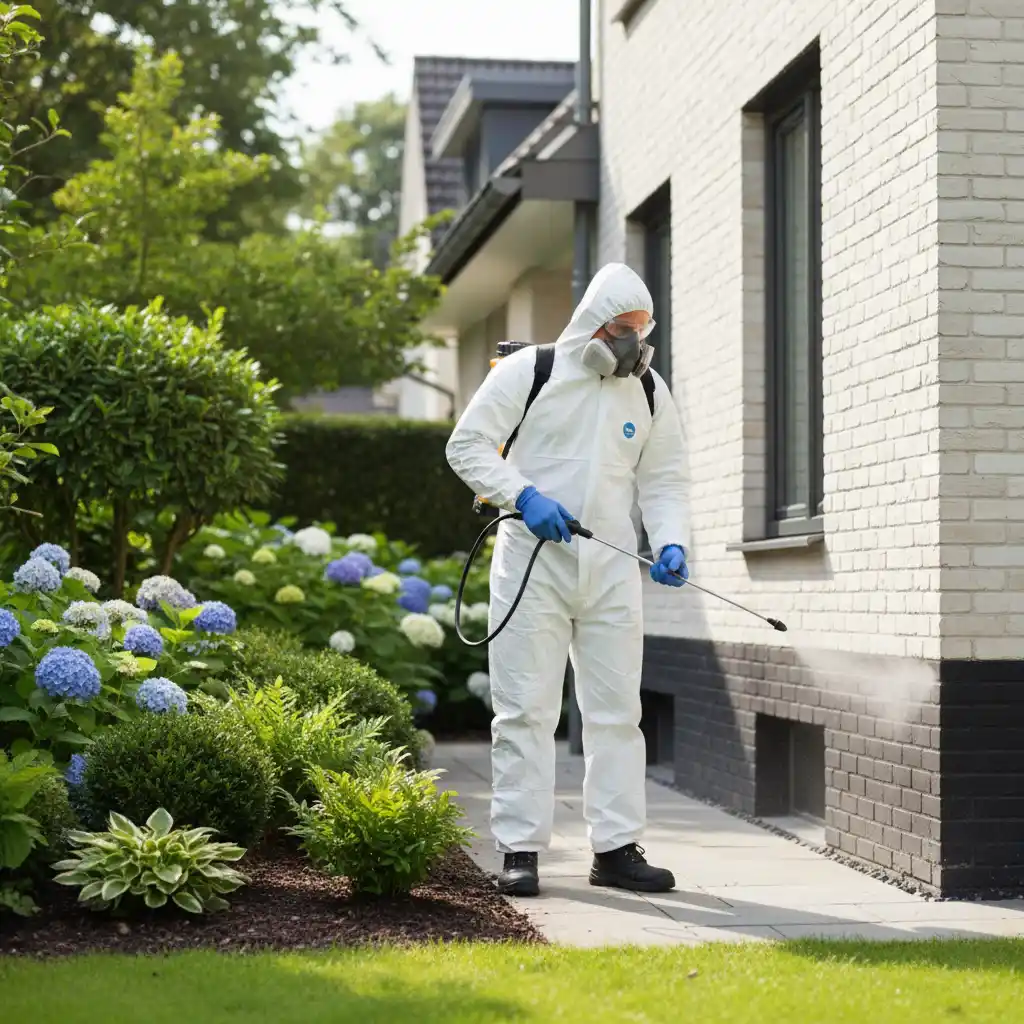
Creating a Perimeter Defense: Barrier Treatments
While baiting kills the active nests, barrier treatments prevent new ants from entering your home or re-colonizing the immediate area. This is particularly important in Auckland, where neighborhood density means ants can easily migrate from a neighbor’s property to yours.
To create an effective barrier:
- Clear the Perimeter: Remove leaf litter, mulch, and vegetation that touches the foundation of the house. These act as bridges for ants to bypass treated ground.
- Apply Insecticide: Use a residual insecticide spray specifically labeled for ants. Spray a band 30cm up the foundation wall and 30cm out onto the soil or path.
- Treat Entry Points: Pay special attention to door frames, window sills, and utility pipe penetrations (where gas or water pipes enter the house).
- Ant Sand: For paved areas, sweeping “ant sand” (insecticidal granules) into the cracks of pavers provides a long-lasting deterrent that prevents them from excavating the sand again.
Eco-Friendly and Natural Ant Control Options
If you prefer to avoid synthetic chemicals, there are natural methods to get rid of ants in garden NZ, though they may require more frequent application.
Diatomaceous Earth (DE)
DE is a powder made from fossilized algae. On a microscopic level, it is razor-sharp. When ants walk across it, the powder cuts their exoskeleton, causing them to dehydrate and die. It is non-toxic to humans and pets but must be kept dry to be effective. Sprinkle it around the base of plants and along ant trails.
Boiling Water
For a nest located directly in a crack in the driveway or a patch of dirt (away from plant roots), pouring boiling water is an instant kill method. However, this only kills the ants it touches and offers no residual protection.
Borax and Sugar
A classic DIY bait. Mix one part Borax (sodium borate) with three parts sugar and dissolve in warm water. Soak cotton balls in the solution and place them near trails. The sugar attracts them, and the Borax acts as a slow poison. Note: Keep Borax away from pets and children.
Seasonal Garden Maintenance Tips for Aucklanders
Summer (December – February)
This is peak ant season. Keep garbage bins washed and sealed. Ensure ripe fruit falling from trees (plums, feijoas, citrus) is picked up daily, as the fermenting sugar is a massive attractant for ants and wasps. Water your garden deeply but less frequently; constant shallow moisture attracts ants looking for easy water sources.
Winter (June – August)
Ants slow down but don’t disappear. They will often move their nests closer to the warmth of the house foundation. Winter is the best time to inspect your paving and seal any cracks in the concrete. Trim back trees and shrubs; ensure no branches touch the roof or walls, cutting off their “highway” into your home.
For more general advice on maintaining a healthy garden ecosystem that naturally resists pests, reputable sites like Gardening NZ or similar local horticultural resources can be invaluable.
When to Call Professional Pest Control
While DIY methods work for minor incursions, there are scenarios where professional intervention is necessary to get rid of ants in garden NZ effectively.
You should consider hiring an Auckland pest control specialist if:
- You suspect Argentine Ants: Their colonies are too large and interconnected for standard store-bought baits to manage.
- The infestation is internal: If ants are coming out of power sockets or wall linings, they are nesting inside the building envelope, which poses a risk to electrical wiring.
- Recurring issues: If you have treated the area multiple times and the ants return within weeks, you likely have a resistance issue or a hidden satellite nest that requires industrial-strength transfer insecticides.
Professional exterminators have access to products that are not available to the public, such as high-concentration non-repellents and specialized gel baits that remain palatable to ants for longer periods.
Frequently Asked Questions
What is the best product to kill ants in NZ?
The best products are usually slow-acting baits containing Boron or Indoxacarb for colony destruction, and non-repellent sprays containing Bifenthrin for barrier protection. Brands like Ant-Rid or Exterm-An-Ant are popular retail options in New Zealand.
How do I stop ants from eating my strawberry plants?
To stop ants eating strawberries, avoid spraying the fruit with chemicals. Instead, plant mint or garlic nearby as deterrents, use Diatomaceous Earth around the base of the plants, or set up borax bait stations away from the strawberry patch to draw them away.
Will vinegar kill ants in the garden?
Vinegar kills ants on contact and disrupts their scent trails, but it does not kill the nest. It is a temporary deterrent rather than a permanent solution and can be harmful to some garden plants if sprayed directly on foliage.
Why are there so many ants in my garden in Auckland?
Auckland’s warm, humid climate and volcanic soil provide ideal breeding conditions for ants. Additionally, invasive species like Argentine ants thrive in urban environments where there is an abundance of food waste and shelter.
Can ants damage my house foundations?
Ants generally do not damage concrete foundations, but they can excavate soil from under concrete slabs and pavers, causing them to sink or crack. Carpenter ants, though less common in NZ gardens, can damage timber structures.
How long does it take to get rid of an ant infestation?
Using slow-acting baits, it typically takes 2 to 3 weeks to eliminate a colony. This delay allows the workers to transfer the poison to the queen. Instant-kill sprays may look effective immediately but often lead to re-infestation quickly.