Roof rats (Rattus rattus), commonly known as Ship Rats in New Zealand, are agile climbers that invade homes to nest in warm ceiling cavities and insulation. Effective extermination requires a strategic combination of securing anticoagulant bait blocks within the roof void, aggressively trimming overhanging tree branches, and sealing all structural entry points larger than 12mm to prevent re-infestation.
Identifying Roof Rats in New Zealand (The Ship Rat)
In the unique ecosystem of New Zealand, and particularly within the urban sprawl of Auckland, correctly identifying your pest is the first critical step toward extermination. While the Norway rat (Rattus norvegicus) prefers ground-level burrows and sewers, the roof rat—officially known in NZ as the Ship Rat—is an arboreal expert. They are the primary culprit for noises in the attic, scratching in the walls, and nests found in roof voids.
The Ship Rat is physically distinct from its ground-dwelling cousin. It is generally smaller and more slender, but its defining feature is its tail. The tail of a roof rat is significantly longer than its head and body combined, acting as a counterbalance for climbing trees, power lines, and drainpipes. They typically have large, prominent ears and a pointed nose, giving them a more alert appearance than the blunt-nosed Norway rat.
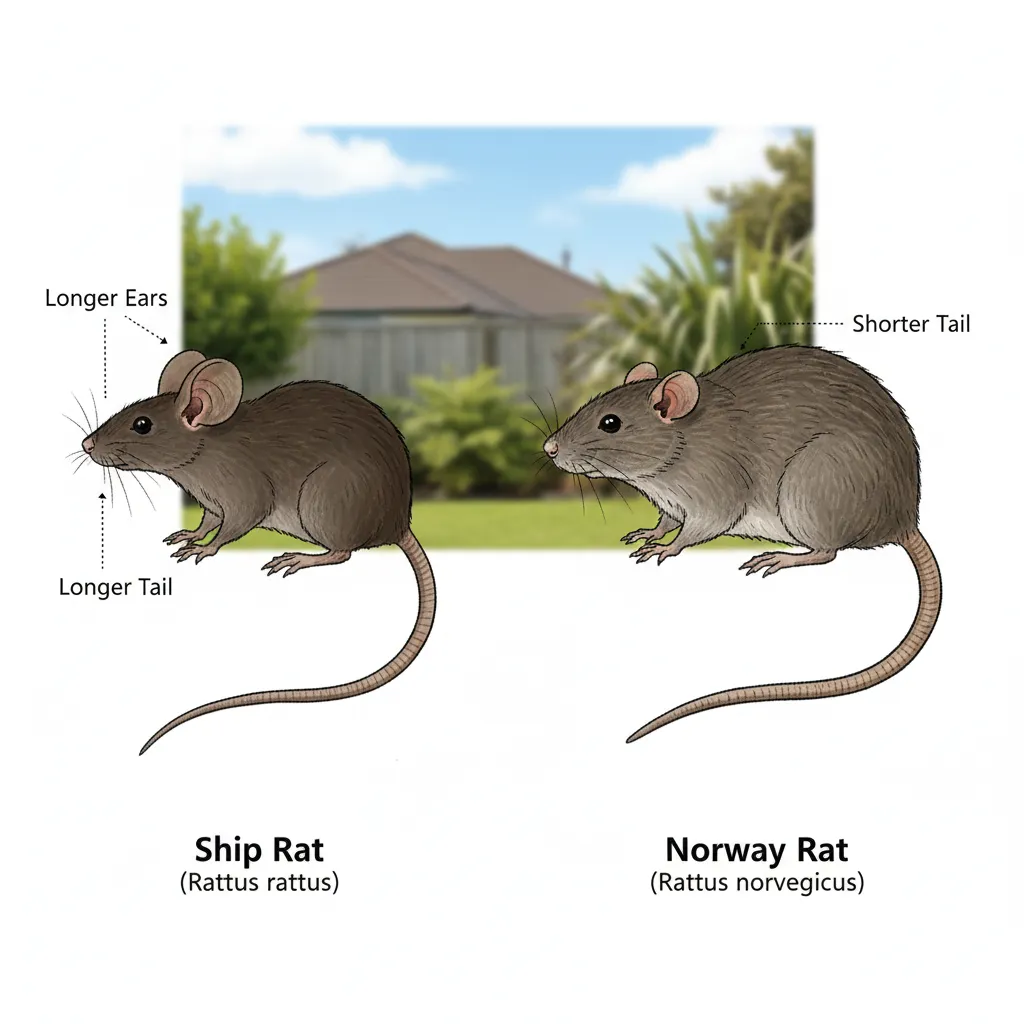
In Auckland suburbs, where native bush often interfaces with residential properties, Ship Rats are prolific. They are excellent climbers and can scale vertical brick walls, walk along telephone wires, and jump nearly two meters horizontally. If you hear scampering above your head at night, it is almost certainly a Ship Rat infestation.
Why Rats Choose Ceilings and Insulation
To exterminate roof rats effectively, one must understand their motivation. Roof cavities in New Zealand homes provide the perfect trifecta for survival: warmth, shelter, and security.
The Thermal Advantage
Heat rises. During the cooler Auckland months, the roof void is often the warmest part of the house. Rats are warm-blooded mammals that seek stable temperatures for breeding. A draft-free attic space traps heat from the home below, creating an incubator-like environment that allows rats to breed year-round, rather than just seasonally.
Insulation as Nesting Material
Modern insulation materials, such as fiberglass batts (e.g., Pink Batts) or loose-fill cellulose, offer ideal nesting conditions. Rats do not just sleep on top of the insulation; they tunnel through it. This tunneling behavior ruins the thermal efficiency of the material (R-value) and compresses it. Furthermore, they shred the material to line their nests, creating comfortable, hidden enclaves where they can raise their pups safely away from predators like cats, dogs, and stoats.
The Risks: Fire Hazards and Insulation Damage
Ignoring a roof rat infestation is not an option due to the severe physical and health risks they pose to property owners. The damage caused by roof rats goes far beyond sleepless nights caused by scratching noises.
Electrical Fires
Rodents have open-rooted incisors, meaning their teeth never stop growing. To keep their teeth sharp and at a manageable length, they must gnaw constantly. Unfortunately, electrical wiring in roof cavities is a prime target. The PVC coating on wires is attractive to rats. When they strip this insulation, they leave bare copper wires exposed. This creates a significant risk of short circuits and is a leading cause of unexplained house fires in New Zealand.
Contamination and Disease
Rats have no bladder control; they urinate as they move. A colony of rats living in your ceiling is constantly saturating your insulation and plasterboard with urine and feces. This creates a biohazard that can seep through ceiling tiles or cause stains on the drywall. In New Zealand, rats are vectors for diseases such as Leptospirosis and Salmonellosis. According to the Department of Conservation (DOC), ship rats are also significant predators of native birds, making their control vital for both home hygiene and local conservation efforts.
Effective Baiting Strategies for Roof Cavities
Eradicating an established infestation requires a methodical approach to baiting. Randomly tossing bait pellets into a roof void is rarely effective and can be dangerous.
Secure Baiting
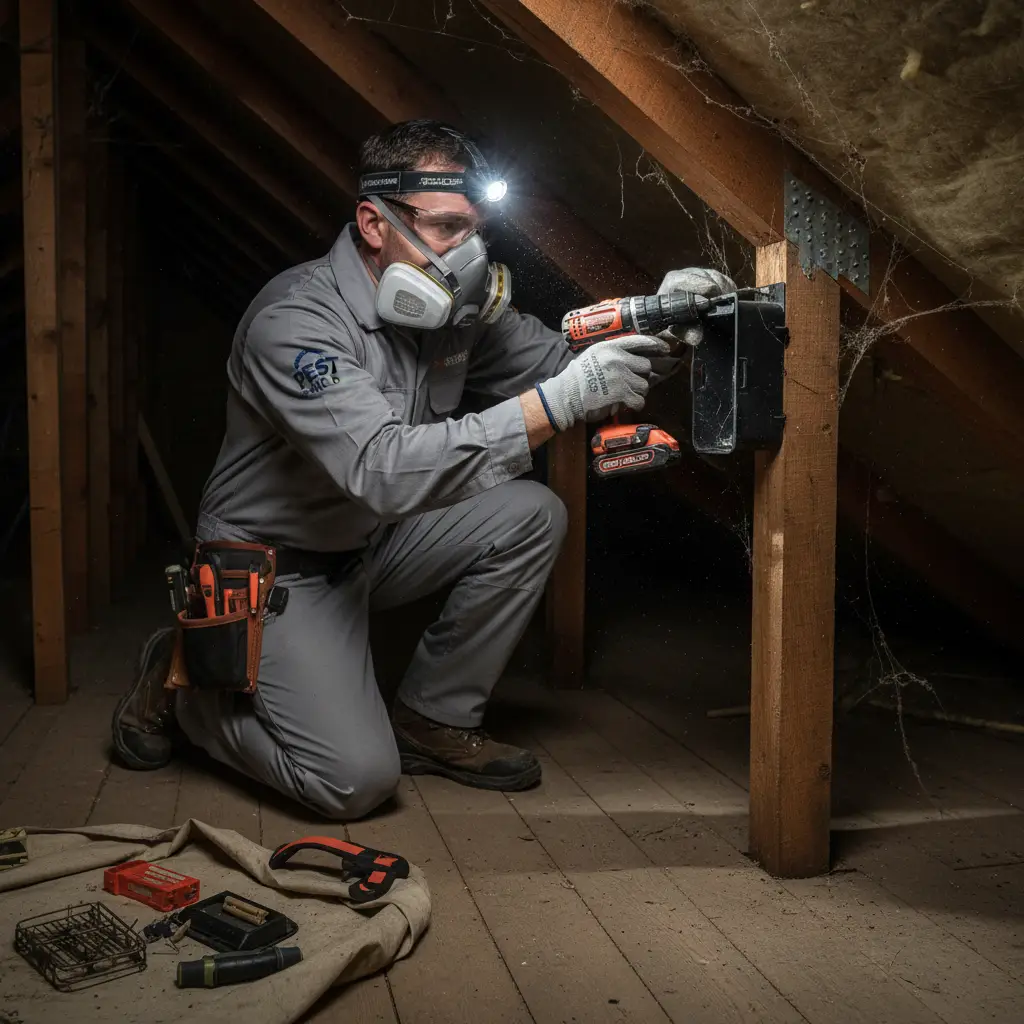
Loose pellets should never be used in roof cavities. Rats are hoarders; they will often carry loose pellets away to store them, sometimes dropping them into wall cavities or, worse, bringing them out into the garden where pets can access them. Instead, use professional-grade anticoagulant bait blocks or pasta sachets that can be secured.
You must nail or wire these blocks to the roof trusses or place them inside tamper-resistant bait stations secured within the void. This forces the rat to consume the lethal dose on the spot rather than hoarding it. This technique is known as “pulse baiting”—placing bait, monitoring consumption, and replenishing until the feeding stops.
Placement is Key
Rats suffer from neophobia (fear of new things), but they also rely heavily on muscle memory and established runways. Look for signs of activity: flattened insulation, droppings, or dark, greasy rub marks along beams. Place your bait stations along these runways. Do not place bait in the center of an open space; rats prefer to move with their bodies against a surface (thigmotaxis).
Tree Trimming and Roof Proofing Techniques
Extermination is futile if you leave the front door open. Once the population has been knocked down via baiting, you must physically exclude them from re-entering. This process is often called “proofing” or “exclusion.”
Vegetation Management
Roof rats are aerial acrobats. Any tree branch touching or hanging over your roof is a highway for rodents. To roof-proof your home, you must create a “canopy break.” Trim all tree branches back at least 1.5 to 2 meters from the roofline. This distance is generally sufficient to stop them from jumping onto the spouting. Vines and creepers growing up the side of the house should also be removed or significantly cut back, as these act as ladders.
Sealing Entry Points
Inspect your home’s exterior with a critical eye. A Ship Rat can squeeze through a hole the size of a 20-cent coin (roughly 12-15mm). Common entry points in Auckland homes include:
- Eave gaps: The space between the fascia board and the roof cladding.
- Pipe penetrations: Gaps where plumbing or HVAC pipes enter the siding.
- Roof valleys: Where two roof lines meet, often leaving gaps under the flashing.
- Broken vent covers: Damaged soffit vents or ridge vents.
Seal these gaps using heavy-gauge galvanized steel mesh or cement. Do not use expanding foam alone; rats can chew through foam in minutes. For a comprehensive guide on pest management and health safety standards, refer to resources provided by Ministry of Health NZ.
Professional Extermination vs. DIY
Many Auckland homeowners attempt DIY pest control first. While hardware store baits can handle minor incursions, established colonies often require professional intervention.
When to Call a Pro
If you hear noise in the ceiling during the day, the infestation is likely severe. Furthermore, if you have baited for two weeks with no reduction in activity, the rats may be avoiding your bait (bait shyness) or there is a competing food source you haven’t identified. Professional exterminators have access to second-generation anticoagulants and tracking powders that are not available to the general public. They also possess the safety equipment to navigate tight, potentially asbestos-contaminated roof spaces safely.
Successful roof rat extermination in New Zealand is a war on two fronts: chemical warfare inside the roof and physical fortification on the exterior. By following these protocols, you can reclaim your home from these unwanted tenants.
Frequently Asked Questions
What is the best bait for roof rats in NZ?
The most effective bait for roof rats in NZ is usually a high-quality anticoagulant block containing Brodifacoum or Diphacinone. These should be secured in bait stations to prevent hoarding. Paste or gel baits are also highly effective as they mimic the moisture-rich foods rats crave.
How do I know if I have roof rats or possums?
Roof rats typically make scratching, gnawing, or scampering sounds that move quickly across the ceiling. Possums are much heavier, sounding like a person walking heavily in the roof (thumping), and they are generally nocturnal, leaving larger droppings and distinct smell markings.
Can roof rats climb up walls?
Yes, roof rats (Ship Rats) are excellent climbers. They can scale rough exterior surfaces like brick, stucco, and wood siding vertically. They can also climb inside or outside of drainpipes and balance on thin utility wires to access the roof.
How long does it take to get rid of rats in the roof?
With a proper baiting and exclusion strategy, you should see a significant reduction in activity within 5 to 7 days. However, complete eradication of a large colony can take 3 to 4 weeks, depending on the uptake of bait and how well entry points are sealed.
Do roof rats leave the attic during the day?
Generally, yes. Roof rats are nocturnal foragers. They leave the safety of the roof void at night to find food and water, often in the garden or kitchen, and return before dawn. However, in severe infestations, they may be active during the day.
Does house insurance cover rat damage in NZ?
Most standard home insurance policies in New Zealand exclude gradual damage caused by pests, vermin, or insects. This means damage to wiring, insulation, or pipes caused by rats is typically not covered, making prevention and immediate extermination financially critical.