Wasps in wall cavity NZ issues arise when German or Common wasps build nests inside building voids. To treat them effectively, do not block the entry hole. Instead, apply a professional insecticidal dust to the entrance, allowing returning wasps to carry the poison deep into the nest for colony eradication.
Discovering a wasp nest inside your home is unsettling, but finding one hidden inside your wall cavity presents a unique and dangerous set of challenges. For homeowners in Auckland and throughout New Zealand, the temperate climate often allows wasp colonies—specifically the aggressive German Wasp and the Common Wasp—to thrive well into the autumn months. Unlike a hanging nest under an eave which is easily visible, a nest inside a wall cavity is a ticking time bomb hidden behind your Gib board or weatherboards.
The instinct for many homeowners is to panic and seal the hole, or empty a can of supermarket fly spray into the opening. However, dealing with wasps in wall cavity NZ contexts requires a counter-intuitive approach. Incorrect treatment methods can lead to disaster, forcing thousands of angry stinging insects into your living room rather than killing them. This comprehensive guide will walk you through the mechanics of wall infestations, why professional dusting is the industry standard, and how to safely reclaim your home.
Identifying Signs of Wasps in Your Wall Cavity
Because you cannot see the nest itself, you must rely on secondary indicators to confirm that wasps have taken up residence inside your walls. Often, homeowners mistake these signs for other pests, such as mice or rats, leading to delays in appropriate treatment.
The Flight Path
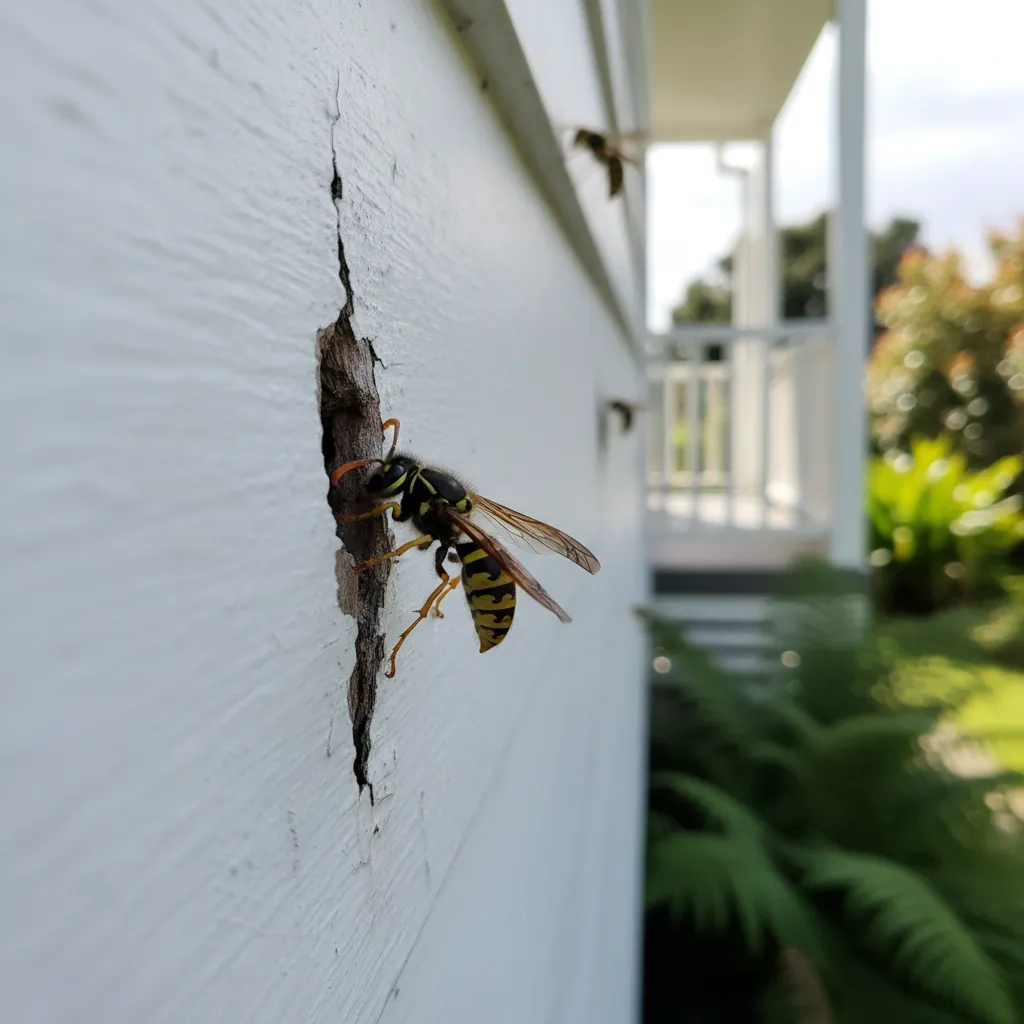
The most obvious sign is a steady stream of insect traffic entering and exiting a specific point on your home’s exterior. This is often a weep hole in brick veneer, a gap in the soffit, a crack in the weatherboards, or a hole around pipe penetrations. Unlike a random wasp looking for food, these wasps move with purpose. They fly directly into the hole without hesitation. In the height of an Auckland summer, this traffic can resemble a busy airport, with dozens of wasps entering and leaving every minute.
Audible Scratching and Tapping
As the colony grows, the nest expands. Wasps build their nests by chewing wood pulp and mixing it with saliva to create a paper-like structure. When this happens inside a wall void, the nest eventually pushes against the drywall (Gib) or insulation. You may hear:
- Scratching or crunching sounds: This is the sound of worker wasps expanding the nest by chewing away the internal wall structure or insulation.
- Tapping or buzzing: When the colony is agitated or regulating the temperature of the nest, the vibration can be audible through the wall.
Warm Spots and Staining
A large wasp nest generates significant heat due to the metabolic activity of thousands of larvae and workers. If you touch the wall in the area where you hear the noise, it may feel noticeably warmer than the surrounding plasterboard. In advanced infestations, moisture from the nest (excretion from the larvae) can soak into the drywall, causing damp patches, discoloration, or a soft spot in the wall.
The Golden Rule: Why You Should Never Block the Entrance
If you take only one piece of advice from this article, let it be this: Never, under any circumstances, block the entrance hole while the nest is active.
It is a natural human reaction to see pests entering a hole and want to close that hole. However, blocking the external exit does not kill the colony; it traps them. Wasps are panic-prone and possess powerful mandibles capable of chewing through wood, plasterboard, and caulking.
The “Break-Through” Scenario
When the external exit is sealed with silicone, expanding foam, or wood, the wasps will desperately seek an alternative light source and airflow. The only remaining direction is inward—into your home. They will chew through the interior drywall (Gib) in a matter of hours or days.
Once they breach the interior wall, they will pour into your living space. Because they have been trapped and agitated, they will be hyper-aggressive. Auckland pest control professionals frequently attend emergency callouts where a homeowner has sealed a weep hole, only to wake up to a bedroom full of hundreds of angry wasps.
Why DIY Liquid Sprays Fail in Wall Voids
Many homeowners attempt to solve the problem using hardware store wasp jet sprays or liquid insecticides. While these products are effective for direct contact on exposed hanging nests, they are notoriously ineffective for wasps in wall cavity NZ scenarios.
The Physics of Wall Voids
Wall cavities in New Zealand homes usually contain insulation (fiberglass or wool blends) and framing timber. When you spray a liquid into a small entry hole, the liquid is immediately absorbed by the insulation or the first piece of timber it hits. It rarely travels far enough to reach the queen or the core of the nest, which may be located several feet away from the entry point (up or down the stud bay).
Furthermore, liquid sprays often have a repellent effect. If the spray doesn’t kill the colony immediately (which it rarely does in walls), the fumes may drive the wasps further away from the entrance and deeper into the house, increasing the likelihood that they will chew through the internal lining.
The Solution: Professional Dusting Treatments
The definitive method for eradicating a wasp nest inside a wall cavity is the application of insecticidal dust (often Permethrin or Carbamate-based) using a professional dusting unit.
How Dusting Works
Unlike liquids, dust is light and behaves like a gas when pumped under pressure. However, the primary mechanism of action is not just filling the void; it is using the wasps themselves as a delivery system. This is often referred to as a “transfer method.”
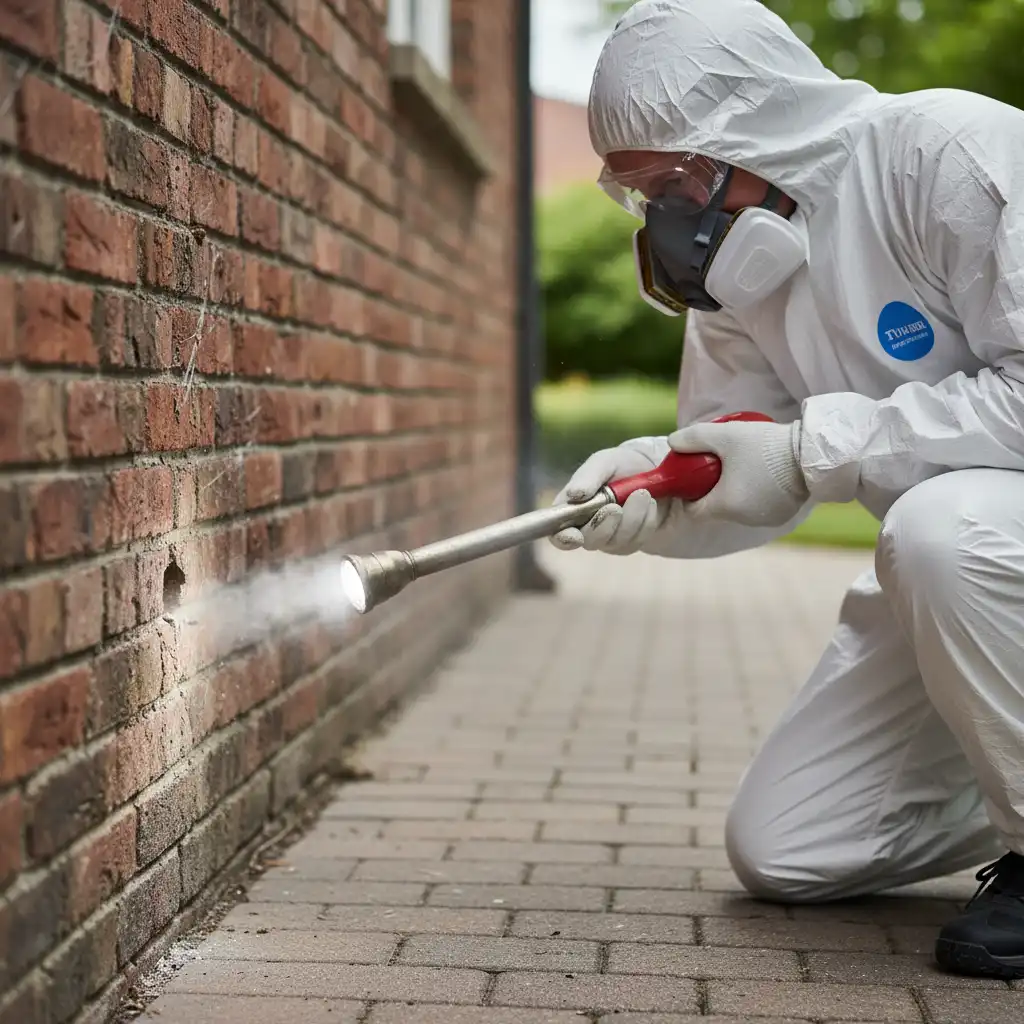
- Application: A pest control technician injects a specific amount of insecticidal powder into the entry point. They may also treat the area immediately surrounding the hole.
- Contamination: As the worker wasps return from foraging, they must pass through the treated entry point. Their bodies become coated in the microscopic dust particles.
- Transfer: The contaminated wasps enter the nest. Because wasps are social insects that groom one another and feed the larvae, they transfer the toxic dust throughout the colony, eventually reaching the queen.
- Colony Collapse: This process is not instant. It is designed to be slow-acting enough to allow the foragers to infect the entire nest. Usually, activity ceases within 2 to 24 hours, depending on the size of the colony.
The Importance of Equipment
Professionals use specialized equipment such as bulb dusters or electric dusters with long extension wands. This allows them to inject the product deep into the void without getting too close to the angry guard wasps. This equipment ensures the dust is electrostatically charged or puffed in a way that adheres to the surfaces where wasps walk.
Understanding the Risks: German vs. Common Wasps in NZ
New Zealand has some of the highest densities of wasp populations in the world. The two main culprits are the German Wasp (Vespula germanica) and the Common Wasp (Vespula vulgaris). Both are aggressive, but they have slight behavioral differences.
According to the Department of Conservation (DOC), these invasive species have no natural predators in New Zealand and mild winters allow their colonies to grow significantly larger than in Europe. A single nest in a wall cavity can contain thousands of wasps.
German wasps are particularly notorious for their aggression. If you disturb a nest in a wall cavity by banging on the wall or spraying ineffective poison, the colony can release alarm pheromones. This triggers a mass attack response. For individuals with allergies to wasp venom, this can be a life-threatening anaphylactic event. Professional intervention is not just a convenience; it is a safety necessity.
Repairing Entry Points After Eradication
Once the treatment has been applied, patience is required. You will likely see activity at the entrance hole for a few hours, but the wasps will appear disoriented or “drunk” as the neurotoxin takes effect.
The Waiting Period
You must wait until all activity has completely ceased before attempting any repairs. We recommend waiting at least 48 to 72 hours after the professional treatment. This ensures that:
1. All foraging wasps have returned and been exposed to the dust.
2. The queen is dead.
3. Any hatching pupae have also been exposed.
Sealing the Hole
Once you are certain the colony is dead (no movement for a full day), you should seal the entry point to prevent re-infestation by other pests or future wasp queens. The method of sealing depends on the material:
- Brick Weep Holes: Do not seal these permanently with silicone, as the house needs to breathe. Use a weep hole guard or stainless steel mesh that allows airflow but blocks insects.
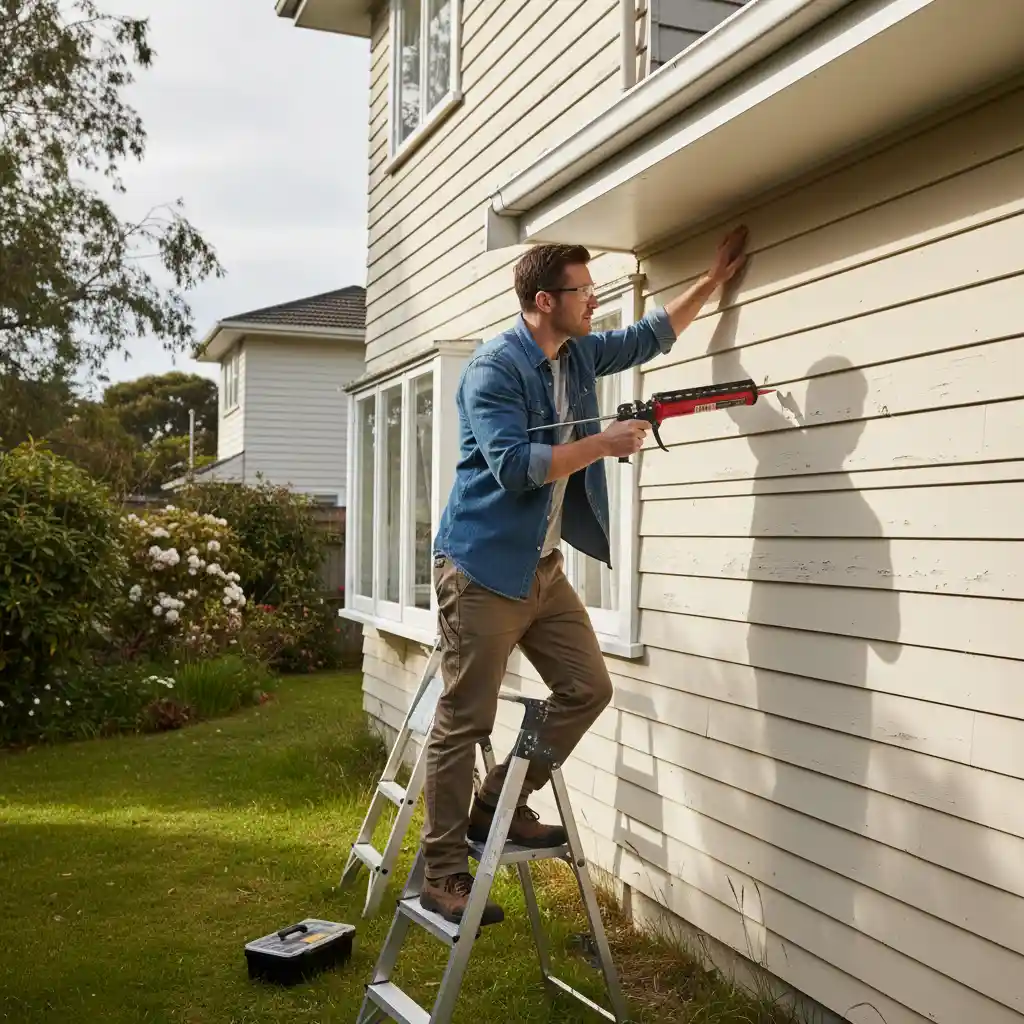
- Weatherboard/Siding: Use a high-quality exterior filler or paintable silicone sealant.
- Soffits/Eaves: Repair any rotted wood and seal gaps with builder’s bog or mesh.
Note: You do not need to remove the nest from inside the wall. In most cases, it is impossible to access without cutting open the wall. A treated nest is dry and paper-like; it will not rot or smell once the larvae dry out. It can safely remain in the wall void.
Preventing Future Infestations
While you cannot completely wasp-proof a house, you can reduce the likelihood of wasps in wall cavity NZ problems recurring. Early detection is key. In the spring (September/October), queen wasps emerge from hibernation looking for nesting sites. They are large and sluggish.
Conduct a perimeter check of your home in late spring. Look for gaps around pipes, cracks in cladding, and unmeshed vents. Sealing these small gaps early in the season prevents queens from gaining access to the voids. Additionally, ensure your roof void is well-maintained and that no light spills through from the outside, indicating a gap large enough for a wasp.
Frequently Asked Questions
Below are common questions regarding wasp infestations in wall cavities, specifically tailored for New Zealand homeowners.
How long does it take for wasps to die after dusting?
After a professional dusting treatment, most wasp activity will cease within 2 to 4 hours. However, it can take up to 24 hours for the entire colony, including the queen, to be fully eradicated. It is normal to see disoriented wasps near the entry point during this time.
Should I seal the hole immediately after treating the nest?
No. You must never seal the hole immediately. Blocking the exit traps the wasps inside, forcing them to chew through your interior walls to escape. Wait at least 48 to 72 hours after treatment to ensure the colony is dead before sealing the entry point.
Can wasps chew through Gib board (drywall)?
Yes, wasps have powerful mandibles capable of chewing through Gib board (plasterboard). If they are trapped inside a wall cavity, they will chew through the lining and enter your home, often in large numbers.
Do I need to remove the dead nest from the wall?
In most cases, no. The nest is made of paper and will dry out harmlessly once the colony is dead. Unless there is significant moisture damage or the nest is easily accessible, it is generally safe to leave it inside the wall void.
Why do wasps build nests in wall cavities?
Wall cavities provide a dry, temperature-regulated, and protected environment for wasp colonies. In New Zealand, the insulation found in walls makes an attractive structure for wasps to anchor their nests and expand rapidly.
Can I use supermarket fly spray for a nest in the wall?
No. Retail fly sprays are liquid-based and will be absorbed by insulation or timber before reaching the nest. They also tend to agitate the wasps without killing the queen, increasing the risk of the colony attacking or breaching the interior wall.
Dealing with wasps in wall cavity NZ situations requires respect for the pest and the right tools for the job. By avoiding the temptation to block the hole and opting for professional dusting, you ensure the safety of your household and the complete destruction of the nest. For more information on invasive species in New Zealand, resources like Landcare Research provide extensive data on wasp behavior and control.