The average wasp nest removal cost in Auckland typically ranges between $180 and $350 NZD for a standard residential treatment. Final pricing depends heavily on the nest’s location (ground vs. roof void), accessibility (height requiring ladders or scaffolding), and the specific species involved. While basic accessible nests are cheaper to treat, complex infestations inside wall cavities or commercial properties may incur higher fees.
Understanding Wasp Nest Removal Costs in Auckland
In the humid climate of Auckland, wasp infestations are a common and potentially dangerous nuisance, particularly during the late summer months from January through April. When homeowners discover a buzzing nest in their eaves, garden, or wall cavities, the immediate concern is safety, closely followed by the cost of professional intervention.
Unlike general pest control sprays which might cover a broad area, wasp nest removal is a targeted surgical strike. The cost reflects not just the chemicals used, but the expertise, risk, and equipment required to neutralize a colony that can contain thousands of aggressive insects. In Auckland, the market for pest control is competitive, yet prices remain relatively standardized across reputable providers due to the fixed costs of safety gear, certified technicians, and effective insecticides.
It is important to view this cost through the lens of safety. A single German wasp nest can house upwards of 5,000 wasps. Disturbing such a nest without professional training can lead to swarming behavior, resulting in multiple stings that can be life-threatening to children, pets, and those with allergies. Therefore, the price paid for removal is effectively a premium paid for the guarantee of safety and the complete eradication of the colony.
Factors Influencing the Price of Removal
When you contact an Auckland pest control company for a quote, they will rarely give a flat rate without asking a series of qualifying questions. This is because no two infestations are exactly alike. Several key variables determine whether your invoice will be on the lower end ($180) or the higher end ($350+).
Height and Accessibility
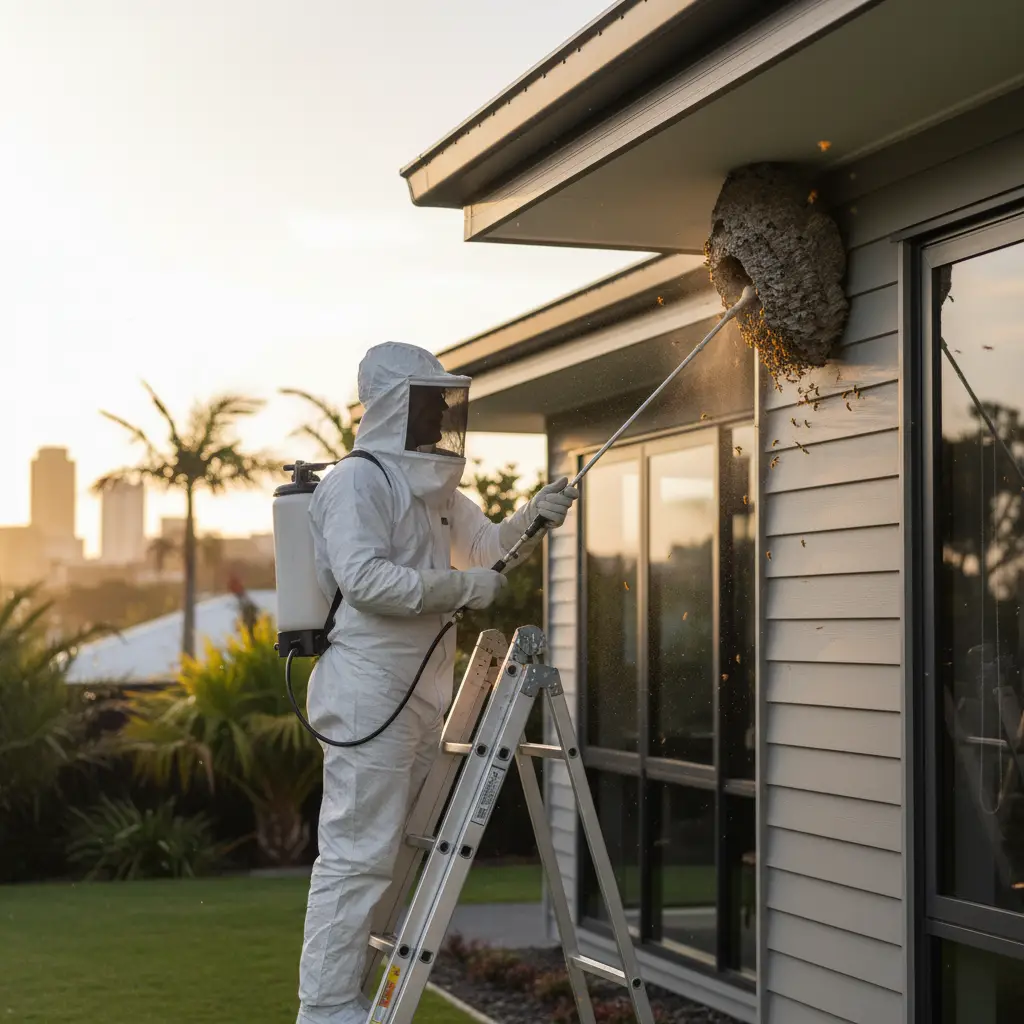
The most significant cost driver is accessibility. A nest located in a garden retaining wall or a low-hanging shrub is easy for a technician to approach and treat. However, nests located in the eaves of a two-story villa or tucked into the soffits of a high roofline require industrial ladders, extension poles, or even scaffolding. If a technician needs to harness up for roof access, the labor time and risk factor increase, raising the overall cost.
Nest Location: Internal vs. External
External nests are generally cheaper to treat. The technician can see the target, apply the powder or spray directly, and leave. Internal nests—those inside wall cavities, roof voids, or beneath floorboards—are more complex. These require a process of tracking the flight path of the wasps to find the entry point. Treatment often involves injecting insecticidal dust into the cavity (crack and crevice treatment). If the nest is deep within the structure, minor invasive work (like drilling small holes) might be necessary, which adds time to the job.
Size and Number of Nests
Most standard quotes cover the removal or treatment of a single nest. However, it is not uncommon for Auckland properties, particularly those near bushland in the Waitakere Ranges or North Shore, to harbor multiple nests. Companies will typically charge a standard fee for the first nest and a discounted rate (e.g., $50–$80) for each additional nest treated during the same visit.
Standard Pricing Tiers for Auckland Services
To help you budget for this service, we have categorized the typical market rates found across the Auckland region. Please note that these are estimates and can vary based on the specific provider.
Tier 1: Basic Access ($160 – $220 NZD)
This tier covers the majority of standard residential calls. It includes:
- Target: Asian Paper Wasps or small German Wasp nests.
- Location: Ground level, fences, low trees, or easily accessible single-story eaves.
- Method: Direct aerosol spray or dusting.
- Time on site: 20–30 minutes.
Tier 2: Difficult Access / Structural ($220 – $350 NZD)
This tier applies to more challenging infestations that pose higher risks to the technician.
- Target: Large German Wasp colonies.
- Location: Second-story eaves, roof voids, wall cavities, or chimneys.
- Method: Powder injection, extension dusting, potential roof entry.
- Time on site: 45–60 minutes.
Tier 3: Emergency & Commercial ($350+ NZD)
Commercial properties often require after-hours service to avoid disrupting business operations. Additionally, emergency call-outs (weekends or public holidays) will attract a surcharge. This tier also covers massive infestations that require follow-up visits.
German Wasps vs. Asian Paper Wasps: Species Impact
In New Zealand, the two main culprits are the German Wasp (Vespula germanica) and the Asian Paper Wasp (Polistes chinensis). Identifying the species can give you a clue about the potential cost and treatment method.
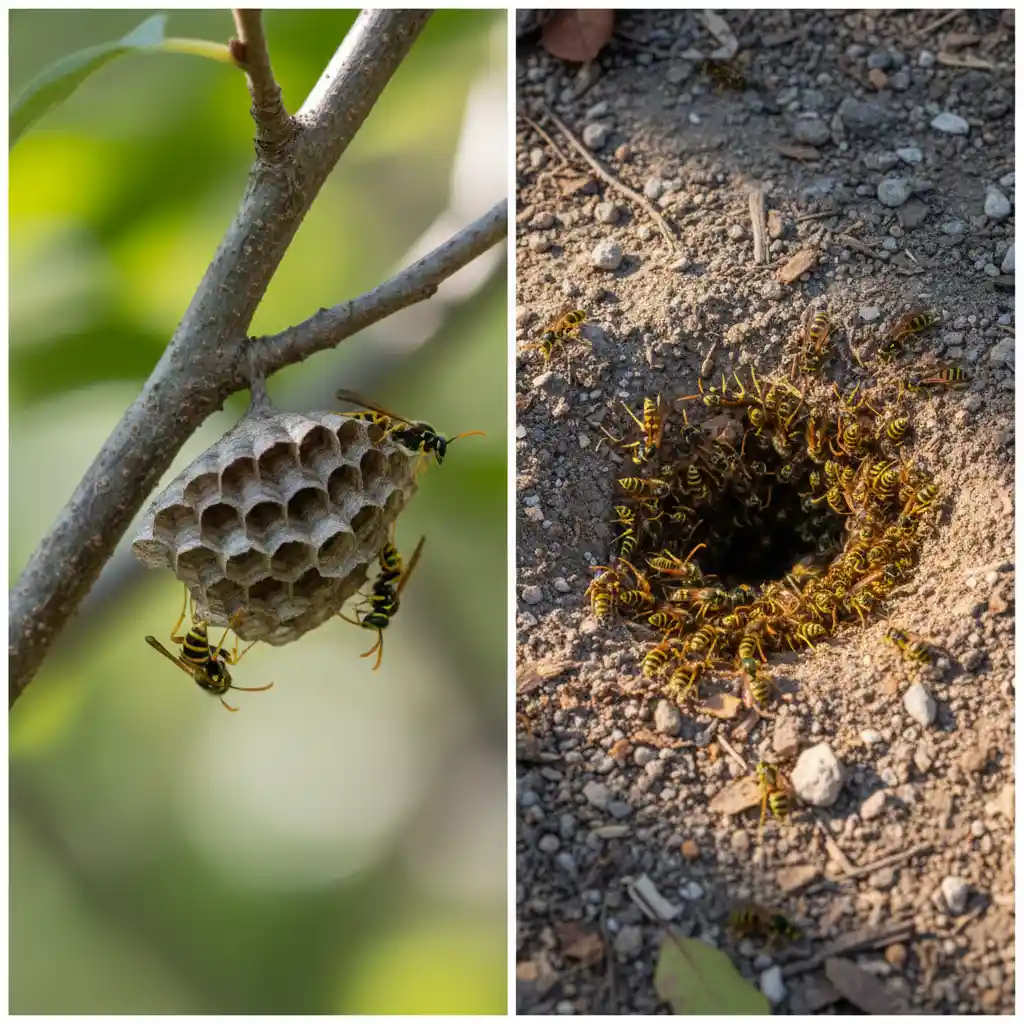
German Wasps: These are the most aggressive and dangerous. They often build large nests underground or inside building cavities. Because their nests are concealed and the colony size is massive, they almost always require professional treatment using carbaryl or pyrethrin-based powders. Removal is riskier, often placing them in the higher price tiers.
Asian Paper Wasps: These wasps build distinctive “umbrella-style” honeycomb nests that hang from eaves, fences, and shrubs. They are generally less aggressive than German wasps but will sting if the nest is threatened. Because their nests are visible and usually smaller, they are often quicker and cheaper to treat.
For authoritative identification of these species, you can refer to the Department of Conservation (DOC) guide on wasps, which details their ecological impact in New Zealand.
Additional Costs and Potential Hidden Fees
When booking a wasp nest removal in Auckland, be aware of potential extra charges that may not be in the advertised “starting from” price.
- Travel Surcharges: If you live in rural Auckland areas (e.g., Kumeu, Whitford, or far Rodney), technicians may charge a travel fee to cover fuel and time. This is standard industry practice.
- warranties and Guarantees: Some companies offer a 3-month or 6-month guarantee on the treated area. While this provides peace of mind, companies offering robust warranties may have slightly higher upfront costs to cover the potential for free call-backs.
- Equipment Fees: In rare cases where a nest is extremely high and inaccessible by ladder, the rental of a cherry picker or scaffolding may be required. This cost is almost always passed on to the client.
DIY vs. Professional Removal: Assessing the Value
Many homeowners consider visiting a hardware store to buy a can of wasp killer instead of paying $200 for a professional. While this might work for a very small, exposed paper wasp nest, it is fraught with danger for larger infestations.
The Safety Risk
Consumer-grade sprays often lack the pressure and potency to penetrate the core of a large nest instantly. If you spray a German wasp nest and fail to kill the queen or the guards immediately, the colony will release attack pheromones. This can result in a mass swarming event. Professional technicians wear full-body protective suits and veils that are sting-proof, a level of protection the average homeowner does not possess.
Effectiveness
Store-bought products are often contact killers. They kill the wasps they touch but may not destroy the larvae inside the nest. Professionals use residual insecticides and dusts. When worker wasps enter the nest, they carry this dust on their bodies deep into the colony, effectively poisoning the queen and the larvae, ensuring the entire lifecycle is terminated.
The Professional Removal Process Explained
Knowing what to expect can help alleviate anxiety about the process. Here is the standard workflow for an Auckland wasp removal job:
- Site Inspection: The technician arrives and assesses the flight paths to locate the nest entrance. They identify the species and determine the safest approach.
- Preparation: The technician suits up in protective gear. They will advise you to close all windows and doors and keep pets and children inside.
- Treatment Application:
- For exposed nests: A high-pressure liquid insecticide is often used to saturate the nest instantly.
- For concealed nests: An insecticidal powder is injected into the entrance. The returning wasps carry this powder into the nest.
- Post-Treatment Advice: You will be advised to avoid the area for 2–4 hours. It is normal to see increased activity immediately after treatment as the wasps become agitated before dying.
- Nest Removal (Optional): If the nest is accessible, the technician may remove it physically. However, for internal nests, the nest is usually left in place to allow the returning wasps to be poisoned by the residual dust. A dead nest inside a wall will eventually dry out and does not typically cause secondary issues.
How to Choose a Reputable Pest Controller
Not all pest control operators are created equal. To ensure you are getting value for your money and a safe service, look for the following:
- PMANZ Registration: The Pest Management Association of New Zealand (PMANZ) is the governing body for the industry. Registered technicians adhere to strict codes of practice and safety standards.
- Insurance: Ensure the company carries public liability insurance. In the unlikely event that damage occurs to your property during the access or treatment, you need to be covered.
- Clear Pricing: Avoid companies that are vague about costs. A reputable provider should be able to give you a firm estimate over the phone based on your description of the problem.
- Local Experience: Choose a local Auckland company. They will be familiar with the local housing types (e.g., weatherboard villas vs. brick and tile) and the specific wasp behaviors in the region.
Preventing Future Wasp Infestations
Once you have paid the cost for removal, you want to ensure the wasps don’t return the following summer. While you cannot control wasps flying onto your property from neighbors’ yards, you can make your home less attractive to them.
Seal Entry Points: Inspect your home for cracks in the cladding, gaps around pipe penetrations, and loose soffits. Sealing these gaps prevents German wasps from establishing nests in your wall cavities.
Manage Waste: Wasps are attracted to proteins and sugars. Ensure rubbish bags are tied tightly and placed in bins with secure lids. Compost bins should be sealed to prevent access.
Early Detection: In early spring (September/October), queen wasps emerge from hibernation to start new nests. These initial nests are the size of a golf ball. Knocking these down early or treating them with a supermarket spray when they are tiny can save you the significant cost of removing a basketball-sized nest later in the season.
Frequently Asked Questions
Below are common questions regarding wasp nest removal costs and procedures in Auckland.
How much does pest control cost in Auckland?
General pest control in Auckland varies by pest type. While wasp removal specifically costs between $180 and $350, a general preventative spray for flies, spiders, and cockroaches typically costs between $200 and $300 for a standard 3-bedroom home.
Can I remove a wasp nest myself?
You can remove small, accessible paper wasp nests yourself using store-bought sprays if you are careful. However, it is highly discouraged to attempt DIY removal of large German wasp nests or nests inside wall cavities due to the high risk of aggressive swarming and stinging.
How long does it take for wasps to die after treatment?
After a professional treatment, most wasps will die within 2 to 24 hours. However, you may see occasional activity for up to 48 hours as foraging wasps return to the nest and come into contact with the insecticide.
Does house insurance cover wasp nest removal?
Generally, standard home insurance policies in New Zealand do not cover pest control services, including wasp nest removal, as this is considered a maintenance issue. However, if the wasps cause sudden, unforeseen damage (like a fire or major electrical fault), the resulting damage might be covered.
What is the difference between German and Paper wasps?
German wasps are aggressive, have black and yellow stripes, and typically nest underground or in building cavities. Asian Paper wasps are less aggressive, have a more slender body, and build open honeycomb nests hanging from eaves or vegetation.
Do pest controllers remove the nest after treatment?
If the nest is accessible (e.g., hanging from an eave), technicians will often remove it. If the nest is inside a wall cavity or roof void, it is usually treated and left in place. A treated nest is biologically dead and will not be reused by other wasps.