Borer control North Shore involves the specialized inspection and chemical treatment of timber structures in Auckland’s coastal suburbs to eradicate the Common House Borer (Anobium punctatum). Effective management requires identifying active flight holes, applying residual insecticides to subfloors and weatherboards, and mitigating humidity to prevent the structural degradation of native softwoods.
The Borer Threat to North Shore Weatherboard Homes
The North Shore of Auckland is renowned for its charming character homes, particularly the classic bungalows and villas found in suburbs like Devonport, Takapuna, and Northcote. However, the very aesthetic that makes these homes desirable—their extensive use of untreated native timbers—makes them prime targets for wood-boring insects. Unlike modern builds that utilize treated pine, many older North Shore properties were constructed using sapwood from Rimu, Matai, and Tawa, which becomes increasingly susceptible to borer attack as the timber ages.
The primary culprit in New Zealand is the Common House Borer (Anobium punctatum). While the Two-toothed Longhorn Borer is also a threat, particularly in larger timbers, the Common House Borer is responsible for the vast majority of structural damage seen in residential properties. These insects do not merely live on the surface; their larvae tunnel deep within the wood grain, consuming the cellulose and structurally compromising the integrity of floorboards, joists, and weatherboards.
For homeowners on the North Shore, the risk is compounded by the local microclimate. The coastal humidity, combined with the dense vegetation often found in established suburbs like Birkenhead and Chatswood, creates an environment where timber moisture content can remain high. Borer larvae thrive in timber with a moisture content above 12%, meaning that a damp, poorly ventilated subfloor is essentially an incubator for these pests.

Ignoring the signs of borer in a weatherboard home can lead to catastrophic structural failure over time. What begins as a few flight holes in the floorboards can eventually lead to the collapse of subfloor supports if left untreated. Preserving the heritage value and structural safety of North Shore homes requires a proactive, rather than reactive, approach to pest control.
Identifying an Active Infestation
Distinguishing between historic damage and an active infestation is crucial for determining the correct course of action. Many older homes will display evidence of past borer activity, but if the colony has died out, treatment may not be immediately necessary for those specific areas. However, assuming damage is old without professional verification is a risky gamble.
The Tell-Tale Signs
Homeowners should conduct regular visual inspections, paying close attention to the following indicators:
- Flight Holes: Small, round holes approximately 1-2mm in diameter. These are the exit points created by the adult beetle emerging from the wood to breed.
- Frass (Borer Dust): This is the most definitive sign of active eating. Frass is essentially wood dust created by the larvae as they tunnel. If you see piles of fine, cream-colored dust beneath floorboards or on furniture, the infestation is active.
- Live Beetles: During the flight season, you may find small, brown beetles on windowsills. They are attracted to light and often die there after mating.
- Crumbling Wood: In severe cases, particularly with the Two-toothed Longhorn Borer, the timber may feel spongy or crumble when touched.
It is important to note that the visible holes are only the tip of the iceberg. The larvae can live inside the wood for 3 to 5 years before emerging. Therefore, by the time you see a flight hole, the internal damage has been accumulating for years. According to BRANZ (Building Research Association of New Zealand), detecting these early signs is vital for preserving the longevity of New Zealand’s timber housing stock.
The Critical Link Between Moisture and Borer Activity
One of the most overlooked aspects of borer control on the North Shore is moisture management. Pest control is not solely about chemical application; it is about environmental management. Borer larvae struggle to survive in dry timber. They require a certain level of moisture to digest the cellulose efficiently. Consequently, homes with damp subfloors are significantly more likely to suffer from severe infestations.
Subfloor Ventilation Issues
The clay soils typical of the North Shore retain water, leading to rising damp in subfloor cavities. Many older homes have insufficient ventilation, causing this moisture to become trapped. This raises the relative humidity under the house, which is then absorbed by the floor joists and bearers. This creates a “soft” timber environment that is easy for borer larvae to chew through.
Vegetation and Drainage
Properties in bush-clad areas like Titirangi or Greenhithe often face issues where vegetation blocks foundation vents. Furthermore, inadequate drainage can lead to water pooling under the house. A comprehensive borer control strategy must include checking that all subfloor vents are clear and, if necessary, installing a polythene vapor barrier over the ground to stop rising damp.
Professional Treatment Methods and Technologies
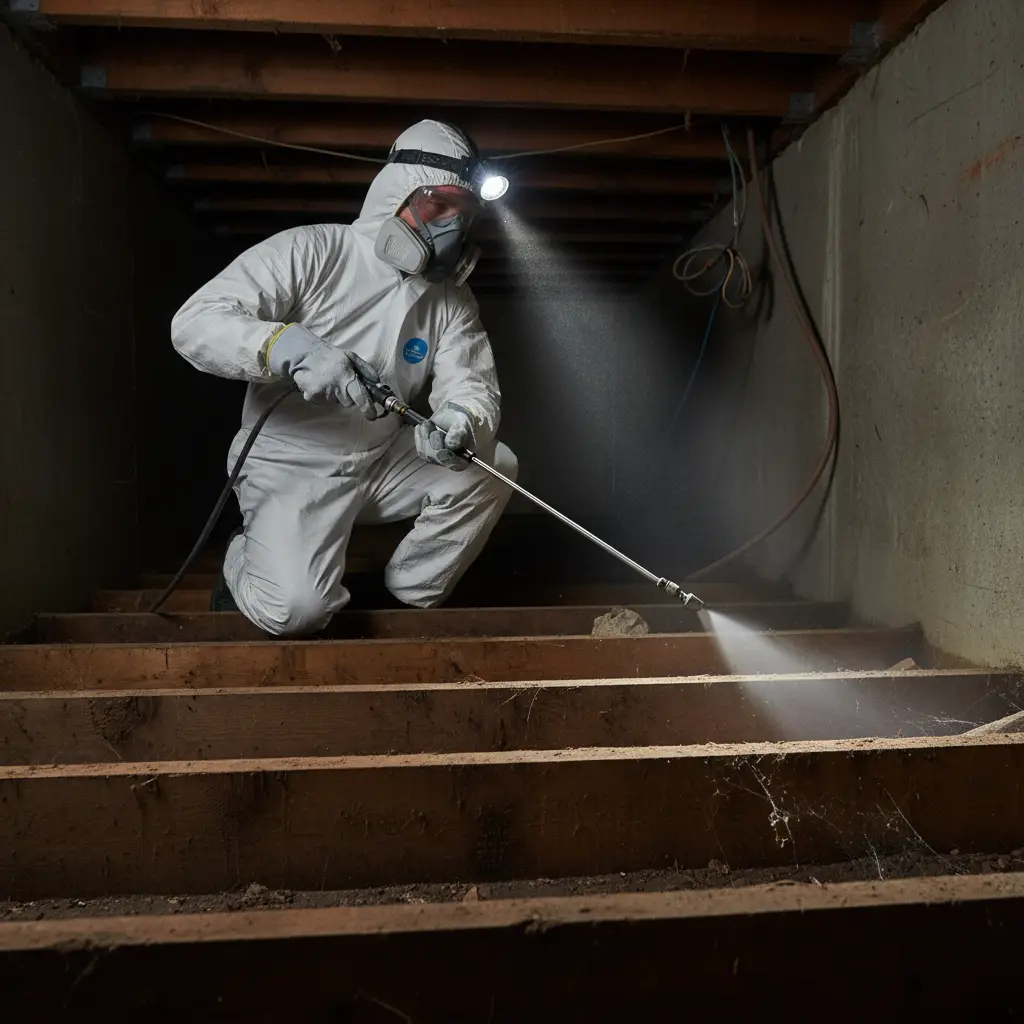
When it comes to borer control North Shore residents should rely on professional-grade treatments rather than over-the-counter hardware store remedies. DIY bomb foggers often fail to penetrate the timber deep enough to kill the larvae inside. Professional exterminators utilize specialized formulations designed to seep deep into the wood grain.
Surface Spraying vs. Injection
The most common treatment involves a residual surface spray applied to all accessible raw timber, primarily in the subfloor and roof void. Modern treatments utilize synthetic pyrethroids or boron-based salts. These products remain active on the surface of the wood for years.
The mechanism of action is twofold:
- It kills adult beetles as they emerge from the wood, preventing them from mating.
- It kills new larvae as they attempt to bore into the wood after hatching from eggs laid on the surface.
For polished floors or painted weatherboards where surface spraying isn’t possible, injection methods may be used. This involves injecting insecticide directly into flight holes, forcing the fluid through the labyrinth of tunnels to reach the larvae.
Gas Fumigation
In extreme cases where an infestation is total and the structure is at risk, gas fumigation (tenting the house) may be considered. However, this is a highly complex, expensive, and disruptive process. For 95% of North Shore homes, a targeted liquid treatment combined with moisture control is the most effective and economical solution.
Seasonal Timing: When to Schedule Treatment
Understanding the lifecycle of the borer is key to successful eradication. The Common House Borer operates on a seasonal cycle that dictates the optimal time for treatment.
The Flight Season (October to March)
Adult beetles typically emerge from the timber between October and March, with the peak activity occurring in mid-summer. This is known as the “flight season.” Upon emerging, they mate, lay eggs on the surface or in old flight holes, and then die. The eggs hatch, and the new larvae bore back into the wood.
The Best Time to Treat
While treatment can be applied year-round, the most strategic time to treat is before or during the early stages of the flight season (late winter to early spring). By applying a residual insecticide before the adults emerge, you ensure that the barrier is fresh and at maximum potency when the beetles attempt to exit. This breaks the reproductive cycle immediately.
However, because the larvae live inside the wood for years, treatment is a long-term game. A single treatment will kill emerging adults and new larvae, but larvae already deep inside the wood may continue to feed until they are ready to emerge. This is why warranties for borer treatment often extend for several years—it takes time to fully flush out the population.
Why Local North Shore Inspections Are Essential
Choosing a generic pest control provider can lead to missed diagnosis. A local team specializing in Auckland pest control understands the specific nuances of North Shore architecture. They know where to look in a 1920s bungalow versus a 1970s brick and tile unit.
Fast Inspections and Local Knowledge
Local technicians are familiar with the specific soil types and moisture profiles of suburbs like Albany, Glenfield, and Milford. They are equipped to handle the difficult subfloor access often found in these hilly coastal areas. Furthermore, a local provider can offer rapid response times for inspections, which is particularly important if you are in the process of buying or selling a home. A pre-purchase borer inspection can save a buyer tens of thousands of dollars in hidden structural repair costs.
For authoritative advice on timber preservation standards in New Zealand, resources such as Scion Research provide in-depth scientific data on wood durability and pest resistance.
Frequently Asked Questions
Here are answers to the most common questions regarding borer control in the North Shore area.
How do I know if the borer in my house is active?
Look for fresh, cream-colored dust (frass) beneath flight holes or on the floor. If the holes look clean and the wood inside is light-colored, it is likely active. Old holes tend to be dark and clogged with grime. Seeing live beetles on windowsills between October and March is also a confirmed sign of activity.
Is borer treatment safe for my family and pets?
Yes, modern professional treatments are highly targeted. Once the treated surfaces are dry, they are generally safe. However, during the application, people and pets must vacate the area, usually for 4-6 hours. Technicians will provide specific safety protocols based on the chemical used.
How long does a borer treatment last?
A high-quality professional residual treatment typically remains effective for 5 to 10 years, provided the timber is kept dry. Most reputable companies offer a warranty period, often around 5 years, to ensure the infestation is fully eradicated over the insect’s lifecycle.
Can I treat borer myself with store-bought products?
DIY products like bug bombs or aerosol injectors are generally ineffective for structural infestations. They do not penetrate deep enough to kill the larvae and lack the residual longevity of professional-grade formulations. DIY is only recommended for very minor, localized issues in furniture.
Does house insurance cover borer damage?
Generally, no. Most insurance policies in New Zealand classify borer damage as “gradual damage” or maintenance-related issues, which are excluded from standard cover. This makes preventative maintenance and regular inspections essential for protecting your asset.
What is the cost of borer treatment on the North Shore?
Costs vary depending on the size of the home, the ease of subfloor access, and the severity of the infestation. An average 3-bedroom home treatment typically ranges from $400 to $900 NZD. A specific quote requires an on-site inspection.