The German cockroach (Blattella germanica) is New Zealand’s most invasive indoor pest, distinguished by its small size (12-15mm) and two parallel dark stripes running down its pronotum. Unlike native species, they infest warm, humid areas like kitchens and electronics. Successful German cockroach NZ extermination requires a strategic combination of gel baits and insect growth regulators to disrupt their rapid breeding cycle.
If you have spotted a small, fast-moving cockroach scuttling across your kitchen bench or noticed pepper-like droppings near your dishwasher, you are likely facing an infestation of the German cockroach. In the context of Auckland pest control, which includes services like Effective Spider Nest Removal Techniques for Auckland Properties, this species is widely considered the most difficult to eradicate due to its rapid reproductive rate and resistance to common household insecticides.
Unlike the larger, slower-moving native bush cockroaches or the Gisborne cockroach often found in New Zealand gardens, the German cockroach is an obligate scavenger that relies entirely on human habitation for survival. They do not live outside. They live in your home, specifically in the cracks, crevices, and motors of your appliances. This guide serves as the definitive resource for identifying, understanding, and eliminating this resilient pest from your property.
Identifying the German Cockroach in NZ
Correct identification is the first critical step in pest management, including specific challenges like White-Footed House Ant Control. Many Auckland homeowners mistake the German cockroach for juvenile versions of other species, leading to ineffective treatment plans. Understanding their physical characteristics and behaviors is essential for gauging the severity of the infestation.

Physical Characteristics
Adult German cockroaches are significantly smaller than other common NZ varieties, typically measuring between 12mm and 15mm in length. Their coloration ranges from tan to light brown. The most defining feature, however, is the pair of dark, parallel longitudinal stripes located on the pronotum (the shield-like plate behind the head). While adults have wings, they rarely fly, preferring to run rapidly when disturbed.
Nymphs (Juveniles)
The nymphs are even smaller and lack wings. They are generally darker, often appearing black with a distinct light-colored stripe running down the center of their back. Seeing nymphs is a clear indicator of an active breeding population within the home. If you see cockroaches of varying sizes, it indicates that the infestation has been established long enough for multiple generations to hatch.
Why They Infest Appliances and Warm Areas
One of the most distressing aspects of a German cockroach infestation is their affinity for electronics and kitchen appliances. In Auckland homes, where humidity can be high, these pests seek out micro-climates that offer three things: warmth, moisture, and darkness.
The Attraction to Heat
German cockroaches are thigmotactic, meaning they prefer tight spaces where their bodies touch surfaces on both sides. They are also thermophilic (heat-loving). The motor of a fridge, the control panel of a dishwasher, the back of a microwave, and the inside of a hot water cylinder cupboard provide the perfect ambient temperature for them to thrive. The heat generated by these appliances accelerates their metabolic rate and breeding cycle.
Moisture and Sustenance
Kitchens and bathrooms are the primary battlegrounds. These pests require water almost as much as they require warmth. Condensation pans under refrigerators, leaking pipes under sinks, and residual water in dishwashers provide ample hydration. Furthermore, they are scavengers that feed on starches, sugars, grease, and even glue. The crumbs found under a toaster or the grease buildup behind a stove are essentially a buffet for a colony.
German Cockroaches vs. Native NZ Species
It is crucial to distinguish the German cockroach from the “Gisborne” cockroach or the Native Bush cockroach. The treatment approaches are vastly different.
- Gisborne/Native Cockroaches: These are typically outdoor pests that wander inside by accident, often carrying wood chips or debris. They are larger, darker, and do not infest food preparation areas in the same aggressive manner. They generally do not breed inside your pantry. Treatment usually involves a simple barrier spray or physical removal.
- German Cockroaches: These are indoor pests. They do not survive well outdoors in NZ’s climate. If you find them, they are breeding inside your walls, appliances, or cupboards. They pose a significant health risk as vectors for Salmonella, E. coli, and allergens that can trigger asthma.
For more detailed information on insect identification, you can refer to resources provided by Manaaki Whenua – Landcare Research, which documents New Zealand’s invertebrate biodiversity.
The Importance of Breaking the Breeding Cycle
The primary reason DIY treatments often fail against the German cockroach is the failure to account for their reproductive speed and the protective nature of their eggs.
The Ootheca (Egg Case)
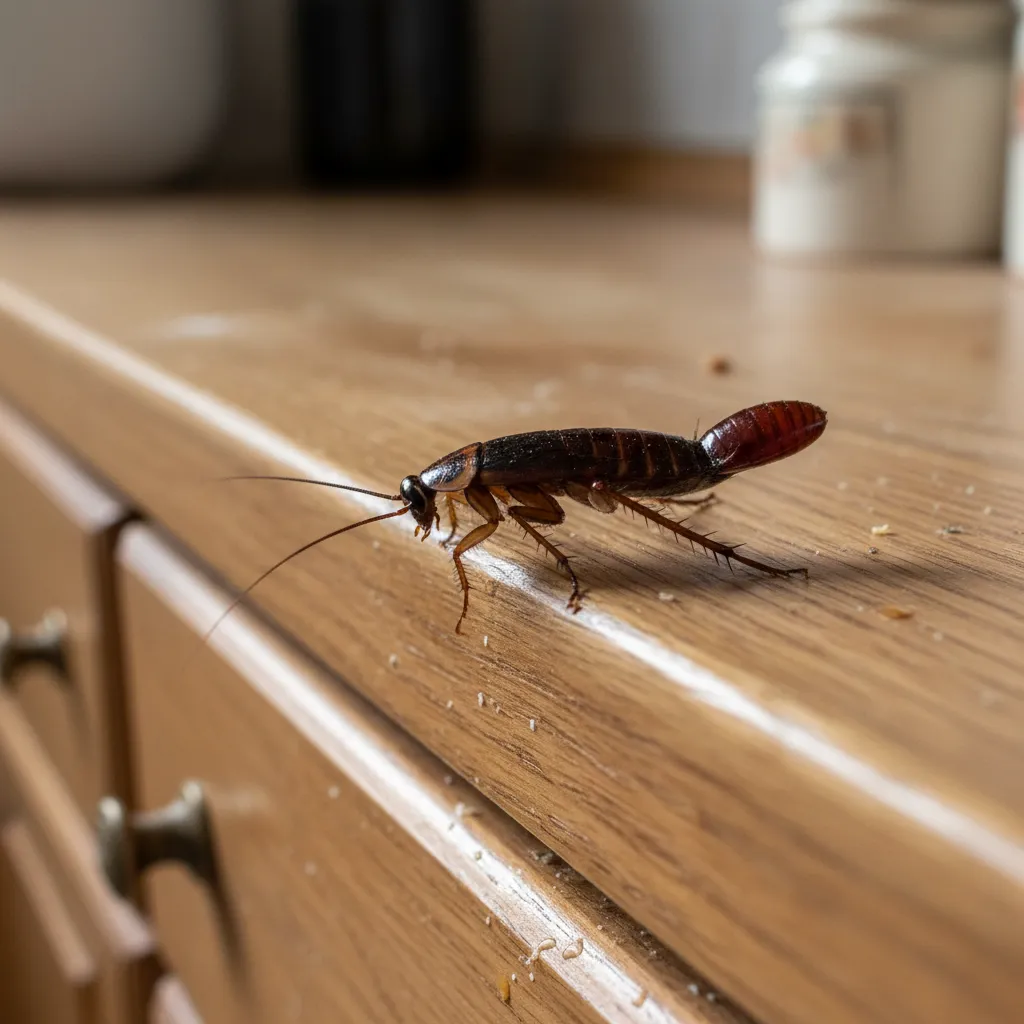
Female German cockroaches carry their egg case, known as an ootheca, attached to their abdomen until just 24 to 48 hours before hatching. This is a unique survival trait. By carrying the eggs, the female protects them from predators and environmental hazards. Each ootheca contains between 30 and 40 eggs. A single female can produce up to 8 egg cases in her lifetime. Mathematically, one female can be responsible for tens of thousands of descendants in a single year.
Insect Growth Regulators (IGRs)
To exterminate this species, killing the adults is not enough. You must break the cycle. Professional pest controllers in Auckland utilize Insect Growth Regulators (IGRs). These are chemical compounds that mimic insect hormones. They do not kill the cockroach immediately; instead, they sterilize the adults and prevent nymphs from maturing into reproductive adults. Without IGRs, the population will rebound within weeks as hidden eggs hatch.
Effective Treatment Methods: Gel vs. Spray
The methodology for treating German cockroaches has evolved significantly. While many homeowners reach for “bug bombs” or aerosol sprays, these are often counterproductive.
Why Bug Bombs Fail
Total release foggers, or “bug bombs,” release a mist into the air. However, German cockroaches hide deep inside crevices and appliance motors where the mist cannot reach. Furthermore, the irritation caused by the chemical often flushes them deeper into the wall voids or into neighboring rooms, spreading the infestation rather than eliminating it.
Gel Baits: The Gold Standard
Gel baiting is the most effective method for controlling German cockroaches in NZ. The gel contains a food attractant combined with a slow-acting non-repellent insecticide. The cockroaches eat the gel, return to their harborage, and die. Because cockroaches are cannibalistic, other members of the colony will consume the carcass and also ingest the poison. This “cascade effect” allows the treatment to reach deep into the nests where sprays cannot go.
Residual Sprays
Professionals may also use non-repellent residual sprays along skirting boards and cupboard perimeters. It is vital to use non-repellent formulas so the cockroaches walk over the treated surface without detecting it, picking up a lethal dose over time.
Preparation for Professional Treatment
If you have booked a pest control service in Auckland for German cockroaches, your preparation is just as important as the technician’s application. Poor preparation can render the treatment ineffective.
Step-by-Step Preparation Checklist
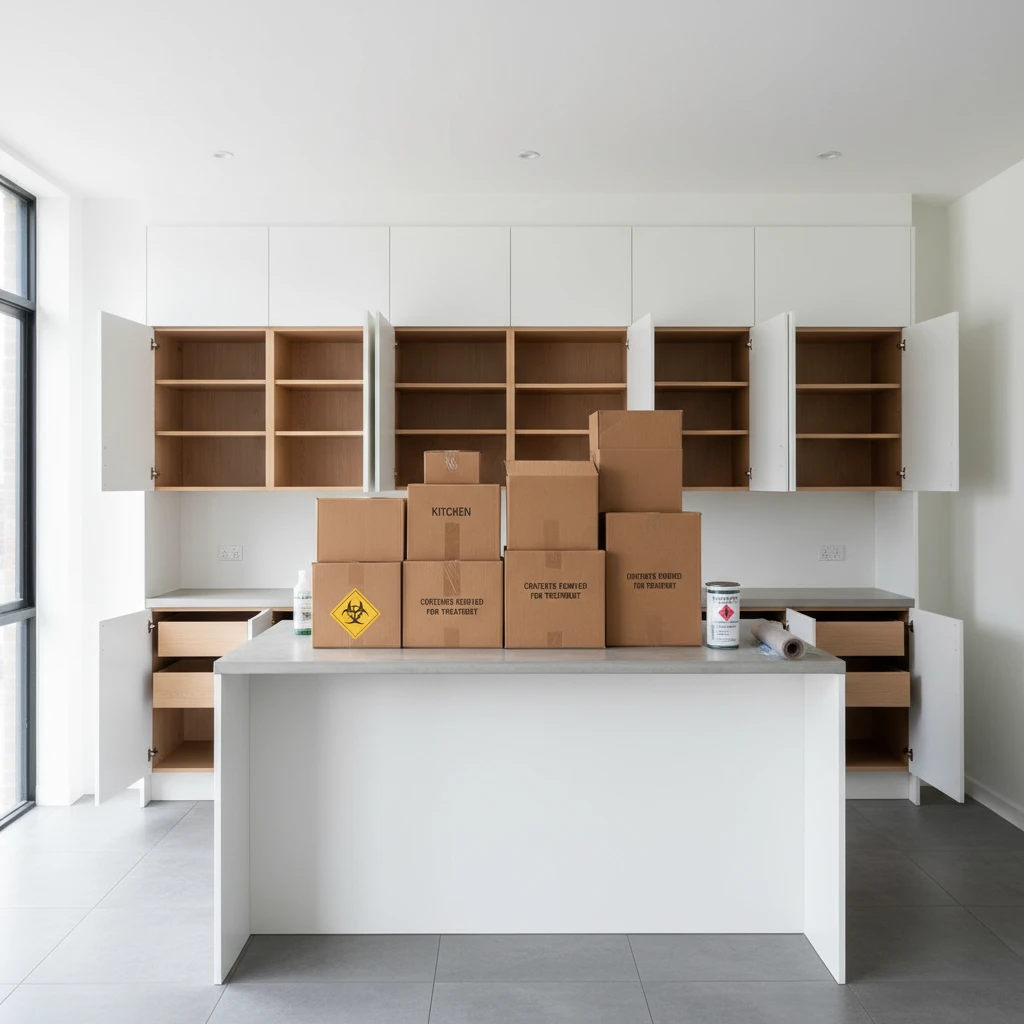
- Clean Thoroughly: Eliminate competing food sources. Wipe down benchtops, clean under the toaster, and degrease the stovetop. If there is food available (crumbs/grease), they may ignore the gel bait.
- Declutter: Remove stacks of paper, cardboard boxes, and plastic bags from the kitchen. These are prime hiding spots.
- Empty Cupboards (If requested): Depending on the severity and the chemicals used, your technician may ask you to empty the pantry and cupboards to allow access to hinges and corners.
- Pull Out Appliances: If safe to do so, pull the fridge and dishwasher slightly away from the wall to allow the technician to treat behind them.
- Cover Food: Ensure all open food packages are sealed in airtight containers or removed from the treatment area.
Long-Term Prevention and Maintenance
Once the infestation is eliminated, preventing re-entry is the goal. In Auckland, German cockroaches are often “hitchhikers.” They enter homes via cardboard boxes from warehouses, second-hand appliances, or grocery bags.
Inspection of Incoming Goods
Inspect all packages and boxes before bringing them into your home. If you buy a second-hand fridge or microwave, inspect it thoroughly or have it treated before bringing it inside. This is the most common vector for new infestations.
Sanitation and Moisture Control
Maintain a dry, clean environment. Fix leaking taps immediately to cut off their water supply. Seal cracks and crevices in the kitchen pantry using silicone caulk to reduce harborage areas. Regular vacuuming and taking out the rubbish nightly will also make your home less hospitable to any stragglers.
For further reading on public health pests and management strategies (e.g., Bee Swarm Relocation), the United States Environmental Protection Agency (EPA) provides extensive documentation on Integrated Pest Management (IPM) which is the global standard adopted by top NZ pest controllers.
Frequently Asked Questions
How do I get rid of German cockroaches in NZ permanently?
Permanent elimination requires a multi-faceted approach. You must use specific cockroach gel baits combined with Insect Growth Regulators (IGRs) to stop reproduction. Additionally, you must eliminate food sources through deep cleaning and seal entry points. Professional treatment is often necessary for established infestations.
Why are German cockroaches so hard to kill?
They are difficult to kill because they reproduce extremely fast, hide in inaccessible areas (like motor housings), and have developed resistance to many common supermarket insect sprays. Their eggs are also protected in a hard case (ootheca) that resists many chemicals.
Can I use a bug bomb for German cockroaches?
It is not recommended. Bug bombs (foggers) often fail to reach the cracks where cockroaches hide. Worse, the irritating chemical mist can drive the cockroaches deeper into the walls or into other rooms, spreading the infestation throughout the house.
What do German cockroach eggs look like?
The egg case (ootheca) is a small, light-brown, purse-shaped capsule about 6-9mm long. The female carries it protruding from her abdomen until hatching. If you find empty cases, it indicates eggs have already hatched in your home.
Do German cockroaches bite humans?
While rare, German cockroaches can bite humans if the population is extremely large and food is scarce. They typically gnaw on fingernails, eyelashes, or calloused skin while people sleep. However, the primary danger they pose is carrying disease, not biting.
How long does it take to get rid of a German cockroach infestation?
With professional treatment, you should see a significant reduction within 1-2 weeks. However, total elimination can take 3-6 weeks depending on the severity, as it takes time for the gel bait cascade effect to kill the colony and for the breeding cycle to be fully broken.