Technician inspecting school playground for wasp nests

Wasp Control for Schools

Pest control for schools NZ involves specialized Integrated Pest Management (IPM) strategies designed to eliminate hazards like wasp nests while strictly adhering to Ministry of Education health and safety guidelines. It requires immediate priority response, after-hours treatment schedules, and certified technicians to ensure the absolute safety of students, staff, and visitors in educational environments.

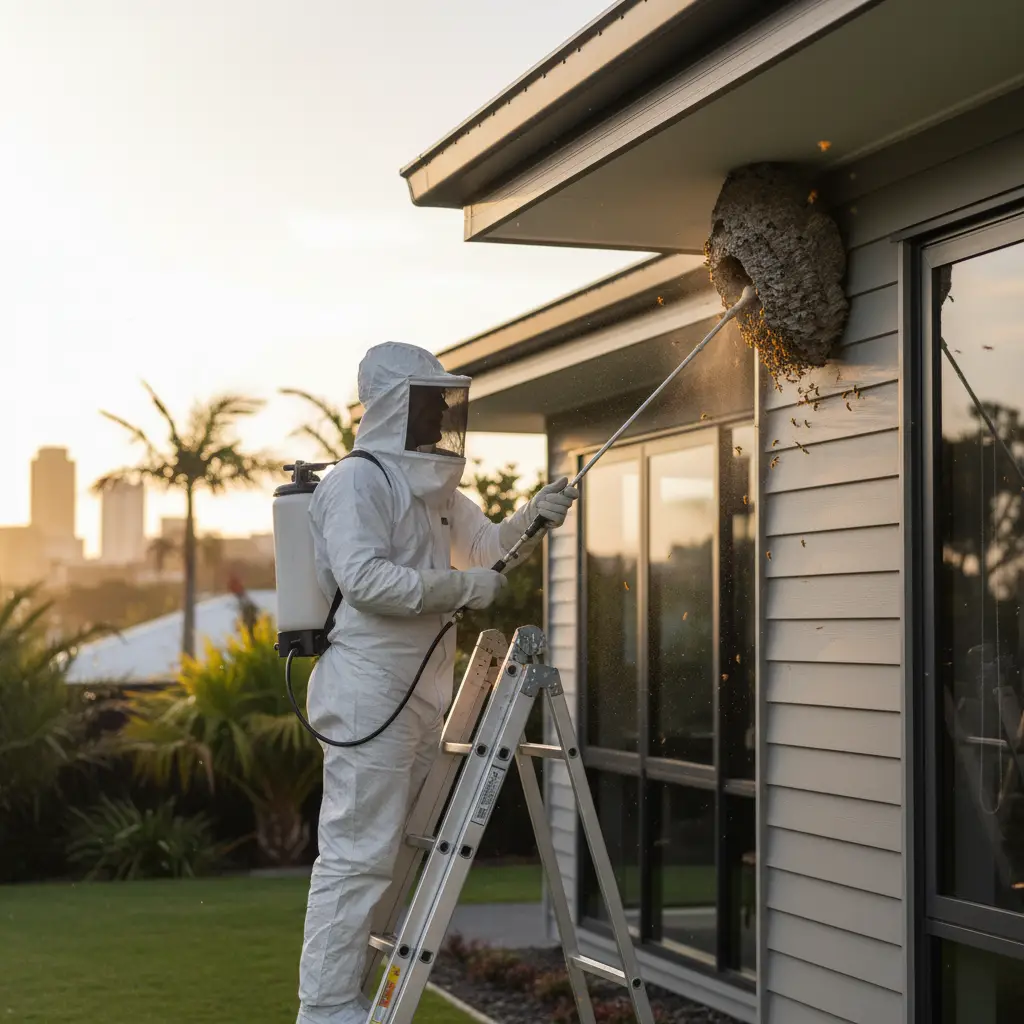
The Critical Importance of Wasp Management in Schools

In the context of educational facilities, pest control is not merely a maintenance task; it is a critical component of student safety and institutional liability management. Among the various pests that plague Auckland schools, wasps pose the most immediate and severe threat. Unlike rodents or ants, which are primarily sanitary nuisances, wasps present a direct physical danger that can result in anaphylactic shock, hospitalization, and significant disruption to the learning environment.

New Zealand has some of the highest densities of wasp populations in the world, particularly the German Wasp and the Common Wasp. For schools, this risk is amplified by the presence of food waste in bins, sugary drinks, and expansive grounds that offer ideal nesting sites. A single disturbed nest can lead to multiple stings, causing panic and potential medical emergencies. Consequently, effective pest control for schools NZ requires a specialized approach that prioritizes rapid elimination and long-term risk mitigation.

School Boards of Trustees and Principals have a legal duty of care under the Health and Safety at Work Act 2015 to ensure that the school environment is free from recognized hazards. Failing to address a known wasp infestation promptly can lead to severe legal and reputational consequences. Therefore, partnering with a commercial pest control provider who understands the nuances of the education sector is essential.

Technician inspecting school playground for wasp nests

Priority Response Protocols for Educational Facilities

When a wasp nest is discovered on school grounds, time is of the essence. Unlike a residential call-out where a delay of a day might be acceptable, a wasp nest in a school playground or near a classroom is an immediate emergency. Children are naturally curious and often unaware of the danger, making the likelihood of accidental disturbance high.

We understand that schools operate under strict schedules and safety parameters. That is why specialized service agreements for schools must include a priority response clause. This ensures that when a school administrator contacts us regarding a stinging insect threat, the job is escalated to the top of the queue.

The “Golden Hour” Response

In many cases, we aim for a same-day assessment and treatment plan. If a nest is active during break times or lunch hours, the immediate area must be cordoned off by staff. Our team prioritizes these call-outs to ensure the hazard is neutralized before the next school day begins. This rapid deployment minimizes the downtime of playground equipment and reduces the anxiety of parents and staff.

Ensuring Student Safety: After-Hours Treatment Strategies

The application of pesticides in an environment populated by children requires extreme caution and strict adherence to safety protocols. Standard pest control practices used in commercial warehouses or private homes are often unsuitable for schools during operating hours. The primary goal of pest control for schools NZ is to eliminate the pest without introducing a chemical hazard to the students.

To achieve this, we implement a rigorous after-hours treatment policy. This involves scheduling treatments during:

  • Evenings: Applying treatments after 3:30 PM once students and non-essential staff have vacated the premises.
  • Weekends: Utilizing Saturday or Sunday for major treatments, allowing ample time for products to dry and ventilate before students return on Monday.
  • School Holidays: Conducting comprehensive site-wide inspections and preventative treatments during term breaks.

By treating nests when the school is empty, we eliminate the risk of students coming into contact with pest control agents. Furthermore, treating wasp nests in the evening is often more effective, as the colony is less active and most foraging wasps have returned to the nest, ensuring a higher elimination rate.

Proactive Prevention: Regular Playground Inspections

Reactive pest control—waiting for a sting to occur before acting—is not a sufficient strategy for schools. Proactive management is key to maintaining a safe environment. Wasps are opportunistic nesters and will utilize any sheltered cavity. In a school setting, this often includes playground equipment, hollow handrails, retained walls, and trees bordering sports fields.

The Inspection Checklist

Our commercial pest control service for schools includes scheduled inspections, typically conducted in early spring and throughout the summer. These inspections focus on:

  • Playground Structures: Checking under slides, inside tunnels, and beneath wooden platforms.
  • Eaves and Guttering: Inspecting classroom blocks and gymnasiums for hanging nests.
  • Vegetation: Examining hedges and banks for ground-nesting German wasps.
  • Rubbish Collection Areas: Ensuring bins are not attracting foraging wasps due to poor sanitation.

Regular monitoring allows us to identify and remove small, establishing nests before they grow into large, aggressive colonies. This proactive approach significantly reduces the volume of chemicals required and prevents traumatic stinging incidents.

Wasp nest camouflaged in school building timber

Health and Safety Compliance for NZ Schools

Compliance is the backbone of any service provided to the education sector. New Zealand has stringent regulations regarding the use of hazardous substances, particularly in areas frequented by children. Schools must adhere to the Ministry of Education’s guidelines and the Health and Safety at Work (Hazardous Substances) Regulations.

When engaging a pest control provider, schools must ensure the contractor is fully compliant. This involves:

  • Approved Handlers: All technicians must be certified and trained in the safe handling of agrichemicals.
  • Safety Data Sheets (SDS): The provider must supply current SDS for every product used on-site, which the school must keep on file.
  • Signage: Appropriate warning signs must be displayed during and immediately after treatment if required by the product label.
  • Risk Assessments: A site-specific risk assessment (SSRA) should be conducted before any treatment begins.

For more detailed information on safety obligations, you can refer to the WorkSafe New Zealand website, which outlines the specific duties of PCBU (Person Conducting a Business or Undertaking) regarding hazardous substances.

Identifying High-Risk Wasp Species in Auckland

Understanding the enemy is the first step in defeating it. In Auckland, schools primarily face threats from two introduced species: the German Wasp (Vespula germanica) and the Common Wasp (Vespula vulgaris). Both are highly aggressive and can sting multiple times.

German Wasps

German wasps are distinguishable by the black triangles on their abdomen. They are notorious for building large nests in dark, dry places—often inside wall cavities of older school buildings or underground in banks surrounding sports fields. Their nests can house thousands of individuals.

Paper Wasps

While generally less aggressive than Vespula species, Paper Wasps (Polistes) are frequently found under the eaves of walkways and classroom overhangs. While they may not swarm as aggressively, their proximity to high-traffic areas makes them a constant hazard for students lining up for class.

Correct identification is crucial because it dictates the treatment method. Ground nests require injection or dusting, while aerial nests may require direct spraying or physical removal. You can learn more about identifying these species through resources provided by Manaaki Whenua – Landcare Research.

Integrated Pest Management (IPM) in Education

Modern pest control for schools NZ moves away from blanket spraying and embraces Integrated Pest Management (IPM). IPM is a holistic approach that combines biological, cultural, physical, and chemical tools to minimize economic, health, and environmental risks.

In a school setting, IPM involves:

  1. Exclusion: Sealing holes in exterior walls and screening vents to prevent wasps from entering wall cavities to nest.
  2. Sanitation: enforcing strict rubbish management protocols. Lidded bins and daily waste removal reduce the food scents that attract foraging wasps.
  3. Education: Teaching students not to leave half-eaten fruit or juice boxes in the playground.
  4. Chemical Intervention: Using pesticides only when necessary and as a last resort, targeting specific nest sites rather than broad application.

Emergency Action Plan: What to Do When a Nest is Found

If a staff member or student identifies a wasp nest during school hours, immediate action is required to prevent injury. Follow this protocol:

  1. Isolate the Area: Immediately place cones or tape around the area to create a safety buffer of at least 5-10 meters.
  2. Do Not Disturb: Instruct students and staff strictly not to throw objects at the nest or attempt to spray it with retail fly spray, which can agitate the colony.
  3. Close Windows: If the nest is near a classroom, keep windows and doors closed to prevent wasps from entering.
  4. Contact Professionals: Call your designated Auckland pest control provider immediately and specify that it is a school emergency.
  5. Monitor: Have a staff member monitor the perimeter from a safe distance until the technician arrives.

Safety cordon around wasp nest in school field

People Also Ask

Who is responsible for pest control in NZ schools?

The Board of Trustees is the PCBU (Person Conducting a Business or Undertaking) and is legally responsible for ensuring the school environment is free from hazards, including pest infestations, under the Health and Safety at Work Act 2015.

Are pest control chemicals safe for use around children?

Yes, when applied correctly by certified professionals. Schools utilize Integrated Pest Management (IPM) and schedule treatments after hours, on weekends, or during holidays to ensure chemicals have dried and dissipated before students return.

How often should schools be treated for pests?

Schools should ideally undergo preventative inspections and treatments quarterly. However, during the warmer months (November to April), more frequent checks for wasps and flies may be necessary.

What should I do if I find a wasp nest at school?

Do not approach or disturb the nest. Cordon off the area immediately with cones or tape to keep students away, close nearby windows, and contact a professional pest control service for emergency removal.

Can the school caretaker remove a wasp nest?

It is not recommended. Unless the caretaker is a certified approved handler with appropriate protective gear, attempting to remove a nest can lead to severe injury and liability issues. Professional removal is safer and more effective.

What is the cost of pest control for schools in NZ?

Costs vary based on the size of the school and the scope of the problem. However, many pest control companies offer commercial contracts for schools that provide regular inspections and priority service at a fixed annual rate.

Leave a Comment

Your email address will not be published. Required fields are marked *

Scroll to Top