G’day, I’m Ronnie. If you’re running a market garden in Pukekohe or an orchard out Waiuku way, you already know the drill. Franklin is the undisputed food bowl of Auckland, and thanks to those deep volcanic loam soils, this region pumps out some of the best produce in the country.
But here’s the rub: the exact same conditions that make your celery and kiwifruit thrive also create a five-star resort for pests. Following the mild winter and scorcher of a summer we had last year, this autumn 2026 season has brought a massive surge in rats, mice, and wasps looking for a free feed.
Whether you’re storing feed, running a grading shed, or managing worker accommodation, a pest breach isn’t just a nuisance—it’s a direct hit to your bottom line. That’s why Protecting Franklin’s Farmlands & Orchards from Agricultural Pests requires a lot more than just buying a few cheap bait stations from the local farm source.
Key Takeaways
Protecting Franklin’s Farmlands & Orchards from Agricultural Pests requires Predictive Integrated Pest Management (IPM). Focus on structural exclusion around packing sheds and storage facilities to meet strict Food Act 2014 and MPI compliance. Always use Level 3 Qualified UPM technicians for commercial agricultural zones.
The 2026 Pest Surge in Franklin
If you’ve noticed more rats in the grain silos or wasps around the processing gear lately, you aren’t imagining things. The climate curveballs of late 2025 and early 2026 have created a perfect storm for pest breeding across the Auckland region.
Franklin’s famous volcanic clay loam soils are brilliant for retaining moisture, which is great for your crops. However, that same ground moisture pushes dampness up into the subfloors of established barns and sheds, creating the perfect humid environment for rodents and crawling insects to nest.
With Auckland gearing up to host the FAOPMA Pest Summit in July 2026, the industry spotlight is heavily focused on smarter, future-proofed pest solutions. The old “spray and pray” methods are dead, and commercial growers are rapidly shifting toward digital, predictive management to protect their yields.
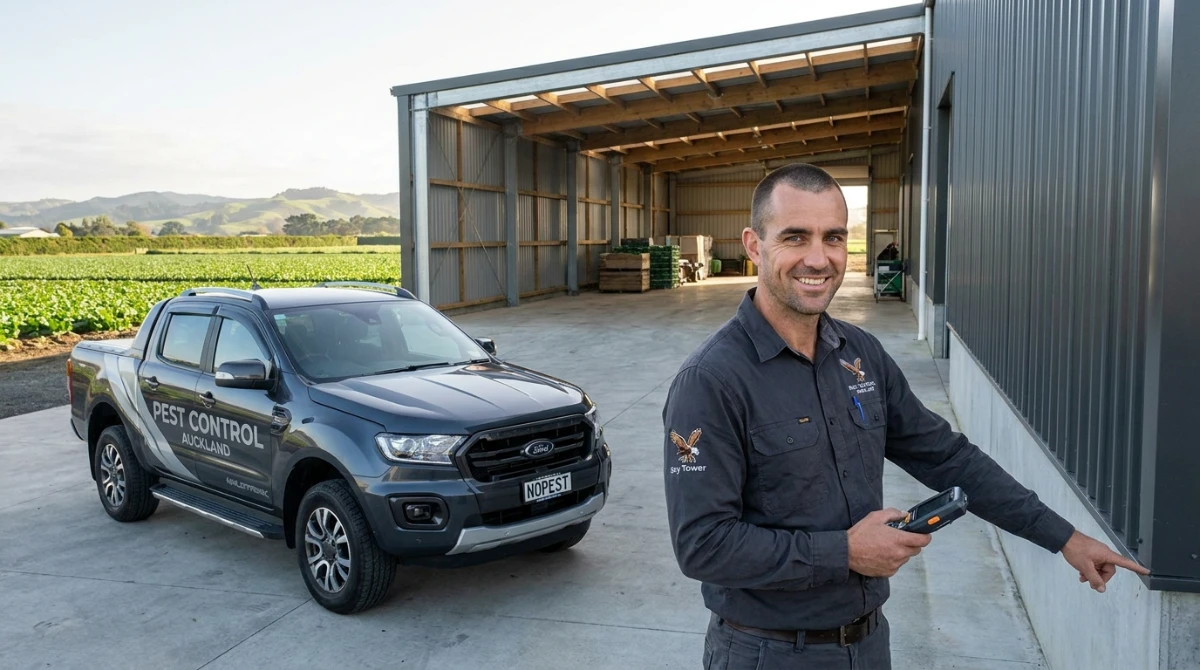
The upcoming FAOPMA 2026 Summit in Auckland is themed “FutureProof: Smarter Pest Solutions.” It highlights a massive industry shift away from toxic chemicals toward sustainable, tech-driven pest exclusion in the agricultural sector.
Top Threats to Packing Sheds and Farm Buildings
When we talk about Protecting Franklin’s Farmlands & Orchards from Agricultural Pests, we’re specifically looking at the structural side of your operation. We leave the broad-acre crop spraying to the agronomists.
Our job is to keep your infrastructure, storage, and processing areas completely sterile and compliant. Here are the main offenders causing grief for Franklin growers right now.
Rodents (Rats and Mice)
Rats are absolute structural wrecking balls. They’ll chew through the wiring in your expensive grading machinery, contaminate stored feed, and ruin your MPI export audits in a heartbeat.
Because farms offer unlimited food and shelter, rodent populations can explode exponentially. A single pair of rats living under a packing shed can produce up to 2,000 descendants in a single year if left unchecked.
Under the Animal Welfare Act 1999, if you use live-capture traps on your farm, they must be physically inspected within 12 hours after sunrise every single day. Glue boards for rodents are also heavily restricted and generally illegal for public use.
Wasps and High-Risk Insects
Wasps are a massive health and safety hazard for your picking and packing crews. A worker stepping on a ground nest during harvest can lead to severe anaphylaxis and immediate work stoppages.
With Biosecurity New Zealand currently managing the Yellow-Legged Hornet threat down in the Bay of Plenty, everyone across the upper North Island is on high alert. You need a rapid-response team to eradicate nests safely before someone gets hurt.
Why MPI and Food Act Compliance is Non-Negotiable
The days of chucking some toxic bait in the corner of the packing shed and hoping for the best are long gone. If you supply supermarkets or export overseas, your pest control has to be bulletproof.
Under the Food Act 2014 and strict HACCP guidelines, you cannot use toxic rodenticide bait in sensitive food preparation or packing areas. You need non-toxic monitoring and mechanical traps to prevent any chance of cross-contamination.
Furthermore, the EPA HPC Notice 2017 dictates that anyone handling Class 9 ecotoxic substances on a commercial site must be properly certified. That means you need a contractor holding a New Zealand Certificate in Pest Operations (Level 3).
We provide comprehensive digital reporting, site maps, and Safety Data Sheets (SDS) after every visit. This ensures you breeze through your next MPI or supermarket supplier audit without a hitch.
Managing Pests in Worker Accommodation
Many orchards and market gardens in Franklin provide on-site housing for seasonal workers. This brings a whole different set of rules into play under the Residential Tenancies Act.
If your worker cottages get infested with fleas, bed bugs, or rodents, you’re legally obligated to sort it out fast. Disputes over who pays for pest control are a massive headache you don’t need during the peak harvest season.
We provide fast, tenant-safe treatments that keep your crew healthy and your property compliant. A well-rested crew is a productive crew, and nobody sleeps well with rats scratching in the ceiling.
Breaking the Rural DIY Cycle of Despair
It’s tempting to grab a bucket of cheap bait from the local farm supply store and chuck it around the shed. We call this the DIY cycle of despair, and it almost never works long-term.
Why? Because surface-level treatments don’t address the root cause. If you have a hole in your corrugated iron or a gap under your roller door, new rats will just replace the dead ones within a week.
Plus, haphazard baiting is incredibly risky around working dogs, farm cats, and native wildlife. Our scientific approach ensures safety first, targeting the exact nesting sites and entry points while keeping your animals safe.
Walk around your corrugated iron sheds at night with a bright torch on the inside. Any light spilling out at the base means you have a gap large enough for a mouse or rat to squeeze through. Seal it up with steel wool and expanding foam.
Predictive IPM: Fixing the Root Cause
We don’t just spray and walk away. That’s a waste of your money and terrible for the local Franklin environment. We use Predictive Integrated Pest Management (IPM).
This means we find out exactly how the pests are getting in and we block them out. We look at the structural integrity of your barns, the moisture levels around your foundations, and your waste management processes.
When it comes to Protecting Franklin’s Farmlands & Orchards from Agricultural Pests, exclusion is always better than extermination. We back this up with our Silver Bullet Guarantee, meaning we do the job right the first time.
| Feature | DIY Farm Supply Methods | Predictive IPM (Our Approach) |
|---|---|---|
| Primary Focus | Reactive killing (treating the symptom) | Root-cause exclusion and prevention |
| Compliance Level | Low (Risks failing Food Act 2014 audits) | 100% MPI & HACCP Compliant |
| Safety Profile | High risk to working dogs and wildlife | Targeted, zero-emission, pet-safe |
| Long-Term Cost | High (Constant rebuying, potential stock loss) | Cost-effective (Fixes the problem once) |
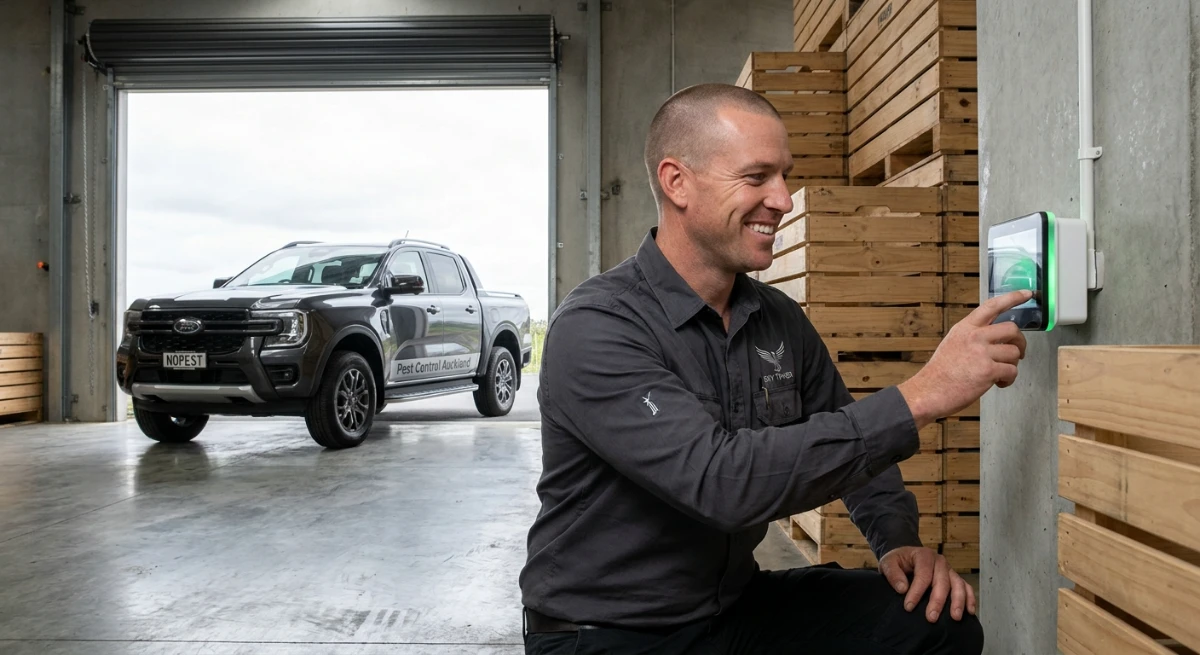
Clear Boundaries: What We Do and Don’t Treat
We believe in straight talking. Pest Control Auckland specializes in urban and commercial structural pest management. We are the experts you call for your packing sheds, worker housing, and equipment barns.
However, we don’t handle feral rural animals like stoats, ferrets, rabbits, or wild pigs. If you have those issues out in the paddocks, we can refer you to a specialized rural contractor who handles field pests.
Likewise, if you spot a strange imported insect or suspect a major biosecurity threat, report it immediately to MPI on 0800 80 99 66. We handle the local structural pests so you can focus on getting the harvest sorted.
Frequently Asked Questions
Got a few questions about keeping your rural property compliant and pest-free? Here is what other Franklin growers are asking us this season.

About the Author: Ronnie
Founder, Pest Control Auckland · Commercial & Residential Pest Expert · Certified Urban Pest Management Specialist
With years of experience in structural pest exclusion across Auckland’s rural fringes, Ronnie understands the strict compliance needs of the primary sector. Having consulted for numerous commercial growers, he is the definitive expert on Protecting Franklin’s Farmlands & Orchards from Agricultural Pests, ensuring facilities meet rigorous MPI and Food Act standards.