Renting out a property in Auckland comes with its fair share of responsibilities, and dealing with unexpected pests is easily one of the most stressful. When rats are scurrying in the ceiling or cockroaches take over the kitchen, the immediate question is always: “Who pays to fix this?”
For years, this was a massive grey area that caused endless arguments between landlords, property managers, and tenants. However, the legal landscape has shifted dramatically in recent years, removing much of the ambiguity.
With the final compliance deadline having passed on 1 July 2025, every private rental in New Zealand must now meet strict housing regulations. Understanding how healthy homes standards pest control nz rules apply to your property is no longer optional—it is a strict legal requirement for operating a rental business.
Key Takeaways
Under NZ law, landlords must provide a pest-free property at the start of a tenancy. The healthy homes standards pest control nz regulations require sealing structural gaps and fixing moisture issues. If pests enter due to these structural failures, landlords pay. If tenant hygiene causes the infestation, tenants pay.
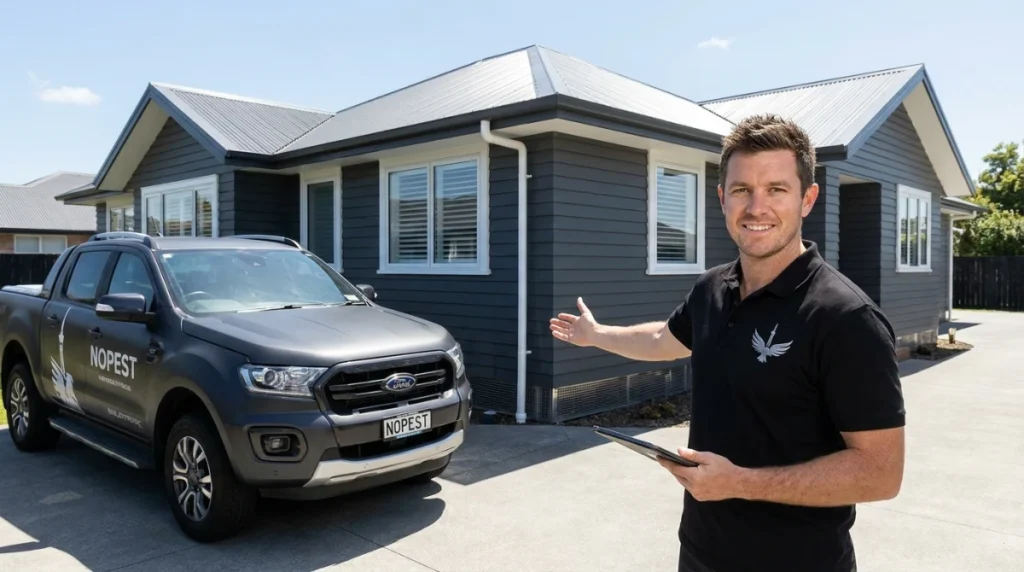
How Pest Infestations Violate Healthy Homes Standards
While the Residential Tenancies Act 1986 does not feature a specific standalone “pest control standard,” pest management is deeply woven into the existing compliance rules. The standards focus on creating warm, dry, and secure living environments for tenants across the country [1].
When a property fails to meet these baseline criteria, it naturally becomes a magnet for urban pests. Rodents, insects, and arachnids actively seek out the exact environmental conditions that the standards are designed to eliminate.
If an Auckland landlord ignores these regulations, they aren’t just risking a hefty fine from Tenancy Services. They are actively inviting costly, destructive pest infestations into their valuable investment property.
The Legal Framework for Auckland Landlords
Under Section 45(1)(a) of the Residential Tenancies Act, landlords are legally required to provide the premises in a reasonable state of cleanliness at the start of a tenancy. This means handing over a property that is completely free of rodents, insects, and other vermin.
Furthermore, the property must be maintained in a reasonable state of repair throughout the life of the tenancy. If the property degrades and allows pests to enter, the landlord is in breach of their ongoing legal obligations.
Compliance is judged in the present moment, not just on the day the lease was signed. If a Tenancy Tribunal complaint is brought today and your property no longer meets the standards, you can face severe financial penalties.
Landlords who fail to meet their obligations under the Healthy Homes Standards, or who fail to maintain a pest-free property due to structural neglect, can face exemplary damages of up to $7,200 from the Tenancy Tribunal.
The Link Between Dampness, Mould, and Pests
One of the core pillars of the regulations is the Moisture Ingress and Drainage standard. Landlords must ensure their properties have efficient drainage systems, functional guttering, and, where applicable, ground moisture barriers in enclosed subfloors [2].
Pests absolutely love damp, humid environments. Cockroaches, silverfish, and highly destructive borer beetles thrive in homes with poor ventilation and pooling water beneath the floorboards.
If a tenant reports a severe cockroach infestation and the root cause is a leaking pipe or a damp, unsealed subfloor, the landlord is entirely liable. By fixing the moisture issue, you permanently remove the micro-climate that allows these pests to breed rapidly.
Structural Integrity and Rodent Damage
The Draught Stopping standard requires landlords to block any unreasonable gaps and holes in walls, ceilings, windows, floors, and doors. This is exactly where healthy homes standards pest control nz compliance becomes incredibly clear and actionable.
A rat can easily squeeze through a gap the size of your thumb, while a juvenile mouse only needs a hole the size of a standard pen. If your rental property has unsealed gaps around exterior plumbing pipes or broken subfloor vents, you are providing an open door for rodents.
When pests enter a home through these structural failures, the Tenancy Tribunal almost always rules that the extermination costs fall entirely on the landlord. Sealing these gaps keeps the expensive winter heat in, but more importantly, it keeps the rats out.
Landlord vs. Tenant: Who Pays for Pest Control?
Determining who pays for the exterminator is the most common source of friction during a pest crisis. The answer always depends on two factors: when the infestation started, and what caused it to happen.
The law requires a practical assessment of the property’s condition versus the tenant’s daily living habits. Neither party is automatically to blame, but evidence will quickly point to the responsible party.
Let’s break down the specific scenarios where liability is clearly defined under New Zealand tenancy laws.
When the Landlord is Financially Responsible
Landlords are generally required to pay for professional pest control in several specific situations. The overarching theme is that the landlord pays when the issue is related to the building’s structure or pre-dates the tenant.
You will be expected to cover the extermination bill if:
- Pre-existing Infestations: The pests were already present in the home when the new tenant moved in.
- Structural Failures: Pests are entering through broken vents, gaps in the cladding, or unsealed roof spaces (a direct failure of the draught stopping standard).
- Environmental Hazards: Issues like wasp nests in the garden or eaves, which are considered exterior hazards beyond the tenant’s control.
When the Tenant Must Pay for Extermination
Tenants are not entirely off the hook when it comes to property maintenance. They have a legal obligation to keep the home reasonably clean and tidy, and to dispose of household rubbish properly [3].
If the landlord provides a secure, compliant home, but pests arrive anyway, the tenant’s living habits are usually scrutinized.
A tenant will typically be held liable for pest control costs if:
- Poor Hygiene: Leaving unwashed dishes out for days, failing to clean up food spills, or letting rubbish bags pile up on the back porch.
- Pet-Related Issues: Flea infestations caused by the tenant’s cats or dogs are entirely the tenant’s responsibility to resolve at the end of the lease.
- Introduced Pests: Bringing bed bugs into the property via second-hand furniture or luggage after traveling overseas.
| Pest Issue | Likely Responsible Party | Reasoning under NZ Law |
|---|---|---|
| Rats in the ceiling | Landlord | Usually indicates a structural entry point or roof gap that needs sealing. |
| Fleas in the carpet | Tenant | Almost exclusively caused by tenant’s pets. Must be treated before moving out. |
| Cockroaches in a clean kitchen | Landlord | If hygiene is good, the issue is likely structural dampness or a pre-existing nest. |
| Ants swarming open rubbish | Tenant | Direct result of poor hygiene and failing to manage household waste. |
Proactive Pest Management for Landlords
Now that the July 2025 deadline has come and gone, compliance is an ongoing, everyday obligation. A property that was perfectly compliant three years ago might easily fail an inspection today.
Building materials degrade, weather stripping perishes in the sun, and determined rodents can chew through old exclusion mesh. Landlords need to shift their mindset from a one-off compliance checklist to continuous, proactive property maintenance.
Being proactive saves a massive amount of money. Paying for a minor repair today is vastly cheaper than paying for a massive structural fumigation and facing a prolonged vacancy later.
Sealing Entry Points and Improving Ventilation
The absolute best form of pest control is physical exclusion. You cannot control the population of rodents in the outside urban environment, but you can entirely control their ability to get inside your rental property.
We highly recommend installing heavy-duty galvanized mesh over all subfloor vents. This crucial step allows essential airflow to prevent dampness while keeping rats, mice, and stray animals out of the foundations.
Additionally, check the weather stripping around all exterior doors and windows between every tenancy. If you can clearly see daylight around the edges of a closed door, an insect or rodent can easily find its way inside.
One of the most common entry points for mice is the gap around plumbing pipes under the kitchen sink. Use expanding foam or steel wool to seal the space where pipes enter the wall cavity.
Managing Exterior Environmental Hazards
Pest control doesn’t stop at the exterior walls of the house. The way the section is maintained plays a massive role in whether pests decide to move indoors.
Overgrown vegetation, piles of old firewood, and unmanaged compost bins provide perfect nesting grounds for rats. As the Auckland weather cools down in autumn, these exterior pests will naturally migrate inside looking for warmth.
Encourage your tenants to keep the lawns mowed, and ensure your property manager is actively checking the exterior perimeter during their routine quarterly inspections.
Scheduling Annual Pest Audits
Smart property investors treat pest control as a standard annual maintenance cost, just like cleaning the gutters or servicing the heat pump. An annual audit catches small, hidden issues before they become expensive, stressful disasters.
During these inspections, a qualified urban pest manager will identify new entry points, assess moisture levels, and provide a detailed, actionable report. This documentation is invaluable if a dispute ever arises with a tenant.
If you can definitively prove that the property was pest-free and structurally sound at the start of the year, it becomes much easier to determine liability if a sudden infestation occurs later.

Documenting Compliance for Tenancy Services
If a tenant takes a pest complaint to the Tenancy Tribunal, the burden of proof almost always falls heavily on the landlord. You must demonstrate that you provided a clean, safe, and fully compliant home from day one.
Handwritten notes, verbal agreements, or DIY receipts from the local hardware store simply won’t cut it. The Tribunal expects to see professional, documented evidence of maintenance and eradication efforts.
This is exactly why partnering with a certified local pest expert is so critical for your property management strategy. We provide clear, detailed service reports that outline exactly what was treated.
The Risks of DIY Pest Control in Rentals
When a serious infestation occurs, trying to fix the problem yourself with cheap DIY baits is a dangerous false economy. Not only is it usually ineffective, but it also shows a severe lack of professional care if the issue escalates legally.
Placing toxic baits around a rental property without proper bait stations is a massive health and safety risk. If a tenant’s pet or child accesses these baits, the landlord can face severe legal consequences.
Professional urban pest managers use lockable, tamper-proof bait stations and targeted treatments that eliminate the pests without endangering the occupants.
A professional pest control service report acts as your legal shield. It documents the structural condition of the home, the treatments applied, and any specific hygiene recommendations given to the tenant.
Keeping Records of Professional Eradication
Using a certified technician ensures the job is done safely, legally, and effectively. It also provides you with an official tax invoice and a formal treatment certificate for your property records.
These official documents prove that you took immediate, appropriate action to resolve the tenant’s complaint. This protects you from claims of negligence under the healthy homes standards pest control nz guidelines.
Keep these records safely stored alongside your original Healthy Homes compliance certificate and your tenancy agreements.
Book a Healthy Homes Pest Compliance Audit
At Pest Control Auckland, we deeply understand the unique pressures and legal requirements that local landlords and property managers face. We don’t just spray chemicals and walk away; we provide practical, long-term, and compliant solutions.
Our technicians are fully certified and intimately familiar with Auckland’s specific seasonal pest challenges. We can help you identify structural vulnerabilities, eliminate active infestations, and keep your property firmly on the right side of the law.
Don’t wait for an angry tenant complaint or a Tribunal notice to find out your property has a pest problem. Contact us today to book a comprehensive inspection and protect your valuable rental investment.
Call Pest Control Auckland today to schedule a comprehensive property audit. We’ll check for structural entry points, assess moisture risks, and provide the documentation you need for total peace of mind.

