New Zealand is famous worldwide for its breathtaking landscapes and, thankfully, its lack of deadly wildlife. Unlike our neighbours across the Tasman, we don’t have to check our shoes for scorpions or worry about snakes hiding in the garden. However, when it comes to venomous spiders in NZ, what Aucklanders need to know is that a few eight-legged residents do warrant a healthy dose of respect.
For many Auckland families, the mere sight of a dark, fast-moving spider scurrying across the living room floor is enough to cause instant panic. We hear it all the time from our customers who are frantic about keeping their toddlers and pets safe. It is completely normal to feel protective of your home and family when dealing with unwanted pests.
But the reality of spider threats in our beautiful city is often heavily distorted by urban legends and sensationalised media stories. As your local experts in urban pest management, we are here to set the record straight. Our guide to understanding venomous spiders in NZ covers everything from identifying the real threats to keeping your property safe and pest-free year-round.
Key Takeaways
When dealing with venomous spiders in NZ, what Aucklanders need to know is that severe bites are incredibly rare. The native Katipō is endangered and restricted to coastal dunes, while Redbacks are seldom found in Auckland. White-tail bites are painful but do not cause flesh-eating ulcers. Professional pest control effectively manages all local spider threats.
The Reality of Spiders in Auckland
Auckland’s temperate, humid climate creates the perfect breeding ground for a wide variety of insects. Where there are insects, spiders will naturally follow to hunt them. Most of the spiders you encounter in your home, such as the common house spider or daddy long-legs, are entirely harmless to humans.
In fact, these common spiders act as nature’s pest controllers, keeping fly and mosquito populations down. However, we understand that finding a large spider in your child’s bedroom is deeply unsettling. The fear of being bitten is a valid concern for many parents and pet owners.
To put things into perspective, recent data provides a clear picture of the actual risks. Between 2017 and 2023, the National Poisons Centre responded to 1,128 calls relating to spider bites across the country. Out of all those calls, only 35 specifically mentioned highly venomous species, and only one was a confirmed Redback bite.
This data highlights that while spider bites do happen, severe envenomation is incredibly rare in New Zealand. The vast majority of incidents involve minor pain and localized swelling, similar to a bee sting. You do not need to live in fear, provided you understand the basic facts about our local species.
Are Auckland Homes at Risk?
For the average Auckland homeowner or renter, the risk of encountering a dangerously venomous spider indoors is extremely low. The most feared spiders in New Zealand simply do not prefer the busy, clean environments of modern urban housing.
Instead, the pests that most commonly trigger calls to our team are white-tails, cockroaches, and ants. By focusing on practical, certified urban pest management, you can easily eliminate these common nuisances without resorting to dangerous DIY chemicals.
The Native Threat: Katipō Spiders
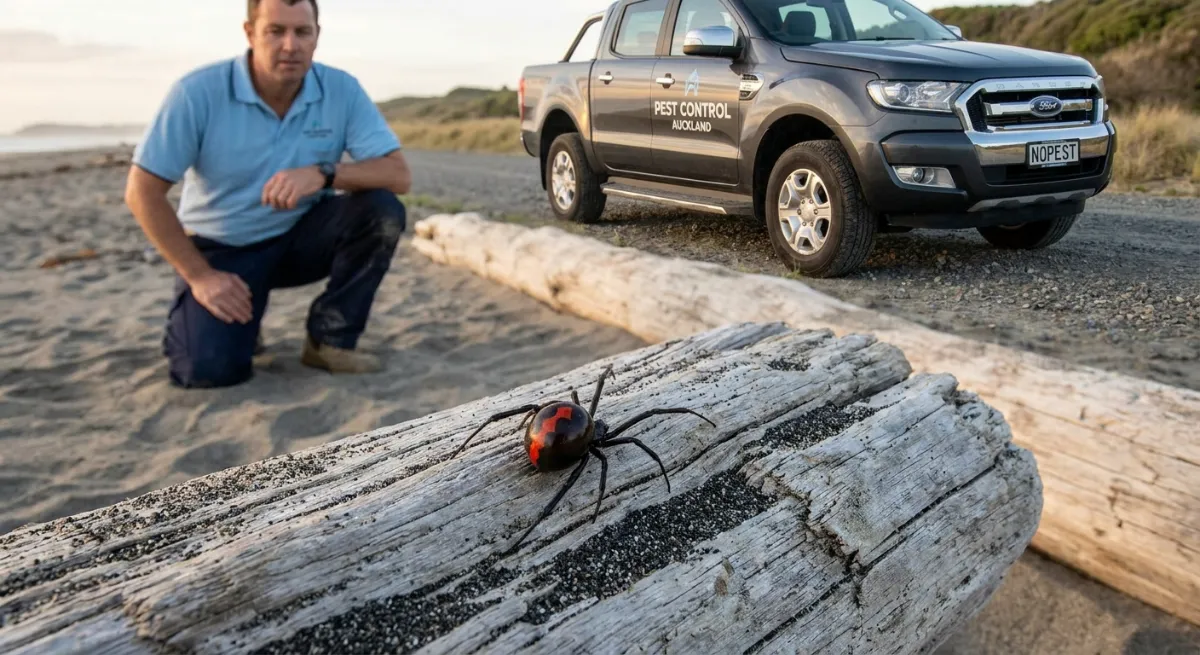
The Katipō is New Zealand’s only native venomous spider. Its name translates to ‘night stinger’ in Te Reo Māori, reflecting its historical significance in local culture. The adult female is easily recognized by her black, spherical abdomen featuring a distinct red or orange stripe.
Despite their fearsome reputation, Katipō spiders are incredibly shy and non-aggressive. They will typically play dead or attempt to flee when disturbed, only biting as a last resort if accidentally crushed against the skin.
Identification and Habitat
You will almost certainly never find a Katipō in a standard Auckland suburban home. They have a highly specialized habitat, living exclusively in coastal sand dunes and under driftwood. They are sometimes found on the rugged beaches of Auckland’s West Coast, hiding among marram grass.
Sadly, the Katipō is currently classified as an endangered and declining species. Habitat loss and competition from introduced spiders have severely reduced their numbers over the past few decades.
Because they are a declining native species, pest control professionals do not actively target Katipō spiders. If you spot one at the beach, simply leave it alone to play its part in our native ecosystem.
Bite Symptoms and Danger
If a Katipō does bite, the venom is highly potent. Symptoms include localized pain that quickly spreads, sweating, difficulty breathing, and abdominal cramping. However, antivenom is readily available at New Zealand hospitals, and there have been no recorded fatalities in many decades.
If you are exploring Auckland’s coastal dunes with your family, the best prevention is simply wearing closed shoes and avoiding turning over large pieces of driftwood with bare hands.
The Aussie Invader: Redback Spiders
The Redback spider is an invasive species that originally hails from Australia. It is closely related to the Katipō and the American Black Widow, sharing a similar body shape but sporting a prominent red hourglass marking on its abdomen.
Redbacks are notorious for living close to human habitation. They love to build their messy, tangled webs in dry, sheltered areas like sheds, garages, and under outdoor furniture. This proximity to humans makes them a more practical concern than our native Katipō.
Are They in Auckland?
The good news for Aucklanders is that Redbacks have not established widespread breeding populations in our city. They have successfully established themselves in drier regions like Central Otago and New Plymouth.
While they are occasionally intercepted in cargo or shipping containers arriving at Auckland’s ports, our humid climate isn’t their preferred environment. Still, it pays to be vigilant if you are purchasing second-hand outdoor furniture or machinery imported from Australia.
Redback venom attacks the nervous system. If bitten, do not apply a pressure bandage as this can worsen the severe pain. Apply an ice pack and seek immediate medical attention.
The Misunderstood White-Tail Spider
When discussing venomous spiders in NZ and what Aucklanders need to know, the white-tail spider is undoubtedly the most infamous. Easily identified by their cylindrical grey bodies and the distinct white spot on their rear, these spiders are a common sight inside Auckland homes.
Unlike web-spinning spiders, white-tails are nomadic hunters. They actively roam your house at night searching for their favourite food: other spiders. This wandering behaviour is why they frequently end up in laundry baskets, bedding, or shoes left on the floor.
The Necrosis Myth Debunked
For decades, an urban myth has circulated claiming that white-tail spider bites cause necrotic ulcers—horrific, flesh-eating wounds that take months to heal. This persistent rumour has caused immense anxiety for Auckland families. However, modern medical science has completely debunked this myth.
A definitive Australian medical study reviewed 130 confirmed white-tail spider bites. The results were clear: there were zero cases of necrotic ulcers or confirmed infections directly caused by the venom. The venom simply does not have the potential to cause tissue necrosis.
Because white-tails roam at night, they love to hide in clothes or towels left on the floor. Always shake out your laundry and check your shoes before putting them on to prevent accidental bites.
Why ACC Claims Tell a Different Story
You might wonder, if the venom isn’t flesh-eating, why are there thousands of ACC claims for white-tail bites in New Zealand? The answer lies in secondary infections and misdiagnosis.
Any minor scratch, insect bite, or ingrown hair can become infected by common skin bacteria like Staphylococcus. When an unexplained, painful skin infection appears, many people incorrectly blame the dreaded white-tail, even if they never saw a spider. While a white-tail bite is certainly painful—akin to a bee sting—it will naturally settle within 24 hours if kept clean.
| Spider Species | Identification | Typical NZ Habitat | Danger Level |
|---|---|---|---|
| Katipō | Black body, red/orange stripe | Coastal sand dunes, driftwood | High (Venomous, but extremely rare) |
| Redback | Black body, distinct red hourglass | Dry regions (Otago), rare in Auckland | High (Seek immediate medical help) |
| White-Tail | Cylindrical grey body, white spot on tail | Urban homes, laundry, behind furniture | Low (Painful bite, no necrosis) |
How to Keep Your Auckland Home Pest-Free
While the truth about venomous spiders in New Zealand is reassuring, nobody wants to share their home with creepy crawlies. Managing spider populations requires a smart, targeted approach rather than indiscriminately spraying harsh chemicals around your family.
Many Aucklanders try DIY bug bombs to eliminate white-tail spiders, only to find the problem returns weeks later. This happens because white-tails don’t build webs; they actively roam looking for other spiders to eat. If you want to get rid of white-tails, you need a strategy that eliminates their food source.
Practical Prevention Tips
You can significantly reduce the number of spiders entering your home by making a few simple environmental changes. Spiders love undisturbed areas, so a little housekeeping goes a long way in deterring them.
- Clear Away Clutter: Keep your garage, attic, and wardrobes tidy. Store items in sealed plastic bins rather than cardboard boxes.
- Seal Entry Points: Check your home for cracks around windows, doors, and plumbing fixtures. Weather-stripping is an easy way to keep pests outside.
- Manage Outdoor Lighting: Bright exterior lights attract flying insects at night, which in turn attract hungry spiders. Consider using yellow bug lights near your entryways.
- Trim Vegetation: Keep bushes, shrubs, and tree branches trimmed back from the exterior walls of your house to remove natural spider bridges.
Professional Urban Pest Management
When prevention isn’t enough, it’s time to call in the experts. Professional urban pest management is the safest and most effective way to protect your home. We don’t just spray and leave; we use certified, family-friendly treatments that target the root of the infestation.
By applying a comprehensive interior and exterior barrier spray, we eliminate the common house spiders and insects that white-tails feed on. Once their food source is gone, the white-tails naturally move elsewhere. This method ensures long-lasting results without exposing your children or pets to unnecessary risks.
Tired of finding spiders in your home? Book our General All-Pest Spray for complete interior and exterior coverage. We provide upfront pricing and safe, effective results.