Spotted a pile of fine sawdust under the skirting board and felt your stomach drop? You’re certainly not the first. I get calls every week from panicked Aucklanders who have found holes in their weatherboards and immediately jump to the worst-case scenario.
They think their home is secretly being eaten alive by a massive colony of termites. It is a fair worry, especially if you have seen those horror stories on Australian home renovation shows where a house practically crumbles overnight. When you are staring at damaged framing, your imagination tends to run wild.
But here in New Zealand, the reality is a bit different. When we look at the facts of termites vs borer nz, the culprit chewing through your floorboards is almost always the Common House Borer. Understanding exactly what you are dealing with is the first step to sorting it out permanently.
If you get the identification wrong, you could end up wasting money on the wrong treatment. Worse still, you might accidentally ignore a serious biosecurity threat. Let’s break down the differences so you know exactly what those unwanted houseguests are up to.
Key Takeaways
When comparing termites vs borer nz, borer is the most common threat to Auckland homes, leaving 2mm exit holes and fine dust. New Zealand has harmless native termites, but highly destructive exotic subterranean termites are a biosecurity threat requiring immediate MPI notification, not standard pest control.
Are There Termites in Auckland?
The short answer is yes, but they probably are not the ones you need to worry about. We actually have three native species of termites right here in New Zealand. They have been quietly living in our native bush long before any houses were built.
However, our native termites are basically nature’s clean-up crew. They prefer rotting logs, damp tree stumps, and decaying wood out in the Waitākere Ranges. They do not form massive, aggressive colonies that strip a house to its bones.
Unless your house has severe moisture issues and actively rotting timber, native termites have zero interest in your framing. If you have dry, sound timber, the native species will happily leave your property alone.
Native Termites vs. Biosecurity Threats
The real danger comes from across the ditch. Australian subterranean termites are a completely different beast. These exotic invaders are highly destructive and can cause catastrophic structural damage to a home in a matter of months.
They occasionally hitchhike into New Zealand on imported timber, luxury yachts, or shipping containers. Since 2020, the Ministry for Primary Industries (MPI) has intercepted multiple exotic termite infestations on boats arriving in our waters, with recent detections continuing right up through mid-2025.
In 2021, a land-based infestation was even detected right here in Auckland and had to be aggressively eradicated. This is why staying vigilant is so important, even if the odds of finding an exotic termite are relatively low.
Exotic termites are a highly classified biosecurity threat in New Zealand. If you suspect you have found Australian subterranean termites, do not attempt to spray them. You must contact MPI immediately to prevent national spread.
Visual Differences: Damage and Insects
When you are trying to figure out the differences between termites vs borer nz, the evidence they leave behind is your best clue. You rarely see the actual insects at work, because they spend their entire lives hidden deep inside the wood.
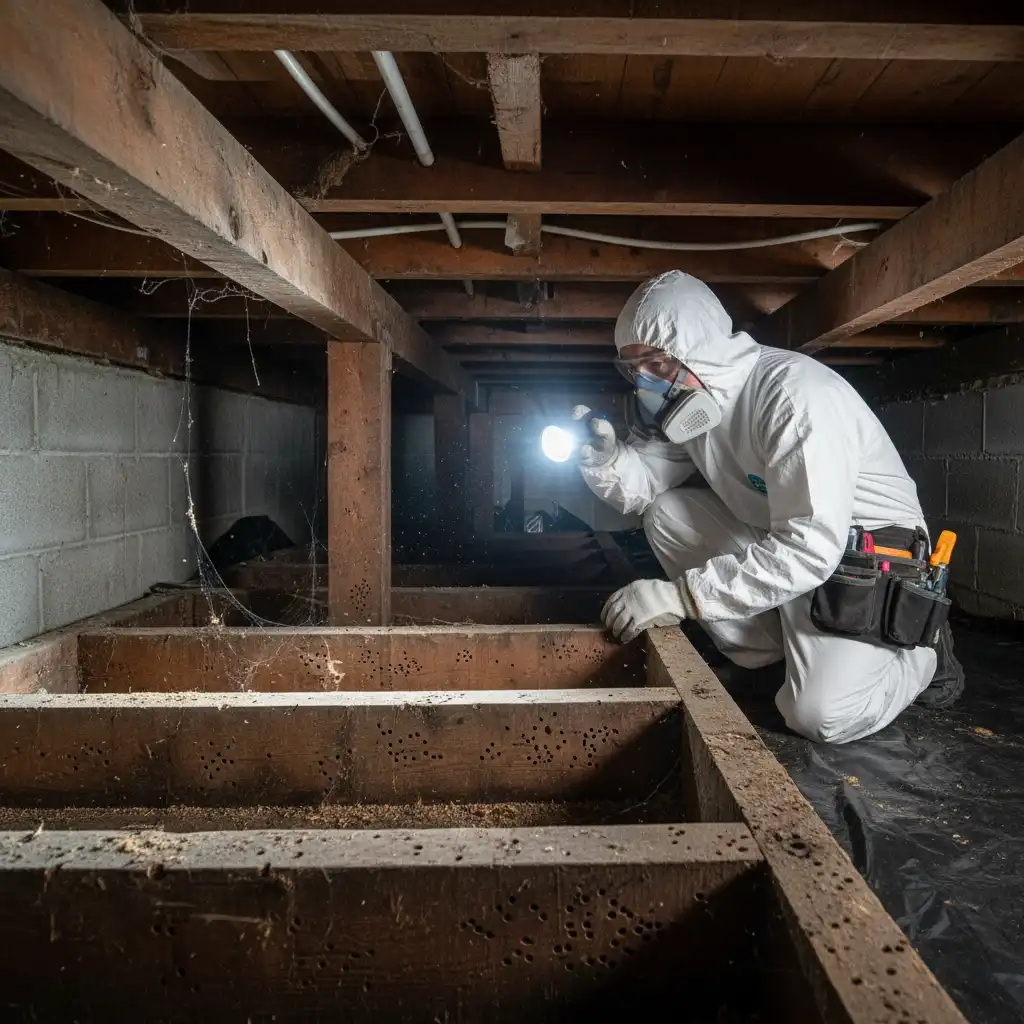
Borer beetles lay their eggs on bare, untreated timber. The larvae hatch and burrow inside, spending up to four years eating the wood from the inside out. They are patient, quiet, and highly destructive over the long term.
The adult beetle only emerges to mate, punching a tiny hole through the surface of the wood. That is usually the exact moment when a homeowner spots the problem and gives us a buzz.

Borer Exit Holes vs. Termite Mud Tubes
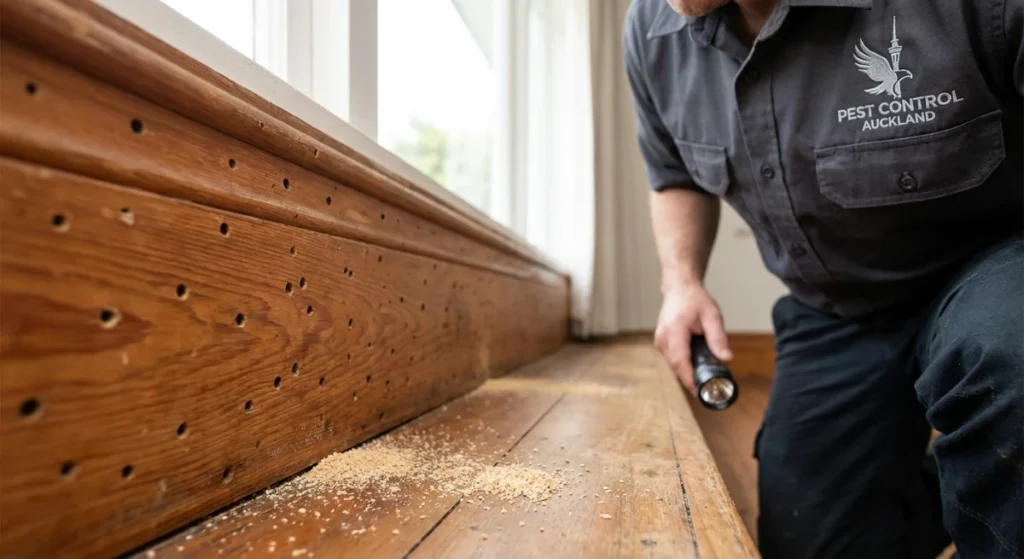
The Common House Borer leaves perfectly round, clean-cut exit holes that are about 2mm wide. If you have got a Two-Toothed Longhorn Borer problem, the holes will be larger and slightly oval-shaped, often up to 7mm across.
Termites operate completely differently. Subterranean termites hate the light and need constant moisture to survive. They do not just fly into your roof space and start chewing.
To travel from the soil to your house framing, they build enclosed “mud tubes” up the side of your concrete foundation blocks. If you see pencil-thick tubes of dried mud running up your foundation walls, you have a serious problem that requires immediate attention.
Frass (Sawdust) vs. Termite Droppings
Another dead giveaway is the mess they leave behind. Borer larvae push fine, powdery dust out of their exit holes as they emerge. This pale, gritty dust is known in the trade as frass.
If you wipe the dust away and more appears a few days later, you have got a highly active borer infestation. Drywood termites, on the other hand, leave behind distinct droppings that look like tiny, hard, hexagonal pellets.
Subterranean termites do not leave sawdust at all. Because they need moisture, they pack mud and soil into the galleries they hollow out, leaving the timber looking like it is stuffed with dried dirt.
Place a sheet of black paper directly under the suspected borer holes. Leave it for a week. If you see fresh white dust on the paper, the borer larvae are currently active and require immediate treatment.
| Feature | Common House Borer | Exotic Subterranean Termites |
|---|---|---|
| Visual Signs | 2mm round exit holes in timber | Mud tubes on foundation walls |
| Debris Left Behind | Fine, powdery frass (sawdust) | Mud packed into hollowed wood |
| Target Material | Untreated sapwood, old furniture | Any structural timber, regardless of age |
| Action Required | Call a qualified local pest controller | Call MPI Biosecurity (0800 80 99 66) |
Auckland’s Climate: A Perfect Storm for Timber Pests
If you live in Auckland, your home is sitting in the perfect incubator for timber pests. Our humid autumns and mild winters create the exact moisture levels that borer beetles need to thrive.
Many of our beautiful older villas and bungalows were built before the 1950s using untreated native timbers like rimu and mataī. While these timbers are stunning, they are an absolute buffet for a hungry borer larvae.
When you combine untreated subfloors with the damp, poorly ventilated crawl spaces common in older Auckland homes, you get a recipe for disaster. This is why proactive monitoring is so critical for local homeowners.
Treatment Differences: Why Accurate ID Matters
Treating borer is a standard procedure for a qualified pest controller. Treating exotic termites is a strict government biosecurity operation. This is why knowing the difference between termites vs borer nz is absolutely crucial.
If you try to tackle a suspected borer problem with a cheap hardware store bug bomb, you are stepping straight into the “DIY Cycle of Despair”. Those bombs only kill the adult beetles flying around the room; they do absolutely nothing to the larvae chewing away deep inside the wood.
For borer, we use targeted residual treatments. We apply a specialized, MPI-approved timber preservative that penetrates the wood and breaks the breeding cycle entirely.
We do not just spray and walk away. Ronnie is Class 9 qualified and assesses your subfloor moisture levels and structural integrity to deliver root-cause eradication. That is how we back our work.
With the massive FAOPMA Pest Summit hitting Auckland in July 2026, the entire industry is shifting toward predictive, smart pest management. We utilise zero-emission, highly targeted treatments that keep your kids and pets completely safe while effectively destroying the borer lifecycle.
Landlord vs. Tenant: Who is Responsible?
This is a massive point of friction in the Auckland rental market. When borer holes start appearing in the floorboards, tenants often panic, and landlords often drag their feet.
Under the Residential Tenancies Act, addressing borer is strictly the landlord’s responsibility. Because borer relates directly to the structural integrity and maintenance of the property, it falls outside the tenant’s daily hygiene obligations.
Property managers and landlords need to stay compliant with the Healthy Homes standards. Ignoring a borer issue can lead to failed flooring, massive repair bills, and serious liability at the Tenancy Tribunal.
Running a business? We provide documented treatment reports for every visit, ensuring you stay completely compliant with the Food Act 2014 and local Auckland Council audits.
When to Call MPI for Suspected Exotic Termites
If you find mud tubes on your foundation or spot aggressive, large-jawed insects swarming inside your home, stop what you are doing immediately. Do not spray them with fly spray.
Do not disturb the wood or try to rip the wall linings off to see how far the damage goes. Exotic termites are a serious threat to New Zealand’s economy, our native forests, and our agricultural sectors.
You need to call the MPI Biosecurity hotline immediately on 0800 80 99 66. They will send a specialized team to investigate and, if necessary, set up professional baiting stations to wipe out the entire colony safely.

If you are just seeing standard 2mm holes and a bit of dust, give us a buzz instead. Ronnie will pop round, have a yarn, and sort out those unwanted houseguests before they do any more damage to your home.