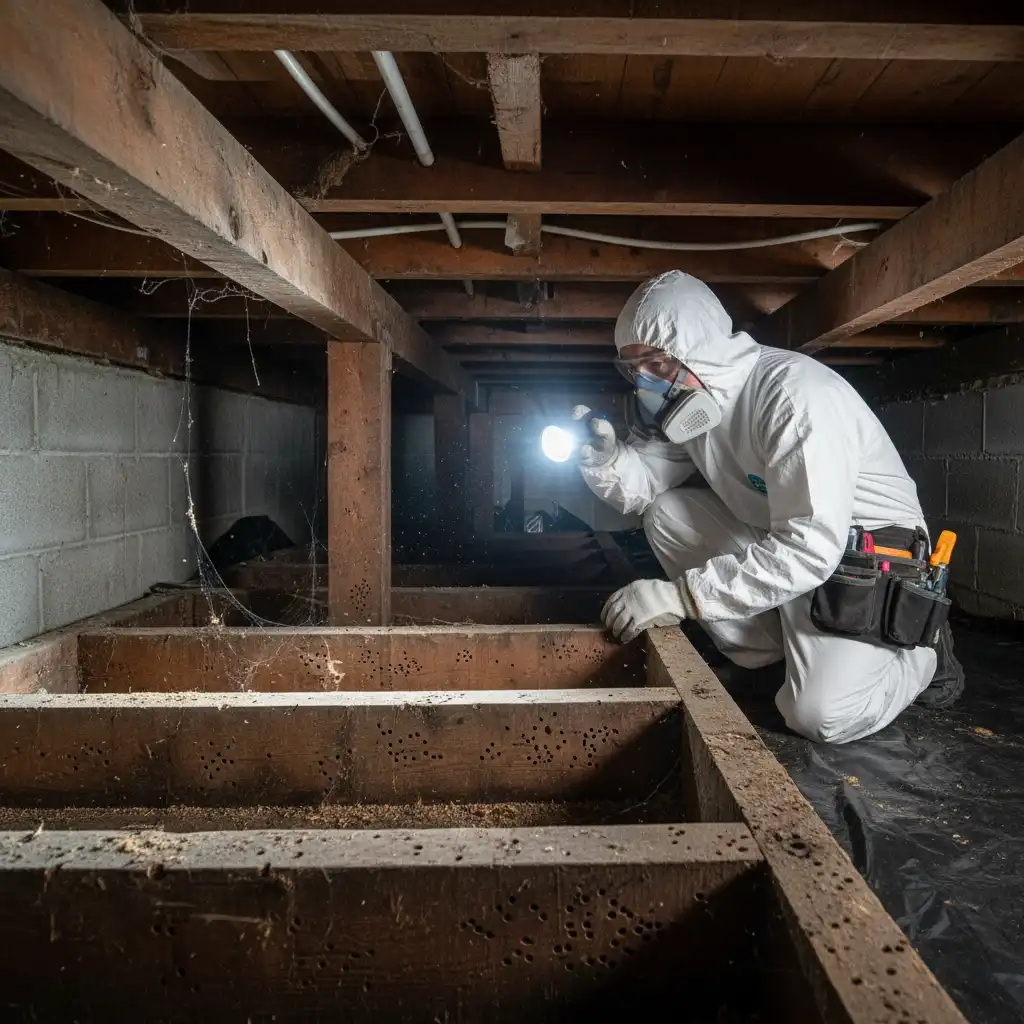
Kia ora. If you live in an older Auckland villa with beautiful native timber floors, you probably already know the sheer panic of spotting fresh, blonde wood dust under the skirting boards.
Those little piles of frass mean you’ve got unwanted houseguests, and they are currently eating your house. Back in South Africa, we dealt with termites that could strip a roof bare in a single season.
Here in New Zealand, the Common House Borer is a bit slower, taking their time over a few years, but they are just as destructive if left unchecked.
When I pop round to inspect a sub-floor, the first question homeowners always ask is: how long does borer treatment last? It is a fair question, especially when you are weighing up the cost of a professional job versus another useless trip to the hardware store.
You want to know that the money you spend is actually going to protect your biggest asset. We don’t just spray and walk away; we focus on getting the product deep into the timber to break the lifecycle for good.
Key Takeaways
A professional borer treatment typically lasts for 10 years. Deep-penetrating residual insecticides bond with the timber, killing emerging adult beetles and preventing new eggs from hatching. However, the lifespan of the treatment heavily depends on keeping the sub-floor dry and well-ventilated.
The Lifespan of Deep-Penetrating Timber Treatments
If you want the short answer on how long does borer treatment last, a professional, deep-penetrating application will protect your timber for at least 10 years. We use highly effective residual synthetic pyrethroids that are designed to bond directly with the cellulose in the wood.
Because the borer larvae live deep inside the timber for up to four years, a basic surface spray simply will not reach them. Our treatment sits inside the wood fibers, waiting patiently for the adult beetle to eat its way out.
Once the adult emerges, it contacts the treated wood and dies before it can mate and lay fresh eggs. That is exactly how we break the cycle and sort it out permanently.
Handling these heavy-duty residual insecticides isn’t a job for the weekend warrior. In New Zealand, applying Class 9 ecotoxic substances requires serious credentials.
I am a qualified Level 3 Urban Pest Management contractor, which means I know exactly how to mix and apply these products safely. We strictly follow the EPA guidelines to ensure the treatment is lethal to wood-boring insects, but completely safe for your family and pets once it has dried.
Factors That Affect Treatment Longevity
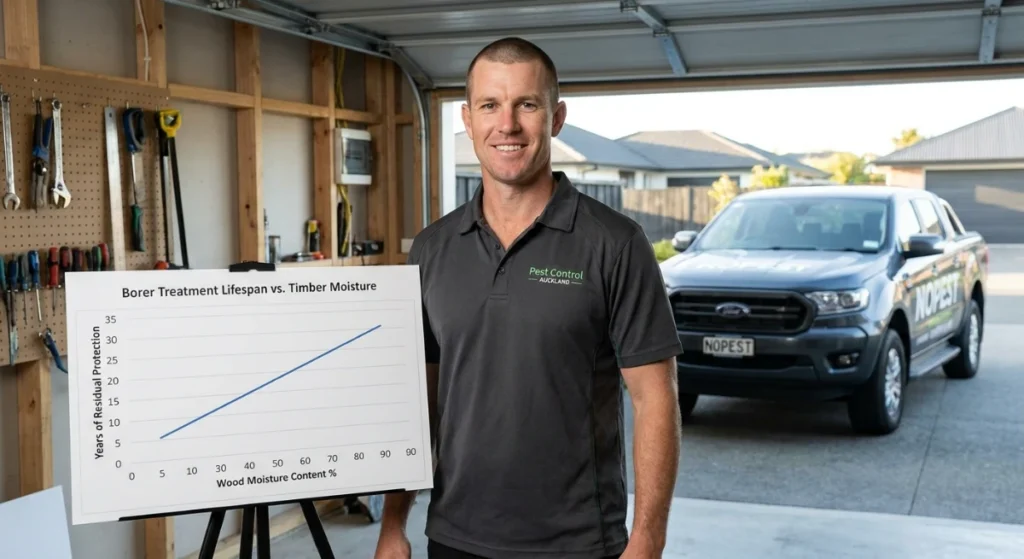
While the chemicals we use are rated for a decade of protection, the real world can sometimes throw a spanner in the works. The actual lifespan of your treatment heavily depends on the environmental conditions under your house.
Moisture Levels in Sub-Floors
Auckland is notoriously damp, especially during the winter months. If your sub-floor has poor ventilation or a hidden plumbing leak, that moisture gets sucked right up into the floorboards.
Damp wood breaks down the chemical barrier much faster than dry wood. It also makes the timber softer, which is essentially ringing the dinner bell for female borer beetles looking for an easy place to lay their eggs.
Crawl under your house and check for damp soil or leaking pipes. Fixing moisture issues is step one in stopping borer from destroying your timber.
We always check for moisture issues before we even start mixing chemicals. If you have a damp issue, you need to fix the leak or install a polythene vapor barrier, or you are just throwing your money away.
Type of Timber (Rimu, Pine, Kauri)
Homes built before the 1960s in Auckland are usually packed with gorgeous native timbers like Rimu, Matai, and Kauri. Borer absolutely love the softer sapwood found on the edges of these native floorboards.
The darker heartwood is generally too hard for them, but they will happily chew through the sapwood until your floor joists look like Swiss cheese.

Different timbers absorb our treatments at different rates. Dry, untreated pine soaks it up like a sponge, giving you fantastic long-term protection.
Harder native timbers require a heavier, more methodical application to ensure the chemical penetrates deep enough to be effective.
Understanding Our 5-Year Borer Warranty
We back our work with what we call the Silver Bullet Guarantee. For borer work, that means a solid 5-year warranty on our sub-floor and roof cavity treatments.
You might be wondering why the warranty is 5 years if the treatment itself can last up to 10. It all comes down to the frustratingly slow lifecycle of the borer beetle.
A larva can live deep inside the wood for up to four years before finally emerging as an adult. If we treat your house today, you might still see a few isolated flight holes appear next year from larvae that were already deep inside the wood.
Our borer treatment warranty ensures that the chemical remains highly active long enough to kill them when they finally emerge.
If you find active borer within that 5-year window, give us a buzz, and we will come back and re-treat the affected area at no extra cost.
| Treatment Method | Penetration Depth | Effective Lifespan | Best Used For |
|---|---|---|---|
| Hardware Store Borer Bomb | None (Airborne only) | 1 to 2 Weeks | Temporary knockdown of flying adults |
| DIY Brush-On Fluid | 1 to 2 Millimeters | 1 to 2 Years | Small pieces of antique furniture |
| Professional Residual Spray | Deep into wood fibers | 10+ Years | Whole-house structural protection |
Preventative Maintenance to Keep Borer Away
Killing the borer is only half the battle; keeping them out is where the real work begins. The borer flight season in New Zealand runs from October through to March.
During these warmer months, adult beetles take to the air, actively looking for fresh, bare wood to lay their eggs. If your sub-floor is exposed and untreated, it is a prime target.
Bug bombs do not penetrate timber. They only kill airborne adults, leaving the destructive larvae safely hidden inside your floorboards.
To protect your home, you need to focus on reducing moisture and improving airflow. Ensure your sub-floor vents are clear of overgrown plants and debris.
If the ground under your house is constantly damp, laying down a polythene vapor barrier can drastically reduce the humidity levels reaching your floorboards.
- Keep sub-floor vents clear of vegetation to allow cross-ventilation.
- Fix any leaking pipes or gutters immediately to stop water pooling.
- Lay a polythene vapor barrier over damp soil under the house.
- Seal or paint exposed bare wood to deter egg-laying females.
How to Identify Active Borer vs Old Damage
Before you even ask how long does borer treatment last, you need to know if you actually have a current infestation. A lot of older Auckland homes have historical borer damage that looks terrible but hasn’t been active for decades.
The clearest sign of active borer is the presence of fresh, bright blonde dust, known as frass. If you tap the timber with a screwdriver and fine dust falls out, you have an active problem.
Look for fresh, bright blonde dust (frass) under the holes. If the holes are dark and clogged with old paint, the borer might have already moved on.
You should also look closely at the flight holes. Active holes have clean, sharp edges.
If the holes are dark inside, filled with dust, or clogged with old layers of paint, the borer have likely moved on long ago. We never recommend treating historical damage just for the sake of it. If we inspect your property and find the borer are long gone, we will tell you straight.
Why Auckland Homes Are Highly Susceptible
Auckland’s unique climate makes it an absolute paradise for these pesty picks. We have high humidity, mild winters, and plenty of older housing stock built from untreated native timber.
During the autumn months, we often see a massive surge in pest activity as the weather cools down and pests seek shelter. However, borer larvae are active year-round, silently eating away at your structural supports regardless of the temperature outside.
The Food Act 2014 and Ministry for Primary Industries (MPI) have strict regulations for commercial premises, but residential homes are left to the homeowner’s discretion.
That means your neighbor’s untreated, borer-ridden fence could be the source of the beetles flying under your house. This cross-contamination is exactly why a long-lasting residual barrier is so critical.
The DIY Cycle of Despair
A lot of folks try to save a few bucks by grabbing a handful of borer bombs from the local hardware store. I get it; pest control can seem pricey when you are trying to balance the family budget.
But here is the honest truth about those bug bombs. They only kill the adult beetles that happen to be flying around the room at that exact moment. They do absolutely nothing to the hundreds of larvae happily chewing away inside your floorboards.

Six months later, you are back at the store buying more bombs, caught in a cycle of despair that ends up costing you more in the long run.
When you rely on supermarket surface sprays, you are barely scratching the surface—literally. These products break down quickly in sunlight and damp conditions, often losing their efficacy in a matter of weeks.
We use MPI-approved products. Keep your pets and kids out of the house during the treatment, and for about 4 to 6 hours afterwards until the timber is completely dry.
Professional treatments involve high-pressure application systems that force the chemical into the labyrinth of tunnels the larvae have created. We don’t just mist the air; we coat the structural timber so thoroughly that it acts as a permanent shield.