The most definitive signs of rodent infestation in Auckland include discovering scattered droppings in cupboards or roof voids, identifying gnaw marks on electrical wiring or structural timber, and hearing scratching noises in the ceiling at night. Homeowners often notice a distinct, musty ammonia smell or greasy rub marks along skirting boards, indicating the active presence of rats or mice.
Understanding the Rodent Threat in Auckland
Auckland’s unique climate and housing density create the perfect storm for rodent activity. Unlike colder regions where pests might hibernate or reduce activity, Auckland’s mild, humid winters allow rodent populations to thrive year-round. However, as the temperature drops and rain increases during the autumn and winter months, rats and mice aggressively seek shelter, warmth, and food sources inside human habitations.
In the Auckland region, homeowners typically encounter three primary species: the Norway Rat (Rattus norvegicus), the Ship Rat or Roof Rat (Rattus rattus), and the House Mouse (Mus musculus). Understanding which species has invaded your home is crucial because their behaviors differ significantly. For instance, Roof Rats are agile climbers often found in the attics of classic Auckland villas and bungalows, while Norway Rats are burrowers that prefer subfloors and basements.
Identifying an infestation early is critical not only for property preservation but also for hygiene. Rodents are prolific breeders; a pair of mice can produce dozens of offspring in a single year. By the time you spot a live rodent scurrying across your kitchen floor, you likely already have a substantial infestation hidden within the walls or ceiling.
Visual Evidence: Droppings and Rub Marks
The most common and undeniable indicator of a pest problem is the presence of droppings. Rodents are incontinent and will defecate frequently as they move through your home. Analyzing these droppings can tell you exactly what kind of pest you are dealing with and the approximate size of the infestation.
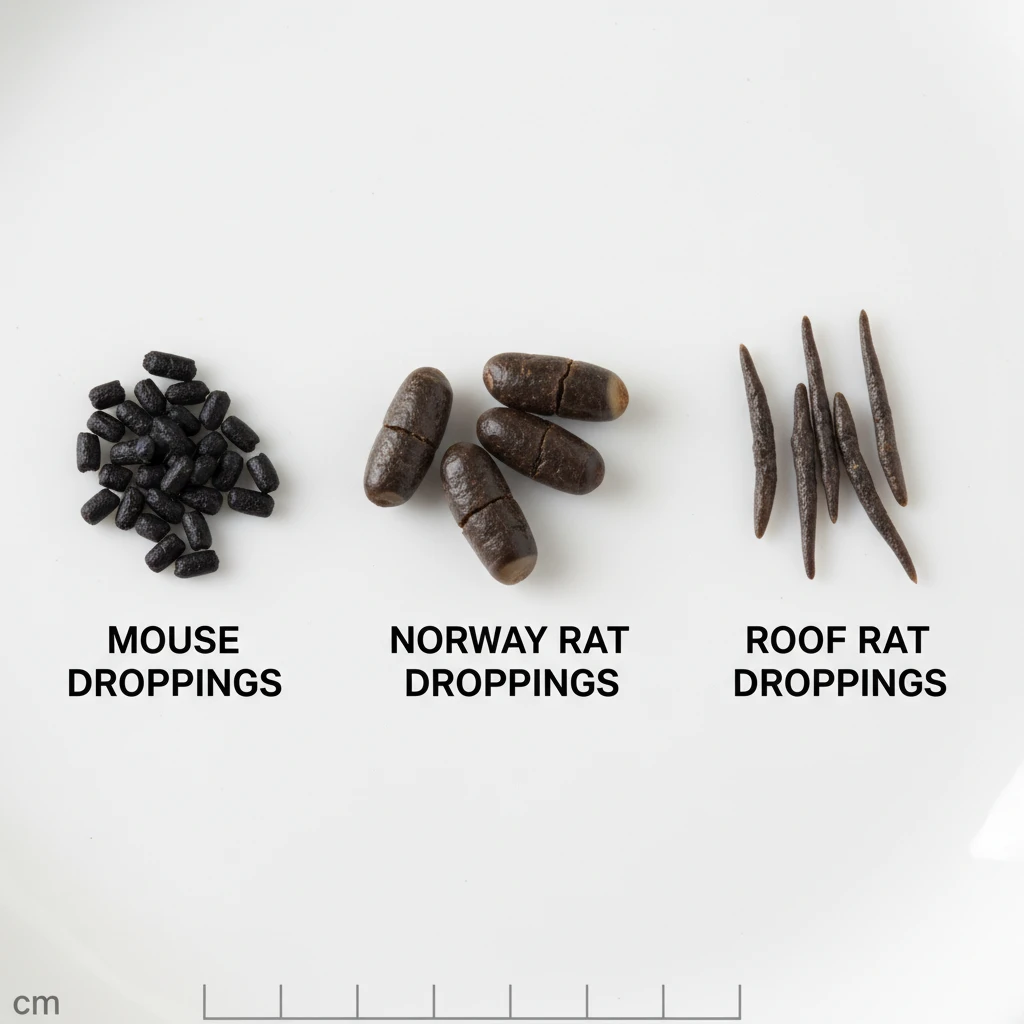
Differentiating Rodent Droppings
Mouse Droppings: These are small, dark, and pointed at both ends, resembling grains of rice. They are typically 3mm to 6mm long. You will often find them scattered widely rather than in piles, particularly in pantry cupboards, behind appliances, or along skirting boards.
Roof Rat Droppings: These are slightly larger, roughly 10mm to 12mm long. They tend to be curved or spindle-shaped with pointed ends. Because Roof Rats dwell in high places, these are most commonly found in attic insulation or on top of high cabinets.
Norway Rat Droppings: These are the largest, measuring up to 20mm. They are blunt at both ends, resembling a capsule. These are usually found in clusters near the rat’s nesting area or along their primary runways in subfloors or garages.
Grease and Rub Marks
Rodents have poor eyesight and rely on their whiskers (vibrissae) and sense of touch to navigate. They tend to stick close to walls and skirting boards as they travel. Over time, the oils and dirt on their fur leave behind dark, greasy smudges known as “rub marks” or “smear marks.” In an Auckland home with light-colored paint, these marks are often visible on corners, around entry holes in walls, or along pipes. Fresh marks will smear if touched, while older marks may flake off.
Structural Damage: Gnaw Marks and Destruction
Rodent teeth never stop growing. To keep their incisors sharp and at a manageable length, rats and mice must constantly gnaw on hard surfaces. This biological necessity results in significant physical damage to your property.
Compromised Electrical Wiring
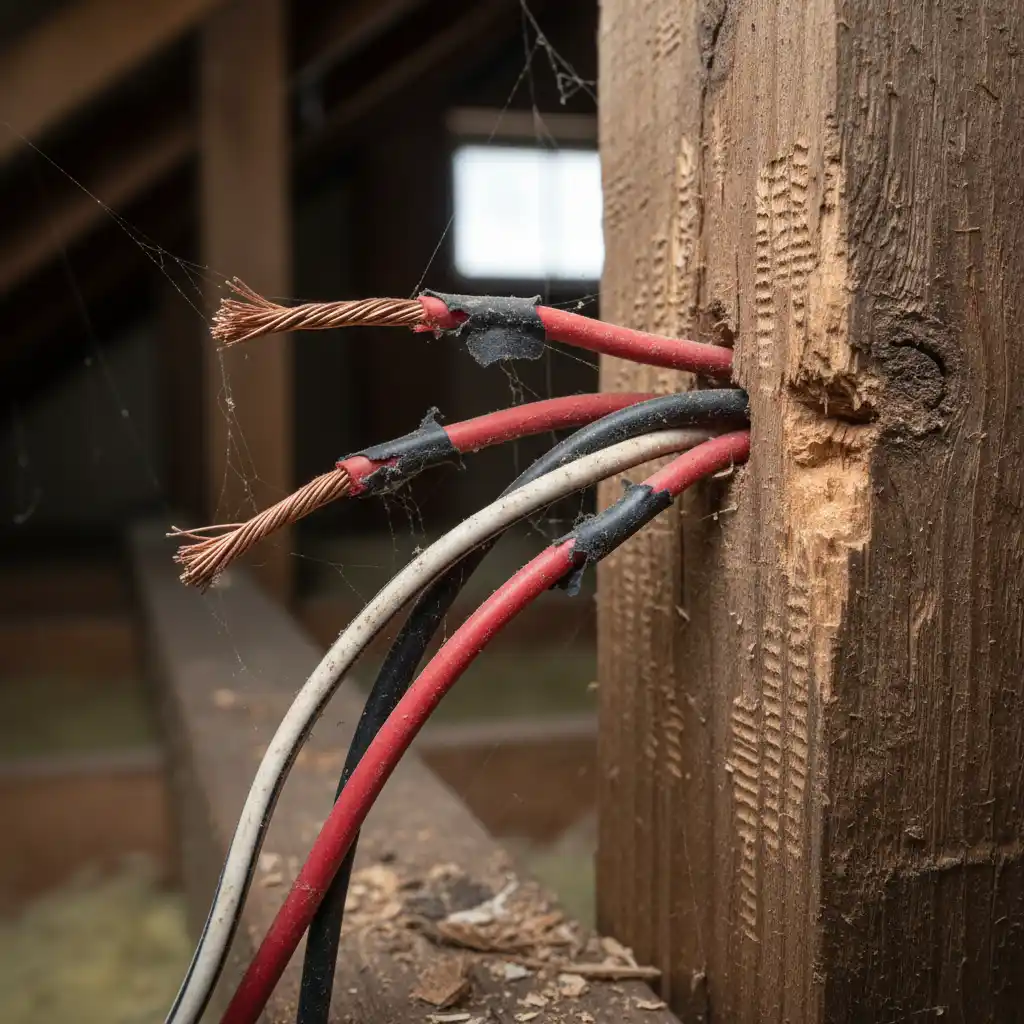
One of the most dangerous signs of a rodent infestation is damaged wiring. Rodents frequently chew through the plastic casing of electrical wires in roof voids and wall cavities. This exposes the bare copper, creating a severe fire hazard. If you experience flickering lights, tripping circuit breakers, or unexplained power outages, you must inspect your wiring for chew marks immediately.
Damage to Building Materials
Look for gnaw marks on wooden structural beams, floor joists, and door frames. Fresh gnaw marks will be light in color, showing the raw wood, while older marks will darken over time. In many Auckland homes, particularly older wooden structures, rats can chew through weatherboards and fascia to gain entry. Additionally, check for holes in skirting boards or the back of pantry cupboards. A mouse only needs a gap the size of a pen (6-7mm) to enter, while a rat needs a hole roughly the size of a thumb (20mm).
Auditory Clues: Noises in the Night
Rodents are nocturnal creatures, meaning they are most active when you are trying to sleep. In the quiet of the night, the sounds of an infestation become apparent.
Scratching and Scuttling: If you hear light, rapid scratching or running sounds above your head, you likely have Roof Rats or mice in your ceiling cavity. This is incredibly common in New Zealand homes with pitched roofs and insulation batting. The sound of “rolling” objects (like acorns or nuts) may also indicate rats moving food supplies.
Gnawing Sounds: A persistent, grinding noise indicates a rodent is chewing on wood or pipes. This sound can travel surprisingly far through the framing of a house.
Squeaking: While rats are generally quieter vocally, mice often communicate with high-pitched squeaks. If you hear squeaking from behind a wall, it may indicate a nest with young pups.
Olfactory and Behavioral Signs
Sometimes you smell them before you see them. Rodents have a distinct odor that becomes overpowering as the infestation grows.
The Smell of Ammonia
Rodent urine has a very strong, musky smell that resembles ammonia. In enclosed spaces like cupboards, pantries, or small roof voids, this smell can be intense. If you notice a persistent, stale odor that doesn’t go away with ventilation, investigate the area for nesting material or droppings.
Pet Behavior
Cats and dogs have far superior hearing and smell than humans. If your pet is acting strangely—staring intently at a blank wall, pawing at the bottom of the refrigerator, or refusing to go into a certain room—they may be detecting the presence of rodents. Trust your pet’s instincts; they are often the first to notice an intruder.
How to Inspect Your Auckland Property
Conducting a thorough inspection is the first step toward reclaiming your home. You will need a strong flashlight and potentially a mirror to see around corners.
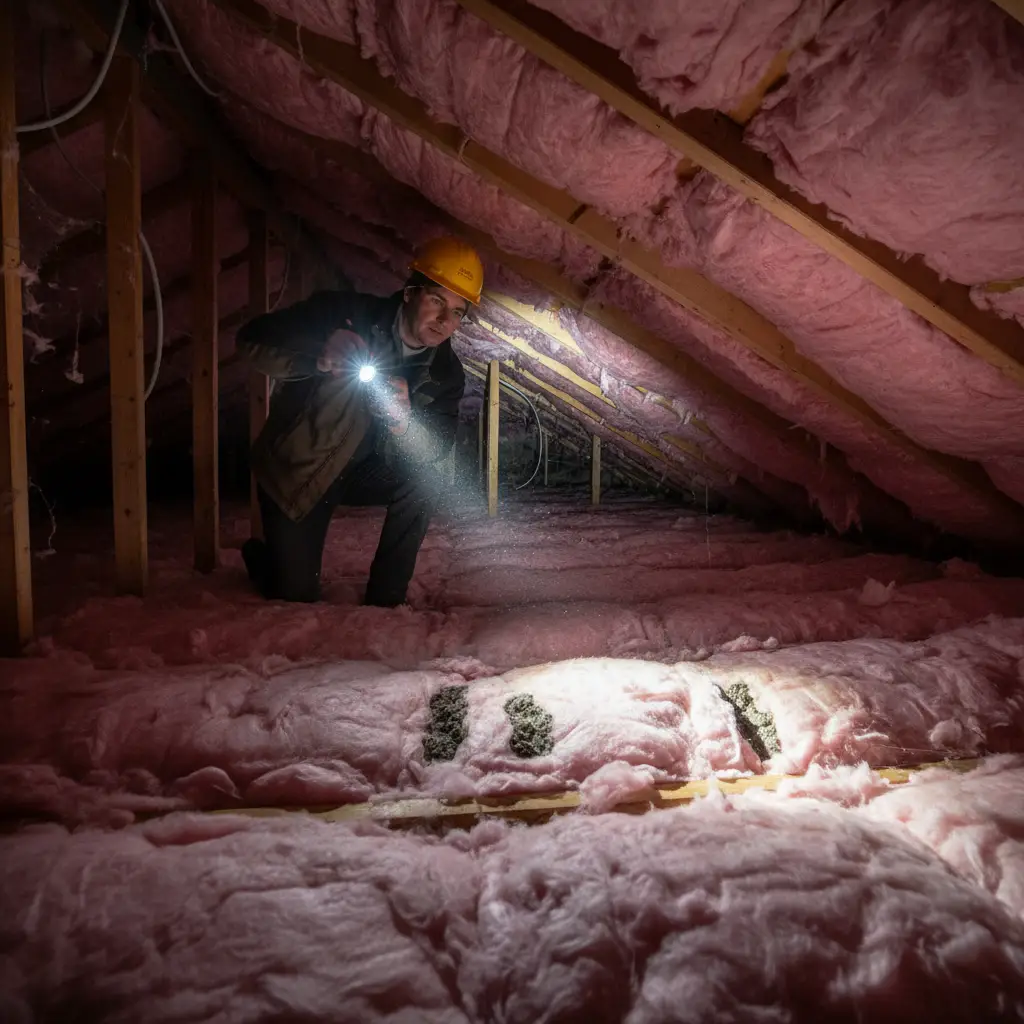
- The Roof Void: This is the number one hideout for Roof Rats in Auckland. Use a ladder to pop your head through the manhole. Look for tunnels in the insulation (rats burrow through it), droppings on top of the joists, and nests made of shredded paper or plastic.
- The Kitchen: Pull out the refrigerator and dishwasher if possible. These appliances generate warmth and often have food scraps underneath, making them prime real estate for mice. Check the back of pantry cupboards for gnaw holes.
- The Subfloor: If your house is on piles, check the subfloor for burrows in the ground or nests near the insulation foil. Look for gaps around plumbing pipes where they enter the house; these are common entry points.
- Exterior Perimeter: Walk around the outside of your house. Look for overhanging tree branches touching the roof (a highway for rats) and gaps in vents or brickwork. Ensure that rubbish bins are sealed and compost heaps are not attracting pests.
Health Risks Associated with Rodents in NZ
Ignoring the signs of rodent infestation is not just a nuisance; it is a health risk. In New Zealand, rodents are vectors for several serious diseases.
Leptospirosis: This bacterial disease is spread through the urine of infected animals. If rats urinate on surfaces in your home, or if you handle contaminated soil or firewood, you are at risk. Symptoms can be severe and flu-like.
Salmonellosis: Rodents foraging in your kitchen can spread Salmonella bacteria across countertops and food packaging. This causes severe food poisoning.
For more detailed information on the health impacts of pests, you can refer to the New Zealand Ministry of Health guidelines on environmental health.
Early Detection and Removal Strategies
The key to effective pest control is early detection. If you spot one sign, assume there are more rodents nearby.
DIY vs. Professional Control
For minor mouse issues, snap traps placed along skirting boards (perpendicular to the wall) can be effective. Peanut butter is often a better bait than cheese as it is sticky and has a strong scent. However, for established rat infestations, particularly in the roof or subfloor, professional intervention is often necessary.
Professional pest control technicians in Auckland have access to single-feed anticoagulants and tracking powders that are more effective than hardware store solutions. Furthermore, they can identify entry points you might miss. Exclusion—physically blocking entry points with wire mesh and sealants—is the only long-term solution to prevent re-infestation.
If you suspect an infestation, do not wait. The structural damage and health risks increase exponentially the longer the rodents are allowed to breed. Check your property today using the signs outlined above.
Frequently Asked Questions
What do rat droppings look like compared to mouse droppings?
Rat droppings are significantly larger than mouse droppings. Norway rat droppings are capsule-shaped with blunt ends, roughly 15-20mm long. Roof rat droppings are spindle-shaped with pointed ends, about 10-12mm long. In contrast, mouse droppings are small (3-6mm) and look like dark grains of rice.
Why do I hear scratching in my ceiling at night?
Scratching noises in the ceiling at night are a classic sign of a Roof Rat (Rattus rattus) infestation. These rats are excellent climbers and prefer nesting in high, warm spaces like roof voids and attics, particularly in New Zealand homes with insulation batting.
How can I tell if rats are entering my Auckland home?
Look for greasy rub marks along walls, gnaw marks on wood or wires, and droppings near food sources. Check for physical entry points such as gaps around pipework, holes in weatherboards, or overhanging tree branches that allow access to the roof.
Are rodents common in Auckland during summer?
While rodent activity inside homes peaks during autumn and winter as they seek warmth, populations remain active year-round in Auckland due to the mild climate. In summer, they may live outdoors but will still enter homes to forage for food.
What smells indicate a rodent infestation?
A strong, stale ammonia-like smell is a major indicator of a rodent infestation. This odor comes from rodent urine and is most noticeable in enclosed spaces like cupboards, pantries, or roof cavities.
Does insurance cover rodent damage in NZ?
Generally, standard home insurance policies in New Zealand do not cover damage caused by pests or vermin, including rats and mice. This makes early detection and prevention critical to avoid costly repairs to wiring and plumbing.