Cockroach identification in Auckland involves recognizing the distinct characteristics of common species like German, American, and Oriental cockroaches. Accurate identification is crucial for effective pest management, helping homeowners and professionals choose the right treatment strategies to eliminate infestations and prevent their recurrence within Auckland properties.
Understanding Cockroaches in Auckland Homes
Cockroaches are a resilient and ubiquitous pest, thriving in various environments, including the warm and often humid conditions found in Auckland homes. While their mere presence can be unsettling, these nocturnal insects pose significant health risks, acting as vectors for pathogens that can cause food poisoning, dysentery, and other illnesses. They can also trigger allergies and asthma attacks, particularly in sensitive individuals. For homeowners in Auckland, understanding the specific types of cockroaches that might invade their property is the first critical step towards effective control. Without proper identification, efforts to eradicate them can be misdirected and ultimately ineffective, leading to prolonged infestations and increased health hazards.
Auckland’s climate provides an ideal breeding ground for several cockroach species, making vigilance and accurate identification paramount. From bustling city apartments to suburban family homes, no property is entirely immune to the threat of a cockroach invasion. Their ability to hide in tiny crevices, reproduce rapidly, and survive on minimal food sources makes them challenging adversaries. This comprehensive guide aims to empower Auckland residents with the knowledge required to pinpoint the exact species they’re dealing with, understand their habits, and take appropriate action.
Common Cockroach Species Found in Auckland
Auckland is home to a few predominant cockroach species, each with unique characteristics that aid in their identification. Knowing these distinct features is fundamental to discerning which pest you are up against. We will delve into the most frequently encountered species, providing detailed descriptions to help you become an expert identifier.
German Cockroach (Blattella germanica)
The German cockroach is arguably the most common and troublesome species found worldwide, and Auckland is no exception. They are highly adaptable and prolific breeders, making their control a significant challenge.
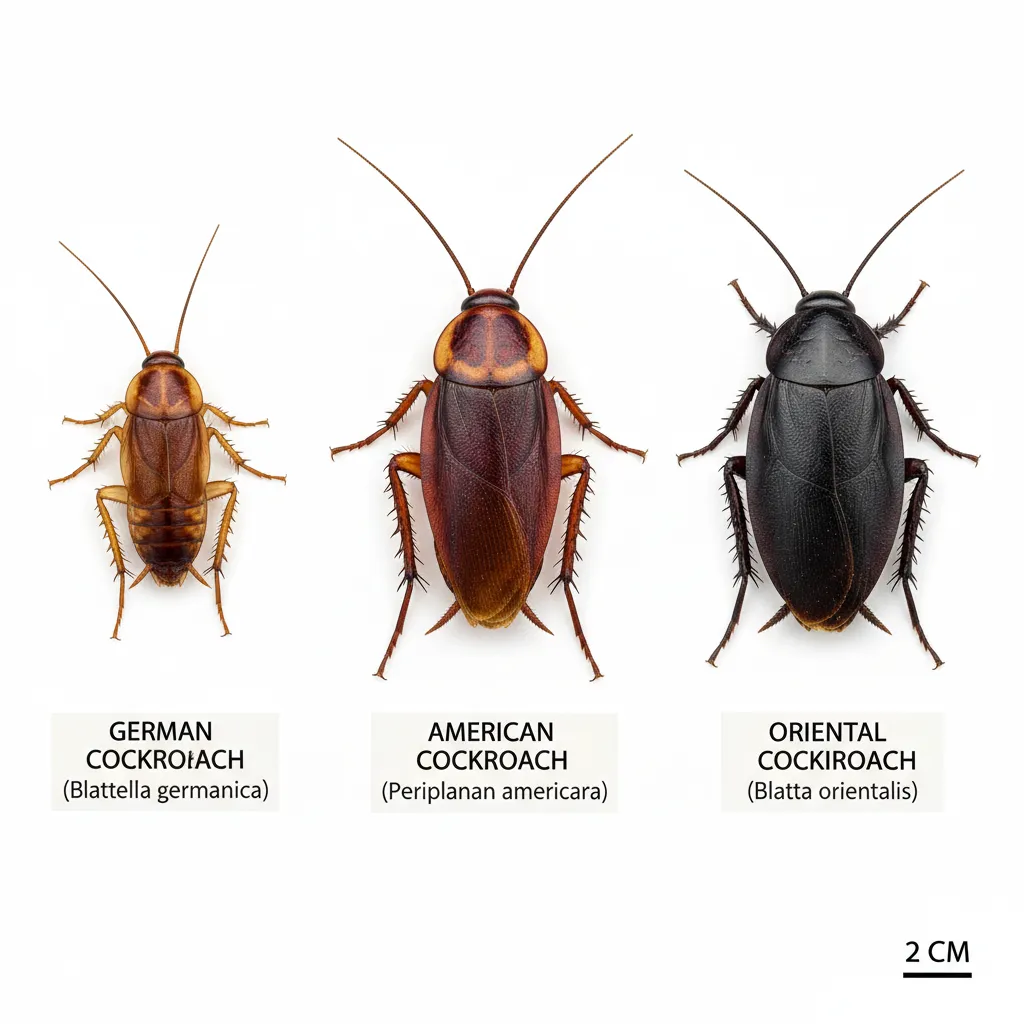
- Size: Small, typically 10-15 mm long.
- Color: Light brown to tan, with two distinct dark, parallel stripes running down their pronotum (the shield-like section behind the head).
- Markings: The two dark stripes are their most distinguishing feature.
- Wings: Both sexes have wings, but they rarely fly, preferring to run.
- Antennae: Long and thin.
- Habitat: Primarily found indoors, especially in kitchens and bathrooms, gravitating towards warm, humid environments close to food and water sources. They often hide in cracks, crevices, behind appliances, and inside cabinets.
- Reproduction: Females carry an egg case (ootheca) containing 30-40 eggs, dropping it just before hatching. They have a rapid life cycle, leading to quick population explosions.
German cockroaches are a major concern due to their rapid reproduction rate and their tendency to contaminate food preparation areas. Their small size allows them to hide effectively, making detection difficult until populations are established.
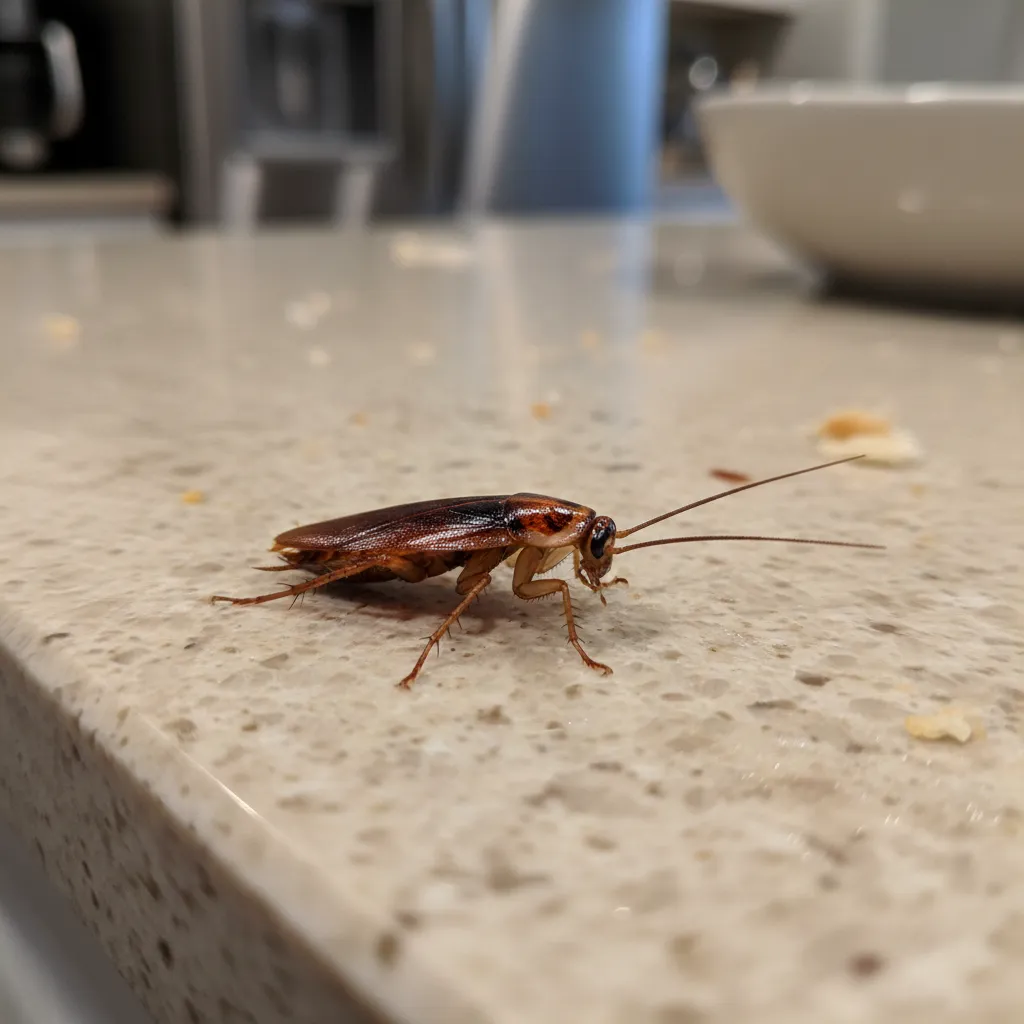
American Cockroach (Periplaneta americana)
Despite its name, the American cockroach is believed to be of African origin and is one of the largest species encountered in Auckland. They are often found in commercial buildings but can infest homes, particularly in damp areas.
- Size: Large, typically 35-50 mm long.
- Color: Reddish-brown, with a yellowish figure-eight pattern on the pronotum.
- Markings: The distinct yellowish ring or pattern on the pronotum is a key identifier.
- Wings: Well-developed wings cover the entire abdomen in both sexes, and they are capable of flying short distances.
- Antennae: Very long, often exceeding their body length.
- Habitat: Prefers warm, moist environments like sewers, drains, basements, boiler rooms, and steam tunnels. In homes, they might be found in laundries, bathrooms, and subfloors. They can enter homes through drains or gaps in foundations.
- Reproduction: Females produce egg cases containing about 14-16 eggs, which they deposit in secluded locations.
These larger cockroaches are more commonly associated with drains and pipes, making plumbing issues a potential entry point into homes. Their ability to fly can be particularly alarming for homeowners.
Oriental Cockroach (Blatta orientalis)
Sometimes referred to as ‘water bugs’ or ‘black beetle cockroaches,’ Oriental cockroaches prefer cooler, darker, and damp environments. They are less common than German cockroaches but can establish significant infestations in suitable conditions.
- Size: Medium to large, typically 20-25 mm long.
- Color: Dark brown to shiny black.
- Markings: Generally uniform dark color without distinct patterns.
- Wings: Males have wings that cover about two-thirds of their abdomen, while females have very reduced, vestigial wings (wing pads) and appear wingless. Neither sex can fly.
- Antennae: Moderately long.
- Habitat: Found in cool, damp, and dark places such as basements, drains, sewers, crawl spaces, under sinks, and sometimes outdoors under leaf litter or stones. They are less agile climbers than other species.
- Reproduction: Females produce egg cases containing about 16 eggs, which are usually dark brown to black and thicker than those of other species.
Oriental cockroaches are often associated with sewage and decaying matter, bringing a particularly unsanitary presence to any property they infest. Their preference for cooler, damp areas differentiates them from German cockroaches.
Brown-Banded Cockroach (Supella longipalpa)
While less common in Auckland than German or American species, brown-banded cockroaches can occasionally be found. They are known for their preference for warmer, drier indoor locations, often away from water sources.
- Size: Small, typically 10-14 mm long.
- Color: Light brown, with two distinct lighter bands across their wings and body. These bands are often more pronounced in nymphs.
- Markings: The light bands are the primary identifying feature.
- Wings: Males have full wings and can fly short distances; females have shorter, broader wings that do not cover the entire abdomen.
- Antennae: Moderately long.
- Habitat: Prefers warm, dry, and elevated locations such as high on walls, ceilings, behind picture frames, inside electronics (TVs, radios), and in furniture. They are not as dependent on water as German cockroaches.
- Reproduction: Females carry egg cases containing about 13-18 eggs, which they glue to protected surfaces, often under furniture or in hidden crevices.
Their ability to thrive in drier areas, and their tendency to hide in less obvious locations like high shelves or inside electronics, can make them tricky to locate and control.
Key Features for Accurate Cockroach Identification
Beyond knowing the specific characteristics of each species, understanding general identification principles can significantly aid in correctly identifying a cockroach. Observing these features carefully will provide critical clues.
Size and Shape
Cockroach size varies significantly between species. German cockroaches are small, typically around 1-1.5 cm. Oriental cockroaches are medium-sized, often 2-2.5 cm. American cockroaches are much larger, reaching 3.5-5 cm. The body shape can also offer hints: German and Brown-banded cockroaches tend to be flatter and more oval, while American cockroaches are more robust. Oriental cockroaches have a distinct glossy, somewhat flattened appearance.
Color and Markings
Color is a primary identifier. German cockroaches are light brown with two dark stripes. American cockroaches are reddish-brown with a yellow figure-eight pattern. Oriental cockroaches are uniformly dark brown to black. Brown-banded cockroaches are light brown with two lighter bands. Paying close attention to these patterns and overall coloration is essential.
Antennae and Wings
Antennae length can be indicative. American cockroaches have very long antennae, often longer than their bodies. German cockroaches also have long, filamentous antennae. The presence and development of wings also vary. German and American cockroaches have well-developed wings, with American cockroaches being capable of flight. Male Oriental cockroaches have short wings, while females have vestigial wing pads; neither can fly. Brown-banded males have full wings and can fly, while females have shorter wings.
Movement and Behavior
Observing how a cockroach moves can be a subtle but useful clue. German cockroaches are notoriously fast runners. American cockroaches are also quick and can fly. Oriental cockroaches are slower and often appear sluggish. Brown-banded cockroaches are agile. Additionally, their preferred hiding spots and activity patterns (e.g., preference for damp vs. dry areas) can further narrow down the possibilities. For a broader understanding of pest control in New Zealand, you might refer to resources like the Ministry for Primary Industries (MPI) pest management guidelines, which can provide context on how such identifications fit into a larger framework of pest control.
Recognizing Signs of a Cockroach Infestation
Identifying cockroaches isn’t always about seeing the insect itself. Often, the first indications of an infestation are subtle signs left behind. Being aware of these indicators can help you detect a problem early, even before you spot a live cockroach scurrying across your floor. Early detection is key to preventing a small problem from escalating into a full-blown infestation.
Droppings
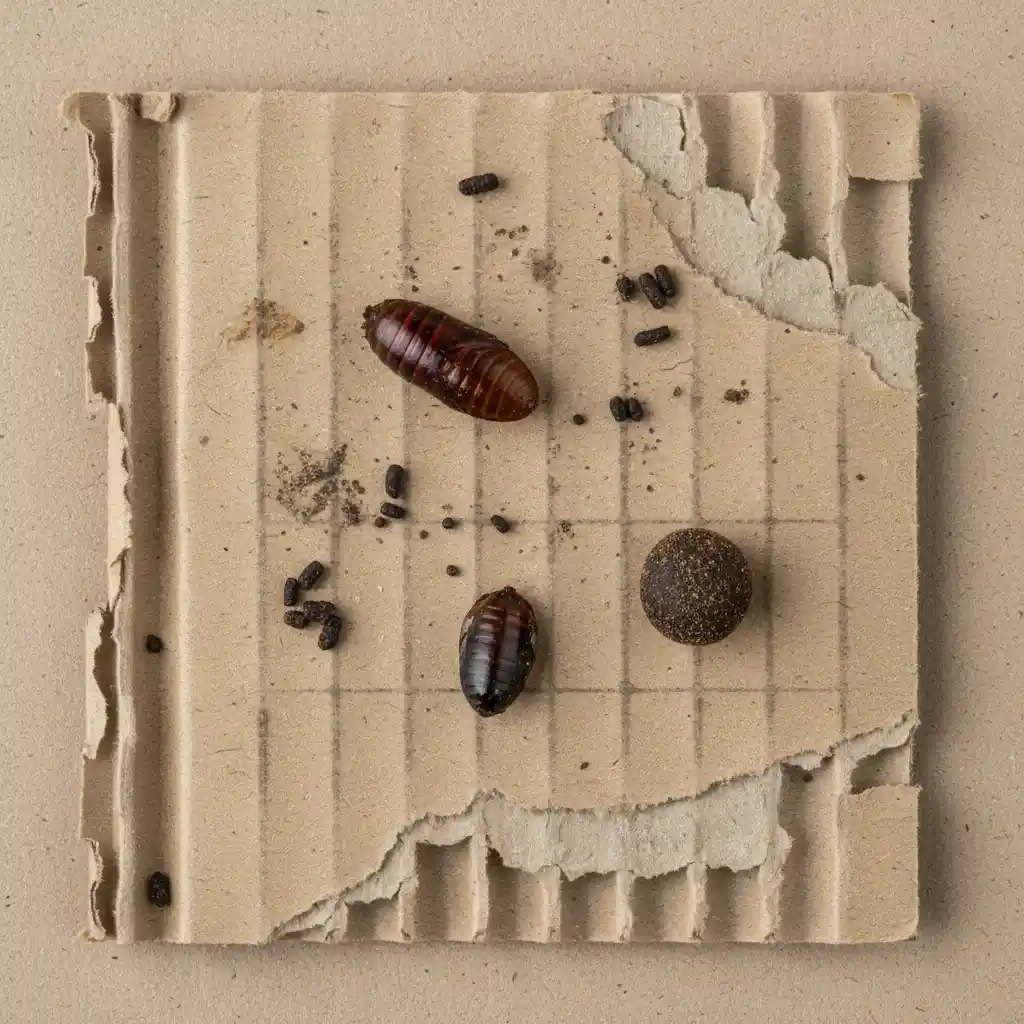
Cockroach droppings often resemble coffee grounds or black pepper, particularly for German cockroaches. Larger species, like the American cockroach, leave behind larger, cylindrical droppings. These can be found in areas where cockroaches frequent, such as inside cabinets, drawers, on countertops, or along baseboards. The presence of fresh droppings indicates active infestation. The quantity and distribution of these droppings can give an estimate of the infestation’s severity.
Egg Cases (Oothecae)
Cockroaches lay their eggs in protective cases called oothecae. These vary in appearance by species. German cockroach oothecae are small, light brown, and capsule-shaped, often carried by the female until just before hatching. American cockroach oothecae are larger, dark reddish-brown, and usually glued to surfaces in hidden locations. Oriental cockroach oothecae are dark brown to black, thicker, and often found in damp areas. Finding these egg cases, empty or full, is a definitive sign of breeding and an active infestation.
Odor
A tell-tale sign of a significant cockroach infestation, especially with German and Oriental species, is a distinct, musty, and often unpleasant odor. This smell is produced by cockroach secretions, pheromones, and decaying bodies. The odor can permeate food, dishes, and entire rooms, becoming more noticeable as the infestation grows. It is a powerful indicator that a large population is present and requires immediate attention.
Damage to Food and Property
Cockroaches are omnivorous scavengers, capable of feeding on almost anything. They will contaminate food items left exposed, leaving behind droppings and chewing marks. Beyond food, they can damage books, paper products, fabrics, leather, and even electrical wiring as they chew on glue, starch, and other organic materials. This damage is not only costly but also indicative of their widespread presence and foraging activity within your home.
Live Sightings (Especially at Night)
Given their nocturnal nature, seeing cockroaches during the day is often a sign of a significant infestation, as overcrowding or lack of food and water can force them out of hiding. Commonly, you’ll see them when you turn on a light in a dark room, scattering quickly to find cover. The species, size, and location of these sightings are crucial for identification and understanding the scope of the problem. For more detailed insights into pest control challenges in urban environments, an article from a reputable source like Wikipedia on Pest Control can offer valuable broader context.
Why Accurate Identification Matters for Effective Control
The saying ‘know your enemy’ holds particularly true in pest control. Accurate identification of the cockroach species infesting your Auckland home is not merely an academic exercise; it is a fundamental step that directly impacts the success of any control strategy. Different cockroach species have distinct behaviours, preferred habitats, dietary preferences, and reproductive rates. A treatment effective against German cockroaches, for instance, might be completely inadequate for American or Oriental cockroaches due to their varying biological traits and hiding places. Misidentification can lead to wasted time, money, and frustration, allowing the infestation to grow unchecked and potentially become more entrenched.
For example, German cockroaches are prolific breeders and prefer warm, humid kitchen environments. Control efforts for them would focus heavily on baiting in these specific areas, alongside meticulous sanitation. In contrast, Oriental cockroaches prefer damp, cool, dark places like basements and drains. A strategy for them would involve sealing entry points from sewers, addressing moisture issues, and using appropriate baits or dusts in those specific cool, damp locations. American cockroaches, often originating from sewers, might require attention to drain seals and exterior entry points. Without knowing which species you’re battling, you could be applying baits in the wrong places, using insecticides that the species is resistant to, or neglecting key breeding grounds. Therefore, precise identification tailors the pest management plan, making it targeted, efficient, and ultimately successful in achieving long-term eradication.
When to Call Professional Pest Control in Auckland
While this guide provides comprehensive information for identification, managing a cockroach infestation can be complex, particularly in Auckland’s urban environment. Home remedies and over-the-counter products often only address superficial issues, failing to eliminate the root cause or reach hidden populations. If you’ve identified cockroaches in your home, especially German cockroaches due to their rapid reproduction, or if the infestation appears widespread, it’s highly advisable to contact professional pest control services in Auckland. Professionals possess the expertise, specialized tools, and commercial-grade products necessary for thorough inspection, accurate species identification, and effective eradication. They can implement integrated pest management (IPM) strategies, which involve a combination of chemical treatments, habitat modification, and ongoing monitoring, ensuring a more sustainable and long-lasting solution than DIY methods. Early intervention by experts can prevent significant health risks and property damage associated with prolonged cockroach presence, offering peace of mind to Auckland homeowners.
Conclusion
Accurate cockroach identification is the cornerstone of effective pest management in Auckland homes. By understanding the unique characteristics of species like the German, American, Oriental, and even the less common Brown-banded cockroach, homeowners can take proactive and targeted steps. From recognizing key physical features like size, color, and wing development to deciphering the subtle signs of an infestation such as droppings, egg cases, and distinctive odors, every detail contributes to forming an accurate assessment. This knowledge empowers you to either implement initial DIY measures with greater precision or, more importantly, to know when to engage professional pest control experts. Ultimately, a thorough understanding of these resilient pests ensures that your Auckland home remains a healthy, safe, and cockroach-free environment.
People Also Ask About Cockroach Identification in Auckland
What are the most common cockroaches found in Auckland homes?
The most common cockroach species found in Auckland homes are the German cockroach (Blattella germanica), American cockroach (Periplaneta americana), and Oriental cockroach (Blatta orientalis). Brown-banded cockroaches (Supella longipalpa) are less common but can also be found.
How can I tell the difference between a German and an American cockroach?
German cockroaches are small (10-15mm), light brown, with two dark parallel stripes on their pronotum. American cockroaches are much larger (35-50mm), reddish-brown, and have a distinct yellowish figure-eight pattern on their pronotum. American cockroaches can also fly, while German cockroaches rarely do.
What do cockroach droppings look like in Auckland?
Cockroach droppings vary by species. German cockroach droppings often resemble coffee grounds or black pepper specks. Larger species like American cockroaches leave cylindrical droppings similar to mouse droppings, but with blunt ends and ridges.
Can I identify cockroaches by their egg cases in Auckland?
Yes, cockroach egg cases, known as oothecae, are distinct for each species. German cockroach oothecae are small, light brown, and capsule-shaped. American cockroach oothecae are larger and dark reddish-brown. Oriental cockroach oothecae are dark brown to black and thicker.
Is an odor a sign of a cockroach infestation in Auckland?
Yes, a distinct, musty, and often unpleasant odor is a common sign of a significant cockroach infestation, particularly with German and Oriental species. This smell is produced by their secretions and can permeate food and living spaces.
When should I call professional pest control for cockroaches in Auckland?
You should call professional pest control in Auckland if you’ve identified German cockroaches (due to their rapid breeding), if the infestation appears widespread, if you’re seeing cockroaches during the day, or if DIY methods have proven ineffective. Professionals offer thorough inspection and targeted treatment for long-term control.