You hear scratching in the roof at 2 AM. Most people immediately worry about chewed electrical wires or damaged insulation. I worry about what those rats are leaving behind in your ceiling cavity.
I’ve spent years crawling through Auckland roof spaces, and I can tell you firsthand that a rodent infestation is never just a noise problem. It is a severe biological hazard. Rats urinate constantly as they move, creating a toxic trail right above your living space.
When we talk about the reality of Rodent-Borne Diseases: Hantavirus & Leptospirosis in NZ, we are looking at two very different beasts. One is a homegrown threat that is putting Kiwis in the hospital right now. The other is a global nightmare we are fighting hard to keep out of our borders.
Key Takeaways
When evaluating Rodent-Borne Diseases: Hantavirus & Leptospirosis in NZ, Leptospirosis is an active, widespread threat transmitted through rat urine, with cases recently hitting a 20-year high. Conversely, Hantavirus is not endemic to New Zealand rodents, but recent global outbreaks highlight the critical need for strict biosecurity and proactive rodent exclusion.
The Hidden Cost of a Rat Problem
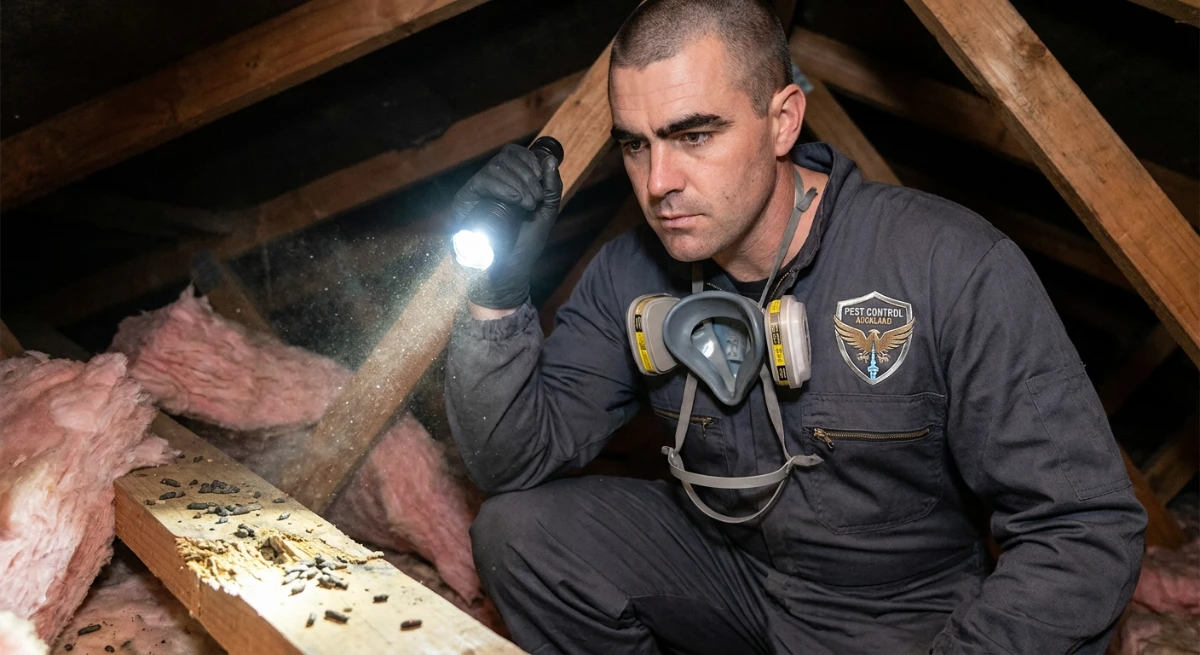
People often underestimate just how dirty rodents are. A single brown rat can produce up to 40 droppings a day and constantly dribbles urine to mark its territory. When you have a rat infestation in your roof, that waste builds up fast.
This isn’t just gross; it is highly dangerous. As the urine dries, the bacteria within it can become airborne or leach through your ceiling plasterboard. If you are going up into the roof to store holiday decorations without a respirator, you are walking directly into a biohazard zone.
Never sweep or vacuum dry rat droppings in an enclosed space. This flings dangerous bacteria directly into the air you breathe. Always wet the area down with a strong disinfectant first.
Hardware store baits don’t solve this. Sure, they might kill a few rats, but they leave the contaminated nest completely intact. We focus on root-cause eradication, ensuring the entry points are sealed so the contamination cycle stops permanently.
Leptospirosis: New Zealand’s Homegrown Threat
For decades, Kiwis thought Leptospirosis was just a disease for dairy farmers and meat workers. That is no longer the case. The epidemiology is changing rapidly, and urban cases are becoming far more common across the Auckland region.
Leptospirosis is a severe bacterial infection transmitted through the urine of infected animals, primarily rats and mice. The bacteria can survive for weeks in moist soil or standing water. If you have an open cut and come into contact with contaminated water, the bacteria enters your bloodstream.
Recent data from Environmental Health Intelligence New Zealand (EHINZ) shows a massive spike. In 2023, following extreme weather events like Cyclone Gabrielle, New Zealand recorded 164 notified cases. That is the highest number in over twenty years, proving that urban flooding and displaced rat populations are a dangerous mix.
The symptoms are brutal. It starts with flu-like fevers and severe headaches, but if left untreated, it can quickly escalate to kidney failure, liver damage, and meningitis. This is why professional rodent eradication is not a luxury; it is a fundamental health requirement [1].
During Auckland’s wet autumn months, rats are driven indoors. They often nest near hot water cylinders or under floorboards, urinating on surfaces you might later touch while doing DIY repairs.
Hantavirus: The Global Threat We Must Keep Out
While Leptospirosis is already here, Hantavirus is the boogeyman we are actively guarding against. Hantavirus Pulmonary Syndrome is a severe, sometimes fatal respiratory disease. Like Lepto, it is spread through aerosolized rodent urine and droppings.
Here is the good news: New Zealand has never detected Hantavirus in humans or local animal populations. Our native and introduced rodent species do not currently carry the virus. However, global travel means the risk is never zero [2].
In May 2026, a major global outbreak linked to the MV Hondius cruise ship made international headlines. The strain involved, Andes virus, showed rare person-to-person transmission capabilities. While the Ministry of Health correctly assessed the risk to New Zealand as low, it served as a massive wake-up call [2].
This is exactly why Biosecurity New Zealand is so strict, and why massive local eradication efforts, like the recent success in the Hūnua Ranges, are so critical. By keeping our overall rat population down, we remove the vehicle that any imported disease would use to spread.
Comparing the Threats: Lepto vs. Hantavirus
To put things in perspective, we need to look at the facts side-by-side. Both diseases originate from rodents, but their presence and transmission in New Zealand differ wildly.
| Feature | Leptospirosis | Hantavirus |
|---|---|---|
| Status in New Zealand | Highly Endemic (Over 160 cases in 2023) | Zero Endemic Cases (Strictly monitored) |
| Primary Transmission | Contact with contaminated water/urine via skin cuts | Inhaling aerosolized dust from dried rodent droppings |
| Primary Vectors | Rats, Mice, Cattle, Pigs, Dogs | Specific rodent species (e.g., Deer Mice overseas) |
| Severe Symptoms | Kidney/Liver failure, Meningitis | Severe respiratory distress, lung fluid buildup |
When clients ask me about Rodent-Borne Diseases: Hantavirus & Leptospirosis in NZ, I tell them the same thing. Don’t panic about the global news, but take the local threat incredibly seriously. If you have rats, you have a health risk.
How We Stop Rodent-Borne Diseases in Auckland
The era of tossing toxic bait blocks into a ceiling and walking away is over. That reactive approach leaves dead, rotting rats in your walls and does absolutely nothing to stop the next family from moving in. We practice Predictive Integrated Pest Management (IPM).
Our technicians hold the New Zealand Certificate in Pest Operations (Level 3). This means we are highly qualified to handle Class 9 Urban Pest Management pesticides. More importantly, it means we understand rodent biology and structural exclusion [3].
Here is how we actually solve the problem:
- Structural Inspection: We find the exact weep holes, broken vents, or roof gaps they are using to get inside.
- Targeted Eradication: We use safe, MPI-approved methods to clear the current population fast.
- Exclusion & Prevention: We advise on blocking those entry points permanently, breaking the cycle of despair.
We also operate strictly within the Animal Welfare Act 1999. You won’t find us using illegal glue boards. If we use live capture or mechanical traps in commercial food spaces, they are monitored and checked properly. We fix the root cause, guaranteed.
We back our work. If we treat your property and implement our structural exclusion advice, we guarantee a massive reduction in pest activity. We do it right the first time.
Landlords, Tenants, and the Law
One of the most common disputes we see in Auckland is between landlords and tenants over who pays for rodent control. Under the Residential Tenancies Act, landlords are required to provide a property in a reasonable state of cleanliness, which includes being free of pests at the start of a tenancy.
If rats are getting in due to structural flaws—like a hole in the eaves or gaps around plumbing—that is entirely the landlord’s responsibility to fix. You cannot expect a tenant to seal up the roof. Landlords must act fast to prevent property damage and health risks like Leptospirosis.
However, if the infestation is caused by the tenant leaving rubbish piled up against the house or failing to clean up food waste, the tenant may be held liable. We provide transparent, unbiased reporting that satisfies Tenancy Tribunal requirements, so everyone knows exactly what caused the issue.
Don’t wait for tenants to complain. Our ‘Auckland Winter Defense’ plans provide proactive, seasonal protection that keeps your properties compliant with Healthy Homes standards year-round.
Frequently Asked Questions

About the Author: Ronnie
Founder, Pest Control Auckland · Commercial & Residential Pest Expert · Certified Urban Pest Management Specialist
With years of experience in structural pest exclusion and biosecurity compliance, Ronnie is Auckland’s definitive expert on Rodent-Borne Diseases: Hantavirus & Leptospirosis in NZ. Having consulted for both residential property managers and high-risk commercial food environments, he provides science-backed, permanent solutions to severe urban rodent infestations.