How does professional bird control work for Auckland buildings?
Professional bird control for Auckland buildings involves the installation of humane, non-lethal deterrents such as stainless steel spikes, high-tension netting, bird wire, and solar-powered repellent systems. These physical barriers prevent pigeons and gulls from nesting on ledges, roofs, and HVAC units, effectively protecting properties from structural corrosion caused by acidic guano and reducing health risks associated with airborne pathogens like Histoplasmosis.
Bird Control Auckland Buildings refers to the professional implementation of humane exclusion strategies designed to prevent pest birds like pigeons and seagulls from roosting on commercial and residential structures. These services protect property integrity, prevent health hazards associated with guano, and ensure compliance with New Zealand’s animal welfare regulations.
The Impact of Pest Birds on Auckland Buildings
In the bustling urban landscape of Auckland, from the high-rises of the CBD to the industrial warehouses in Penrose and East Tamaki, pest birds are more than just a nuisance; they are a significant threat to building integrity and public health. The primary culprits in the region—Feral Pigeons, Starlings, Indian Mynas, and Sparrows—adapt remarkably well to the urban environment, utilising ledges, roofs, and HVAC systems for nesting.
The consequences of ignoring a bird infestation can be severe and costly. Property managers often underestimate the speed at which a small flock can cause extensive damage. The acidic nature of bird droppings (guano) can corrode building materials, including stone, metal, and masonry, leading to accelerated weathering and structural weakness over time. Furthermore, nesting materials are highly flammable and can clog gutters and drainage systems, resulting in water damage and roof leaks during Auckland’s frequent rain events.
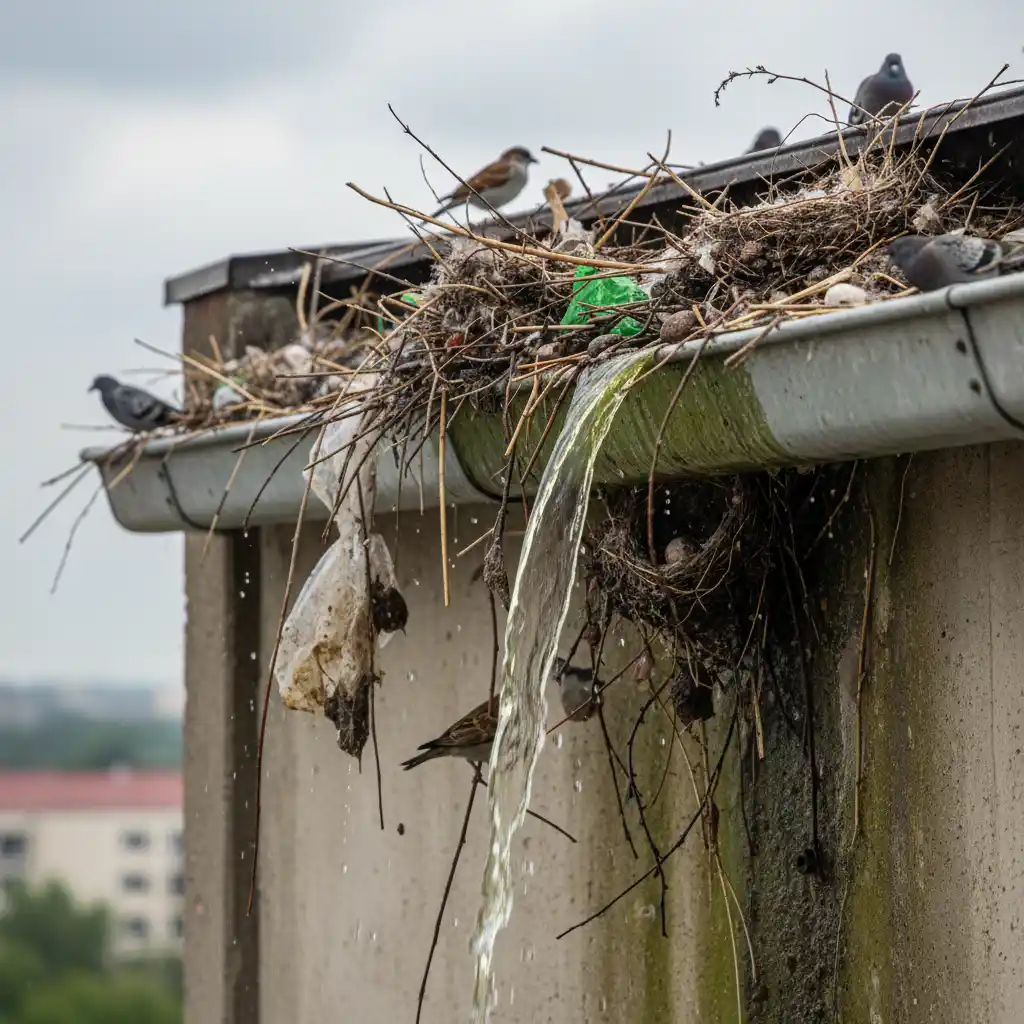
Structural Damage and Maintenance Costs
When birds decide to roost on your building, the maintenance costs inevitably spike. Pigeons, in particular, are known to dislodge roof tiles to create entry points into roof voids. Once inside, they can damage insulation and electrical wiring, posing a significant fire risk. For commercial entities, the presence of birds can also damage inventory, particularly in logistics and food storage facilities where hygiene is paramount.
HVAC units are another favorite target. Birds often nest around warm ventilation systems. The accumulation of feathers and droppings can block airflow, reducing system efficiency and potentially circulating airborne pathogens throughout the building’s interior climate control system.
Humane Bird Deterrent Methods
Modern bird control in Auckland focuses on humane, long-term exclusion rather than extermination. The goal is to modify the behavior of the birds or the physical environment so that the building is no longer an attractive or accessible roosting spot. This approach aligns with New Zealand’s animal welfare expectations and ensures sustainable results.
It is important to distinguish between pest species and protected native species. While pigeons and sparrows are generally considered pests, species like the Red-billed Gull are protected under the Wildlife Act 1953. This makes the selection of a humane, non-lethal control method not just an ethical choice, but a legal necessity. For more information on protected species, you can refer to the Department of Conservation (DOC).
Authored By: Ronnie
Founder & Lead Technician, Pest Control Auckland
Ronnie is a highly certified specialist in Urban Pest Management, holding NZ-recognised qualifications for the management of Class 9 Urban Pest chemicals. With over a decade of experience across the Auckland region, Ronnie specializes in scientific bird exclusion and structural pest proofing. His approach combines local Auckland expertise with high-level biosecurity compliance, ensuring that every treatment is both effective and ethically sound.
Authored By: Ronnie
Founder & Lead Technician, Pest Control Auckland
Ronnie is a highly certified specialist in Urban Pest Management, holding NZ-recognised qualifications for the management of Class 9 Urban Pest chemicals. With over a decade of experience across the Auckland region, Ronnie specializes in scientific bird exclusion and structural pest proofing. His approach combines local Auckland expertise with high-level biosecurity compliance, ensuring that every treatment is both effective and ethically sound.