Eco-Friendly Ant Control for Auckland Homes
Auckland’s lush, humid microclimate is a paradise for outdoor living, but it also serves as a perfect incubator for invasive pests. Homeowners across the region frequently wake up to the frustrating sight of a thick, black trail of ants marching relentlessly across their kitchen benches.
As these colonies expand, the instinct to reach for a harsh, chemical-laden bug spray is incredibly strong. However, traditional toxic sprays often cause more harm than good, fracturing colonies and exposing your family and pets to dangerous airborne residues.
The shift toward sustainable living has made eco-friendly ant control in Auckland a top priority for conscientious property owners. By understanding the specific biology of local ant species, you can achieve long-term eradication without compromising your indoor air quality.
Key Takeaways
Effective eco-friendly ant control in Auckland relies on identifying the exact species, such as Argentine or White-Footed ants. Using slow-acting, non-repellent natural baits ensures the queen is targeted. Combining moisture reduction, structural sealing, and targeted organic treatments provides safe, long-lasting relief from infestations.
Identifying Ant Species in Auckland
Before implementing any pest management strategy, you must first deeply understand your enemy. New Zealand is home to several invasive ant species that thrive in the temperate, damp conditions of the North Island.
Auckland, in particular, battles two primary culprits that routinely invade residential spaces. Both species have unique feeding and nesting behaviors that render standard chemical sprays completely ineffective.
By identifying whether you are dealing with Argentine ants or White-Footed house ants, you can tailor your environmental approach. This targeted methodology is the absolute cornerstone of successful eco-friendly ant control in Auckland.
Argentine Ant Eradication Without Harsh Chemicals
First discovered in Auckland in 1990, the Argentine ant (Linepithema humile) is recognized globally as one of the most problematic invasive species. They are small, honey-brown ants that move in massive, multi-lane trails across driveways and up exterior walls.
Unlike native species, Argentine ants form massive super-colonies by linking multiple nests together. They are highly cooperative, meaning a single property might host interconnected nests spanning hundreds of meters into neighboring yards.
Using traditional repellent sprays on Argentine ants causes a phenomenon called budding, where the colony fractures and spreads further into your home. Instead, organic and eco-friendly slow-acting baits are required to trick the workers.
These natural baits are carried back to the nest and shared among the workers and multiple queens. This ensures the entire super-colony is neutralized at the source without leaving toxic residues on your kitchen surfaces.
During spring and summer, Argentine ants have an insatiable appetite for protein to feed their growing larvae. Switching your natural bait from sugar-based to protein-based during these warmer months yields significantly higher success rates.
White-Footed House Ant Control
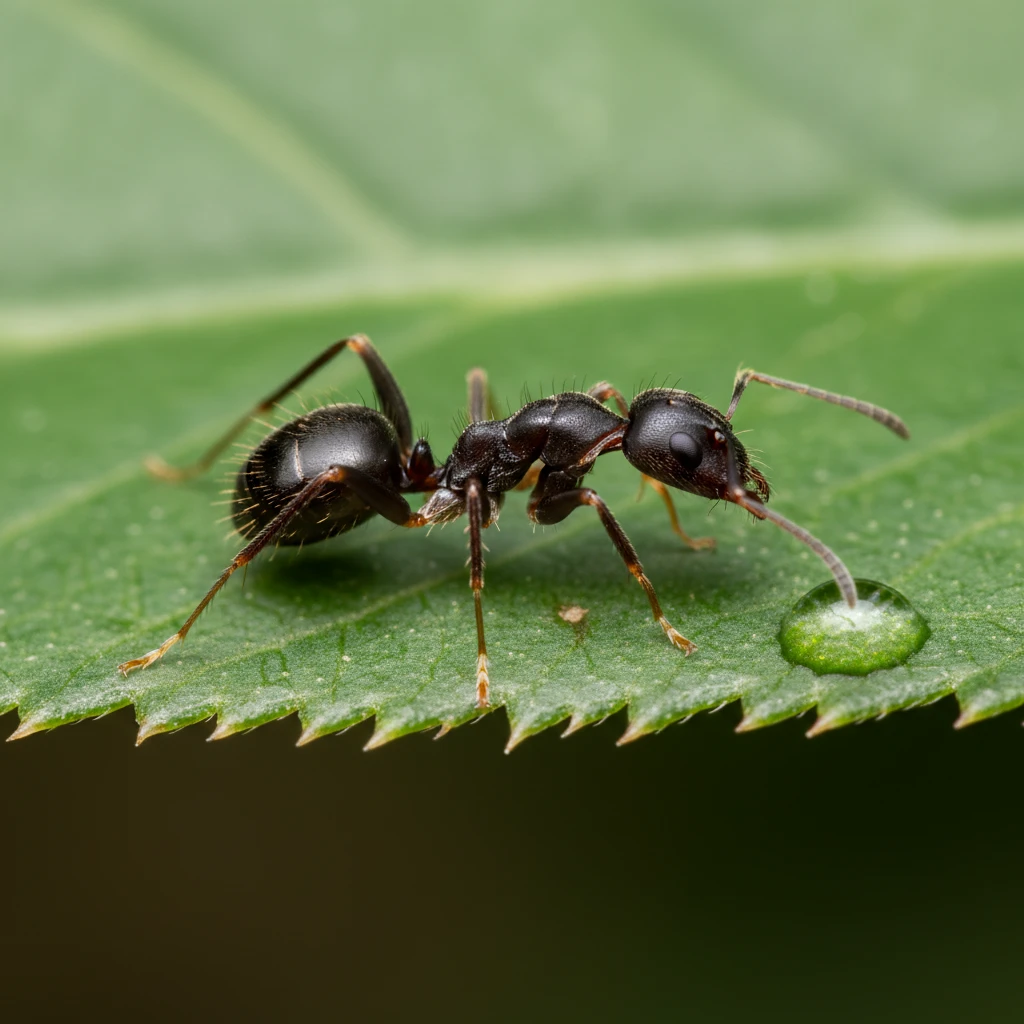
The White-Footed house ant (Technomyrmex albipes) was first documented in New Zealand in 1921. To the naked eye, they appear uniformly black, but under a magnifying glass, their pale lower legs become clearly visible.
This species is exceptionally difficult to eradicate because of its unique biological quirks. Unlike most ants, foraging White-Footed workers do not share their food directly with the rest of the colony through regurgitation.
Instead, sterile workers produce unfertilized trophic eggs which are fed directly to the queen. Because the queen never directly consumes the commercial bait you place, standard pest control methods frequently fail to eliminate the nest.
To combat them naturally, pest specialists use advanced, non-repellent botanical formulations. These specialized treatments focus on disrupting the colony’s environment and utilizing slow-transfer organic compounds.
Natural Ant Deterrents and Baits
Transitioning away from synthetic chemicals does not mean sacrificing effectiveness. Nature provides a wealth of potent compounds that disrupt ant pheromone trails and physically destroy their exoskeletons.
When implementing eco-friendly ant control in Auckland, homeowners should focus on barrier creation and natural baiting. These methods are rigorously safe for households with young children, sensitive individuals, and curious pets.
Understanding the vital difference between a deterrent and a bait is crucial. Deterrents stop ants from entering your space, while baits are designed to be consumed and carried back to destroy the hidden nest.
| Feature | Eco-Friendly / Natural Methods | Traditional Chemical Sprays |
|---|---|---|
| Safety Profile | High (Safe for pets, children, and indoor air) | Low (Leaves toxic residues, requires evacuation) |
| Colony Impact | Targets the queen via slow-acting transfer | Causes colony fracturing and rapid budding |
| Environmental Impact | Biodegradable, zero soil or water contamination | High runoff risk, harmful to native pollinators |
| Long-Term Efficacy | High (Eliminates the entire source of the infestation) | Low (Only kills surface-level foraging workers) |
Essential Oils and Diatomaceous Earth
Essential oils are powerful tools in the fight against household pests. Ants navigate their complex world using invisible pheromone trails, which guide thousands of workers straight to your kitchen pantry.
Strong botanical scents from peppermint, tea tree, and eucalyptus oils completely scramble these chemical signals. By spraying diluted essential oils around window frames and baseboards, you create an invisible, fragrant barrier.
For physical eradication, Diatomaceous Earth (DE) is the gold standard of organic pest control. DE is a fine, chalky powder made from the fossilized remains of microscopic aquatic organisms called diatoms.
When an ant walks across food-grade DE, the microscopic sharp edges cut deep into their waxy exoskeleton. This causes the insect to dehydrate and perish naturally without the use of a single synthetic poison.
Always ensure you are purchasing ‘Food-Grade’ Diatomaceous Earth for indoor use. Pool-grade DE is chemically treated, contains dangerous crystalline silica, and is highly hazardous if inhaled by humans or pets.

Long-Term Pest Prevention Plans for Auckland Properties
Eradicating a current infestation is only half the battle. To ensure your home remains entirely pest-free year-round, you must adopt proactive, structural prevention strategies.
Ants are constantly searching for three fundamental things: food, water, and shelter. By systematically removing these attractants, you make your property highly unappealing to scouting ants.
Auckland’s frequent rainfall means moisture control is incredibly important for any homeowner. Leaky outdoor taps, blocked gutters, and damp subfloors create the perfect humid micro-environments that ants love to nest in.
- Seal Entry Points: Use high-quality silicone caulk to seal tiny cracks around window frames, door jambs, and where utility pipes enter the house.
- Manage Moisture: Repair leaking faucets immediately and ensure your subfloor has adequate ventilation to prevent dampness from building up.
- Trim Vegetation: Keep tree branches and shrubs trimmed at least one meter away from your exterior walls to prevent natural bridges to your roof.
- Store Food Securely: Transfer pantry items like sugar, honey, and cereal into airtight glass or heavy-duty plastic containers.
Implementing these physical barriers is the most sustainable form of pest management available. It forms the robust backbone of any reliable plan for eco-friendly ant control in Auckland.
Inspect your garden weekly for aphid infestations on citrus trees and roses. White-Footed ants farm aphids for their sweet honeydew, so controlling aphids naturally reduces the ant population.

When to Call a Professional for Ant Infestation Emergency Auckland
While DIY organic methods are fantastic for minor incursions, certain situations absolutely require expert intervention. Invasive species like the Argentine ant can escalate from a mere nuisance to a full-blown emergency rapidly.
If you notice ants emerging from electrical outlets or nesting deep inside wall cavities, it is time to call a professional. Ants can strip insulation from wiring, creating a hidden, severe fire hazard within your home.
Professional exterminators who specialize in green pest management have access to commercial-grade botanical treatments. These advanced products are highly potent against insects but remain completely safe for the local ecosystem.
They also possess the specialized equipment and expertise to locate hidden super-colonies. By investing in professional eco-friendly ant control in Auckland, you guarantee the eradication of the queen without compromising your environmental values.
When hiring a professional, specifically ask if they use non-repellent baits and botanical sprays. A reputable green pest controller will happily provide a safety data sheet for all their organic products.