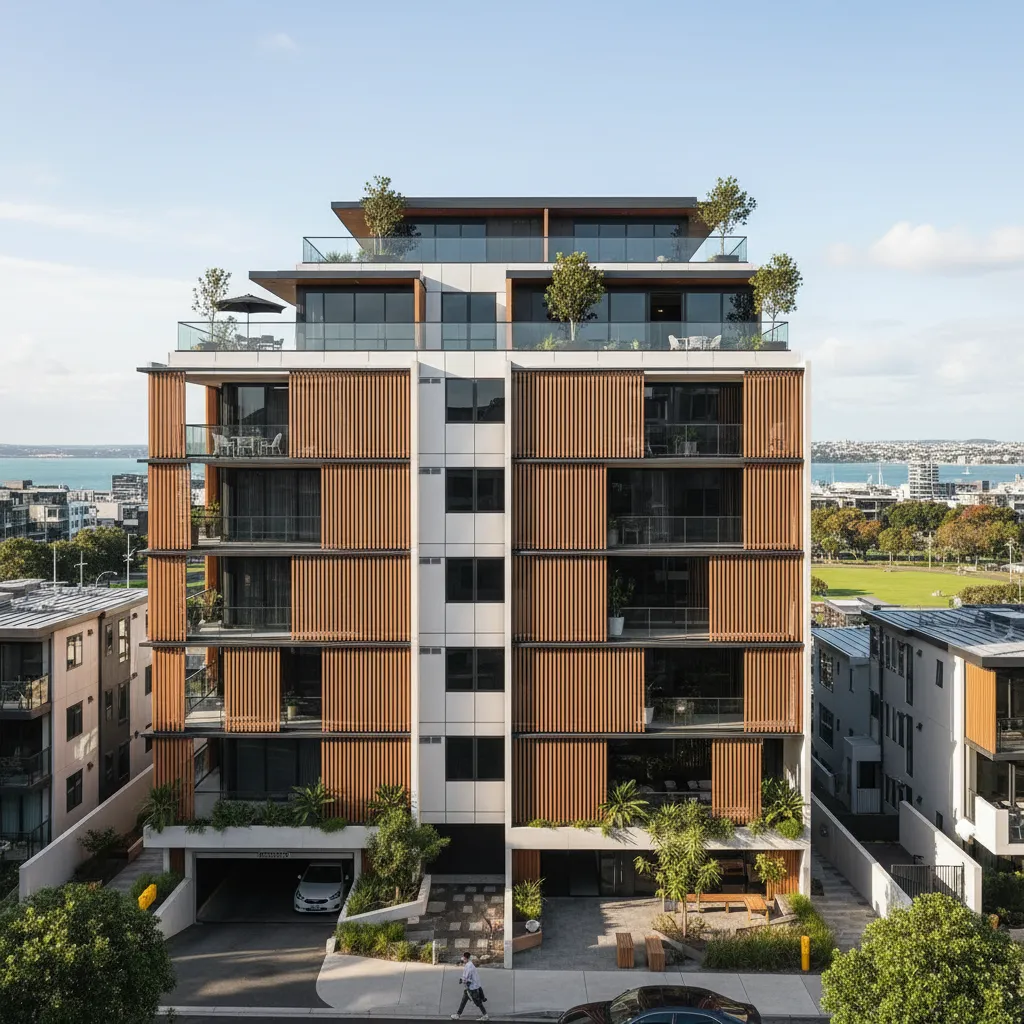
Modern Auckland apartment complex requiring pest management

Body Corporate Pest Management Auckland

Auckland’s skyline is rapidly transforming before our eyes. With over half of all new residential consents now dedicated to multi-unit dwellings, the shift towards high-density living is undeniable.

However, this modern way of living brings a unique and frustrating set of challenges for property managers. When dozens of families share walls, plumbing, and waste disposal systems, a minor pest issue can quickly escalate into a building-wide infestation.

Effective body corporate pest management is no longer just a nice-to-have amenity; it is a critical component of structural maintenance. Pests simply do not respect property boundaries or legal titles.

If a single unit develops a German cockroach problem, it is only a matter of time before the entire floor is compromised. This is exactly why proactive, building-wide strategies are absolutely essential for long-term success.

Key Takeaways

Effective body corporate pest management in Auckland requires proactive coordination across all units. With multi-unit dwellings accounting for over 50% of new home consents, relying on professional strata pest control services nz ensures compliance with Auckland Council bylaws, prevents structural damage from autumn rodents, and maintains a healthy environment for all residents.

Overcoming Multi-Unit Coordination Challenges

Modern Auckland apartment complex requiring pest management

Managing pests in a standalone suburban house is a relatively straightforward process. However, managing pests across a multi-level apartment building or a sprawling townhouse complex is a complex logistical maze.

The primary hurdle that body corporates face is coordination between different owners. Treating a single unit while ignoring the adjoining apartments simply pushes the pests next door temporarily.

Within a matter of weeks, the infestation will inevitably migrate back to the original unit. Comprehensive strata pest control services nz completely eliminate this frustrating game of ping-pong.

Professionals treat the entire building holistically, targeting common areas, roof voids, subfloors, and individual apartments simultaneously. This unified, systematic approach is the only proven way to permanently break the pest breeding cycle.

Graph showing the rise of multi-unit dwelling consents in New Zealand

Streamlined Communication for Body Corporate Managers

Body corporate managers already juggle a mountain of daily administrative responsibilities. Coordinating with dozens of tenants, owner-occupiers, and absent landlords for a single pest treatment can easily become a nightmare.

Top-tier pest control providers understand this dynamic and take the administrative burden off the manager’s shoulders. They offer streamlined communication systems and automated scheduling tools.

📝

Tenant Communication Strategy

Always provide residents with at least 48 hours written notice before a scheduled pest treatment. Clear instructions on how to prepare their units will vastly improve the treatment’s success rate.

By providing direct notices to residents regarding treatment schedules, professional teams ensure maximum compliance. This reduces friction and ensures the pest technicians can access all necessary areas without delay.

Opaque Pricing Solved: Clear Strata Contracts

Budgeting for a large body corporate requires financial predictability and transparency. Reactive pest control—calling an exterminator only when a tenant complains—inevitably leads to erratic and highly inflated maintenance costs.

Emergency call-out fees can quickly drain a building’s sinking fund. By establishing an ongoing annual maintenance contract, body corporates can lock in predictable, wholesale pricing.

This proactive financial approach saves thousands of dollars in the long run. It also ensures that minor pest incursions are dealt with before they require expensive, large-scale fumigation.

Feature Reactive DIY Control Professional Strata Contract
Cost Predictability Highly erratic, expensive emergency fees Fixed annual or quarterly pricing
Treatment Scope Isolated to a single unit Building-wide holistic coverage
Compliance Documentation None provided Full audit trails for Council
Effectiveness Temporary relief, high recurrence Permanent disruption of breeding cycles

Strict Compliance and Safety Regulations

Pest control technician inspecting building compliance

In New Zealand, property owners have a strict legal obligation to provide a safe, sanitary, and healthy living environment. Failing to adequately address pest infestations can lead to severe legal and financial repercussions.

Under the Residential Tenancies Act, landlords must ensure properties are completely free from pests at the commencement of any tenancy. For body corporates, this heavy responsibility extends to all shared spaces, corridors, and structural voids.

⚠️

Legal Liability Warning

Ignoring a known pest infestation in common areas can result in hefty fines and legal action from the Tenancy Tribunal. Body corporates can be held directly liable for damages to tenant property caused by unmanaged pests.

When searching for the best strata pest control services nz, ensure the provider has specific experience with multi-story complexes. They must understand the unique safety protocols required when deploying treatments around high-density populations.

Auckland Council Bylaws on Pest Management

The Auckland Council takes urban pest management incredibly seriously, especially in densely populated areas. Under the Property Maintenance and Nuisance Bylaw 2015 (updated in 2022), property owners must actively prevent their premises from harbouring pests.

Allowing vegetation to overgrow or rubbish to accumulate in common areas directly violates this bylaw. Furthermore, the Auckland Regional Pest Management Plan 2020-2030 empowers the council to enforce strict biosecurity measures across the region.

Partnering with professional strata pest control services nz ensures your building remains fully compliant with these stringent regulations. Experts provide the necessary documentation, service reports, and audit trails to prove your body corporate is meeting its legal obligations.

If the Council investigates a nuisance complaint, having a professional pest management contract on file serves as an excellent defense. It demonstrates proactive governance and a commitment to public health.

Autumn Pest Prevention Tips for Auckland Homes & Strata

Autumn pest prevention for Auckland townhouses

As the warm summer fades and autumn temperatures drop across Auckland, pest behaviour changes dramatically. Insects and rodents that previously thrived outdoors begin desperately seeking warmth and shelter inside buildings.

Autumn is a critical transition period for body corporate managers and facility caretakers. Failing to pest-proof a building in April or May virtually guarantees a miserable, infested winter for the residents.

đź’ˇ

Proactive Exclusion Tip

The most effective pest control is exclusion. Focus your autumn maintenance budget on sealing physical entry points before investing heavily in chemical baits.

Here are the most effective autumn pest prevention strategies for multi-unit dwellings:

  • Seal all exterior cracks, weep holes, and crevices around the building foundation using expanding foam or steel wool.
  • Install heavy-duty weather stripping and door sweeps on all communal doors and ground-floor windows to block crawling insects.
  • Ensure all communal rubbish bins are tightly sealed, washed regularly, and emptied frequently to deter cockroaches and flies.
  • Trim back overhanging tree branches that provide a direct bridge for rodents to access the roof and gutters.
  • Schedule a comprehensive professional inspection of all subfloors, basement carparks, and roof voids before winter arrives.

Autumn: Strata and Body Corporate Rodent Prevention

Rodents are without a doubt the undisputed kings of autumn pests in Auckland. Rats and mice can squeeze through incredibly small gaps, with mice needing only a space the size of a ten-cent coin to gain entry.

Once inside a multi-unit building, they travel rapidly through shared wall cavities, plumbing chases, and elevator shafts. The physical and financial damage they cause to a complex is often staggering.

Rodents continuously chew on hard materials to file down their growing teeth. When they chew through electrical wiring, they create severe, hidden fire hazards for the entire residential complex.

They also tear up insulation for nesting material and spread dangerous diseases through their urine and droppings. A coordinated baiting program is essential to keep their populations in check.

âś…

Action Required: Rodent Station Audit

Before May ends, ensure your pest control provider has serviced and restocked all exterior tamper-proof rodent bait stations around the perimeter of the building.

Request a Comprehensive Strata Pest Audit

Body corporate manager reviewing pest control audit

Protecting a multi-million dollar residential complex requires far more than just setting a few mousetraps in the basement. It requires a strategic, data-driven approach to urban pest management and structural maintenance.

A comprehensive strata pest audit will identify hidden vulnerabilities in your building’s architecture. It will also highlight subtle sanitation issues in common areas that may be secretly attracting pests.

Investing in reputable strata pest control services nz is a direct investment in the building’s longevity and the residents’ overall wellbeing. Do not wait for a furious tenant complaint to take action.

Contact a certified Auckland pest management professional today to schedule a full site inspection. In the world of high-density living, a proactive defense is always vastly superior to a reactive cure.

Frequently Asked Questions

Who is responsible for pest control in a body corporate in NZ?
In New Zealand, the body corporate is strictly responsible for managing and funding pest control in all common areas, shared structural voids, and exterior grounds. Individual unit owners or tenants are generally responsible for pest issues isolated entirely within their own private airspace, unless the infestation originated from a common area or structural defect.
How often should a strata complex have pest control done?
For most multi-unit residential complexes in Auckland, a comprehensive professional pest treatment should be conducted at least twice a year. High-risk properties, such as those with shared commercial food facilities on the ground floor or properties located near heavy bushland, may require quarterly servicing to remain compliant and pest-free.
Can one tenant refuse a building-wide pest control treatment?
While a tenant can express concerns, body corporate rules and the Residential Tenancies Act generally allow landlords and property managers to enter a unit for necessary maintenance, provided proper written notice (usually 48 hours) is given. Refusing access for critical building-wide pest eradication can put the tenant in breach of their tenancy agreement.
What happens if Auckland Council finds a pest nuisance on the property?
Under the Property Maintenance and Nuisance Bylaw, Auckland Council can issue a formal warning or a statutory notice requiring the immediate removal of the pest harbourage. Failure to comply can result in the Council hiring contractors to resolve the issue at the owner’s expense, alongside potential fines of up to $20,000.
Are strata pest control treatments safe for pets and children?
Yes, reputable providers use highly targeted, eco-friendly products approved by the EPA. Modern treatments focus on precise gel baits and localized exterior sprays rather than indiscriminate indoor fogging. However, residents are usually advised to keep pets and children away from treated surfaces until they are completely dry.
Why are rodents worse during autumn in Auckland?
During summer, rodents thrive outdoors where natural food sources are abundant. As autumn arrives and temperatures drop, these food sources deplete, and the cold weather drives rats and mice indoors in search of warmth, shelter, and reliable food, making multi-unit residential buildings highly attractive targets.

Leave a Comment

Your email address will not be published. Required fields are marked *

Scroll to Top