Expert Verified: This guide on Rodents in Auckland: Types & Damage Signs was reviewed by Ronnie, our lead technician, to ensure scientific accuracy in identification and Auckland-specific environmental factors. Updated for 2026 standards.
Rodents in Auckland: Identification, Signs & Damage Guide
The primary Rodents in Auckland: Types & Damage Signs include the Norway Rat, Ship Rat, and House Mouse. Key identification signs involve cylindrical droppings (6mm to 20mm), fresh gnaw marks on electrical cables or timber, greasy rub marks along skirting boards, and distinct nocturnal scratching sounds within wall cavities or roof voids. If these signs are present, immediate intervention is required to prevent structural fires and health risks.
When managing Rodents in Auckland: Types & Damage Signs, our maritime climate and high-density urban sprawl provide ideal conditions for infestations. Auckland rodents pose significant threats through contamination and structural damage. As a family-owned Auckland business, we focus on root-cause eradication rather than just temporary baiting.
Common Rodent Species Found Across Auckland
Our unique geography—from the Hibiscus Coast down to South Auckland—hosts three primary species. Identification is the first step toward our Silver Bullet Guarantee.
The Norway Rat (Rattus norvegicus)
Known as the brown rat, these robust pests measure up to 28cm. They are ground-dwellers often found in Auckland’s basements, drainage systems, and industrial areas near the Waitematā Harbour. They are powerful burrowers that can undermine building foundations.
The Ship Rat (Rattus rattus)
The ship rat, or roof rat, is the most common climber in Auckland residential areas like the North Shore and Central Auckland. They nest in attics and wall cavities. Their agility allows them to enter through gaps in eaves, often following the warmth of household insulation during the Auckland winter.
The House Mouse (Mus musculus)
Highly adaptable and prolific breeders, mice can enter through gaps as small as 6mm. While smaller than rats, their ability to contaminate food and chew through delicate electrical components makes them a high-priority pest for Auckland homeowners.
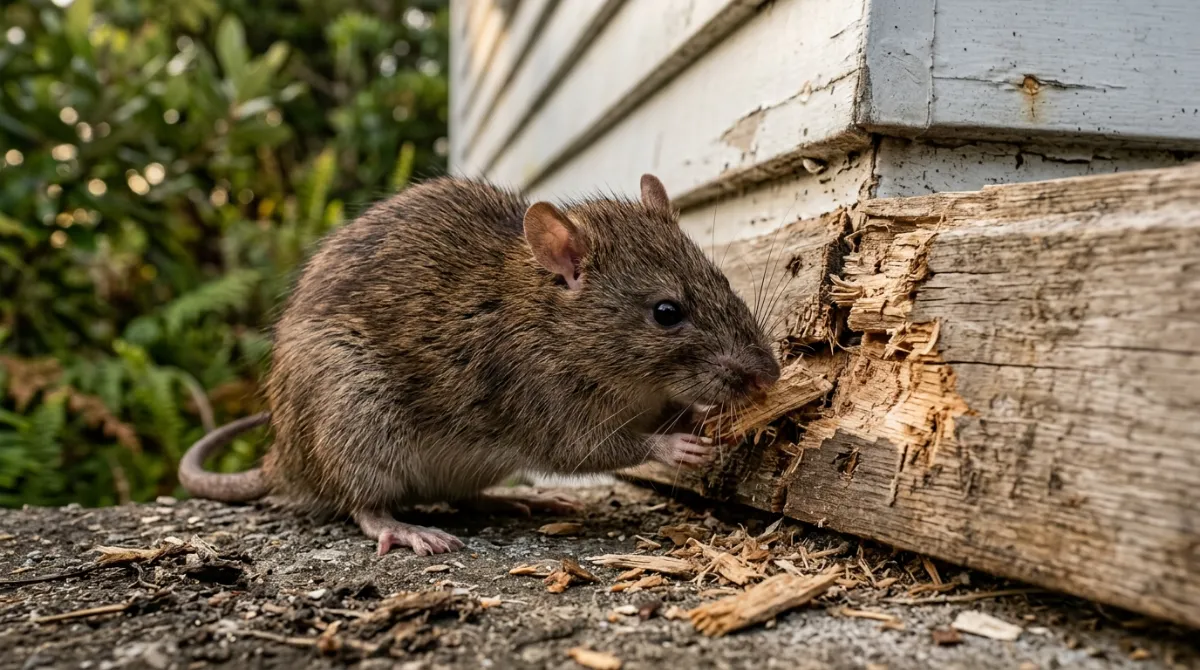
Recognizing Tell-Tale Signs of Rodent Activity
Detecting a rodent infestation early is crucial for preventing extensive damage. Since rodents are primarily nocturnal, property owners must look for secondary evidence.
Droppings and Urine
Rodent droppings are definitive indicators. Norway rat droppings are blunt-ended (18-20mm), ship rat droppings are spindle-shaped (12mm), and house mouse droppings are small and rice-like (3-6mm). A strong ammonia-like smell often indicates a large, established nest.
Gnaw Marks and Rub Marks
Rodents constantly gnaw to file down their incisors. Check behind appliances and in roof voids for light-colored marks on wood or wires. Greasy, dark “smear marks” along skirting boards indicate regular runways where their fur oils rub against the wall.
Understanding the Types of Damage Rodents Inflict
Rodent damage in Auckland homes is rarely just cosmetic; it is often structural and hazardous.
- Fire Hazards: Rodents are a leading cause of “unknown origin” house fires due to chewing through electrical cable insulation.
- Structural Degradation: Damage to wooden beams, floorboards, and wall linings can be costly to repair.
- Insulation Loss: Rats often nest in ceiling insulation, compressing it and reducing its thermal efficiency, which is vital for damp Auckland homes.
Initial Steps for Dealing with a Suspected Rodent Issue
- Sanitation: Remove all food sources, including pet food and fallen fruit in gardens.
- Exclusion: Identify entry points like gaps around pipes or under doors.
- Professional Consultation: Contact a certified Auckland technician. DIY sprays and supermarket traps rarely address the nesting site or root cause.
Frequently Asked Questions
Are Auckland rodents dangerous to my health?
Yes. Rodents carry pathogens such as Leptospirosis, Salmonella, and Hantavirus. Their urine and droppings can contaminate surfaces and food prep areas, posing a significant risk to children, pets, and commercial staff.
Why do I hear noises in my roof only at night?
Rats and mice are nocturnal. Ship rats, in particular, are expert climbers that nest in ceiling voids. If you hear scratching or scampering after dark, it is highly likely you have an active infestation in your roof space.
Can I just use DIY traps from the hardware store?
While traps can catch individual rodents, they don’t address the colony’s source or entry points. Professional pest management involves scientific exclusion and Class 9 certified treatments that ensure the rodents do not return.
How do rodents enter my Auckland home?
Rodents are incredibly flexible. They enter through weeping holes in brickwork, gaps around plumbing pipes, or overhanging trees that provide a bridge to your roofline. Our technicians specialize in structural exclusion to seal these points permanently.
About the Expert
Ronnie, Lead Technician: With years of experience in Auckland Urban Pest Management, Ronnie specializes in root-cause eradication and structural exclusion. He is fully certified to handle Class 9 pesticides, ensuring every treatment is safe for Auckland families and pets.