Food Contamination by Pests: Health Hazards & Expert Prevention Guide
Food contamination by pests is not merely a nuisance; it is a critical public health hazard that affects thousands of Auckland homes and businesses annually. From the dense urban corridors of Central Auckland to the residential suburbs of the Hibiscus Coast, pests like rats, cockroaches, and flies serve as highly efficient vectors for infectious diseases. At Pest Control Auckland, we believe that understanding the scientific mechanics of contamination is the first step toward achieving a sterile, safe environment.
What are the primary health hazards of food contamination by pests?
Food contamination by pests involves the transmission of biological hazards including Salmonella, E. coli, Campylobacter, and Leptospira through direct contact with saliva, droppings, or physical debris. These hazards cause severe gastrointestinal illness, potential long-term organ damage, and dangerous allergic reactions. In Auckland, maintaining professional pest management is a legal requirement for commercial entities under the Food Act 2014 to mitigate these life-threatening risks.
The Mechanics of Pathogen Transmission
Pests operate as biological delivery systems. They do not merely eat your food; they introduce a microbial cocktail gathered from Auckland’s sewage systems, waste bins, and decaying matter. In our scientific assessments at Pest Control Auckland, we categorize contamination into three distinct routes:
1. Mechanical Transmission (The Hitchhiker Effect)
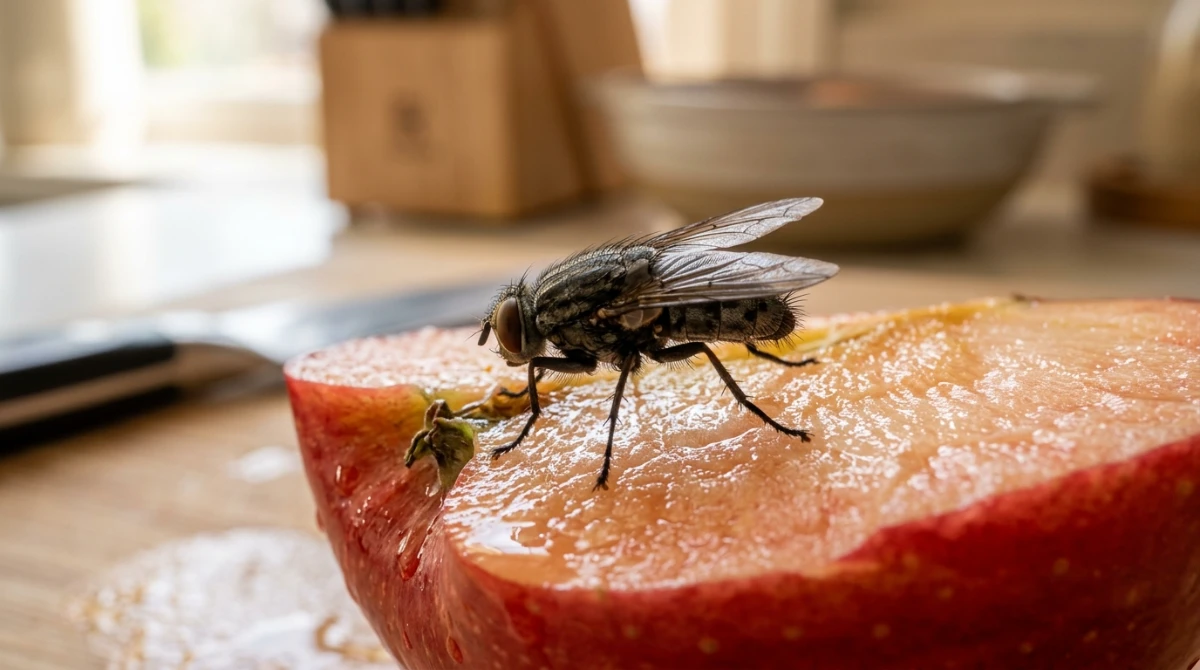
Flies and cockroaches are the primary culprits here. Their legs and body hairs are covered in microscopic bristles that trap pathogens when they walk across contaminated surfaces (like garbage). When they land on your meal or preparation counter, they deposit these microbes instantly. This is particularly prevalent in Auckland cafes during the humid summer months when fly populations surge.
2. Biological/Internal Transmission
This occurs when pests ingest pathogens and then regurgitate them or excrete them onto food. Rodents are notorious for this; they constantly dribble urine to mark territory, often directly across pantry shelves. This urine can contain Leptospira, a dangerous bacteria that can enter the human body through minor skin abrasions or ingestion, leading to Weil’s disease.
3. Physical Contaminants
Beyond bacteria, pests shed hair, cast skins, and egg cases (oothecae). These physical fragments are potent allergens. For Auckland residents with respiratory sensitivities, the presence of cockroach allergens in food preparation areas can trigger severe asthma attacks even if the food is cooked.
Species-Specific Risk Profiles: Auckland’s Major Threat Actors
The Norway Rat & Roof Rat
Rats in Auckland are responsible for the spread of Salmonellosis and Leptospirosis. Their gnawing behavior also compromises food packaging, exposing contents to secondary mold and airborne spores.
The German Cockroach
The most common commercial pest in Auckland. They carry 30+ types of bacteria and thrive in the heat of kitchen motors and fridge compressors, making them the #1 risk for food poisoning in hospitality.
House & Blow Flies
Each time a fly lands, it may vomit digestive juices onto the food. They are primary vectors for Campylobacter, New Zealand’s most commonly reported enteric disease.
Argentine & White-Footed Ants
While often seen as a minor nuisance, these ants travel through drains and waste to reach pantries, trailing pathogens across clean utensils and open food containers.
Comparative Risk Data Table
| Pathogen | Primary Pest Vector | Symptoms | Auckland Risk Level |
|---|---|---|---|
| Salmonella | Rats, Mice, Cockroaches | Fever, Diarrhea, Abdominal Cramps | High (Year-round) |
| Leptospirosis | Rats (Urine) | Flu-like symptoms, Kidney failure | Moderate (Urban hubs) |
| E. coli | Flies, Cockroaches | Severe stomach cramps, Vomiting | Critical (Summer) |
| Dysentery | Flies | Bloody diarrhea, Fever | Moderate |
Auckland Compliance & The Food Act 2014
For Auckland business owners, pest control is not optional. The Food Act 2014 mandates that all food businesses must ensure their premises are free from pests. Failure to maintain a robust Integrated Pest Management (IPM) system can result in heavy fines, forced closure by the Ministry for Primary Industries (MPI), and irreversible damage to your brand’s reputation.
Our team at Pest Control Auckland provides professional auditing and biosecurity compliance support. We don’t just treat the infestation; we provide the documentation and structural advice needed to pass health inspections with flying colors. This includes identifying “dead zones” where pests hide and implementing MPI-approved, zero-emission treatments that are safe for food-handling environments.
The Scientific Solution: Root-Cause Eradication
Traditional DIY sprays often exacerbate the problem by causing “pest scattering,” where the colony moves deeper into the building’s structure. Our Silver Bullet Guarantee approach focuses on three scientific pillars:
- Structural Exclusion: Identifying and sealing every entry point, from 2mm gaps under doors to pipe penetrations, using rodent-proof materials.
- Baiting & Monitoring: Using Class 9 Urban Pest Management grade baits that target the nesting site, ensuring the entire colony is eradicated, not just the visible individuals.
- Hygienic Intervention: Advising on moisture control and waste management to remove the “attractant cycle” that brings pests back to your Auckland property.
Frequently Asked Questions
Can I just use store-bought sprays for pests in my kitchen?
We strongly advise against this. Store-bought sprays are often repellent-based, which can cause pests like cockroaches to scatter into harder-to-reach areas (like inside walls or appliances), making the infestation much harder to treat professionally. Furthermore, improper application near food surfaces can lead to chemical contamination risks.
How long after a pest treatment can I safely use my kitchen?
Safety is our priority. While we use MPI-approved, low-toxicity treatments, we generally recommend waiting 2 to 4 hours for any surface treatments to dry completely. Our technicians provide a detailed preparation and aftercare checklist specific to your home or business environment to ensure total safety for children and pets.
What does the Food Act 2014 require for my Auckland cafe?
The Act requires you to have a documented food control plan (FCP) that includes a pest management strategy. You must demonstrate that you are proactively preventing pests and have a contract with a certified technician like Pest Control Auckland to handle any sightings immediately. Failure to comply can result in MPI improvement notices or closure.
Are the treatments safe for food preparation areas?
Yes. We utilize specialized gel baits and zero-emission botanical or targeted treatments that are strictly applied to non-food contact surfaces (cracks, crevices, and motor housings). Our Class 9 certified technicians are trained to ensure zero chemical drift in food prep zones.
Protect Your Health & Reputation
Don’t let a minor pest issue turn into a public health crisis or a regulatory nightmare. Contact Ronnie and the team for a scientific site assessment today.
Family Owned | MPI Compliant | Auckland Wide Service