It is May 2026, and if you live in Auckland, you have probably noticed the autumn chill driving a few unwanted guests indoors. After a scorcher of a summer and a remarkably mild winter last year, our local rodent and insect populations have had an absolute field day.
Here at Pest Control Auckland, we are seeing rats the size of small cats trying to move into ceiling cavities across the region. But while our certified team is busy handling the complex urban infestations, there is a massive movement happening right in our local reserves and backyards.
Everyday Kiwis are rolling up their sleeves to protect our native birds and bush. The rise of community initiatives for pest eradication in Auckland is transforming how we manage invasive predators, proving that when neighbourhoods band together, we can achieve incredible results.
Key Takeaways
Successful community initiatives for pest eradication in Auckland rely on coordinated backyard trapping, strict adherence to the Animal Welfare Act 1999, and professional support. While local groups tackle possums and stoats in reserves, certified experts handle complex urban infestations using root-cause exclusion and eco-safe methods.
The 2026 Autumn Pest Surge and The Local Response
We are currently navigating one of the most intense pest seasons Auckland has seen in years. The combination of early 2025’s heatwave and a lack of winter frosts created the perfect breeding ground for rodents and insects.
Homeowners are frustrated. Many get stuck in what we call the “DIY cycle of despair”—buying cheap hardware store bombs and baits that barely scratch the surface. These temporary fixes do not address the root cause, leading to recurring infestations and wasted money.
That is exactly why community initiatives for pest eradication in Auckland have gained such massive traction. Instead of fighting isolated battles, neighbourhoods are forming trapping networks. By coordinating their efforts, they create buffer zones that drastically reduce predator numbers before they even reach residential properties.
The Auckland RPMP 2020-2030 mandates strict pathway management, especially for the Hauraki Gulf Controlled Area (like Waiheke and Aotea). This is crucial to prevent accidental pest introductions to our vulnerable island sanctuaries.
Major Success Stories: Hūnua Ranges and Kawau Island
If you want proof that coordinated efforts work, look no further than the Hūnua Ranges. Following a massive late-2025 aerial 1080 drop, the results have been nothing short of spectacular.
Recent data shows that rat tracking in the Hūnua Ranges has plummeted to an incredible 1.3%. This gives our native Kōkako and other vulnerable bird species a genuine fighting chance to thrive without the constant threat of nest predation.
Meanwhile, out on Kawau Island, eradication teams are using cutting-edge technology. Thermal drones and highly trained detector dogs are currently sweeping the island in the final phases of their predator-free mission.
These large-scale operations provide the blueprint for suburban groups. When local trapping networks align their goals with these massive regional wins, the impact compounds across the entire Auckland region.
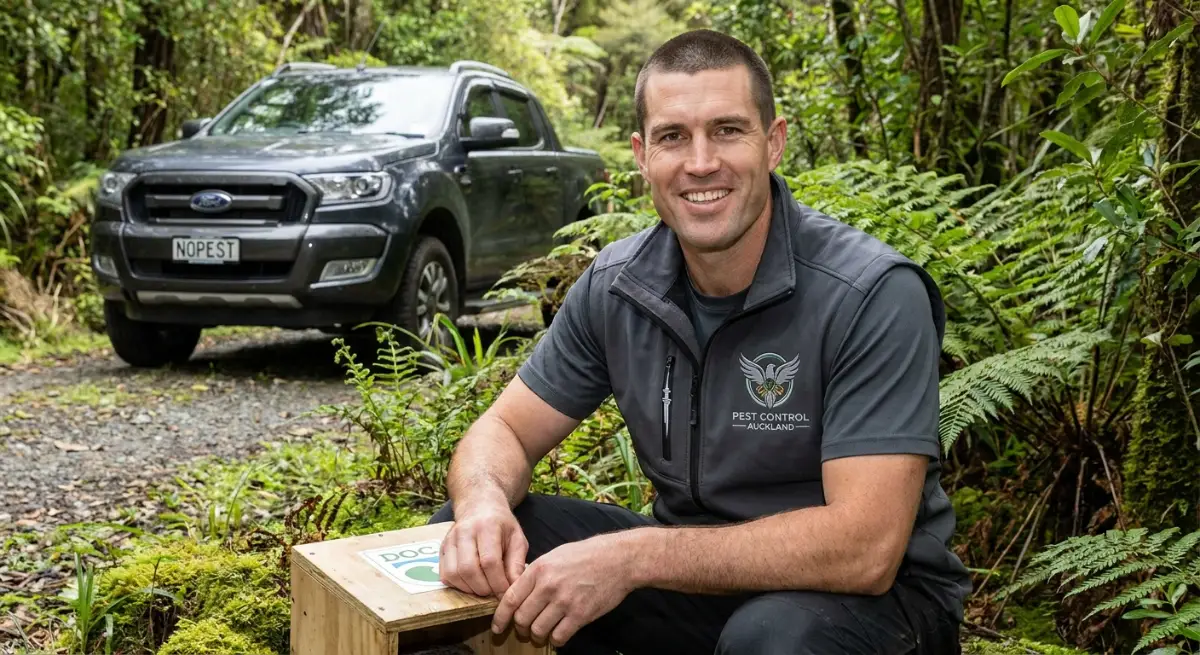
Community Trapping vs Professional Urban Exclusion
We are massive advocates for local trapping groups. They do the hard yakka in the reserves and bush margins. However, managing pests inside a residential home or a commercial kitchen requires a completely different approach.
Backyard trapping is fantastic for population control of possums, stoats, and outdoor rats. But when a family of roof rats has chewed through your electrical wiring, you need professional Integrated Pest Management (IPM).
At Pest Control Auckland, we do not just spray and walk away. We use a scientific, root-cause eradication method. We find the structural entry points, seal them up, and utilise MPI-approved, zero-emission treatments to ensure your home is safe for kids and pets.
| Feature | Community Trapping | Professional Pest Management |
|---|---|---|
| Primary Focus | Native bush, reserves, backyard perimeters. | Inside homes, roof cavities, commercial kitchens. |
| Target Species | Possums, stoats, outdoor rats, feral predators. | Ants, cockroaches, bed bugs, roof rats, wasps. |
| Methods Used | Mechanical traps, bait stations, volunteer labour. | Structural exclusion, Class 9 pesticides, digital monitoring. |
| Legal Expertise | Basic Animal Welfare Act compliance. | EPA HPC Notice 2017, Food Act 2014, HSNO Act. |
Navigating the Legalities: Animal Welfare and HSNO Acts
One thing we always emphasize to local trapping groups is the absolute necessity of staying on the right side of the law. New Zealand has stringent regulations for a reason.
Under the Animal Welfare Act 1999, if you are using live-capture traps, they must be physically inspected within 12 hours after sunrise every single day. There are no exceptions. Furthermore, glue boards for rodents are heavily restricted and generally illegal for public use.
Never attempt to use restricted pesticides or illegal traps. Applying treatments or setting leg-hold traps within 150 meters of a dwelling requires explicit legal permission under the Trespass Act 1980.
When it comes to chemical treatments, the rules tighten even further. The EPA HPC Notice 2017 and the HSNO Act 1996 dictate that anyone handling Class 9 (ecotoxic) substances must be a Qualified UPM Contractor.
This is why you should always check your pest controller’s credentials. Our technicians hold the New Zealand Certificate in Pest Operations (Level 3). We know exactly how to apply treatments safely without risking your family, your pets, or the local environment.
Commercial Impact: Hospitality and The Food Act 2014
While community initiatives for pest eradication in Auckland do an amazing job in residential areas, the commercial sector faces a whole different beast. New Zealand’s hospitality sector hit a record $15.99 billion turnover in FY2025, and nearly a third of those businesses are right here in Auckland.
For cafes, restaurants, and warehouses, pest control is not just about peace of mind; it is about strict legal compliance. The Food Act 2014 and MPI standards enforce a zero-tolerance policy for pests in food preparation areas.
- Toxic rodenticide baits are strictly prohibited in sensitive food areas.
- Businesses must rely on non-toxic monitoring and mechanical traps.
- Detailed documentation and regular compliance auditing are legally required.
- Treatments must be hygienic and zero-emission to protect stock and staff.
This is where our commercial Integrated Pest Management (IPM) systems shine. We handle the complex compliance paperwork, ensuring you pass your health inspections while keeping your brand reputation spotless.
If you manage a food business, ditch the reactive sprays. Transition to an ongoing, non-toxic IPM monitoring system to stay fully compliant with the Food Act 2014.
The Future: FAOPMA Pest Summit 2026
The pest control industry is evolving rapidly, and Auckland is right at the centre of it. We are gearing up to host the prestigious FAOPMA Pest Summit from July 15-17, 2026, at the NZICC.
Themed “FutureProof: Smarter Pest Solutions for a Rapidly Changing World,” this summit is bringing the best minds in global pest management to our shores. It is a massive validation of the work being done locally.
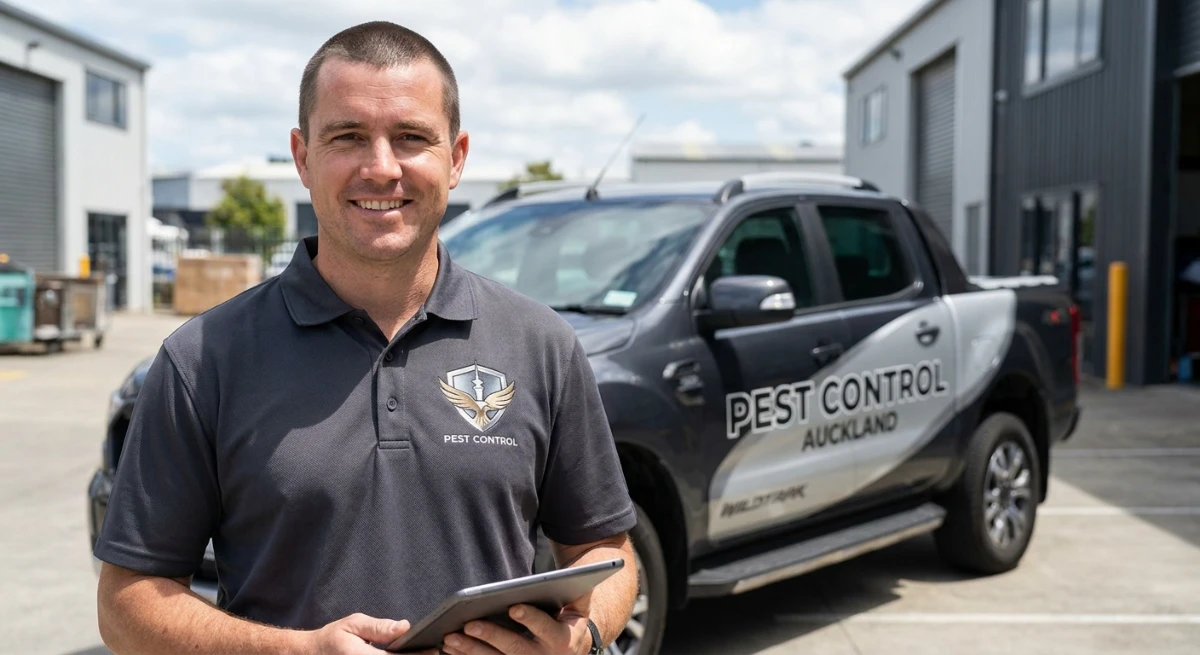
The era of toxic “spray and pray” is dead. The future belongs to predictive, eco-conscious interventions. IoT-enabled digital monitoring, thermal tracking, and highly targeted exclusion tactics are becoming the new standard.
As we integrate these advanced technologies, they will run parallel to the grassroots work done by locals. The synergy between professional innovation and passionate community initiatives for pest eradication in Auckland is what will ultimately protect our beautiful city.
Wrapping It Up: Your Role in a Pest-Free Auckland
Whether you are setting a rat trap in your backyard reserve or calling us to secure your commercial kitchen, every action counts. We are incredibly proud of the Aucklanders taking initiative to protect our native wildlife.
Remember, if you are dealing with standard urban pests—like a wasp nest in the eaves, cockroaches in the pantry, or rats in the roof—that is where you need the professionals. We bring the heavy artillery, the Level 3 qualifications, and the Silver Bullet Guarantee.
We assess every situation on a case-by-case basis. If you have an unusual pest problem, or if you need advice and referral for protected wildlife, give us a shout. We will point you in the right direction so you are never left guessing.
Trim back tree branches that touch your roofline. Rats use these as natural highways straight into your ceiling cavity. Removing the bridge is the first step in structural exclusion.
People Also Ask

About the Author: Ronnie
Founder, Pest Control Auckland · Commercial & Residential Pest Expert · Certified Urban Pest Management Specialist
With years of hands-on experience sealing up Auckland’s trickiest roof cavities and ensuring strict Food Act compliance for local cafes, Ronnie is the definitive expert on urban pest exclusion. Having consulted alongside local trapping groups, he understands exactly how professional Integrated Pest Management supports broader community conservation efforts across the region.