If there is one thing that will ruin a good night’s sleep faster than a southerly gale hitting the Waitākeres, it is the sound of scratching in your ceiling. Auckland’s unique mix of dense native bush, older housing stock, and a booming hospitality scene makes it an absolute paradise for rodents. We have seen a massive autumn surge this year, driven by a mild winter and a baking hot summer in 2025. When the weather turns cold, rats and mice look for a warm, dry place to crash.
Unfortunately, your roof void is prime real estate for these unwanted guests. Tossing a cheap hardware store bait block into the ceiling is not a long-term fix. It is simply a temporary band-aid on a much larger structural issue. True rodent proofing Auckland properties requires a bit of science, a lot of structural know-how, and the willingness to find exactly how the pests are getting in.
We do not believe in fear-mongering or scare tactics. We believe in straight-talking Kiwi pest management that permanently solves the problem. In this guide, we are going to walk you through the exact structural exclusion methods we use to keep Auckland homes safe, secure, and completely rodent-free.
Key Takeaways
Effective rodent proofing Auckland requires structural exclusion, not just basic baiting. You must seal gaps larger than 5mm, trim roofline vegetation, and manage external food sources. Professional eradication uses Level 3 qualified technicians and complies with the Animal Welfare Act, ensuring permanent, safe removal over failed DIY methods.
Understanding Auckland’s Rodent Pressure: Ship Rats vs. Norway Rats
Before you can effectively block rodents out of your home, you need to know exactly what species you are up against. In the Auckland region, we are primarily dealing with two main culprits: the Ship Rat and the Norway Rat. Each species requires a completely different exclusion strategy.
Ship rats, also known as roof rats, are exceptionally agile climbers. They are usually the ones throwing a midnight party in your ceiling insulation and running along your overhead power lines. Norway rats, on the other hand, are the heavyweights of the rodent world. They prefer the ground floor, digging burrows under your decking, tunneling beneath concrete slabs, and finding their way into damp basements.
The recent autumn surge has pushed both of these species indoors at alarming rates. While large-scale regional conservation efforts are doing brilliantly—like the late-2025 aerial drops that plummeted rat tracking in the Hūnua Ranges to an incredible 1.34 percent—urban residential areas are a completely different beast. Our local hospitality boom provides a massive food source, and when the commercial bins are emptied, those rats head straight to the warmth of residential suburbs.
Phase 1: Structural Exclusion and Gap Sealing Techniques
The absolute cornerstone of rodent proofing Auckland homes is structural exclusion. If you do not physically block their entry points, you will be trapping and baiting for the rest of your life. It becomes a never-ending cycle of frustration.
Mice are incredibly flexible and can squeeze through a gap the size of a standard ballpoint pen, which is roughly 5 millimetres. Rats are not much bigger when it comes to entry requirements, needing only a hole the size of your thumb to gain access. We always start by meticulously inspecting the perimeter of your home.
During our inspections, we are looking for several common structural failures. These are the most frequent highways into your wall cavities:
- Compromised weep holes in brick veneer exteriors.
- Damaged or completely missing subfloor ventilation grates.
- Unsealed gaps around exterior plumbing and drainage pipes.
- Rotting timber around the baseboards of older villas.
Standard polyurethane expanding foam from the local hardware store will not stop a rat. A determined rodent will chew straight through it in under ten minutes. Always use professional-grade exclusion materials.
Instead of cheap foam, we use heavy-duty materials designed to withstand gnawing. This includes galvanized steel mesh, concrete patching, and specialized rodent-proof sealants infused with metal fibres. Fixing it right the first time saves you money and massive headaches down the road.
Phase 2: Roofline Integrity and Vegetation Management

Because Ship Rats are such exceptional climbers, your roof is highly vulnerable to invasion. Overhanging tree branches act as a literal highway straight into your gutters, eaves, and eventually your ceiling space. If branches are touching your roof, you are rolling out the red carpet for pests.
You need to keep all trees and large shrubs trimmed at least two metres away from your roofline. It is a relatively simple weekend landscaping job, but it is easily one of the most effective preventative measures you can take. Rodents hate being exposed in the open air, so removing their leafy bridges cuts off their main access route.
Rotting timber around your roofline is a massive vulnerability. Rats can smell the damp wood and will easily chew through softened fascia boards to get into the warm, dry attic space behind it.
Next, you must check your overall roof integrity. Slipped concrete tiles, rusted corrugated iron, and poorly sealed flashings provide incredibly easy access. We frequently find rodents exploiting the tiny gaps where different rooflines meet, or where modern air conditioning pipes enter the attic space.
Phase 3: Securing Ground-Level Entry Points and Utilities
Ground-level entry is where the heavy Norway rats do their absolute best work. They love to dig a good burrow under a warm concrete slab or slip under a poorly sealed garage door. If your garage is attached to your house, a breach there means they are already inside your main living envelope.
Check the weather stripping on the bottom of all your exterior doors. If you can see daylight shining underneath the door frame, a rat can easily flatten its ribcage and get through. You should replace worn rubber strips with heavy-duty bristle sweeps or solid metal kick plates.
Utility penetrations are another massive blind spot for Auckland homeowners. Where your heat pump pipes, gas lines, and water mains enter the house, there is usually an oversized hole cut by the original tradesman. These utility gaps are essentially open doors for ground-dwelling pests.
Inspect all exterior pipes entering your brickwork or weatherboards. Pack any gaps tightly with coarse wire wool, then seal it completely with a high-quality, exterior-grade caulking compound.
Environmental Hygiene: Managing External Attractants and Food Sources
You can build a physical fortress, but if you are leaving a buffet on the front lawn, rodents will eventually find a way to breach it. Managing what draws them to your property is just as important as sealing the house itself. Food scarcity is the best deterrent.
Open compost bins, fallen rotting fruit from backyard citrus trees, and overflowing rubbish bins are massive attractants. Auckland’s humid, temperate climate speeds up organic decomposition, making these food smells travel much further on the wind. If a rat can smell it, they will come looking for it.
| Property Feature | High Risk (Rodent Attractant) | Low Risk (Rodent Proof) |
|---|---|---|
| Compost Bins | Open top, resting directly on soil | Sealed tumbler, elevated off ground |
| Pet Feeding | Bowls left outside overnight | Fed indoors, bowls cleaned immediately |
| Rubbish Storage | Overflowing bags next to the bin | Hard plastic bins with tight locking lids |
| Garden Debris | Piles of leaves and stacked firewood | Clear lawns, firewood stored on racks |
Bird feeders are another prime suspect. While we all love seeing native birds in the garden, the seeds that drop to the ground are a high-calorie feast for mice. If you must feed the birds, use a catch-tray and sweep the area daily to prevent nighttime scavenging.
Why DIY Fails: The Scientific Case for Professional Eradication
Aucklanders are a highly practical bunch, and the instinct to just sort the problem out yourself is strong. But the DIY cycle of despair usually involves buying cheap snap traps, catching one juvenile mouse, and leaving the smart adult breeders to multiply inside your wall cavities. It gives you a false sense of security.
There is also a strict legal side to pest control that most homeowners ignore. Under the Animal Welfare Act 1999, if you set a live capture cage trap, you are legally required to manually inspect it within 12 hours of sunrise every single day. Failing to do so is an offence and can land you a massive fine. Glue boards are also heavily restricted, cruel, and completely unnecessary.
When you hire Pest Control Auckland, you are getting technicians who hold the New Zealand Certificate in Pest Operations (Level 3). We are fully qualified to handle Class 9 Urban Pest Management pesticides safely. We use MPI-approved, zero-emission treatments that are rigorously tested to be safe around your children and family pets.
We are also constantly staying ahead of the global curve. Auckland is gearing up to host the massive FAOPMA Pest Summit in July 2026, which is heavily focused on FutureProof and smarter pest solutions. We bring that exact world-class, predictive Integrated Pest Management science straight to your living room.
The Silver Bullet Guarantee: Our Local Auckland Protection Plan
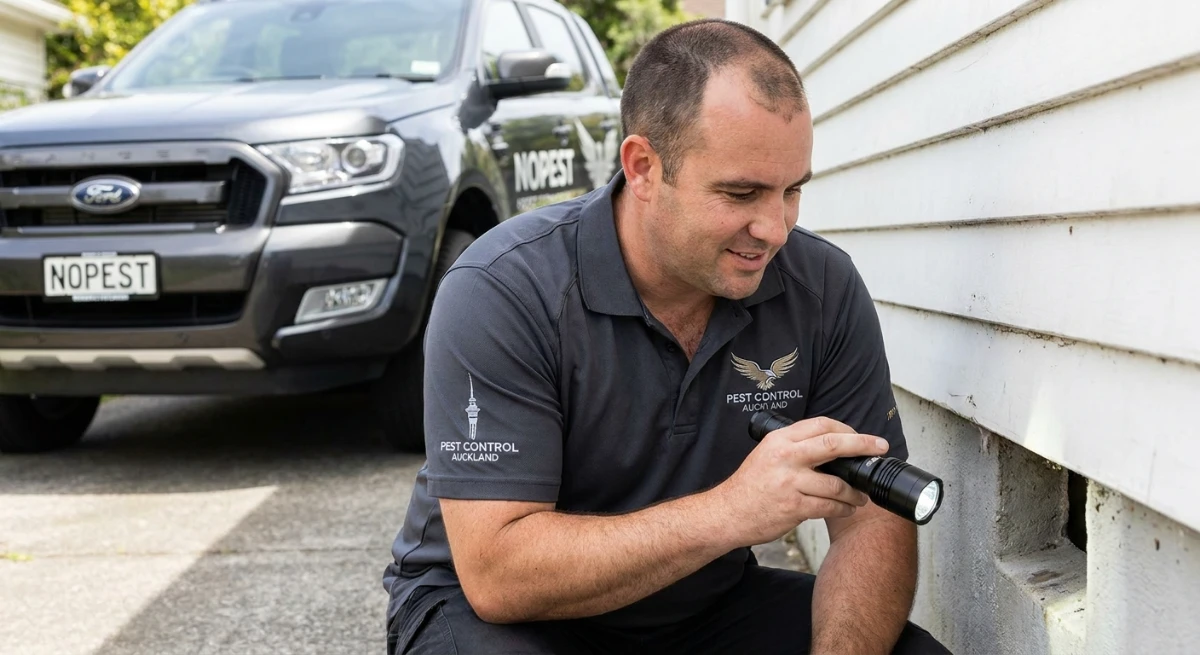
At Pest Control Auckland, we absolutely refuse to do a quick spray and pray job. We focus entirely on scientific, root-cause eradication. If we cannot find exactly how the rodents are getting into your property, we simply haven’t done our job properly.
That is exactly where our famous Silver Bullet Guarantee comes into play. We stand firmly behind our workmanship and our results. If you sign up for our comprehensive Auckland Winter Defense plan, we provide ongoing digital monitoring and structural advice to keep your home locked down year-round.
We are proud locals, not a faceless corporate franchise answering to overseas shareholders. When you call our team for rodent proofing Auckland services, you get honest advice, transparent pricing, and a family-owned crew that treats your house with respect. Give us a yell today, and let’s get those pests sorted for good.