Effective Rodent Baiting Strategies for Auckland Homes
Quick Answer: How to Bait Rodents Effectively in Auckland?
The most effective rodent baiting strategy for Auckland homes involves a scientific three-step approach: 1. Identification of species (Ship rats vs. Norway rats); 2. Deployment of MPI-approved second-generation anticoagulants in tamper-resistant stations; and 3. Strategic placement along structural ‘runways’ and entry points. For permanent results, baiting must be paired with structural exclusion to prevent re-entry.
Written by Ronnie
Founder & Lead Technician | Urban Pest Management Certified
Effective rodent baiting in Auckland requires more than just placing poison in a corner. It demands a systematic, scientific approach to identifying species, selecting specialized baits, and deploying tamper-resistant technology.
Auckland’s climate and urban density provide a thriving environment for rodents. As a local, family-owned business, we have seen how DIY attempts often fail because they treat the symptom rather than the root cause. This guide outlines the professional strategies we use to provide our clients with the ‘Silver Bullet’ of pest protection: long-term eradication.
Understanding the Rodent Problem in Auckland Homes
Before baiting, you must know your enemy. Auckland primarily faces three invasive species: the Norway rat, the Ship rat (Roof rat), and the House mouse.
The Scientific Difference
Norway rats are burrowers typically found near foundations or under floorboards. Ship rats are agile climbers, almost exclusively nesting in Auckland roof voids. Mice are curious but prolific breeders. Professional baiting strategies differ for each; for instance, bait for Ship rats must be secured in elevated locations like attics, while Norway rat baiting focuses on ground-level perimeters.
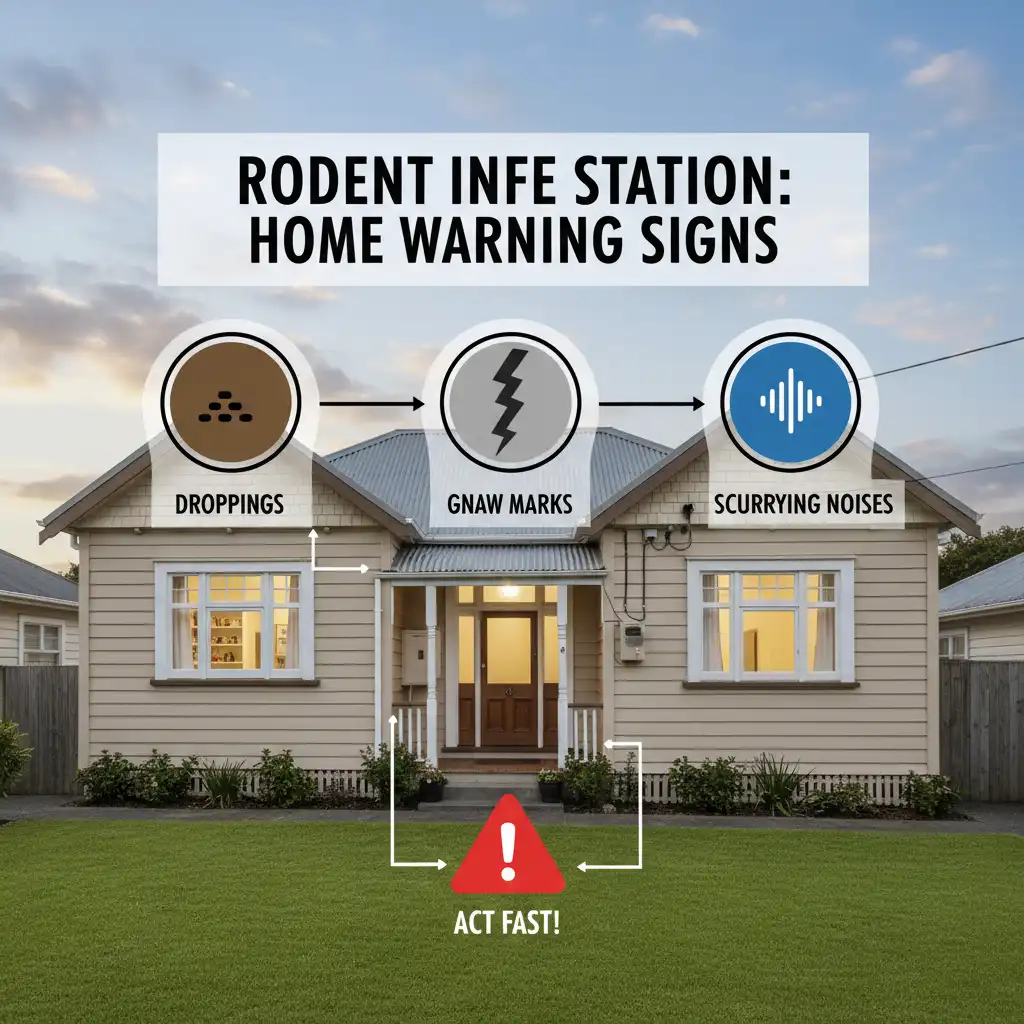
Types of Rodent Baits and Their Applications
As certified technicians, we use professional-grade formulations that are far more effective than standard retail products.
Anticoagulant Baits
- First-Generation (FGARs): Require multiple feedings. Used in lower-risk residential areas but less effective for large infestations.
- Second-Generation (SGARs): Such as Brodifacoum. These are highly potent, often requiring only a single feed to be lethal. We utilize these within secure, lockable stations to ensure rapid colony collapse.
Safe Placement of Rodent Bait Stations
Safety is our absolute priority. We use Class 9 Urban Pest Management protocols to protect children and pets.
- Tamper-Resistant Stations: All baits are housed in heavy-duty, lockable boxes that prevent access by non-target animals.
- Runway Targeting: Rats are creatures of habit. We place stations along ‘runways’—the paths they take between nests and food sources—to maximize uptake.
The Ronnie Difference: Root-Cause Eradication
We don’t just ‘spray and walk away.’ Our baiting programs include a structural assessment to identify entry points. Sealing these holes is the only way to ensure the rodents don’t return once the current population is managed.
People Also Ask
How long does it take for rodent bait to work?
Typically, you will see a significant reduction in activity within 3 to 7 days after the rodents begin feeding. Full colony eradication may take up to 3 weeks depending on the size of the infestation.
Are rodent baits safe for my pets?
When deployed by a certified professional in lockable, tamper-resistant stations, the risk to pets is extremely low. We provide full aftercare instructions and use products with secondary-poisoning safeguards where possible.