Silverfish & Booklice Auckland: Damage to Belongings
Expert Reviewed by: Ronnie, Lead Technician & Founder | Certification: Urban Pest Management NZ | Updated: 2024 Standards
Silverfish & Booklice Auckland: Damage to Belongings occurs primarily through the consumption of starches, cellulose, and microscopic fungal growths. Silverfish (Lepisma saccharina) cause irreparable harm by chewing irregular holes in books, wallpaper, and natural textiles. Booklice (psocids) target damp materials, feeding on the mold growing on paper. Both pests thrive in Auckland’s humid coastal climate, leading to the gradual degradation of heirlooms and archival documents if moisture and structural entry points are not professionally managed.
When assessing Silverfish & Booklice Auckland: Damage to Belongings, it is vital to recognize that these pests are often bio-indicators of underlying moisture issues. Auckland’s unique subtropical conditions facilitate rapid reproduction cycles. Homeowners frequently discover damage only after significant infestation levels have been reached, making proactive monitoring and environmental control essential for preserving high-value personal assets.
Morphology: Identifying Auckland’s Silverfish and Booklice
Accurate identification is the cornerstone of effective Integrated Pest Management (IPM). In New Zealand, these two species are often conflated due to their similar preferred habitats.
The Silverfish (Lepisma saccharina)
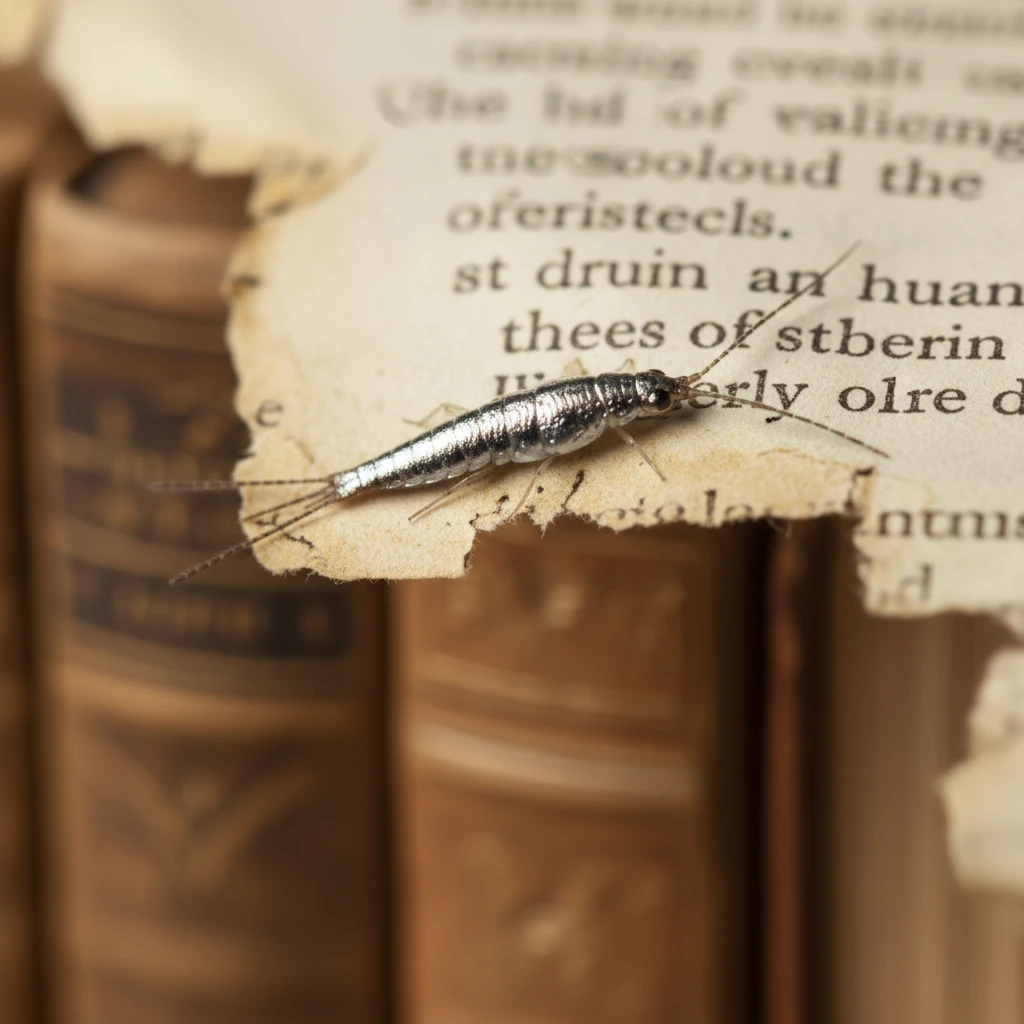
Silverfish are primitive, wingless insects characterized by their metallic, scale-like exoskeleton and three long abdominal appendages (cerci). They can live for up to eight years, meaning a single infestation can cause cumulative damage over nearly a decade.
The Booklice (Psocoptera)
Unlike true lice, booklice are not parasites. These minute (1-2mm) insects are soft-bodied and thrive in high-humidity environments. Their presence is a definitive sign of microscopic mold growth, which they consume, inadvertently staining the materials they inhabit.
Mechanism of Destruction: How Belongings Are Damaged
The damage caused by these pests is rarely just surface-level; it often involves the structural compromise of organic materials.
Archival and Document Degradation
Silverfish possess specialized mouthparts for scraping and chewing. They target the dextrin-based adhesives used in bookbindings and the starch sizing in high-quality paper. Booklice contribute by introducing moisture and fungal spores, leading to “foxing” (brown spotting) on antique documents.
Textile and Fabric Destruction
Natural fibers including cotton, linen, and silk are at risk. Silverfish damage often presents as yellowing stains and irregular holes, frequently mistaken for moth damage. However, the absence of webbing or cocoons usually confirms a silverfish infestation.
Environmental Triggers: Humidity and Microclimes
In Auckland, localized microclimes within a home significantly impact pest activity. Areas with poor cross-ventilation, such as sub-floor voids, roof cavities, and internal wardrobes, provide the high-humidity environment (75%+) required for these insects to flourish. Addressing Auckland’s coastal dampness is the first step toward long-term exclusion.
Professional Prevention & Long-term Asset Security
To secure your belongings, a two-pronged approach is required: environmental modification and professional-grade treatment. At Pest Control Auckland, we utilize MPI-approved, zero-emission treatments that target the root cause of the infestation. Our technicians, certified in Class 9 Urban Pest Management, go beyond surface spraying by identifying nesting sites in wall cavities and recommending structural exclusion measures to prevent re-entry.
Auckland Pest FAQ: Silverfish & Booklice
Are silverfish or booklice dangerous to humans?
Neither silverfish nor booklice bite or spread disease directly to humans. However, their presence can trigger allergies in sensitive individuals. Their primary threat is economic and sentimental—causing permanent destruction to books, photos, and clothing.
Why am I finding silverfish in my Auckland home?
Auckland’s high humidity and mild winters provide the perfect breeding ground. They enter homes through tiny cracks in foundations or are brought in via cardboard boxes and second-hand books. Once inside, they seek out dark, damp areas like bathrooms, laundries, and roof spaces.
Can I use supermarket sprays to stop the damage?
While DIY sprays may kill individual insects on contact, they rarely reach the deep nesting sites inside wall cavities or under floorboards. To stop ongoing damage to your belongings, a scientific approach that targets the life cycle and entry points is necessary.
How does Pest Control Auckland handle an infestation?
We use a combination of residual barrier treatments and structural advice. Led by Ronnie, our team focuses on long-term exclusion. We provide the “Silver Bullet Guarantee,” ensuring that we don’t just spray and walk away, but solve the moisture and nesting issues at the source.