I get calls every single week from panicked Aucklanders who have spotted a small pile of sawdust under their skirting boards. Their stomachs drop, and they immediately jump to the worst-case scenario. They think their biggest investment is secretly being eaten alive by a massive, unseen colony of Termites Auckland homeowners dread.
It is a fair worry, let’s be honest. If you have ever watched those Australian home renovation shows where a beautiful heritage house practically crumbles overnight, your imagination tends to run wild. When you are staring at damaged structural framing, the stress is incredibly real.
But here in New Zealand, the reality of timber-destroying pests is a bit different. More often than not, the culprit chewing through your weatherboards is actually the Common House Borer. However, when we are dealing with genuine exotic termites, the game changes completely.
Understanding exactly what insect is silently chewing through your property is the very first step to sorting it out permanently. Get the identification wrong, and you could end up wasting thousands of dollars on the wrong treatment. Worse still, you might accidentally ignore a serious national biosecurity threat.
Key Takeaways
While New Zealand has harmless native termites, highly destructive exotic species like Australian subterranean termites pose a massive threat to homes. If you suspect an invasive termite infestation, do not disturb them; contact MPI immediately. For standard timber pests, professional pest control in Auckland is essential for structural protection.
Understanding the Termite Threat in the Auckland Climate
Auckland’s climate is virtually a five-star resort for timber pests. Following the incredibly mild winter and hot, humid summer we experienced heading into 2026, we have seen a massive autumn surge in urban pest activity.
Insects thrive on moisture and warmth. When you combine our coastal humidity with the older, untreated timber framing found in many classic Auckland villas, you are looking at a perfect storm. The days of reactive, toxic “spray and pray” applications are dead.
Today, the industry standard is Predictive Integrated Pest Management (IPM). In fact, as Auckland prepares to host the FAOPMA Pest Summit in July 2026, the entire focus of the global pest control community is shifting toward smarter, eco-conscious interventions.
We do not just look at the bugs; we look at the building envelope. By addressing the environmental factors that draw pests in, we can achieve true root-cause eradication rather than just masking the symptoms.
Species Distinction: New Zealand Native Termites vs. Invasive Subterranean (Coptotermes)
The short answer to the question “Are there termites in Auckland?” is yes. But they probably are not the ones you need to panic about immediately. New Zealand is home to three species of native termites, including the New Zealand drywood termite (Kalotermes brouni).
Our native species are generally harmless. They live in small colonies, prefer rotting logs in the forest, and rarely attack sound, dry structural timber. If you find them in your home, it usually means you have a severe moisture problem or rotting wood that needs replacing anyway.
The real nightmare scenario involves invasive species. The Australian subterranean termites (Coptotermes acinaciformis) and the West Indian drywood termite (Cryptotermes brevis) are highly destructive. They build massive colonies and can chew through a home’s structural framing in a matter of months.
| Pest Type | Colony Size | Structural Threat Level | Typical Signs |
|---|---|---|---|
| NZ Native Termites | Small (Hundreds) | Low (Prefers rotting wood) | Found in damp, decaying timber outdoors. |
| Exotic Subterranean Termites | Massive (Millions) | Extreme (Eats sound timber) | Mud tubes on foundations, hollow-sounding wood. |
| Common House Borer | Individual larvae | Moderate (Over many years) | 2mm flight holes, fine powdery sawdust (frass). |
High-Risk Zones: Why Auckland’s Coastal and Humid Regions are Vulnerable
Auckland’s unique geography makes certain suburbs far more susceptible to timber pests than others. Coastal areas like the North Shore, Hibiscus Coast, and the Hauraki Gulf islands deal with elevated humidity levels year-round.
This constant moisture prevents older subfloors from properly drying out, creating an incredibly inviting environment for both native termites and borer. Furthermore, properties near marinas are at a statistically higher risk for exotic incursions.
Since 2020, the Ministry for Primary Industries has intercepted multiple exotic termite infestations on luxury yachts and boats arriving from overseas. If these pests establish a foothold near our ports, the surrounding residential suburbs will be the first in the firing line.
Comprehensive Termite Inspections: Thermal Imaging and Structural Assessment
When we conduct termite inspections, we do not just walk around kicking your baseboards and hoping for the best. Modern pest management requires a deeply scientific, investigative approach.
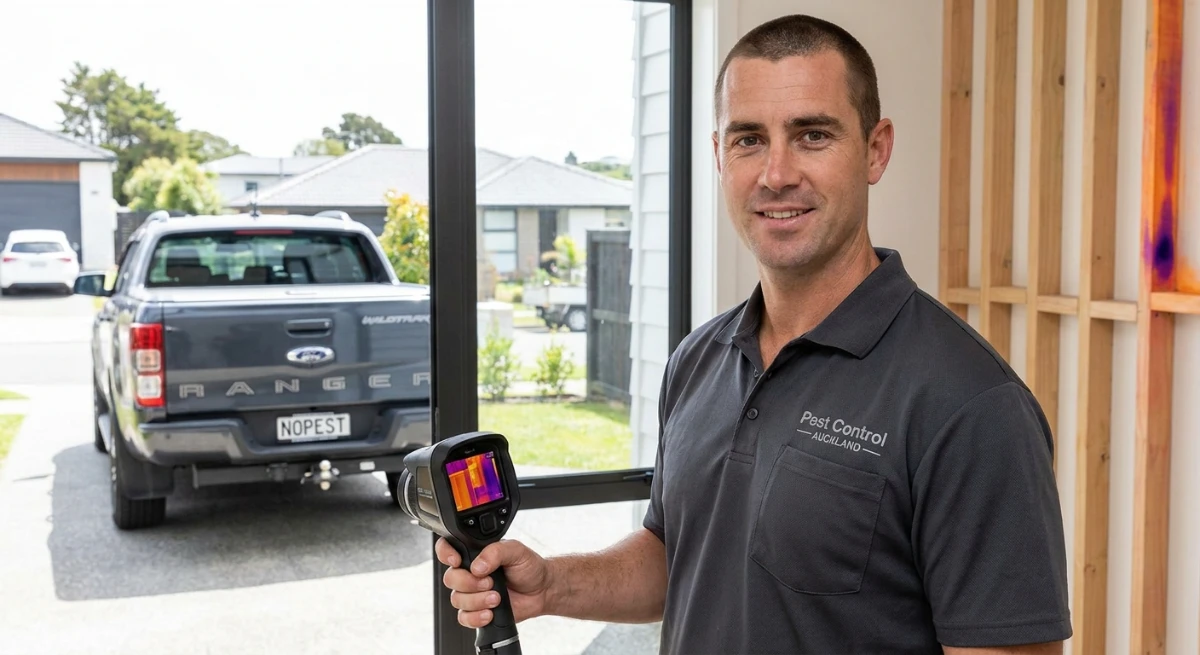
We utilize advanced thermal imaging cameras and digital moisture meters to detect anomalies behind your walls. Termite colonies generate heat and bring moisture up from the soil, both of which show up clearly on our specialized equipment.
By mapping out the exact entry points and nesting areas, we can provide targeted, root-cause eradication. This is the difference between a qualified urban pest professional and a cowboy with a hardware store spray pack.
Treatment Protocols: Targeted Eradication vs. Area Suppression
If we identify standard timber pests like the Common House Borer or native termites in damp wood, our Level 3 certified technicians will implement a targeted treatment plan. We use MPI-approved, zero-emission treatments that penetrate the timber to break the breeding cycle.
However, if we uncover a suspected exotic termite colony, our protocol shifts instantly. We do not treat them. We secure the area and immediately escalate the situation to Biosecurity New Zealand.
Attempting to DIY an exotic termite infestation is not just foolish; it is a massive biosecurity risk. Disturbing the colony will cause them to panic, fracture, and spread deeper into your home’s structure, making professional eradication nearly impossible.
Under the HSNO Act 1996, handling Class 9 ecotoxic substances requires strict Level 3 certification. Never use illegal, imported chemical bombs. If you suspect exotic termites, disturbing them can spread the colony. Call professionals immediately.
Protective Barriers: Chemical Soil Treatments and Physical Barriers
For long-term peace of mind, prevention is always cheaper than a cure. If you are building a new home or renovating an older Auckland villa, installing protective barriers is a non-negotiable step.
Chemical soil treatments involve applying a continuous zone of termiticide around the foundation of the property. This non-repellent barrier ensures that any subterranean pests attempting to tunnel toward your home pass through the treated zone.
Physical barriers, such as stainless steel mesh or specialized crushed stone laid during construction, physically prevent insects from breaching the foundation. We back our preventative advice with our “Silver Bullet Guarantee,” ensuring you get honest, transparent protection.
The Role of Moisture Management in Termite Prevention
If there is one thing you take away from this article, let it be this: moisture is the enemy of a pest-free home. Both native termites and borer absolutely rely on damp timber to survive and breed.
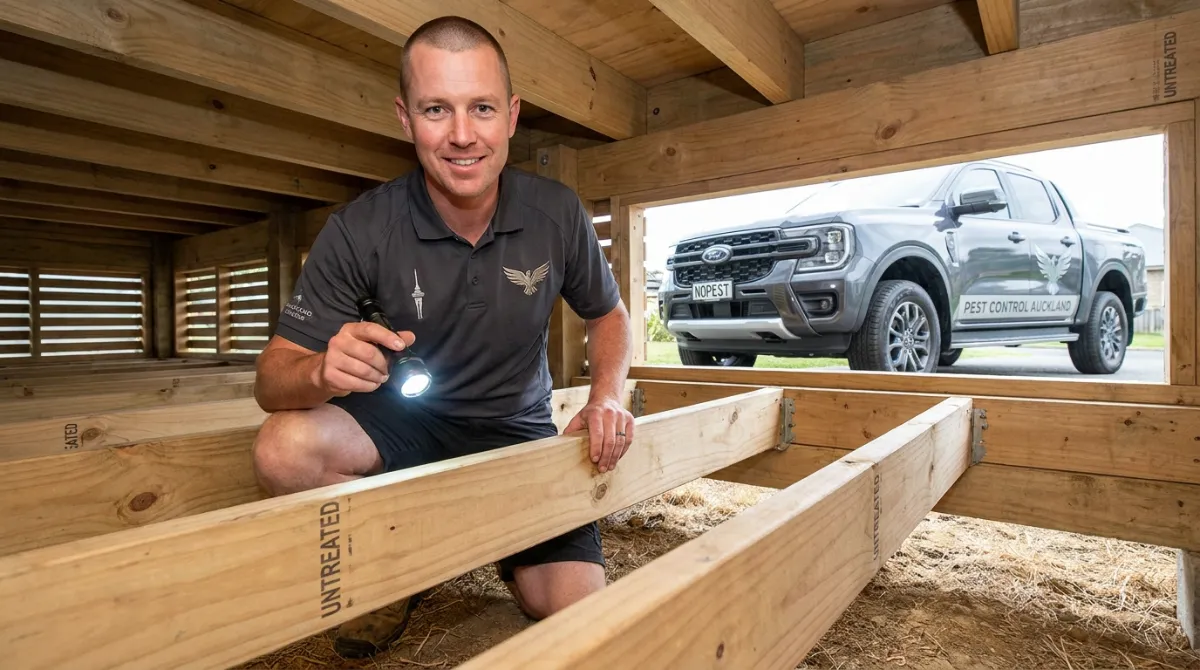
Auckland’s heavy rainfall can easily lead to blocked gutters, pooling water against foundations, and poorly ventilated subfloors. If your subfloor feels like a damp cave, you are practically rolling out the red carpet for timber pests.
Fixing leaking pipes, installing proper subfloor ventilation, and ensuring ground levels slope away from your exterior walls are the most effective DIY pest control methods you can possibly undertake.
Check your subfloor vents regularly. If they are blocked by overgrown gardens or stored items, clear them immediately. Cross-ventilation keeps timber dry and makes it incredibly hostile to native termites and borer.
Biosecurity Awareness: Reporting Suspicious Exotic Species to MPI
At Pest Control Auckland, we draw a very hard line when it comes to biosecurity. We are highly trained to identify the difference between a local nuisance and a national threat.
If we identify species like the Australian subterranean termite or the West Indian drywood termite, we do not promise to kill them for you. These are classified as unwanted pests and notifiable organisms under New Zealand law.
The government handles these eradications directly, often involving extensive monitoring and localized fumigation protocols to protect the country’s timber and agricultural industries.
If you spot unusual mud tubes on your foundation or capture winged insects that look like exotic termites, capture them in a jar and report it immediately to the Ministry for Primary Industries on 0800 80 99 66.
Auckland Property Maintenance Checklist to Prevent Infestation
Keeping your home safe from the Termites Auckland homeowners fear requires consistent, proactive maintenance. Do not wait until you see flight holes in your antique furniture.
We have put together a straightforward checklist that every homeowner and property manager should follow. By ticking these boxes, you drastically reduce the risk of structural damage.
- Ensure all downpipes are connected to stormwater drains, not discharging directly against the foundation.
- Keep firewood stacked well away from the main house, elevated off the ground if possible.
- Trim back heavy foliage and trees that touch your roofline or exterior walls, as these create pest bridges.
- Regularly inspect retaining walls and wooden fences for signs of decay or unexplained mud trails.
- Book an annual timber pest inspection with a certified pest control in Auckland professional.
Don’t rely on the DIY cycle of despair. Book an annual predictive IPM inspection to catch structural vulnerabilities before they turn into a full-blown infestation.
FAQ: Insurance Coverage and Early Warning Signs
We get asked the same questions every week by stressed landlords and homeowners. Here are the straight-talking answers you need to navigate timber pest issues in Auckland.

About the Author: Ronnie
Founder, Pest Control Auckland · Commercial & Residential Pest Expert · Certified Urban Pest Management Specialist
With years of hands-on experience navigating Auckland’s unique climate and strict biosecurity laws, Ronnie is uniquely positioned to address the threat of Termites Auckland homeowners face. Having consulted on complex structural timber pest issues across the region, he ensures every inspection is backed by Level 3 certified science and honest, straight-talking advice.