Spotted a pile of fine sawdust under the skirting board and felt your stomach drop? You are certainly not the first. I get calls every week from panicked locals who have found holes in their weatherboards and immediately jump to the worst-case scenario.
They think their home is secretly being eaten alive by a massive colony of termites. It is a fair worry, especially if you have seen those horror stories on Australian home renovation shows where a house practically crumbles overnight. When you are staring at damaged framing, your imagination tends to run wild.
But here in New Zealand, the reality is a bit different. When folks ring us looking for Subterranean Termite Solutions in Auckland, we have to start by playing detective. Nine times out of ten, the culprit chewing through your floorboards is the Common House Borer, not a termite.
However, when it actually is a subterranean termite, the game changes entirely. These are not your average household pests; they are severe biosecurity threats that require immediate government intervention. Let’s break down exactly what you are looking at, what the law says, and how to protect your property.
Key Takeaways
While New Zealand has harmless native termites, highly destructive Australian subterranean termites are an exotic biosecurity threat. If you suspect an infestation, do not spray them. You must legally report them to the MPI Exotic Pest Hotline (0800 80 99 66). Accurate professional identification is your first line of defence.
The Reality of Termites in New Zealand
Let’s get one thing straight right out of the gate: New Zealand does actually have termites. We have three native species, including dampwood and drywood varieties. They have been quietly living in our native forests for thousands of years.
The good news? Our native termites are incredibly slow eaters and form very small colonies. They prefer rotting logs in the bush and are rarely a structural threat to dry, treated building timber. If we find native termites during an inspection, it usually just means you have a severe moisture issue or a rotting retaining wall that needs replacing.
The real danger comes from across the ditch. Australian subterranean termites (specifically Coptotermes acinaciformis) are highly destructive. They can hollow out structural framing in a matter of months, leaving nothing but paper-thin layers of wood behind. Because of our mild, humid climate, Auckland is considered a high-risk zone for these invaders to establish themselves if they slip through the border.
The Autumn Surge and Climate Factors
In May 2026, following a particularly humid summer and mild autumn, we have seen a massive spike in pest callouts across the Auckland region. Moisture is the number one driver for timber pests. When subfloors stay damp, wood softens, making it an absolute buffet for insects.
As we prepare for the FAOPMA Pest Summit being held right here in Auckland this July, the industry focus is heavily shifting toward Predictive Integrated Pest Management (IPM). This means we are looking at environmental factors—like poor drainage and subfloor ventilation—rather than just reacting to the bugs once they are already inside.
Identifying the Threat: Borer vs. Termites
The biggest mistake homeowners make is misidentifying the pest. Treating a house for borer when you actually have an exotic termite colony is not just a waste of money; it allows a biosecurity threat to multiply rapidly. Accurate identification is the cornerstone of providing reliable Subterranean Termite Solutions for Auckland properties.
Borer beetles leave tiny, 2mm flight holes in the surface of the wood. Underneath these holes, you will often find small piles of fine, gritty dust known as frass. Borer damage is slow, but over decades, it can severely weaken your floorboards and joists.
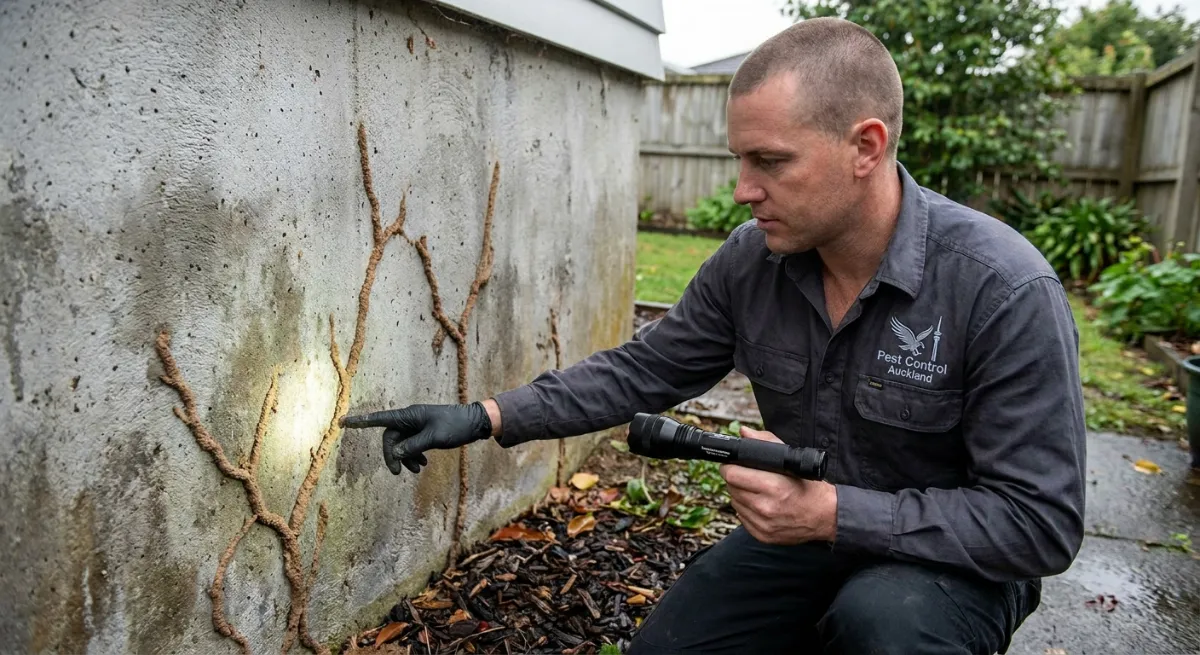
Subterranean termites operate entirely differently. They hate the light and open air, so they build distinctive “mud tubes” across concrete piles and foundations to travel safely from the soil into your timber. They do not leave neat little exit holes or dry dust; instead, they pack mud into the gaps of the timber they are destroying.
| Pest Type | Visual Signs & Damage | Required Action |
|---|---|---|
| Common House Borer | 2mm exit holes, fine gritty dust (frass) under timber. | Professional timber treatment & moisture control. |
| Native Termites | Found in damp, rotting wood. Small colonies. No mud tubes. | Fix moisture leaks, replace rotting timber. |
| Exotic Subterranean Termites | Mud tubes on foundations. Hollowed timber. Swarming winged insects. | Do not spray. Call MPI immediately on 0800 80 99 66. |
The Exotic Threat: Australian Subterranean Termites
So, how do these Australian invaders actually get here? Historically, they hitched a ride inside imported hardwood utility poles, railway sleepers, and wooden packaging. While modern import regulations and fumigation standards are much stricter today, colonies still occasionally slip through the cracks.
Once a colony establishes itself in the soil, the worker termites forage tirelessly for cellulose (wood). If your home is nearby, they will build their characteristic earthen runways right over your concrete foundations to reach your floor joists. Because they eat the wood from the inside out, the damage can remain completely hidden for years.
By the time you notice sagging floors, bubbling paint, or hollow-sounding skirting boards, the structural integrity of the home is already severely compromised. This is why regular, professional subfloor inspections are absolutely critical in Auckland’s humid environment.
If you break open a piece of timber and find pale, ant-like insects packing the galleries with mud, DO NOT spray them with fly spray. Disturbing the nest will cause the colony to panic, split up, and spread further into your home, making eradication by the authorities much harder.
Our Approach to Structural Pest Assessments
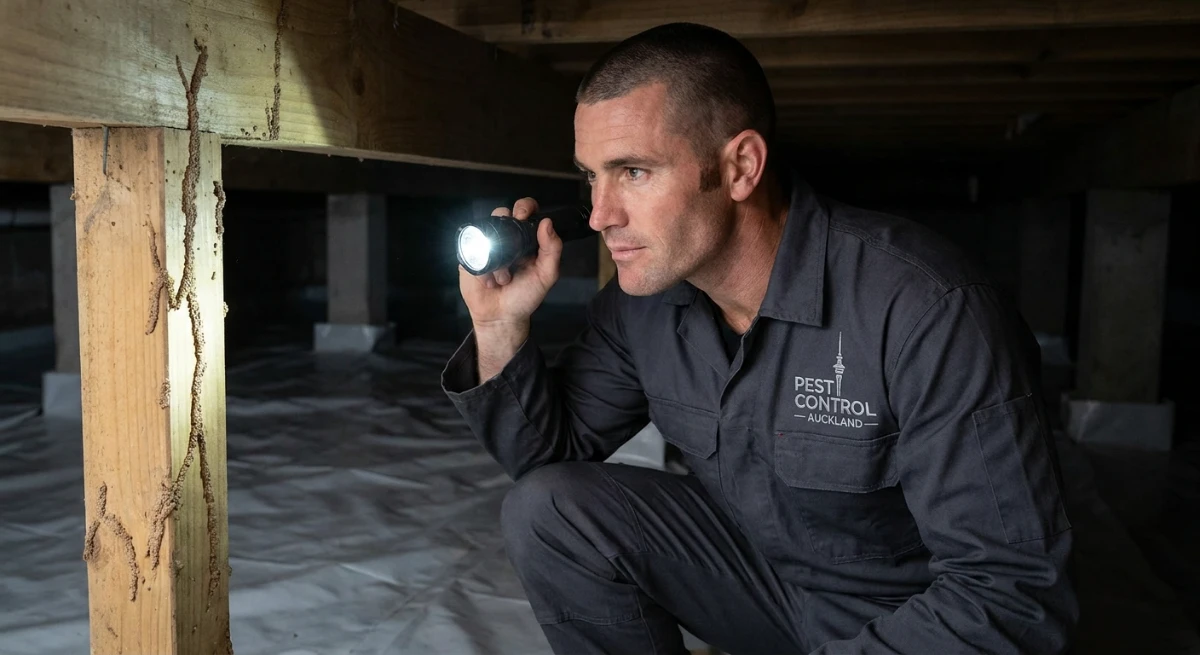
At Pest Control Auckland, we do not just “spray and walk away.” We are highly certified Urban Pest Management specialists. When we are called in to provide Subterranean Termite Solutions in the Auckland region, our primary job is rigorous, scientific assessment.
Under the HSNO Act 1996 and EPA regulations, handling serious structural pests requires deep entomological knowledge. We get under your house, check the moisture levels, inspect the piles for mud tubes, and identify exactly what is eating your timber.
If we identify the Common House Borer, we will put together a comprehensive, safe treatment plan to eradicate them and protect the remaining timber. If we identify a native dampwood termite, we will advise you on the structural repairs and drainage fixes needed to dry the area out.
If our technicians confirm the presence of an exotic biosecurity threat like the Australian subterranean termite, we immediately halt work. We document the evidence, secure the area, and escalate the case directly to Biosecurity New Zealand for their specialized baiting eradication program. We ensure you are not left guessing.
Preventative Measures for Auckland Homes
The best defence against any timber-destroying pest is making your home an unappealing target. Pests are looking for two things: food (untreated timber) and moisture. Cut off the moisture, and you drastically reduce your risk profile.
Here is what we recommend for every Auckland property:
- Subfloor Ventilation: Ensure your subfloor vents are clear of overgrown plants and debris. Good airflow keeps timber dry and hard.
- Fix Leaks Immediately: Dripping downpipes, leaking hot water cylinders, and poor drainage create the damp conditions native termites and borer thrive in.
- Clear Earth-to-Wood Contact: Never let soil, mulch, or garden beds rest directly against your weatherboards or wooden piles. This provides a hidden highway for subterranean pests.
- Annual Inspections: Book a professional “Auckland Winter Defense” inspection. We catch early signs of pest entry before they cause thousands of dollars in structural damage.
Under the Healthy Homes Standards, maintaining a dry, well-ventilated property is a legal requirement. Proactive pest inspections not only protect your investment but prevent messy Tenancy Tribunal disputes over who is responsible for pest-related damages.
The Financial Impact: Why You Cannot Ignore Timber Pests
Let’s be honest, nobody wants to spend money on pest control. But the “DIY Cycle of Despair”—buying cheap hardware store bombs and hoping for the best—will cost you dearly in the long run. Bug bombs do absolutely nothing to penetrate the deep structural timber where borer and termites actually live.
Replacing a borer-damaged subfloor in Auckland can easily cost upwards of $15,000 to $30,000. For commercial hospitality businesses, failing a Food Act 2014 hygiene inspection due to pests can result in immediate closure and severe brand damage.
Furthermore, standard New Zealand home insurance policies generally exclude damage caused by gradual deterioration, insects, or vermin. That means if pests hollow out your framing, the repair bill comes straight out of your own pocket. A professional assessment is the smartest investment you can make to protect your biggest asset.