
Wasp control Auckland refers to the professional management, extermination, and removal of dangerous stinging insect colonies, specifically German wasps, Common wasps, and Paper wasps, from residential and commercial properties. To ensure safety, certified technicians utilize specialized insecticidal dusts and protective equipment to neutralize aggressive nests while employing eco-friendly relocation methods for beneficial honey bee swarms.
Why Wasp Control in Auckland is Critical During Summer
As the humidity rises and the Pohutukawas bloom, Auckland enters its peak season for stinging insects. While bees and wasps play roles in the ecosystem, their presence in high-traffic urban environments poses a significant threat to public health and safety. The unique climate of the Auckland region, characterized by warm, humid summers and mild winters, allows wasp colonies to thrive longer than in colder climates, sometimes leading to overwintering nests that grow to massive sizes.
The primary danger lies in the aggressive nature of social wasps, particularly when their nests are disturbed. Unlike honey bees, which die after a single sting, wasps can sting repeatedly, injecting venom that causes intense pain, swelling, and in severe cases, life-threatening anaphylactic shock. For families with small children, pets, or individuals with known allergies, a nearby wasp nest is a ticking time bomb.
Furthermore, the ecological impact in New Zealand is severe. Introduced wasp species have no natural predators here and compete with native birds and insects for food sources like honeydew. According to the Department of Conservation (DOC), New Zealand has some of the highest densities of German and Common wasps in the world. By engaging in professional wasp control, Auckland homeowners not only protect their families but also contribute to local biodiversity protection.
Identifying Your Pest: German Wasps vs. Paper Wasps vs. Bees
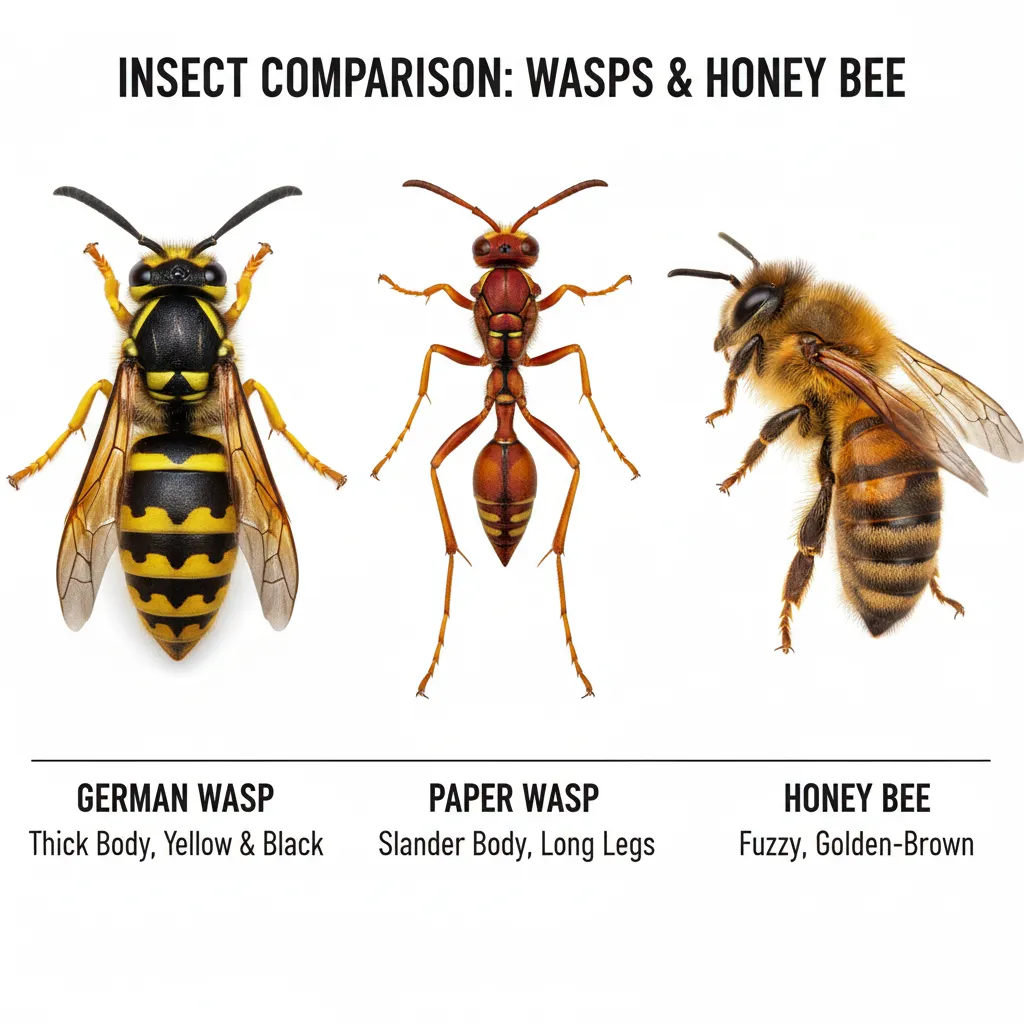
Effective treatment begins with accurate identification. Misidentifying a honey bee swarm as a wasp nest can lead to the unnecessary destruction of protected pollinators. Conversely, mistaking a German wasp nest for a harmless solitary insect can result in a dangerous attack. Here is how to distinguish between the major stinging insects found in Auckland.
German Wasps and Common Wasps
These are the most aggressive and problematic species in Auckland. They are similar in appearance, featuring bright yellow and black stripes and a stocky body. They are scavengers, often found around rubbish bins, picnics, and fallen fruit.
- Nesting Habits: They typically build nests underground, in wall cavities, or in roof voids. The nest is made of chewed wood pulp (paper) but is usually hidden from view, with only a small entrance hole visible with high traffic of wasps entering and exiting.
- Behavior: Highly aggressive if the nest is approached. They emit alarm pheromones that trigger the entire colony to attack.
Asian Paper Wasps
Paper wasps are generally less aggressive than their German counterparts but will sting if their nest is directly threatened. They have a more slender body with longer legs that dangle during flight.
- Nesting Habits: They build small, umbrella-shaped nests constructed from grey, papery material. These are commonly found hanging under eaves, pergolas, fences, and vegetation. The honeycomb cells are visible from below.
- Behavior: They feed on nectar and other insects. While their sting is painful, they do not swarm with the same ferocity as German wasps unless provoked.
Honey Bees and Bumble Bees
Bees are generally rounder, fuzzier, and duller in color (golden-brown to black) compared to the shiny, bright yellow of wasps. They are vital pollinators and should never be exterminated unless they pose an immediate, unavoidable threat to human life.
- Nesting Habits: Honey bees live in large colonies, often in hollow trees or wall cavities. Swarms may temporarily cluster on branches or fences while scouting for a new home.
- Behavior: docile unless crushed or the hive is attacked.
The Dangers of DIY Wasp Extermination
With the availability of hardware store sprays, many Auckland homeowners attempt to tackle wasp infestations themselves. However, DIY wasp control is fraught with risks and is often ineffective against large, established colonies.
The Petrol Myth: A common but dangerous rural myth involves pouring petrol into underground nests. This is highly illegal, environmentally disastrous (contaminating soil and groundwater), and a fire hazard. Furthermore, it often fails to kill the entire colony, leaving behind angry survivors.
Ladder Hazards: Treating nests in eaves or second-story soffits requires working at heights. When a swarm attacks, the natural human reaction is to panic and flee. Falling from a ladder while being stung can result in severe orthopedic injuries, which are often more debilitating than the stings themselves.
Inadequate Products: Consumer-grade sprays often lack the residual power to penetrate deep into a nest. They may kill the guard wasps at the entrance but fail to reach the queen. This can cause the colony to split or relocate to a more inaccessible part of the home, making the problem worse.
Our Professional Wasp Nest Removal Process
When you hire a professional pest control service in Auckland, you are paying for safety, efficiency, and a guarantee of eradication. Our process is methodical and designed to minimize risk to your property and family.
1. Site Inspection and Risk Assessment
Upon arrival, a licensed technician will assess the species, the location of the nest, and the flight paths. We check for entry points into the home to ensure wasps don’t escape into living areas during treatment.
2. Treatment Application
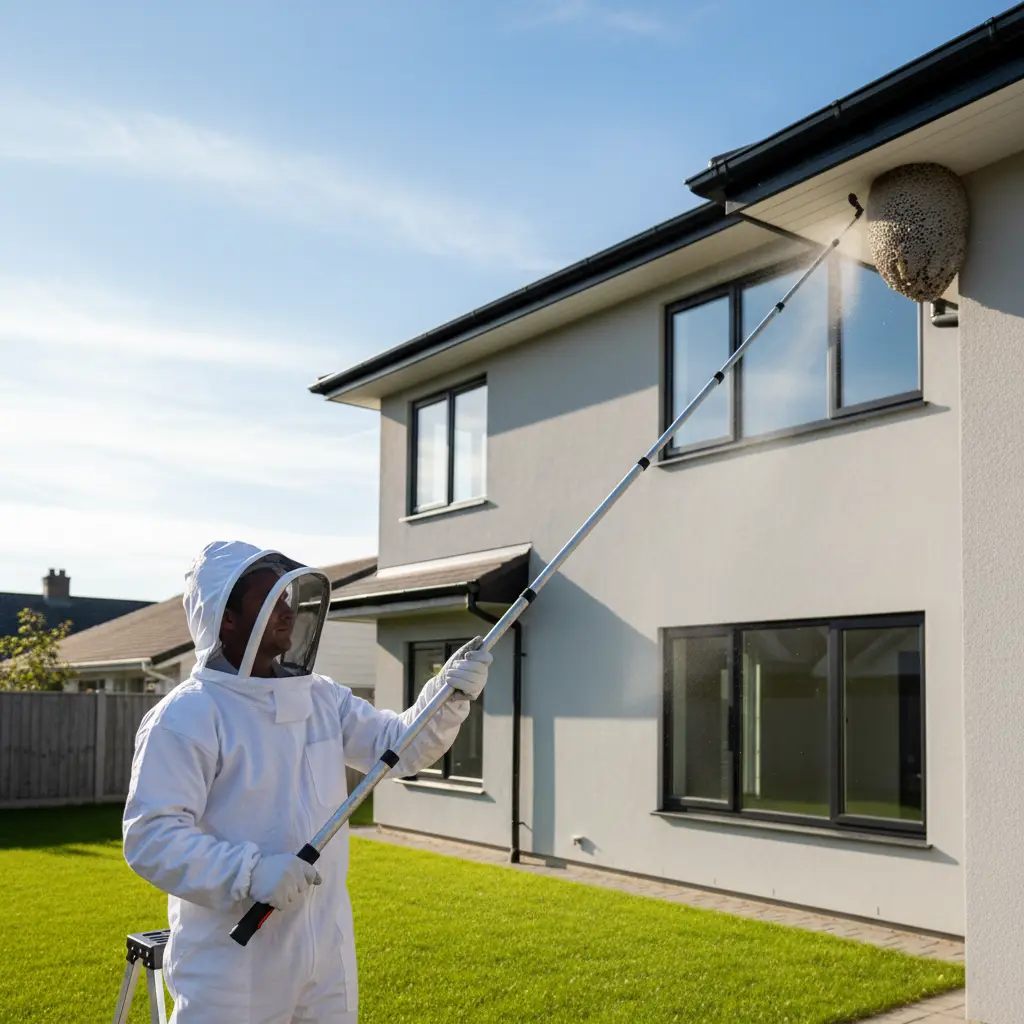
For German and Common wasps, we typically use a specialized insecticidal dust injected directly into the nest entrance. This method is far superior to sprays. The returning worker wasps pick up the dust on their bodies and carry it deep into the nest, contaminating the larvae and the queen. This “trojan horse” method ensures total colony collapse, usually within 24 to 48 hours.
3. Nest Removal
If the nest is accessible (e.g., hanging Paper wasp nests), we will physically remove it after the activity has ceased. For nests inside wall cavities, we recommend leaving the nest in place after treatment. Wasps do not reuse old nests, and breaking open a wall to remove a dead nest is usually unnecessary unless there are secondary issues like smell or moisture.
Eco-Friendly Bee Swarm Relocation Services
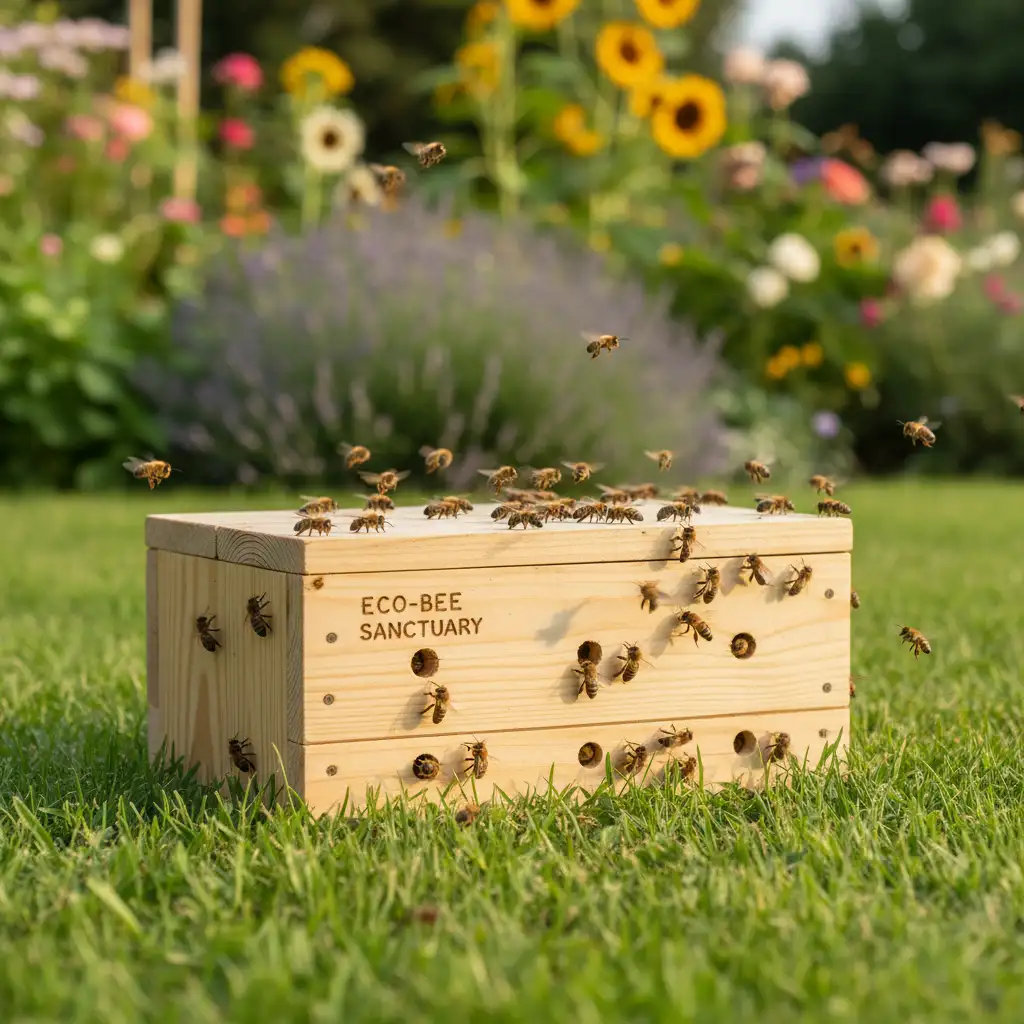
At the heart of our operations is a commitment to environmental stewardship. We understand that bees are precious. If our inspection reveals a honey bee swarm or an established hive that is accessible, our priority shifts from extermination to relocation.
We partner with registered local Auckland beekeepers to safely collect swarms. This involves using a “nuc box” to capture the queen and the workers. Once the colony is secured, it is transported to an apiary where the bees can thrive and produce honey.
Note: In some cases, bees establish hives in inaccessible areas (like between floors) where removal would require significant demolition. In these rare instances, if the hive poses a health risk, extermination may be the only option, but this is always a last resort.
Urgent Removal Services: When to Call the Experts
While some pest issues can wait, a wasp nest is often an emergency. You should seek urgent wasp control in Auckland if:
- Anaphylaxis Risk: Anyone in the household has a known allergy to bee or wasp stings.
- Proximity to Entrances: The nest is located near a front door, window, or garage where family members pass frequently.
- Construction Work: You are planning renovations, painting, or roofing. Contractors will often refuse to work until the site is certified pest-free.
- School or Public Space: The nest is near a playground, footpath, or bus stop.
We offer rapid response times for these high-priority situations, often providing same-day service to neutralize the threat immediately.
Preventing Future Infestations in Auckland Homes
Once the immediate threat is dealt with, prevention is key to keeping your property wasp-free. While you cannot control the wasp population of the entire Waitakere Ranges, you can make your property less attractive to queens looking to establish new colonies in spring.
- Seal Entry Points: Inspect your home for cracks in cladding, gaps around pipes, and unsealed vents. Wasps only need a tiny gap to access a wall cavity.
- Manage Food Sources: Ensure rubbish bins have tight-fitting lids. Do not leave pet food outside. Pick up fallen fruit from trees immediately, as fermenting fruit is a major attractant for German wasps.
- Regular Inspections: In early spring, check for small, golf-ball-sized “starter nests.” These are built by the solitary queen and are much easier to remove than a full summer colony.
- Wasp Traps: Hanging commercial wasp traps around the perimeter of your garden can help reduce the number of foraging wasps, though this rarely eliminates a nest on its own.
For authoritative advice on managing pests and protecting your health, resources like Ministry of Health NZ offer guidelines on treating stings and recognizing allergic reactions. Professional intervention remains the safest route for structural infestations.
Frequently Asked Questions
How much does wasp nest removal cost in Auckland?
The cost of wasp nest removal in Auckland typically ranges from $180 to $350 NZD, depending on the accessibility of the nest, the species of wasp, and whether specialized equipment (like ladders or roof access gear) is required.
What is the difference between a bee and a wasp?
Bees are generally fuzzy, duller in color, and feed on pollen/nectar; they are beneficial pollinators. Wasps (specifically German and Common wasps) are shiny, bright yellow and black, hairless, and are aggressive scavengers that feed on insects and human food waste.
Can I remove a wasp nest myself?
It is not recommended. DIY removal carries a high risk of multiple stings and falls from ladders. Consumer-grade sprays often fail to kill the queen, causing the colony to become aggressive or move deeper into the wall cavity.
Do wasps return to the same nest?
No, wasps do not reuse old nests. However, if a location was favorable for one colony (e.g., a warm, dry roof void), a new queen may build a new nest nearby in the following season if the entry points are not sealed.
How long does it take for wasps to die after treatment?
After professional treatment with insecticidal dust, activity usually ceases significantly within 2 to 4 hours. Total colony eradication is typically achieved within 24 to 48 hours as the returning wasps carry the poison to the queen.
Are German wasps common in Auckland?
Yes, German wasps are extremely common in Auckland and throughout New Zealand. They are an invasive pest that thrives in the temperate climate, often building massive nests with thousands of individuals.