Who Pays for Pest Control Landlord or Tenant NZ

Waking up to the sound of rats scurrying in the ceiling or cockroaches darting across the kitchen floor is a deeply stressful experience for any renter. However, the ensuing argument over the exterminator’s bill can quickly become an even bigger headache for both parties involved. Navigating the legal grey areas of rental property maintenance is absolutely essential for resolving these disputes quickly and preserving the landlord-tenant relationship.

In Auckland, the autumn of 2026 has brought a massive surge in urban pest activity following a mild winter and a scorching summer. As rodents and insects actively seek shelter indoors, the question of who pays for pest control landlord or tenant nz is becoming one of the most frequently searched queries. Determining liability requires looking closely at the Residential Tenancies Act 1986 (RTA), the structural integrity of the home, and the daily living habits of the occupants.

Whether you are a property investor protecting your valuable asset or a renter trying to maintain a healthy, safe home, understanding your legal obligations is non-negotiable. Ignorance of the law can lead to severe financial penalties, strained relationships, and unsafe living conditions. Let us break down exactly how New Zealand law assigns responsibility for pest control in rental properties.

Key Takeaways

Under NZ law, landlords must provide a pest-free property at the start of a tenancy and seal structural gaps. Tenants are responsible for extermination costs if their poor hygiene or pets cause the infestation. When neither party is at fault, costs are typically shared or covered by the landlord.
The General Rule of Thumb Under NZ Law

When pests suddenly invade a rental property, the very first question is always about financial liability. The Residential Tenancies Act 1986 (RTA) does not actually have a single, specific clause dedicated exclusively to pest control. Instead, the Tenancy Tribunal relies on broader property maintenance and cleanliness obligations to assign blame.

Under Section 45(1)(a) of the RTA, landlords are legally required to provide the premises in a reasonable state of cleanliness. This strictly means handing over a property that is completely free of rodents, insects, and other pests on the day the tenancy begins. If pests are discovered within the first few weeks, the Tribunal almost always views this as a pre-existing issue that the landlord must resolve.

Tenants, on the other hand, have a clear legal obligation to keep the property reasonably clean and tidy. If a tenant’s living habits directly cause an infestation, they will be held financially liable for the eradication costs. This often includes leaving food out, failing to dispose of rubbish properly, or bringing infested second-hand furniture into the home.

📝

Note on Healthy Homes Standards

The NZ Healthy Homes Standards mandate that landlords must stop any unreasonable gaps or holes in walls, ceilings, windows, and floors to prevent draughts. These same gaps are the primary entry points for rodents, meaning structural compliance is key to pest prevention.

Pre-Existing Infestations vs. Tenant-Caused Issues

The timing of the infestation is usually the most critical factor in determining liability. If a tenant moves into a new Auckland rental and discovers cockroaches in the kitchen within the first fortnight, the landlord must cover the treatment. The landlord cannot simply blame the new tenant for a problem that was clearly brewing before they even arrived.

However, if a tenant has been living in the property for two years and suddenly develops a severe ant problem due to unwashed dishes, the liability shifts entirely. The Tenancy Tribunal expects tenants to maintain a standard of hygiene that does not attract urban pests. If the tenant fails to do so, the landlord can issue a formal notice to remedy.

In many cases, an infestation occurs mid-tenancy, and neither party is clearly at fault. For example, a sudden influx of Argentine ants during a heavy Auckland rainstorm might not be anyone’s fault. In these ambiguous situations, landlords and tenants often agree to split the cost, or the landlord covers it to protect their asset.

Tenancy Tribunal Pest Dispute Causes Chart

Specific Scenarios Explained

Because the law relies on interpretation, it helps to look at how specific pest scenarios are typically handled in New Zealand. Different pests enter homes for different reasons, which heavily influences who is ultimately responsible for the exterminator’s invoice.

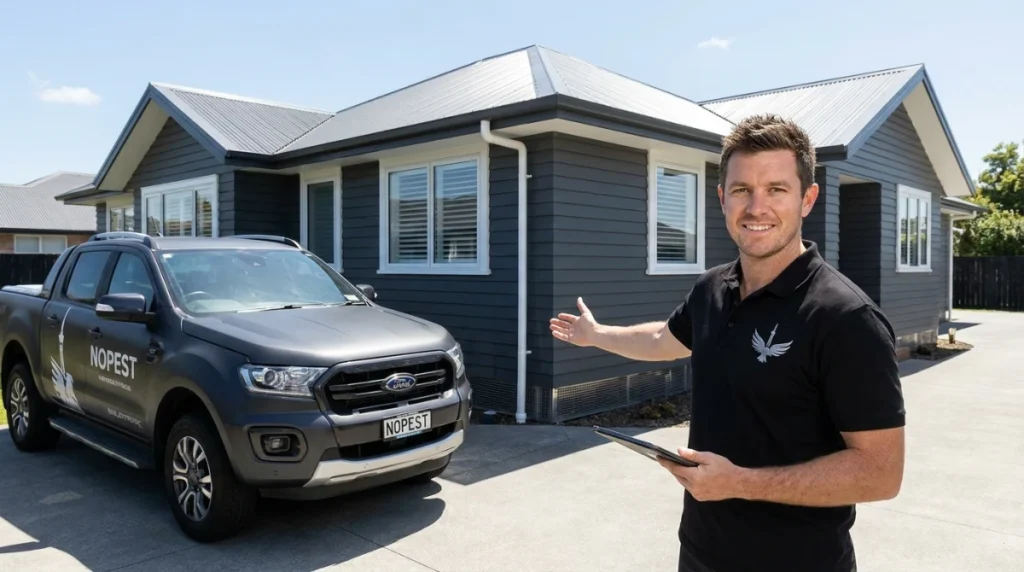
New Zealand rental property exterior

Fleas from Tenant’s Pets

Flea infestations are one of the most common sources of conflict between landlords and tenants. If a tenant is permitted to keep a dog or a cat on the property, they are almost always responsible for any resulting flea problems. This is because the pest issue is directly tied to the tenant’s personal property and lifestyle choices.

Many tenancy agreements in New Zealand include a specific pet clause that outlines these obligations. These clauses often require the tenant to arrange and pay for a professional end-of-tenancy flea treatment. This ensures the property is safe, hygienic, and pest-free for the next occupants.

If a tenant moves out and leaves a flea infestation behind, the landlord can legally withhold money from the bond to cover the extermination costs. It is highly recommended that tenants hire a qualified pest control technician rather than relying on ineffective DIY flea bombs. DIY treatments rarely eliminate the egg and pupae stages of the flea life cycle.

💡

Tip for Tenants with Pets

Always book a professional end-of-tenancy flea treatment and provide the receipt to your property manager. This proactive step guarantees you will get your bond back without any deductions for pest control.

Rats Entering Through Broken Vents (Landlord Responsibility)

Structural integrity is a core responsibility of the property owner under New Zealand law. If rats or mice are entering the home through broken subfloor vents, rotting eaves, or gaps in the cladding, the landlord must pay for the pest control. The landlord is also entirely responsible for repairing the structural defects to prevent future access.

Following the massive late-2025 aerial 1080 drop in the Hūnua Ranges, displaced rodent populations have been seeking new urban territories across Auckland. Landlords in South and East Auckland must be particularly vigilant about sealing their properties. Failing to address these structural vulnerabilities will lead to repeated infestations and potential Tenancy Tribunal penalties.

Damaged subfloor vent allowing rat entry

Cockroaches Due to Poor Hygiene

Cockroaches thrive in environments with abundant food, water, and warmth. If a tenant fails to maintain basic hygiene, such as leaving grease spills on the stove or letting rubbish pile up, they are actively inviting an infestation. In these cases, the tenant will be liable for the cost of professional cockroach eradication.

However, landlords must also act responsibly and transparently. In a landmark August 2024 ruling, a group of tenants was awarded over $12,000 after enduring a severe cockroach infestation. The Tribunal ruled against the landlord because they failed to produce actual receipts proving they had treated the property prior to the move-in date.

This ruling highlights the absolute necessity of keeping professional pest control documentation. Landlords cannot rely on cheap hardware store sprays and claim they have fulfilled their legal obligations. Professional, certified treatments provide the necessary paperwork to prove compliance and protect both parties.

Pest Scenario Likely Responsible Party Reasoning under NZ Law
Pests present on move-in day Landlord Failure to provide premises in a reasonable state of cleanliness (RTA Sec 45).
Rats entering via roof hole Landlord Failure to maintain structural integrity and meet Healthy Homes draught standards.
Ants attracted to unwashed dishes Tenant Failure to keep the property reasonably clean and tidy.
Fleas after keeping a dog Tenant Infestation directly caused by tenant’s personal property/pet.

The Financial Cost of Ignoring Pest Issues

In 2026, the cost of professional pest control in Auckland is a primary concern for both property owners and renters. Transparent providers are currently charging benchmark rates for a standard three-bedroom home. For example, comprehensive ant treatments typically range from $160 to $200.

Cockroach extermination, which requires more intensive insect growth regulators and gel baits, generally costs between $265 and $325. Rodent control programs, involving secure bait stations and structural advice, fall into the $155 to $325 bracket. Bed bug treatments are significantly more labor-intensive, often costing $215 to $265 per room.

While these upfront costs might seem daunting, they pale in comparison to the financial damage of ignoring the problem. Rats chew through electrical wiring, creating severe fire hazards that can entirely invalidate landlord insurance policies. Cockroaches spread dangerous pathogens, leading to tenant illness and massive Tribunal compensation claims.

⚠️

Warning on DIY Trapping Methods

Under the Animal Welfare Act 1999, live-capture traps must be physically inspected within 12 hours after sunrise every single day. Unqualified landlords attempting DIY trapping often inadvertently break these laws, exposing themselves to severe criminal liability.

How Professional Inspections Resolve Disputes

When a pest problem arises mid-tenancy, emotions can run high, and finger-pointing is incredibly common. Tenants may blame the drafty old house, while landlords may blame the tenant’s overflowing rubbish bin. The fastest way to resolve this standoff is to hire an independent, certified pest control professional.

A qualified technician does not just spray chemicals and leave; they conduct a thorough, scientific investigation. By examining the species of pest, the location of the nests, and the potential entry points, they can determine the true root cause. This objective analysis is invaluable for settling disputes fairly and legally.

In 2026, the Auckland industry standard has shifted heavily towards Predictive Integrated Pest Management (IPM). This scientific approach focuses on long-term prevention rather than reactive, toxic treatments. A professional IPM inspection will provide a detailed report that can be submitted as evidence to the Tenancy Tribunal if necessary.

Pest control technician inspecting kitchen

Unbiased Root-Cause Analysis Reports

An unbiased root-cause analysis report is the ultimate tool for determining who pays for pest control landlord or tenant nz. When our technicians visit a rental property, we document absolutely everything with high-resolution photos and detailed entomological notes. We look closely for structural flaws, hygiene issues, and environmental factors.

If we find that rats are entering through a chewed-out waste pipe, the report will clearly state that this is a landlord maintenance issue. If we find that German cockroaches are breeding inside a pile of unwashed recycling, the report will indicate a tenant hygiene failure. This clarity completely eliminates the guesswork and stops arguments in their tracks.

Furthermore, our reports provide highly actionable steps for both parties. We might advise the landlord to install steel mesh over the weep holes, while advising the tenant to store dry goods in sealed plastic containers. This collaborative approach ensures the property remains a healthy, compliant environment for everyone.

  • Photographic Evidence: High-resolution images of entry points and nesting sites.
  • Species Identification: Determining whether the pest is attracted to structural dampness or food waste.
  • Actionable Recommendations: Clear steps for both the landlord and the tenant to prevent recurrence.

Need an Inspection? Contact Us Today

Navigating pest control disputes does not have to be a stressful, drawn-out process. Whether you are a property investor protecting your asset or a renter trying to maintain a healthy home, you need a professional team you can trust. Pest Control Auckland is your local, family-owned expert in urban pest management.

We provide transparent, upfront pricing, completely bypassing the frustration of hidden fees and vague quotes. Our certified technicians provide all the necessary documentation to satisfy Tenancy Tribunal requirements, ensuring you are legally protected. We don’t just treat the symptoms; we find the root cause.

Stop wasting money on ineffective DIY hardware store bombs that only prolong the cycle of despair. Contact Pest Control Auckland today to book an unbiased inspection and a guaranteed treatment plan. Let our qualified UPM contractors restore your peace of mind and keep your property legally compliant.

Book Your Inspection Now

Call us today or fill out our online form to schedule a comprehensive property inspection. We will provide a detailed report clarifying exactly who pays for pest control landlord or tenant nz based on the root cause.

Pest Control Auckland service van

People Also Ask (FAQ)

Does the landlord have to pay for pest control in NZ?
Yes, if the pests were present at the start of the tenancy or if they entered due to structural defects (like holes in the roof or broken vents). Landlords must provide a clean, pest-free home under the Residential Tenancies Act.
Can a landlord charge a tenant for fumigation in NZ?
A landlord can only charge a tenant for fumigation if they can prove the tenant’s actions directly caused the infestation. This typically involves poor hygiene, leaving rubbish out, or bringing infested items into the home.
Are landlords responsible for rats in the roof NZ?
Generally, yes. Rats in the roof usually indicate a structural entry point, such as gaps in the eaves or missing tiles. Under the Healthy Homes Standards, landlords must seal these gaps, making roof rats a landlord responsibility.
Do tenants have to pay for end of tenancy flea treatment?
If the tenancy agreement includes a specific pet clause allowing cats or dogs, it usually requires the tenant to pay for a professional flea treatment upon moving out to ensure the property is pest-free for the next occupant.
How long does a landlord have to fix a pest problem?
Once notified, a landlord should act promptly, usually within 14 days. If the infestation is severe and impacts health and safety, it should be addressed immediately. Tenants can issue a 14-day notice to remedy if the landlord delays.
What happens if a landlord ignores a pest complaint?
If a landlord ignores a valid pest complaint, the tenant can apply to the Tenancy Tribunal. The Tribunal can order the landlord to fix the issue, refund rent, or pay significant compensation to the tenant for the distress caused.

About the Author: Ronnie C.

Ronald Cronje (Ronnie C.) is the founder and lead technician of Pest Control Auckland, an Orewa-based family business serving Rodney, the Hibiscus Coast, and the wider Auckland region.

With years of experience in urban pest management and deep knowledge of the Residential Tenancies Act, Ronnie is uniquely qualified to explain who pays for pest control landlord or tenant nz. Having consulted for hundreds of property managers and tenants across Auckland, his preventative, root-cause methodology ensures properties remain compliant, safe, and entirely pest-free.

Leave a Comment

Your email address will not be published. Required fields are marked *

Scroll to Top