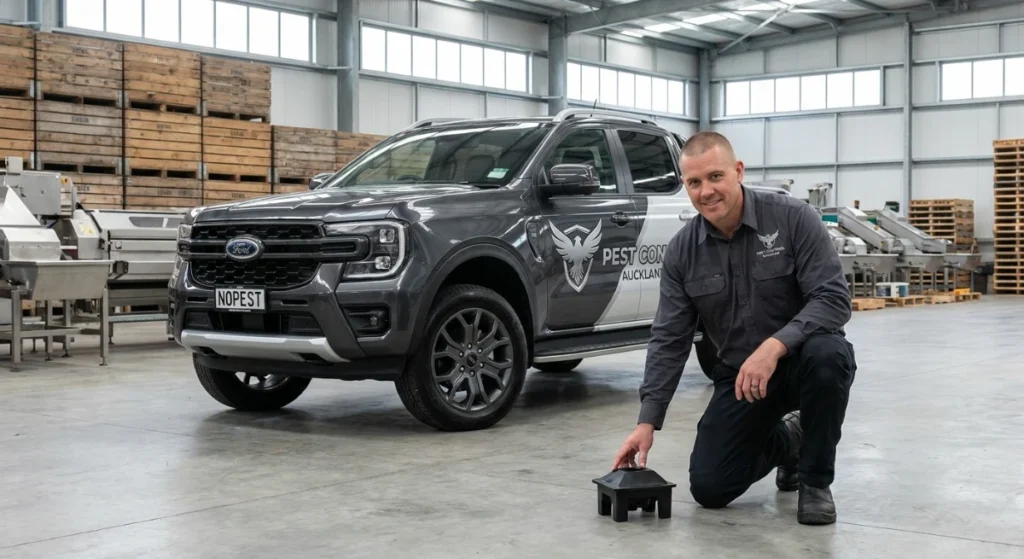
Kia ora. If you’ve been paying attention to the agricultural scene around Auckland’s rural fringes—places like Pukekohe, Kumeu, or Clevedon—you’ll know the old “spray and pray” days are officially behind us. Whether you’re running a commercial packhouse, a greenhouse, or a sustainable lifestyle block, the pressure from global markets and local regulations is immense.
Back in South Africa, dealing with agricultural pests meant checking the grain silos for venomous snakes and scorpions. Here in New Zealand, the threats might not bite back quite as hard, but a rat infestation in a commercial packhouse can shut your export operation down just as fast [1]. Failing a food safety audit because of a cockroach sighting isn’t an option when livelihoods are on the line.
That’s why the industry is shifting rapidly. The focus is no longer on reactive extermination. Instead, Integrated Pest Management (IPM) for Sustainable Farming in New Zealand is the gold standard for keeping our crops safe, our warehouses compliant, and our environment protected.
Key Takeaways
Integrated Pest Management (IPM) for Sustainable NZ Farming is a science-based strategy that prioritises biological, cultural, and physical pest controls over routine chemical spraying. By focusing on root-cause prevention, strict monitoring, and targeted exclusion, NZ farms and agricultural storage facilities ensure long-term environmental sustainability and strict export compliance.