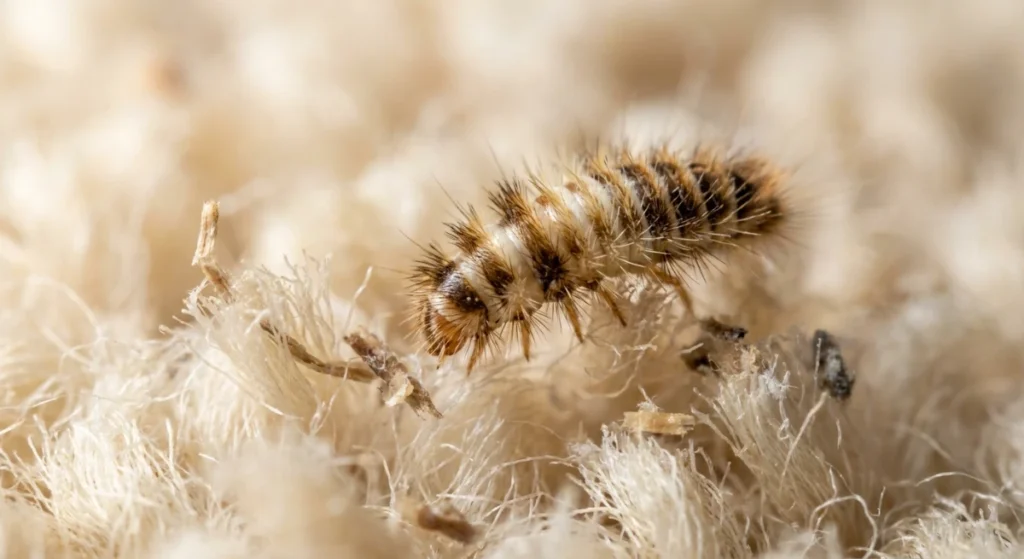
Carpet beetle larva on wool carpet

Signs of Carpet Beetles

Imagine pulling your heavy lounge suite away from the wall for a spring clean, only to discover a massive, threadbare patch on your expensive wool carpet. For many homeowners in New Zealand, this is a harsh reality. These silent destroyers often go completely unnoticed until the financial damage is already done. If you are wondering what are the signs of carpet beetles, you have come to the right place.

Carpet beetles are widely considered one of the most destructive household pests in Auckland and across the country. They thrive in warm, humid environments, quietly multiplying in the dark corners of your living spaces. Catching an infestation early can save you thousands of dollars in carpet replacement and upholstery repair.

In this comprehensive guide, we will break down exactly how to identify these pests before they ruin your natural fabrics. We will explore the visual clues, the biological lifecycle, and the subtle damage patterns they leave behind. By understanding what are the signs of carpet beetles, you can take immediate action to protect your home.

Key Takeaways

If you want to know what are the signs of carpet beetles, look for threadbare patches on wool carpets, irregular holes in natural fabrics, and translucent shed skins. You may also find tiny, mottled adult beetles near windows and experience unexplained, itchy skin rashes from larval hairs.

Visual Identification of Carpet Beetles and Larvae

Many homeowners misidentify these pests because they only look for the flying adults. However, the lifecycle of this insect involves distinct stages, each leaving different clues behind. To fully answer what are the signs of carpet beetles, we must look at both the mature insects and their offspring.

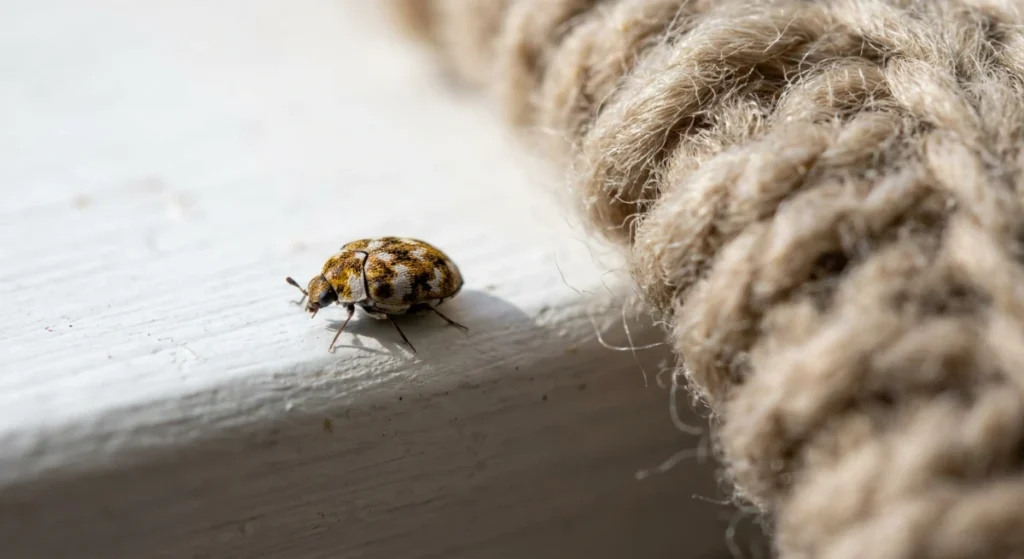
Adult carpet beetles are surprisingly small, typically measuring just 2 to 4 millimetres in length. They often resemble miniature, mottled ladybugs with a mix of brown, white, and yellow scales on their backs. Interestingly, these adults are completely harmless to your flooring and fabrics.

In their mature stage, these insects feed exclusively on flower pollen and nectar. You will frequently find adult beetles congregating on windowsills, as they are attracted to natural light and desperately try to get outside after pupating. Seeing these tiny beetles near your windows is one of the earliest warning signs that a breeding population exists nearby.

Adult Beetles vs. Destructive Larvae (Woolly Bears)

While the adults are busy trying to escape outdoors, the real enemy is lurking in the dark. The larvae, affectionately but misleadingly known as “woolly bears,” are the true culprits behind the destruction of your carpets. These juvenile pests are voracious eaters with a highly specialized diet.

Carpet beetle larvae are slightly larger than the adults and have a distinct, cigar-shaped appearance. They are covered in dense, bristly hairs, which gives them a fuzzy or striped look. Unlike the adults, these larvae possess strong mouthparts designed to chew through tough, natural fibres.

Their absolute favourite food is keratin, a natural protein found in animal-based materials. This means that woollen carpets, silk curtains, leather furniture, and even shed pet hair are firmly on their menu. They will actively avoid synthetic materials unless those materials are heavily soiled with food stains or human perspiration.

Carpet beetle larva on wool carpet

Shed Skins and Fecal Pellets

As these hungry larvae consume your expensive wool rugs, they grow rapidly and must molt their exoskeletons. Finding shed larval skins is a guaranteed indicator of an active infestation. These empty, translucent, hairy shells are often found clustered underneath heavy furniture or in dark wardrobe corners.

Alongside these shed skins, you may also notice tiny, gritty droppings known as frass. Carpet beetle fecal pellets are incredibly small and often look like coarse grains of sand or fine dirt. Because they blend in with normal household dust, these pellets are frequently vacuumed up without a second thought.

📝

Microscopic Evidence

Frass (droppings) from carpet beetles is often the exact colour of the fabric they have been eating. If they are consuming a red wool rug, their droppings will appear as tiny red specks.

Recognizing Carpet Beetle Damage

When homeowners ask what are the signs of carpet beetles, they are usually reacting to unexpected damage in their home. Unlike clothes moths, which tend to scatter small holes randomly across a garment, carpet beetles are methodical eaters. They prefer to graze in concentrated, dark areas where they remain undisturbed.

Because they feed at the very base of the carpet pile, the damage can remain hidden for months. You might walk over an infested area every day without noticing the structural weakening below. It is only when you vacuum aggressively or move a piece of furniture that the true extent of the destruction is revealed.

Irregular Holes in Natural Fabrics

If you store woollen blankets, silk scarves, or vintage leather jackets in a dark wardrobe, they are prime targets. Carpet beetle damage typically presents as large, irregular holes clumped together in a specific area. The larvae will often feed along the seams or collars of clothing, where sweat and skin cells accumulate.

You may also notice damage to natural-fibre upholstery or feather-filled cushions. If your down pillows seem to be leaking feathers more than usual, it is worth inspecting the fabric covers for tiny chew marks. Remember, these pests only consume animal proteins, so your pure cotton or polyester items are generally safe unless blended with wool.

⚠️

Expensive Consequences

Natural-fibre carpets are a significant financial investment. When left unchecked, carpet beetle larvae can eat through large sections of your flooring, leading to exposed underlay and permanent structural weakening.

Bald Spots on Woolen Carpets

One of the most heartbreaking discoveries for a homeowner is finding bald patches on a luxury wool carpet. Because the larvae chew through the fibres right at the backing, the top tufts of the carpet simply fall out. This creates a “shaved” appearance that looks as though someone has taken a razor directly to your flooring.

These threadbare patches almost always start at the edges of the room, right up against the skirting boards. They also frequently appear underneath heavy, seldom-moved furniture like bookcases, beds, and heavy sofas. By the time these bald spots become visible to a casual observer, the colony has likely been feeding for several months.

Bald spots on wool carpet from beetle damage

Carpet Beetle Dermatitis: A Hidden Health Risk

While these insects do not bite humans or transmit infectious diseases, they still pose a frustrating health risk. Many people discover an infestation not by seeing the bugs, but by experiencing unexplained skin irritation. This condition is medically referred to as carpet beetle dermatitis.

The bristly hairs that cover the “woolly bear” larvae are highly allergenic. As the larvae crawl across your bedsheets, clothing, or carpets, they shed these microscopic hairs into the environment. When these sharp little hairs come into contact with sensitive human skin, they can trigger a severe allergic reaction.

Symptoms typically include intensely itchy, red, and raised welts that look suspiciously like bed bug bites. Because the bites appear overnight, homeowners often misdiagnose the problem and waste money on the wrong pest control treatments. If you have itchy rashes but cannot find any evidence of bed bugs, checking for what are the signs of carpet beetles is your next logical step.

💡

Medical Distinction

Unlike bed bug bites which often appear in a linear row of three (known as breakfast, lunch, and dinner), carpet beetle dermatitis presents as random, patchy rashes localized to areas that touched the infested fabric.

Common Hiding Spots in Auckland Homes

Auckland’s uniquely humid and temperate climate creates the perfect breeding ground for a wide variety of crawling insects. Because homes in New Zealand are often built on raised piles with sub-floors, pests have easy access to the interior. Understanding where these beetles hide is crucial for early detection.

Often, the source of an indoor infestation actually originates from the outside. Adult beetles fly in through open windows during the spring, or they migrate from birds’ nests and dead rodents located in the roof cavity. Once inside, the females seek out dark, undisturbed locations to lay their eggs, ensuring their larvae have immediate access to food.

Carpet Beetle Infestation Hotspots in the Home

To thoroughly inspect your home, you must look beyond the middle of the room. Grab a bright flashlight and check the following high-risk zones:

  • Underneath Heavy Furniture: Sofas, beds, and heavy cabinets that haven’t been moved in months.
  • Along Skirting Boards: The tiny gaps where the carpet meets the wall are perfect larval highways.
  • Inside Wardrobes: Especially in boxes containing winter coats, wool sweaters, or vintage silk.
  • Air Vents and Ducts: Areas where pet hair, human skin cells, and dust bunnies naturally accumulate.
  • Roof Cavities: Near old birds’ nests or areas where rats may have previously nested.

Inspecting dark corners for carpet beetles

Prevention Strategies: Keeping Beetles at Bay

Once you have successfully eradicated an infestation, your primary goal must shift to prevention. You do not want to go through the stress and expense of replacing your carpets a second time. Implementing a few simple household habits can drastically reduce the chances of these pests returning.

First and foremost, maintain a rigorous vacuuming schedule. Because carpet beetles thrive on accumulations of pet hair, dead skin cells, and lint, removing their food source is your best defense. Pay special attention to the edges of your rooms and use the crevice tool to clean right up against the skirting boards.

Secondly, rethink how you store your seasonal clothing. Never pack away winter woollens or heavy coats without washing or dry-cleaning them first. Food stains and human perspiration act as a magnet for adult beetles looking for a place to lay their eggs. Always store natural fibres in airtight plastic containers rather than cardboard boxes, which pests can easily chew through.

Finally, manage your home’s entry points. Ensure that your window screens are free of tears and that your doors have proper weather stripping installed. If you enjoy bringing fresh-cut flowers from the garden indoors, inspect the petals and stems carefully. Adult carpet beetles are notorious for hitchhiking into homes on beautiful spring bouquets.

When to Call a Professional Entomologist

While minor infestations can sometimes be managed with rigorous vacuuming and hot-washing fabrics, established colonies require professional intervention. Over-the-counter bug bombs and DIY surface sprays rarely penetrate deep enough into the carpet pile to kill the hidden larvae. If you are seeing widespread signs of damage, it is time to call in the experts.

Professional pest control technicians in Auckland have access to targeted, commercial-grade insecticidal treatments. They do not just spray the surface; they treat the underlying cracks, crevices, and sub-floors where the beetles breed. Furthermore, a professional can accurately identify the species, ensuring the treatment protocol is highly effective.

Immediate Action Required

If you discover live larvae, shed skins, or fresh bald patches on your carpets, immediately isolate affected clothing in sealed plastic bags and contact a local pest control professional for an urgent inspection.

To help you decide the best course of action, consider the differences between DIY methods and professional extermination. The table below outlines the key comparisons.

Treatment Method Efficacy on Larvae Penetration Depth Cost Effectiveness
DIY Surface Sprays Low to Medium Surface level only High short-term, poor long-term
Bug Bombs / Foggers Low Airborne, misses under furniture Wastes money on hidden pests
Professional Insecticide Extremely High Deep pile and sub-floor reach High value, prevents carpet loss
Heat Treatment / Steam High (if sustained) Deep fabric penetration Excellent for specific rugs/clothing

By learning exactly what are the signs of carpet beetles, you empower yourself to protect your home. Do not let these silent destroyers turn your beautiful wool carpets into their personal buffet. Stay vigilant, inspect your dark corners regularly, and trust in professional pest control when the situation escalates.

Professional pest control treating carpet beetles

Frequently Asked Questions

Do carpet beetles bite humans?
No, neither adult carpet beetles nor their larvae possess mouthparts capable of biting humans. However, the bristly hairs on the larvae can cause a severe allergic skin reaction known as carpet beetle dermatitis, which is often mistaken for bed bug bites.
What causes a carpet beetle infestation?
Infestations typically start when adult beetles fly indoors through open windows to lay their eggs. They can also be carried inside on cut flowers, or migrate from birds’ nests and dead rodents located in your roof cavity or sub-floor.
Will vacuuming alone get rid of carpet beetles?
While rigorous vacuuming helps remove pet hair, lint, and some surface larvae, it is rarely enough to eliminate a full infestation. The larvae hide deep within the carpet pile and under heavy furniture where standard vacuums cannot reach.
Do carpet beetles eat synthetic carpets?
Generally, no. Carpet beetles require keratin to survive, which is only found in animal-based fibres like wool, silk, and leather. However, they may attack synthetic carpets if the fibres are heavily soiled with food stains, sweat, or pet urine.
How fast do carpet beetles multiply?
A single female carpet beetle can lay between 30 to 100 eggs at a time. These eggs hatch in just 10 to 20 days, and the resulting larvae can feed for several months to over a year before pupating into adults, allowing populations to grow rapidly if left unchecked.
Are carpet beetles common in New Zealand?
Yes, carpet beetles are extremely common throughout New Zealand, particularly in humid regions like Auckland. The popularity of high-quality wool carpets in Kiwi homes provides an abundant food source for these destructive pests.

Leave a Comment

Your email address will not be published. Required fields are marked *

Scroll to Top