How to Get Rid of Pantry Pests in Auckland: The 4-Step Scientific Protocol
To successfully eradicate Stored Product Insects (SPIs) like Indian Meal Moths and Grain Weevils from your Auckland kitchen, follow this proven exclusion and sanitisation method:
- Identify the Source: Locating the primary breeding site is critical. Look for 10mm coppery moths, 4mm snouted weevils, or silken webbing in dry goods.
- Immediate Disposal: Discard all infested products into sealed outdoor bins. Do not leave them in kitchen bins where larvae can migrate to wall voids.
- Deep Sanitisation: Vacuum all shelf corners, cracks, and structural crevices where larvae pupate and eggs remain hidden.
- Structural Exclusion: Seal remaining dry goods in airtight glass or BPA-free hard plastic containers to prevent cross-contamination.
Struggling with a persistent infestation? Pest Control Auckland provides professional-grade root-cause eradication and structural exclusion. Request a Quote
Understanding Pantry Pests: A Scientific Perspective for Auckland Kitchens
Pantry pests, professionally classified as Stored Product Insects (SPIs), are more than an aesthetic nuisance in Auckland homes. From Orewa to the North Shore, these invaders exploit the humid coastal climate of the Auckland region to accelerate their lifecycles. Identifying these pests is not just about cleaning; it is about implementing targeted eradication and structural exclusion strategies to safeguard your food supply.
At Pest Control Auckland, we move beyond the “spray and walk away” mentality. Our approach is grounded in scientific pest management, focusing on the biological drivers of infestation. Whether you are a homeowner in Central Auckland or managing a hospitality venue on the Hibiscus Coast, we focus on identifying where they breed, how they entered, and how to keep them out for good.
Common Pantry Pests in Auckland: Identification Guide
1. Indian Meal Moths (Plodia interpunctella)
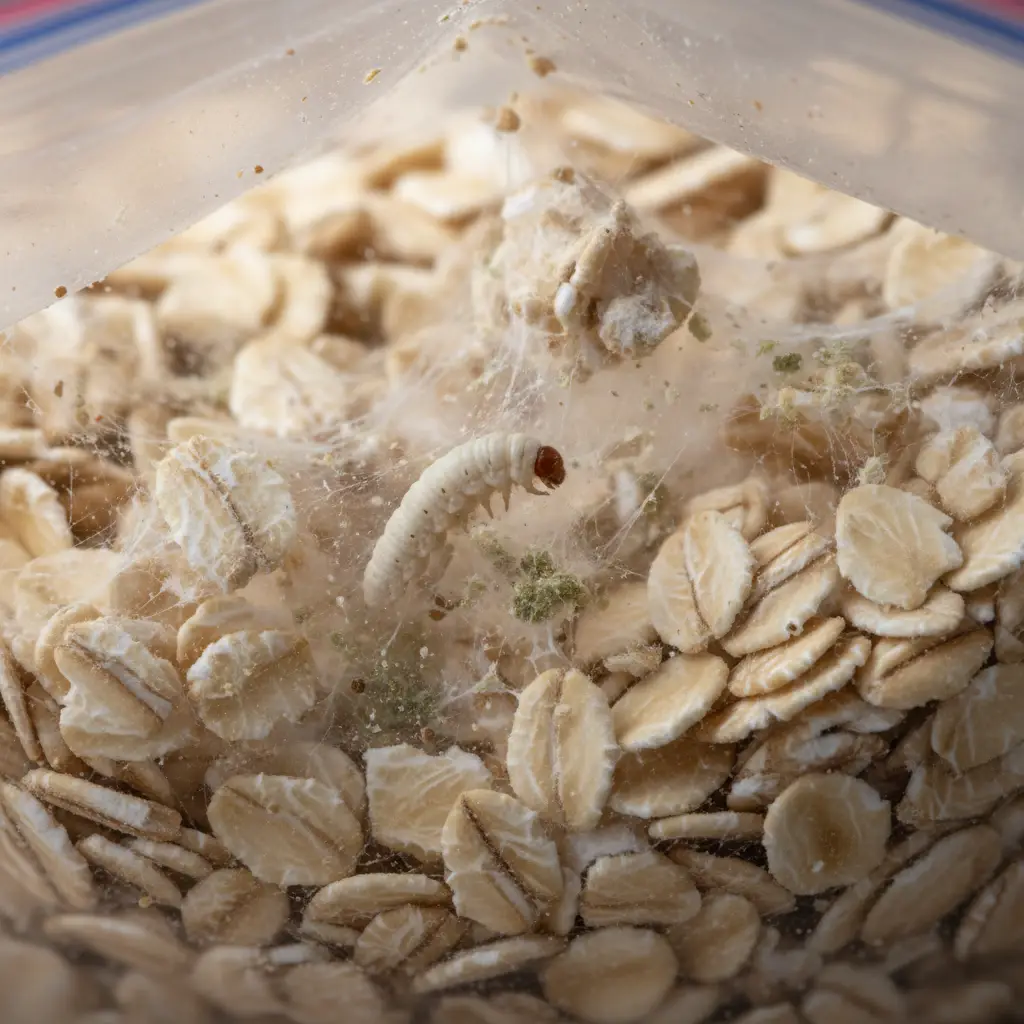
The Indian Meal Moth is the most prevalent pantry invader in New Zealand. Easily identified by their 10-14mm wingspan featuring coppery-brown outer halves, these moths are often seen fluttering in kitchens at night. However, the most destructive phase is the larval stage. If you notice silken webbing in your flour, cereal, or nuts, you are witnessing the pupation prep of an established colony.
2. Grain Weevils (Sitophilus granarius)
These are highly destructive beetles, approximately 3-4mm long, identifiable by their prominent snout (rostrum). Unlike surface feeders, weevils develop inside whole grains like rice, corn, and pasta. They are often brought into Auckland homes via contaminated bulk-buy bags. If you see tiny, circular exit holes in your grain, the infestation is already in its second generation.
3. Saw-toothed Grain Beetles (Oryzaephilus surinamensis)
Smaller than weevils and flattened in shape, these beetles are notorious for crawling into factory-sealed packaging that appears airtight. Because they do not fly, their presence usually indicates they were introduced via external goods or are migrating through the wall voids of multi-unit Auckland apartments.
The Biology of Infestation: Why Auckland Homes are Vulnerable
Auckland’s moderate temperatures and high humidity provide the ideal incubation chamber for SPIs. In many cases, a single female moth can lay up to 400 eggs. These eggs hatch into larvae that can bore through thin plastic and cardboard. The “Cycle of Despair” often occurs when homeowners discard the obvious infested item but miss the microscopic eggs or the pupae hidden in the shelf-support holes of their cabinetry.
Commercial Kitchen Compliance: Meeting the Food Act 2014
For Auckland’s hospitality sector—from Ponsonby cafes to Wairau Valley food manufacturers—pantry pests are a significant biosecurity risk. Our commercial Integrated Pest Management (IPM) programs ensure your business remains compliant with the Food Act 2014 and MPI standards. We use hygienic, zero-emission treatments that protect your stock and your brand reputation without compromising food safety.
Frequently Asked Questions
Are pantry pests harmful to my family’s health?
While they do not carry pathogens like cockroaches or rats, they contaminate food with faeces, shed skins, and webbing. This can cause allergic reactions in sensitive individuals and leads to significant food waste.
Why do they keep coming back after I cleaned everything?
This is usually due to “structural nesting.” Larvae often migrate away from the food source to pupate in wall cracks, ceiling junctions, or behind kickboards. Professional treatment targets these hidden zones that domestic cleaning cannot reach.
Does Pest Control Auckland use safe treatments for kitchens?
Yes. We prioritize MPI-approved, zero-emission treatments. Our technicians are highly certified in Urban Pest Management, ensuring that any application is safe for children, pets, and food prep surfaces.
Meet Ronnie: Your Auckland Pest Management Authority
Ronnie – Founder & Lead Technician
With years of experience across the Auckland region, Ronnie leads Pest Control Auckland with a focus on scientific, root-cause eradication. As a certified Urban Pest Management specialist, he holds the high-level qualifications required to handle Class 9 pesticides safely and effectively. Ronnie’s “Silver Bullet Guarantee” reflects his commitment to providing honest, family-owned service that larger corporate franchises often lack.
“We don’t just solve your pest problem; we secure your home against the next one.”
Stop the Infestation Today
Protect your home or business with Auckland’s trusted pantry pest specialists.