Got mice in the roof? We will find how they are getting in, block the entry points, and clear them out—usually in a single visit. You do not need a slick corporate sales pitch; you just need the scratching in your ceiling to stop immediately.
With the autumn 2026 pest surge hitting the Auckland region hard, rodents are pushing indoors faster than usual. I have personally seen hundreds of ceilings torn up and contaminated by mice while homeowners waste their time and money on ultrasonic plug-ins and weak supermarket baits.
If you are typing “how to get rid of mice” into Google at 2 AM, you are already caught in the cycle of despair. We bypass that entirely. The most effective mice extermination methods rely on a combination of structural exclusion, targeted commercial baiting, and strict environmental management.
Key Takeaways
The most effective mice extermination methods combine structural exclusion (sealing entry points) with commercial-grade baiting and mechanical trapping. DIY supermarket baits often fail because they ignore the root cause. Professional Integrated Pest Management (IPM) guarantees long-term eradication while ensuring absolute safety for children, pets, and native wildlife.
The Core Strategy: Why Most Mice Extermination Methods Fail
Most Aucklanders start their pest control journey at the local hardware store. They buy cheap snap traps and low-grade baits, hoping for a quick fix. These surface-level tactics almost always fail because they ignore the fundamental issue: how the mice are physically entering the home.
When you rely solely on DIY products, you are only treating a symptom. You might kill a few foraging mice, but the nest remains highly active inside your wall cavities or sub-floor. This leads to a frustrating, never-ending cycle of buying traps, catching a few rodents, and hearing the scratching return just a week later.
The DIY Cycle of Despair
Mice are prolific breeders. A single female can produce up to ten litters a year, meaning a small problem can escalate into a severe infestation in just a few months. Hardware store baits simply do not have the potency to collapse a colony of that size.
Furthermore, mice are incredibly agile. They can squeeze through gaps no larger than a standard pencil. If you do not find and seal those gaps, you are essentially leaving the front door wide open for the next generation of rodents to move in.
Predictive Integrated Pest Management (IPM)
The professional pest control industry has evolved drastically. We no longer just “spray and walk away.” The modern standard for urban environments is Predictive Integrated Pest Management (IPM), which focuses on long-term prevention rather than reactive killing.
This scientific approach targets the root cause. In fact, the upcoming FAOPMA Pest Summit in Auckland (July 2026) is entirely themed around “FutureProof” and smarter, predictive pest solutions. We analyze environmental factors, weather drops, and breeding cycles to stop pests before they establish a stronghold in your property.
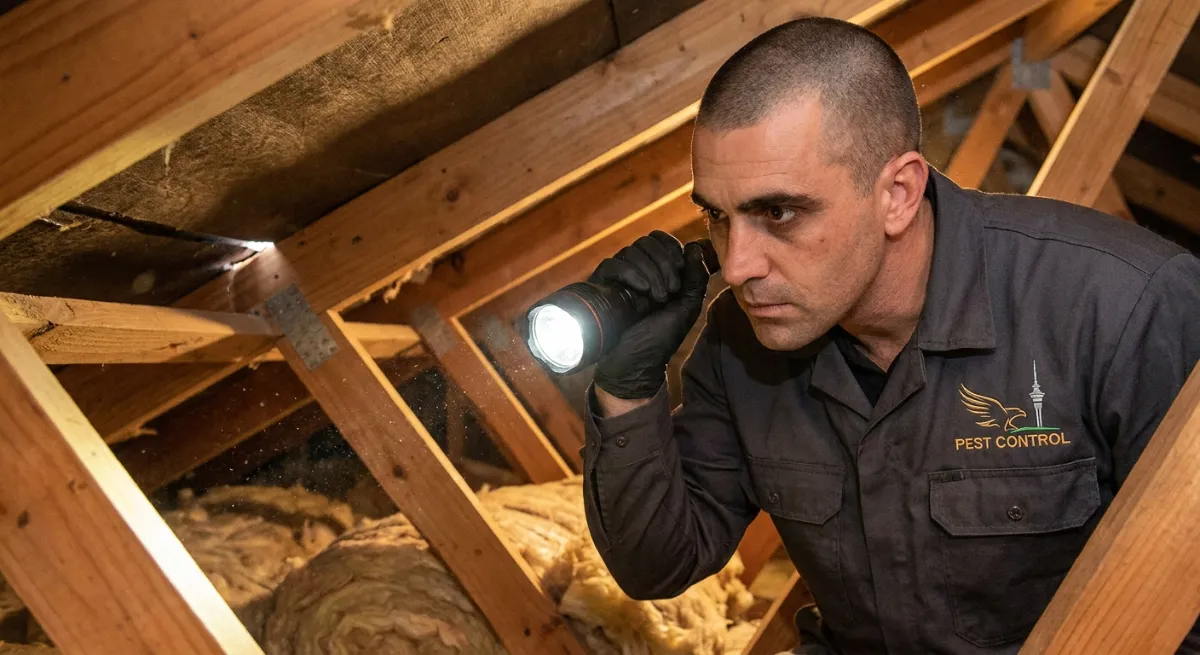
Professional Mice Extermination Methods in NZ
When we roll up to an Auckland property, we deploy a strict, multi-tiered approach. We do not guess; we follow a proven framework. These are the certified mice extermination methods that actually guarantee long-term, reliable results.
Structural Exclusion (The Silver Bullet)
You cannot bait your way out of a structural problem. Our first step is always a rigorous perimeter inspection to identify how the rodents are bypassing your defenses. We check weep holes, pipe penetrations, sub-floor vents, and roofline gaps.
Sealing these entry points with gnaw-proof materials like wire mesh and specialized sealants is the only way to ensure permanent eradication. We call this our “Silver Bullet Guarantee”—if we fix the structure, we fix the problem for good.
Walk around your home and look for gaps around air conditioning pipes, damaged sub-floor vent covers, and gaps under the garage door. Seal anything larger than a pencil width.
Commercial-Grade Baiting and Rodenticides
Once the exterior is sealed, we need to eliminate the population trapped inside. We utilize MPI-approved, commercial-grade rodenticides that are heavily restricted and not available to the general public. These baits act quickly and efficiently to collapse the remaining colony.
These baits are always secured in heavy-duty, tamper-proof stations. Because we use advanced, low-toxicity formulations, the risk of secondary poisoning to native wildlife or pets is virtually zero when applied by a certified technician.
Mechanical and Snap Trapping
In sensitive areas where baiting is inappropriate, we rely on high-impact mechanical trapping. This method is highly effective in commercial kitchens, childcare centers, or homes with extremely inquisitive pets.
Unlike rats, which are neophobic (fearful of new things), mice are highly curious. They will readily investigate new objects in their territory. We exploit this biological trait by placing snap traps directly along their known travel paths and rub marks.
Legal Constraints on Trapping
You cannot just throw traps anywhere in New Zealand. The Animal Welfare Act 1999 heavily regulates pest control practices to ensure humane treatment. For instance, if you are using live-capture traps, the law mandates that they must be physically inspected within 12 hours after sunrise every single day.
Failure to adhere to these inspection rules is a prosecutable offence under New Zealand law. Furthermore, glue boards are heavily restricted and largely banned for general use due to severe animal cruelty concerns.
Do not use glue boards for rodent control. They are restricted under the Animal Welfare Act 1999, and unauthorized use can result in hefty fines and prosecution.
The Real Cost: Auckland Pricing and Value
People often ask why they should pay a professional when rat bait costs ten dollars at the local supermarket. The answer comes down to long-term value and property protection. Mice do not just eat your food; they destroy your home.
When you factor in ruined insulation, chewed electrical wires (a massive fire hazard), and the sheer frustration of ongoing infestations, professional intervention is significantly cheaper. For a standard 3-bedroom home in Auckland, transparent providers are charging between $155 and $325 for comprehensive rodent control.
| Methodology | DIY Hardware Store Solutions | Professional IPM Extermination |
|---|---|---|
| Initial Cost | $30 – $80 (Recurring) | $155 – $325 (One-time investment) |
| Root Cause Addressed? | No (Only treats symptoms) | Yes (Focuses on structural exclusion) |
| Safety Profile | High risk if baits are left loose | Zero-emission, tamper-proof stations |
| Effectiveness | Low to Moderate | Extremely High (Guaranteed) |
Environmental Impact and Native Wildlife Safety
We live in a beautiful country, and protecting our native taonga is a non-negotiable part of our job. Pest control must be highly targeted. Broad-spectrum, reckless poison application threatens native birds, lizards, and domestic pets.
We only use targeted mice extermination methods that isolate the rodents. We do not broadcast toxins into the environment. Our goal is maximum impact on the pest population with zero collateral damage to the surrounding ecosystem.
Protecting Auckland’s Ecosystems
Targeted intervention works. The recent 2025/2026 aerial 1080 operations in the Hūnua Ranges proved how effective strategic control can be, dropping the rat tracking index from over 90% down to just 1.34%. We apply that same level of scientific precision to your residential property.
By utilizing secure bait stations and focusing on structural exclusion, we prevent toxins from entering the food chain. This ensures that non-target species, like the native ruru (morepork) that might hunt nearby, are kept completely safe.

Pet and Child Safety During Extermination
Safety is our absolute priority on every single job. We use secure, lockable bait stations that require a specific, proprietary key to open. A dog, a cat, or a curious toddler simply cannot access the internal bait blocks.
Furthermore, our technicians hold Level 3 Urban Pest Management certifications. This means we are legally qualified and highly trained to handle and place these treatments safely, adhering strictly to the HSNO Act 1996.
While our stations are tamper-proof, we always recommend keeping pets indoors while our technicians are actively placing the stations around the perimeter to minimize stress and interference.
Commercial Mice Extermination vs. Residential
Treating a bustling café in Ponsonby is entirely different from treating a quiet villa in West Auckland. Commercial environments require strict regulatory compliance, discreet servicing, and robust documentation.
For businesses, a single mouse sighting can lead to severe reputational damage or a failed health inspection. We provide tailored commercial pest management plans that focus heavily on ongoing monitoring and rapid response.
The Food Act 2014 Requirements
For small-to-medium hospitality businesses, the Food Act 2014 and MPI standards enforce a strict zero-tolerance policy for pests in food preparation areas. Compliance is not optional; it is a legal requirement to operate.
In these sensitive environments, toxic rodenticide baits are strictly prohibited indoors. To maintain compliance, we must rely on non-toxic monitoring blocks, aggressive structural exclusion, and mechanical traps to protect your brand’s reputation.
Our commercial IPM plans include full documentation, site maps, and compliance certificates designed specifically to pass MPI and local council health inspections without issue.
Auckland Pest Trends: What the Data Shows
Data drives our operational strategy. By monitoring regional pest tracking indexes, we can predict when rodents will surge into urban areas. The recent success in the Hūnua Ranges demonstrates the power of targeted, professional intervention over time.
When professional mice extermination methods are applied correctly, the population collapse is dramatic and sustainable. Below is the recent data showing the massive reduction in rodent tracking following professional operations.
Frequently Asked Questions (FAQ)

About the Author: Ronnie
Founder, Pest Control Auckland · Commercial & Residential Pest Expert · Certified Urban Pest Management Specialist
With years of experience in structural exclusion and advanced rodenticide application across Auckland, Ronnie has successfully eradicated hundreds of severe rodent infestations. His deep understanding of the Animal Welfare Act and MPI compliance makes him the definitive expert on safe, permanent mice extermination methods.