Rats in the roof? We will find how they are getting in, block it, and clear them out — usually in one visit.
But before we get to the fix, you need to understand exactly what is at stake. When we talk about rodent damage to wiring & insulation: fire risks are the absolute biggest concern.
This is not a scare tactic; it is a structural reality. Ignoring the signs of a rodent infestation in your roof cavity is a gamble that puts your entire property on the line.
Key Takeaways
Rodents chew constantly to file down their growing teeth, often targeting live electrical cables and roof insulation. This exposes bare copper wire, creating severe arc faults. Experts estimate rodents cause up to 25% of house fires with unknown origins. Professional exclusion is the only way to permanently mitigate these rodent damage to wiring & insulation: fire risks.
Why Rodents Target Your Electrical Wires
It is not because they like the taste of plastic. Mice and rats have incisor teeth that never stop growing, adding several inches every single year.
To keep their teeth filed down and pain-free, they gnaw on whatever is close by. Unfortunately for Auckland homeowners, that often means the 240-volt cables running through your roof cavity.
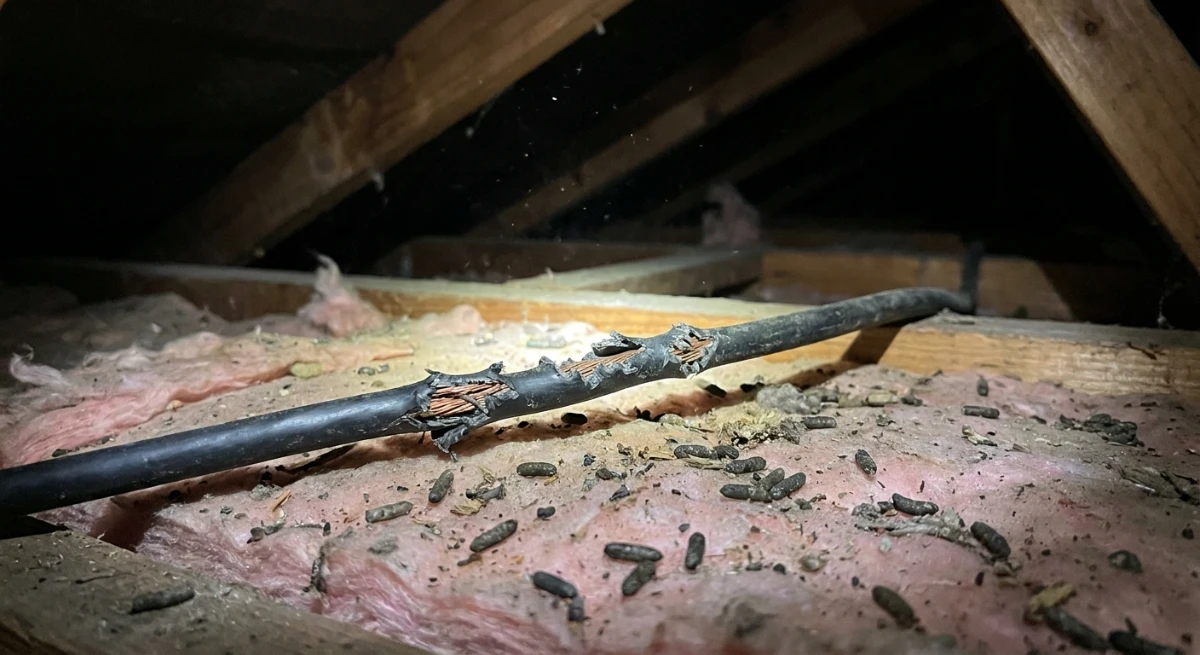
They will chew right down to the bare copper. Sometimes they get a shock, and sometimes they just keep going until the cable is completely stripped.
The Warmth and Nesting Factor
As the autumn chill hits West Auckland, rodents move indoors looking for warmth. Electrical components and junction boxes naturally generate ambient heat.
This makes the areas around your wiring prime real estate for a rat to build its nest. They settle in, start chewing, and the countdown to a potential disaster begins.
The Hidden Danger: Understanding the Fire Risks
When a rat strips the plastic casing off your wires, it leaves live copper exposed. If those bare wires touch, or if moisture gets into the cavity, it creates an arc fault.
An arc fault generates immense heat, instantly igniting the dry dust, timber, or shredded insulation nearby. Fire and Emergency New Zealand (FENZ) reports that electrical faults cause around 800 house fires every year.
A significant portion of these faults can be traced directly back to pest activity. This is why rodent damage to wiring & insulation: fire risks must be treated as an immediate emergency.
The Statistics Speak for Themselves
Globally, fire investigators estimate that between 20% to 25% of all house fires with an “unknown cause” are actually sparked by rodents.
That is a staggering statistic that most homeowners completely ignore until they smell smoke. We see this constantly during our inspections across Auckland.
A landlord or homeowner calls us about a scratching noise, and we find frayed, exposed wiring sitting just inches away from bone-dry timber.
If your lights are flickering or your circuit breakers are tripping without a clear reason, you might have exposed wiring. Turn off the mains if you smell burning, and call a registered electrician immediately alongside a qualified pest controller.
Insulation Destruction: More Than Just a Mess
The wiring is the ignition source, but the insulation is the kindling. Rodents do not just live on top of your insulation; they tunnel through it and tear it apart.
They use fiberglass and wool as the primary building materials for their nests. Once they rip it to shreds, the thermal efficiency of your home plummets.
Heat Loss and Health Hazards
When rats destroy your pink batts, the insulation gets pulled down and compacted. Your heating bill goes up while your house stays cold.
Worse, they contaminate the remaining insulation with urine and feces. This creates a severe health hazard, circulating airborne allergens and bacteria through your home’s ventilation points.
Most standard New Zealand homeowner insurance policies contain exclusions for insect and rodent damage. If a rat chews your wiring and causes a fire, your claim might be heavily scrutinized if the infestation was deemed noticeable and ignored.
Recognizing the Signs of Rodent Damage
You do not need to climb into the roof to know you have a problem. Your house will usually give you warning signs before the situation becomes critical.
Catching these signs early is the best way to prevent rodent damage to wiring & insulation: fire risks from becoming a devastating reality.
- Flickering Lights: Unexplained power dips or blinking bulbs often mean a rat has chewed through a neutral or phase wire.
- Tripping Breakers: If your RCD or circuit breaker trips constantly, an exposed wire might be shorting out in the roof cavity.
- Scratching Noises: Hearing movement at night, especially above the ceiling or inside the walls, is a dead giveaway.
- Ammonia Smells: A strong, stale urine smell in cupboards or the garage indicates a heavy, established infestation.
Rats are excellent climbers. Keep tree branches trimmed at least two meters away from your roofline to remove their natural bridge into your gutters and eaves.
The Legal and Compliance Side of Rodent Control
Handling a rodent infestation in Auckland is not just about throwing poison into the ceiling. All operations must adhere to New Zealand’s strict regulatory framework.
Under the Animal Welfare Act 1999, using unchecked live-capture traps or illegal glue boards can land you in serious legal trouble. You must physically inspect live traps within 12 hours of sunrise every single day.
Qualified Urban Pest Management
Furthermore, operators handling ecotoxic substances must hold the New Zealand Certificate in Pest Operations (Level 3). We do not cut corners.
We use MPI-approved, zero-emission treatments that align strictly with the HSNO Act 1996. This ensures the safety of your family, your pets, and the local environment.
How We Fix It: The Scientific Eradication Approach
Hardware store bait stations and bug bombs will not solve a structural infestation. You might kill a few mice, but the entry points remain wide open.
If you do not seal the gaps, the rodent damage to wiring & insulation: fire risks will just continue with the next generation of pests.
We take a straight-talking, scientific approach. We find out exactly how they are getting in, we block the access points, and we clear the population out. No corporate hype, just results.
Structural Entry-Point Exclusion
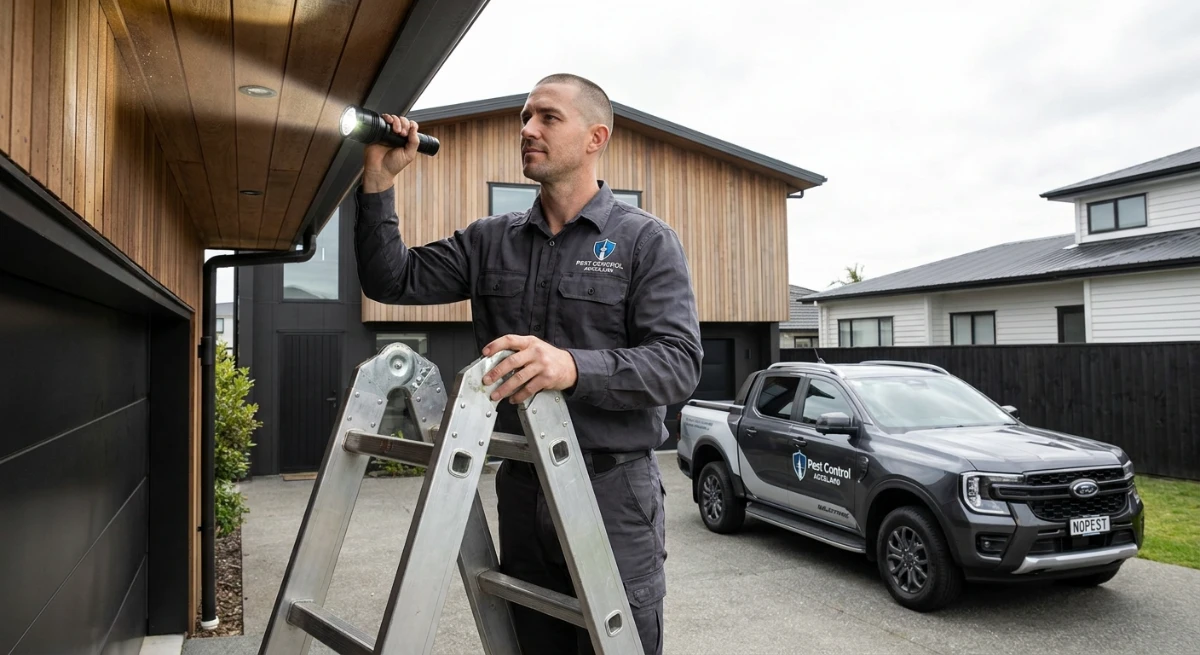
Our priority is root-cause eradication. We inspect the perimeter, the subfloor, and the roof cavity to identify gaps as small as 10mm.
Once we seal the house, we use our targeted treatments to eliminate the trapped rodents safely. This protects your property without relying on endless cycles of toxic baiting.
| Method | Effectiveness | Fire Risk Mitigation |
|---|---|---|
| DIY Hardware Store Baits | Low (Treats symptoms, not the cause) | Poor. Rodents continue chewing until the bait takes effect. |
| Standard “Spray & Pray” Pest Control | Moderate (Kills current population) | Temporary. New rodents will enter through unsealed gaps. |
| Professional Exclusion & Eradication | High (Permanent root-cause fix) | Excellent. Stops access entirely, protecting wires long-term. |
The Auckland Winter Defense Strategy
To fully eliminate rodent damage to wiring & insulation: fire risks, you need to be proactive. Waiting until you hear scratching means the damage is already being done.
We offer an Auckland Winter Defense program. This is a predictive Integrated Pest Management (IPM) subscription that secures your home before the autumn surge pushes rats indoors.
Walk around the perimeter of your house. Look for damaged vent covers, gaps around plumbing pipes, or overhanging tree branches touching the roof. If you spot vulnerabilities, call us to get them sorted before the rats move in.
Frequently Asked Questions

About the Author: Ronnie
Founder, Pest Control Auckland · Commercial & Residential Pest Expert · Certified Urban Pest Management Specialist
With over a decade of hands-on experience in Auckland’s urban pest management sector, Ronnie has personally inspected hundreds of residential roof cavities. Holding a New Zealand Certificate in Pest Operations (Level 3), his expertise in structural exclusion is critical for permanently mitigating rodent damage to wiring & insulation: fire risks safely and effectively.