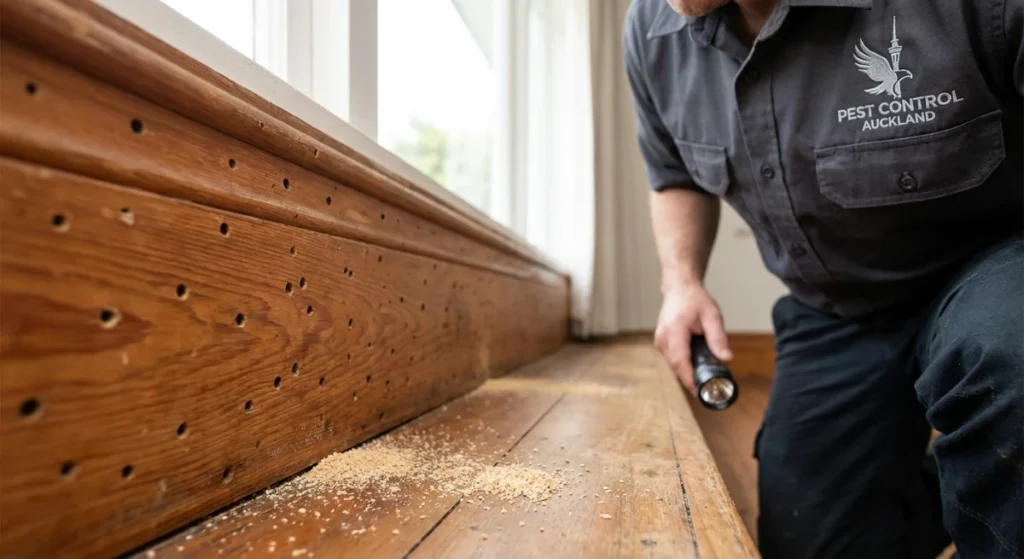
Borer exit holes and frass in NZ timber

Termites vs Borer NZ

Found a pile of fine sawdust under your skirting boards or noticed tiny holes in your antique dining table? It is enough to make any Auckland homeowner’s heart sink. When you spot timber damage, the immediate panic usually revolves around one question: are we dealing with termites vs borer in NZ?

Give us a buzz, and we can tell you right now: it is almost certainly borer. We do not have the massive, house-destroying termite swarms that plague our Australian neighbours. But that does not mean you are off the hook when it comes to protecting your property.

We are a family-run pest control crew based in Orewa, and we spend our days crawling under houses across the Auckland region. We have seen firsthand the structural havoc that untreated wood pests can cause. It is not just about aesthetics; it is about the safety and integrity of your home.

In this guide, we are going to break down exactly how to tell the difference between termites vs borer nz. We will show you what to look for, when to handle it locally, and when an exotic pest sighting means you need to get the government involved.

Key Takeaways

In New Zealand, the primary cause of timber damage is the Common House Borer, not termites. While NZ has three non-destructive native termite species, destructive exotic termites are rare biosecurity threats. Borer leaves fine sawdust and small exit holes, whereas termites create mud tubes and hard, pelleted droppings.

Termites vs Borer in New Zealand: Key Differences

It is a classic mix-up. People see holes in their floorboards and immediately jump to the worst-case scenario they have seen on overseas renovation shows. But the reality of termites vs borer in New Zealand is quite different.

Borer (specifically the Common House Borer, Anobium punctatum) is the undisputed heavyweight champion of eating Kiwi homes. These are little brown beetles. They lay eggs on bare timber, and their larvae spend up to four years chewing through your joists before flying out as adults.

Termites, on the other hand, operate completely differently. They are highly social insects that live in large colonies, much like ants. They hollow out the wood from the inside, often leaving a paper-thin exterior that looks perfectly fine until you accidentally poke a finger through it.

Borer exit holes and frass in NZ timber

Are There Termites in Auckland?

The short answer is yes, but probably not the ones you are worried about. Auckland’s climate is warm and humid, which pests love, but we do not have established populations of the aggressive, house-eating termites found across the Tasman.

Instead, New Zealand has three native species of termites. They prefer the quiet life. You will usually only find them in damp, rotting logs out in the Waitākere Ranges, not chewing through the dry framing timber of your house.

📝

Note: Native Termites and Dampness

If you do find native termites in your home, it is almost always a symptom of a severe moisture problem. Fix the leaky pipe or the poor subfloor ventilation, and the native termites will usually move on.

Native Termites vs. Biosecurity Threats

Our most common local guy is the New Zealand Drywood Termite (Kalotermes brouni). They form tiny colonies and are generally non-destructive. They are part of the natural ecosystem, breaking down dead wood in the forest.

The real danger comes from exotic invaders like the Australian Subterranean Termite or the West Indian Drywood Termite. These are serious biosecurity threats that occasionally hitch a ride on imported timber, shipping containers, or yachts.

If we spot signs of exotic termites during an inspection, we do not just spray them and walk away. We lock down the site and get the government involved immediately. It is a completely different ballgame.

Visual Differences: Damage and Insects

You do not need a microscope to tell these pests apart. You just need to know what they leave behind. The visual clues are distinct once you know what to look for.

Borer Exit Holes vs. Termite Mud Tubes

Borer damage is obvious. You will see tiny, perfectly round flight holes (about 1-2mm across) peppering the surface of your timber. This is where the adult beetle has chewed its way out to mate during the summer months.

Exotic subterranean termites do not leave exit holes. Instead, they build distinctive “mud tubes” up the sides of your foundation walls to travel safely between the moist soil and your floorboards.

⚠️

Warning: Do Not Break Mud Tubes

If you see a dirt-like mud tube running up your concrete piles in Auckland, do not break it open. Disturbing an exotic termite colony can cause them to panic and spread further into your home.

Frass (Sawdust) vs. Termite Droppings

This is the easiest way to ID your unwanted houseguests. Borer larvae push out a fine, powdery dust called “frass” as they chew. It looks exactly like regular baking flour or fine sawdust, often piling up under skirting boards.

Termites are a bit more sophisticated. Drywood termites excrete tiny, hard, six-sided pellets that look like coarse grains of sand or poppy seeds. If the dust is gritty rather than powdery, you might have a bigger problem on your hands.

Pest Type Primary Visual Sign Timber Preference Threat Level in NZ
Common House Borer 1-2mm round holes, fine powdery sawdust Dry sapwood, untreated native timber High (Very Common)
Two-Tooth Longhorn Borer Larger oval holes (up to 7mm) Softwoods and some living trees Moderate (Severe Damage)
Native Termites Small hollowed sections in damp wood Damp, rotting, or water-damaged wood Low (Moisture Issue)
Exotic Termites Mud tubes, hard pelleted droppings Sound structural timber, dry or damp Extreme (Biosecurity Threat)

The Financial Impact: Why Borer is the Real Threat

When we talk about the financial cost of wood pests in Auckland, borer takes the crown. Because the damage accumulates slowly over years, many homeowners ignore the creaking floorboards until it is too late.

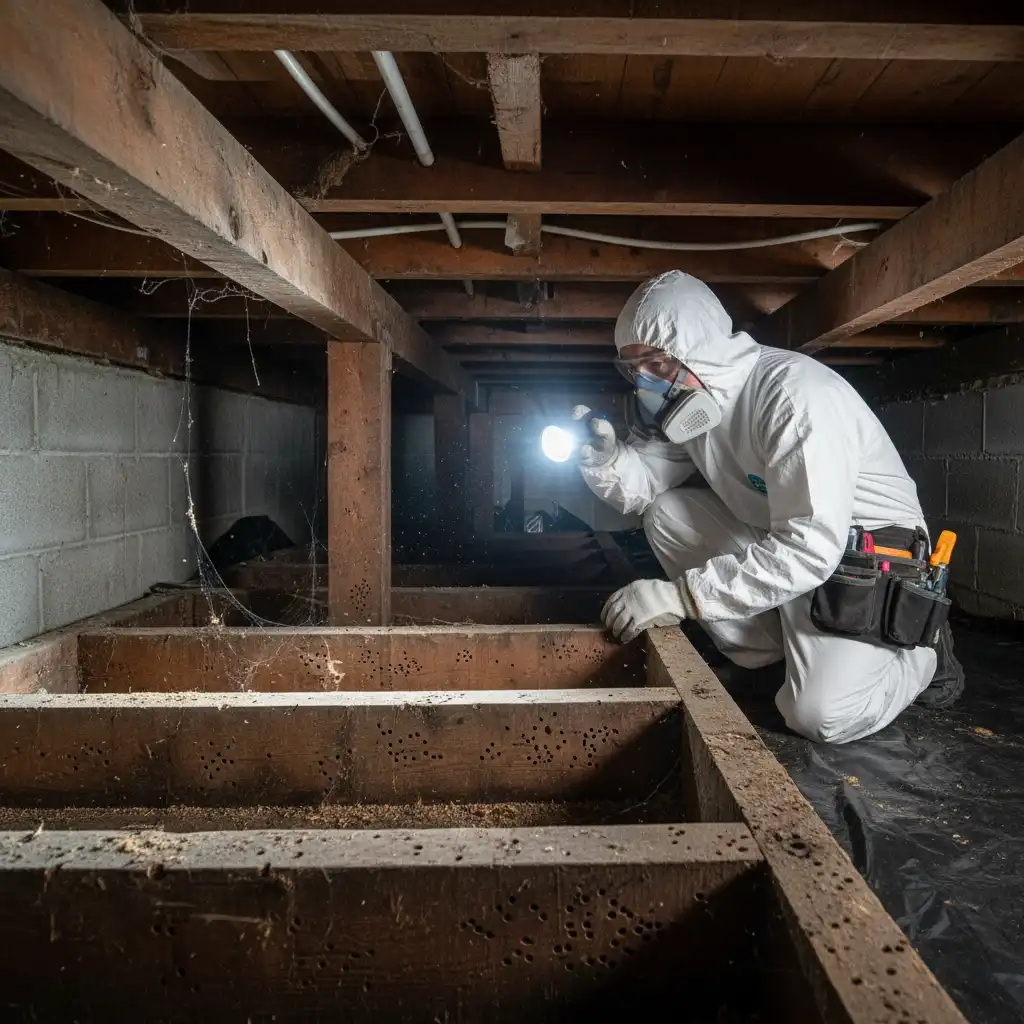
The larvae of the Common House Borer live inside your timber for 2 to 4 years. They are eating the structural integrity of your home 24/7. By the time you see the exit holes, the inside of the wood looks like Swiss cheese.

If you are running a commercial premise, like a café in a heritage building, failing a structural or hygiene audit because of borer damage can shut you down. We handle the pest side so you stay on the right side of the regulations, and you get a written treatment report for every visit.

Bar chart showing the high prevalence of Common Borer compared to termites in Auckland homes

Treatment Differences: Why Accurate ID Matters

Treating the wrong pest is a fast way to burn cash and let the real problem get worse. The “DIY Cycle of Despair” usually involves homeowners buying hardware store bug bombs that barely scratch the surface of a deep timber infestation.

If you have got borer, we use MPI-approved, zero-emission treatments that actually penetrate the timber. We target the larvae where they live, breaking the breeding cycle. Ronnie is Class 9 qualified, meaning we handle the heavy-duty stuff safely, keeping your kids and pets out of harm’s way.

If you have native termites, the treatment is often as simple as fixing a leaky roof or improving sub-floor ventilation. Take away the dampness, and the native termites will pack their bags and leave.

Check/Action: The Tap Test

Grab a screwdriver handle and gently tap your skirting boards or floor joists. If it sounds hollow or papery, you have significant internal damage. Give us a buzz, and we will come have a look, free of charge.

When to Call MPI for Suspected Exotic Termites

Biosecurity New Zealand takes exotic termites incredibly seriously. With the FAOPMA Pest Summit hitting Auckland in mid-2026, the industry is hyper-focused on keeping our borders secure from invasive species.

If you suspect an exotic termite colony, it is a legal obligation under the Biosecurity Act 1993 to report it immediately. These insects can devastate not just homes, but native forests and commercial forestry blocks.

Do not try to sort it out yourself. Take a clear photo, try to catch a specimen in a jar if it is safe to do so, and call the MPI Exotic Pest and Disease Hotline on 0800 80 99 66. Once MPI clears the site, we can step in to manage any secondary pest issues.

Pest control technician inspecting subfloor for borer and termites in Auckland

Preventative Strategies for Auckland Homes

The best way to win the battle against termites vs borer nz is to stop them from setting up camp in the first place. Wood pests thrive in environments that are damp, dark, and undisturbed.

Make sure your subfloor is well-ventilated. Clear away any debris, old firewood, or rotting timber stacked against the side of your house. These act as a perfect bridge for pests to migrate straight into your framing.

If you are worried about the upcoming season, ask us about our Auckland Winter Defense plan. We provide comprehensive structural inspections and preventative treatments to ensure your home stays solid, safe, and pest-free all year round.

💡

Tip: Summer Flight Season

Borer adults take flight between October and March. This is the best time to check your window sills for dead beetles and look for fresh, light-coloured sawdust under wooden furniture.

Frequently Asked Questions

Are termites common in New Zealand homes?
No. While New Zealand has three native termite species, they rarely attack dry, sound structural timber. The vast majority of timber damage in Kiwi homes is caused by the Common House Borer.
How do I know if I have borer or termites?
Look at the dust and the holes. Borer leaves perfectly round 1-2mm exit holes and fine, powdery sawdust (frass). Exotic termites leave mud tubes on foundation walls and hard, pelleted droppings.
Can borer completely destroy a house?
Yes, over a long period. Borer larvae can live inside the wood for up to four years, eating away the structural integrity. If left untreated for decades, floorboards and joists will eventually fail and need replacing.
What should I do if I find mud tubes on my piles?
Do not touch or break them. Mud tubes are a strong indicator of exotic subterranean termites. Take a photo and immediately call the MPI Exotic Pest and Disease Hotline on 0800 80 99 66.
Are hardware store borer bombs effective?
Bug bombs only kill the adult beetles that happen to be flying around at the exact moment you set them off. They do not penetrate the timber to kill the larvae, which are doing the actual damage inside the wood.
Who pays for borer treatment, the landlord or the tenant?
Under the Residential Tenancies Act, the landlord is responsible for maintaining the structural integrity of the property, which includes treating borer. Tenants are generally only responsible for pests if their actions directly caused the infestation.

About the Author: Ronnie

Founder, Pest Control Auckland · Commercial & Residential Pest Expert · Certified Urban Pest Management Specialist

With years of experience crawling under Auckland’s oldest homes and managing complex commercial compliance audits, Ronnie is a definitive authority on timber pests. Holding a Class 9 qualification for Urban Pest Management, he combines rigorous scientific methodologies with practical, plain-English advice to help Kiwis protect their largest investments from structural damage.

Leave a Comment

Your email address will not be published. Required fields are marked *

Scroll to Top