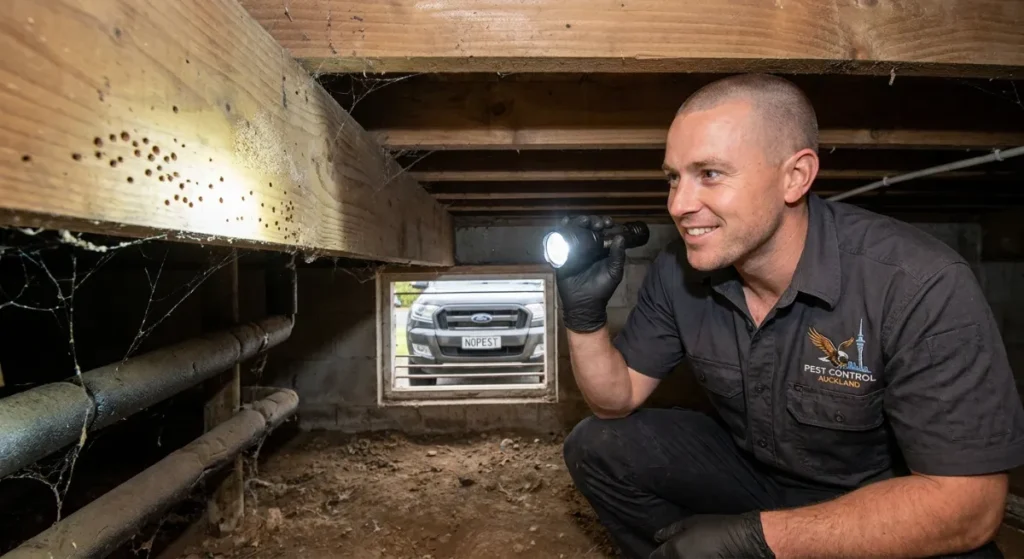
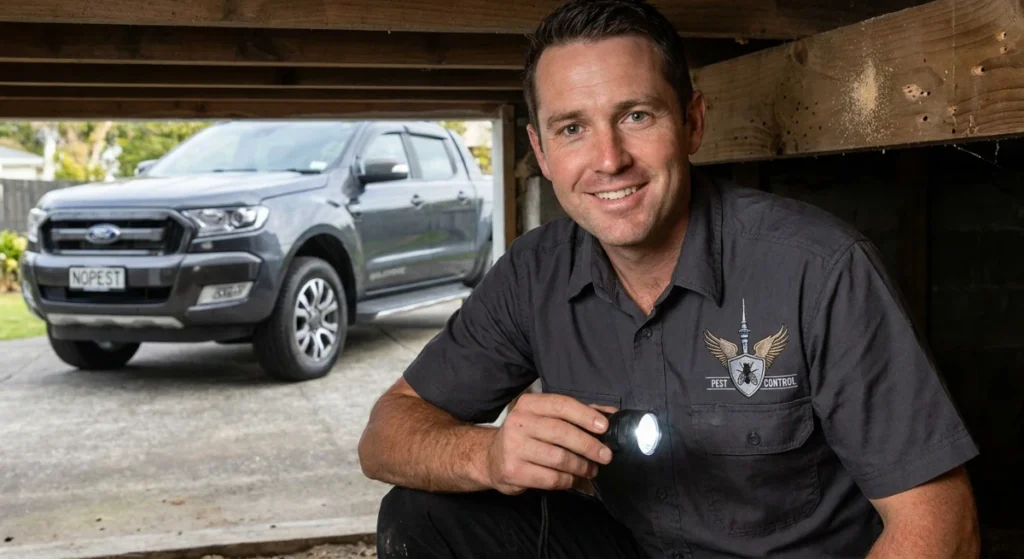
Kia ora. There’s nothing quite like walking into an open home in Ponsonby or Mt Eden and falling in love with a 1920s heritage villa. High studs, native timber, sash windows—they’ve got a character you just can’t replicate with modern builds. But that character often comes with a few uninvited houseguests.
Before you go unconditional and pop the champagne, you need to know exactly what’s hiding in the subfloor. I’ve crawled under enough Grey Lynn bungalows to tell you that what looks like “historic charm” upstairs can be a structural nightmare downstairs.
If you don’t spot the Pre-Purchase Pest Red Flags for Auckland’s Heritage Villas and Bungalows, you could be buying someone else’s expensive problem. Let’s have a yarn about what to look out for, so you don’t get stung.
Key Takeaways
The biggest Pre-Purchase Pest Red Flags for Auckland’s Heritage Villas and Bungalows include fresh borer exit holes in native timber framing, rodent droppings in ceiling cavities, and damp subfloors attracting cockroaches. Always get a certified pest inspection alongside your standard building report to avoid buying hidden structural damage.
The Reality of Auckland’s Heritage Market in 2026
Auckland’s character homes are highly sought after, but they were built in an era before modern pest exclusion standards. Properties in suburbs like Ponsonby, Mt Eden, and Grey Lynn often feature untreated native timbers that have been sitting in damp conditions for over a century.
Following the massive autumn pest surge we’ve seen across Auckland in 2026, these older homes have become prime real estate for rodents and insects. A mild winter followed by a hot summer has pushed pest populations to record highs, and they are looking for shelter.
We’re finding that many heritage properties have severe subfloor moisture issues. When you combine damp earth with 100-year-old timber framing, you create the absolute perfect breeding ground for destructive pests.
Core Pre-Purchase Pest Red Flags
When you’re walking through an open home, it’s easy to get distracted by the freshly painted walls and the fancy staged furniture. But you need to look a bit closer. Spotting the Pre-Purchase Pest Red Flags for Auckland’s Heritage Villas and Bungalows is about knowing exactly where the critters hide.
Here are the main culprits you need to be looking for before you sign your life away on the dotted line.
Borer: The Silent Timber Killer
The Common House Borer (Anobium punctatum) is public enemy number one for Auckland’s older homes. These beetles lay their eggs in bare timber, and the larvae spend years eating their way through the wood from the inside out.
The most obvious sign is small, 2mm flight holes in the floorboards, weatherboards, or subfloor framing. But the real red flag is finding fresh “frass”—a fine, sawdust-like powder sitting just below those holes.
If you see fresh frass, the borer is active right now. Left untreated, they can completely hollow out structural floor joists, turning a solid bungalow into a massive, unavoidable repair bill.
Standard New Zealand house insurance policies generally classify borer damage as “gradual damage.” This means they won’t cover the cost of replacing hollowed-out floor joists. You carry the financial risk entirely.
Rodents: Rats in the Rimu
In May 2026, we are seeing a massive autumn pest surge across the Auckland region. While rural areas like the Hūnua Ranges have seen success with recent eradication drops, urban rats are migrating straight into warm, dry residential ceilings.
Heritage homes are notoriously drafty, which means there are usually dozens of entry points for rats and mice. Roof rats love the high, spacious ceiling cavities of old villas. They use the rough-sawn native timber framing as a highway to get around your house undetected.
Look for dark, rice-sized droppings in the corners of cupboards, under the sink, or in the hot water cylinder cupboard. Smear marks—dark, greasy stains along skirting boards—are another dead giveaway of a heavy, ongoing infestation.
If you stick your head into the ceiling space and see chewed wiring or tunnelled insulation, you’ve got a serious problem. Rats don’t just carry disease; they are a massive fire hazard when they start gnawing on old electrical cables.
Cockroaches and Ants: The Moisture Indicators
While a few ants trailing across the bench might not seem like a dealbreaker, a heavy presence of cockroaches or Argentine ants in a heritage home usually points to a much deeper issue: moisture. These pests absolutely thrive in damp environments.
If you see large numbers of cockroaches in the bathroom or kitchen, it’s a strong indicator that the subfloor below is wet, poorly ventilated, or has a slow plumbing leak that hasn’t been fixed.
The Financial Stakes: What Happens If You Ignore the Signs?
Let’s have a straight yarn about the money. Buying property in Auckland is already a massive financial stretch. The last thing you need is a surprise repair bill three months after you move in.
If you ignore the Pre-Purchase Pest Red Flags for Auckland’s Heritage Villas and Bungalows, you are taking on 100% of the liability. Once settlement day passes, the vendor is out of the picture. Any hidden structural damage from pests becomes your problem to sort out.
We’ve seen new homeowners fall into the “DIY cycle of despair.” They find a rat problem, buy a few cheap traps from the hardware store, and hope for the best. But hardware store gear doesn’t fix the hole in the foundations where the rats are getting in.
Structural repairs for severe borer damage can easily run between $10,000 and $30,000. Replacing gnawed electrical wiring is another massive hidden cost. Investing in professional Pre-Purchase Pest Inspections is the cheapest insurance policy you’ll ever buy.
The Link Between Structural Age and Pests
Older homes weren’t built with the modern pest exclusion techniques we use today, which often begin with Pre-Construction Pest Control Services.
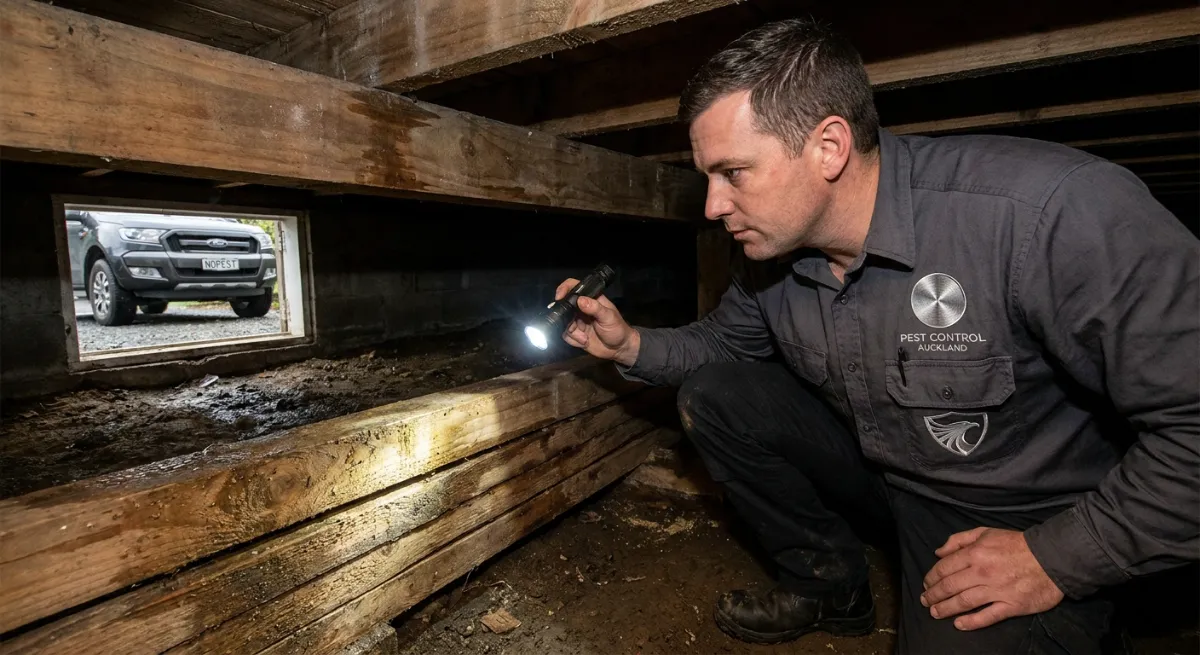
Back in the 1920s, subfloor ventilation was often minimal. Over the decades, garden beds get raised by previous owners, blocking the few vents that did exist. This traps moisture right under the floorboards.
Damp timber is softer, making it an absolute buffet for borer larvae. It also creates the perfect humid microclimate for fleas to breed, which is exactly why end-of-tenancy flea treatments are so common in rented character homes.
When you view a property, open a low cupboard that sits on an external wall and take a deep breath. If it smells musty or earthy, the subfloor is damp, and pests won’t be far away.
Why Standard Building Reports Aren’t Enough
A lot of buyers think a standard pre-purchase building inspection will cover them. But a builder is looking for structural integrity and weathertightness, not necessarily the early signs of pest activity.
Building inspectors do a fantastic job, but they are conducting a visual inspection. They might note “evidence of borer” in their report, but they rarely have the entomological training to tell you if that borer is currently active or historical.
That’s why identifying Pre-Purchase Pest Red Flags for Auckland’s Heritage Villas and Bungalows requires a specialist eye. You need someone who understands pest behaviour, lifecycle patterns, and exactly how they exploit old buildings.
| Feature | Standard Building Inspection | Specialist Pest Inspection |
|---|---|---|
| Primary Focus | Structural integrity, leaks, compliance | Pest ingress points, nesting, active infestations |
| Borer Assessment | Notes visible holes and timber condition | Determines if activity is current via frass analysis |
| Rodent Check | May mention chewed wires if visible | Identifies species, entry points, and eradication plan |
| Qualifications | LBP (Licensed Building Practitioner) | Class 9 Urban Pest Management Certified |
Best Practices for Heritage Home Buyers
So, you’ve found a beautiful bungalow in Grey Lynn, and you’re ready to make an offer. Don’t let the fear of creepy crawlies stop you. You just need to be smart about your due diligence.
Before you sign anything, make sure you follow a strict process to protect your investment. A little bit of upfront work can save you tens of thousands of dollars in structural repairs down the track.
The Essential Pre-Purchase Checklist
Here is exactly what you need to do when evaluating an older Auckland property:
- Check the Subfloor Vents: Walk around the exterior. Are the vents clear, or are they blocked by soil and plants? Blocked vents mean damp timber.
- Look for Frass: Check the floorboards, especially under carpets if you can lift a corner. Look for the fine yellow dust that indicates active borer.
- Inspect the Ceiling Cavity: Shine a strong torch into the roof space. Look for rodent droppings, disturbed insulation, and wasp nests near the eaves.
- Book a Dual Inspection: Always stipulate in your sale and purchase agreement that the offer is subject to both a building report AND a specialist pest report.
Keep in mind the Auckland Regional Pest Management Plan (RPMP) 2020-2030. If you’re buying property with significant pest issues, especially near sensitive ecological areas, you may face compliance pressures to manage them.
Getting the Right Experts In
If you spot any of the red flags we’ve talked about, don’t panic. It doesn’t mean you have to walk away from the sale. It just means you need to negotiate.
Give us a buzz. As Class 9 qualified technicians, we can pop round and assess exactly what’s going on. We don’t just spray and walk away. We look at the root cause, identify the structural entry points, and give you a clear plan to sort it out.
If there’s active borer, we can provide a quote for a full timber treatment. You can then use that quote to negotiate the purchase price down with the vendor (for tips on how to do this, check out A Buyer’s Guide to Negotiating Property Prices After a Pest Discovery). It’s a win-win.
When we treat a heritage home, we back our work with our Silver Bullet Guarantee. We use MPI-approved, zero-emission treatments that are tough on pests but completely safe for your family and pets.

Conclusion
Buying a heritage home in Auckland is a massive milestone. Those high ceilings and native timber floors are absolutely worth the effort, provided you go into the purchase with your eyes wide open.
By learning to spot the Pre-Purchase Pest Red Flags for Auckland’s Heritage Villas and Bungalows, you protect yourself from buying a money pit. Always check the subfloor, look out for borer dust, and don’t rely solely on a standard building report to tell you if the house is pest-free.
If you’re looking at a property and you’re not quite sure what you’re dealing with, don’t leave it to chance. Give us a buzz. We’ll come have a yarn, check the place over, and make sure your dream home isn’t secretly housing a nightmare.