What are the official MPI pest control requirements in NZ in 2026?
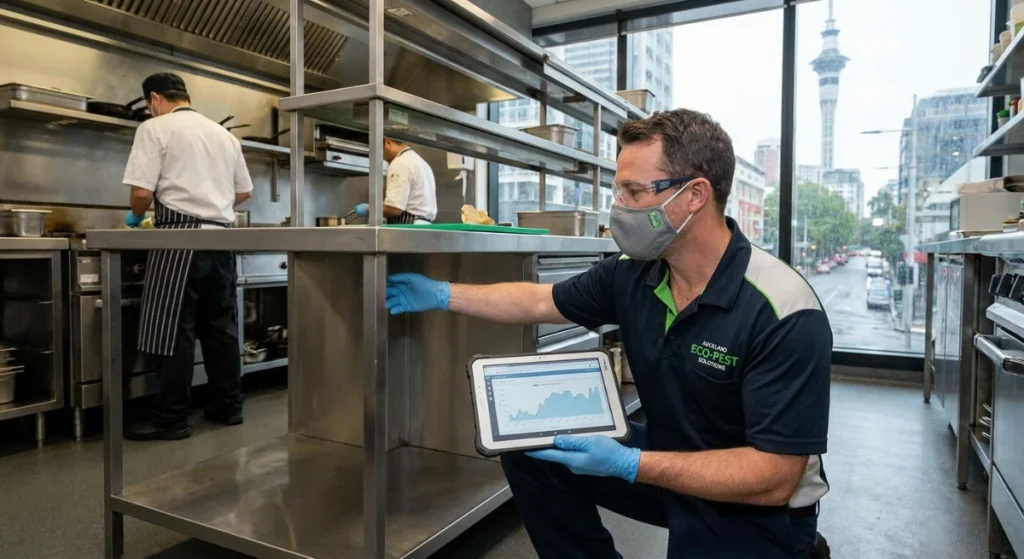
MPI pest control requirements in NZ for 2026 mandate that all food businesses operate under the Food Act 2014 or Animal Products Act 1999. Businesses must implement a written Food Control Plan (FCP) that details specific pest exclusion, monitoring, and eradication protocols. Compliance ensures that facilities remain free from rodents, insects, and birds, preventing biological contamination of the New Zealand food supply chain.
Why do food processing facilities fail MPI audits?
Food processing facilities fail MPI audits primarily due to inadequate documentation and poor physical exclusion measures. Common triggers include missing pest sighting logs, unmanaged bait stations, and structural gaps exceeding 5mm. Verifiers also cite “lack of corrective action” when previous infestations were noted but not resolved. Maintaining a rigorous, evidence-based pest management system is essential to passing these mandatory New Zealand regulatory inspections.
| Failure Category | Primary Cause | MPI Penalty Level |
|---|---|---|
| Documentation Gap | Missing or incomplete pest sighting logs | Moderate – Corrective Action Request |
| Structural Integrity | Gaps in doors or windows over 5mm | High – Re-audit required within 30 days |
| Active Infestation | Presence of live larvae or rodent droppings | Critical – Immediate suspension of operations |
This table highlights the severity of various compliance lapses encountered during standard MPI inspections conducted across New Zealand food manufacturing sites.
How can you prevent contamination of export goods?
Preventing contamination of export goods requires strict adherence to the Biosecurity Act 1993 and MPI’s Transitional Facility standards. Exporters must implement integrated pest management (IPM) strategies, including heat treatments and fumigation for high-risk cargo. Utilizing MPI-approved providers for container inspections ensures that pests like the Brown Marmorated Stink Bug do not compromise international trade agreements or New Zealand’s biosecurity reputation.
What documentation is needed for MPI pest compliance?
MPI pest compliance documentation in 2026 must include a comprehensive Pest Management Plan, detailed sighting logs, and technician service reports. Businesses must also maintain an up-to-date site map showing all bait station locations and a register of MPI-approved chemicals with corresponding Safety Data Sheets. These records provide the “paper trail” necessary to prove continuous monitoring and effective pest control during audits.
Frequently Asked Questions
Q: What is the Food Act 2014?
The Food Act 2014 is the primary legislation governing food safety in New Zealand, requiring businesses to manage pests to prevent food contamination.
Q: How often does MPI audit food businesses?
High-risk facilities typically face audits every 12 to 18 months, though frequency increases if previous non-compliances were recorded.
Q: Can I perform my own pest control for MPI compliance?
While possible, MPI requires documented proof of competency and the use of approved chemicals, leading most businesses to hire PMANZ-certified technicians.
Q: What pests are considered high-risk by MPI?
Rodents, cockroaches, flies, and stored product insects like the Indian Meal Moth are high-risk due to their potential to spread pathogens.
Q: What is an MPI Transitional Facility?
A Transitional Facility is a designated site approved by MPI to receive and inspect imported containers for biosecurity risks before they are cleared.