You have finally found it. The perfect Auckland property, sitting proudly on a sunny section, with a price tag that actually makes sense in the 2026 market. You sign the conditional offer, pay for the builder’s report, and wait for the green light.
Then, the email arrives. The inspector has flagged “active borer in the subfloor” or “significant rodent damage to the roof insulation.” Suddenly, your dream home feels like a liability, and panic sets in. Do you walk away, or do you fight for a better deal?
Here is the truth from a crew who spends every day under Auckland’s houses: a pest discovery is rarely a reason to run for the hills. Instead, it is a powerful piece of leverage. By keeping a cool head and relying on certified scientific data, you can turn a scary building report into a strategic advantage.
This guide is your roadmap. We are going to show you exactly how to approach negotiating property prices after a pest discovery without losing the house or your sanity. Let’s get into the details of turning a pest problem into a fair purchase price.
Key Takeaways
When negotiating property prices after a pest discovery, never rely on guesswork. Obtain a quote from a Level 3 Certified Urban Pest Management contractor. Use this factual data to request a price reduction rather than letting the vendor arrange a cheap, temporary DIY fix prior to settlement.
The Reality of Auckland Homes in 2026
With the median house price in Auckland hovering around $1.04 million in early 2026, buyers expect a certain level of quality. However, the reality of New Zealand’s housing stock is that it is heavily timber-based and often surrounded by lush, damp vegetation. This makes our properties a prime target for urban pests.
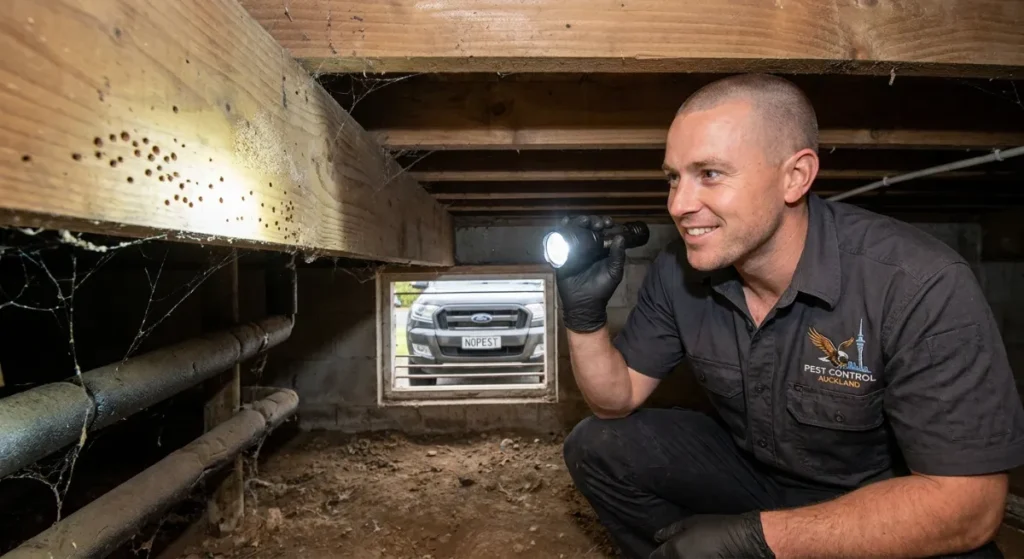
We saw a massive autumn surge in pest activity following the mild winter of 2025. Rats, mice, and the Common House Borer (Anobium punctatum) have been working overtime. When a building inspector crawls into a Ponsonby villa or a North Shore bungalow, finding evidence of these intruders is incredibly common.
The key is distinguishing between a minor nuisance and a major structural deficit. A few old spider webs in the garage? Not a big deal. Piles of fresh, light-coloured frass (dust) under the floorboards? That requires immediate, professional intervention. Understanding this difference is the first step in negotiating property prices after a pest discovery.

Identifying the True Threat Level
Not all pests impact property value equally. If a pre-purchase inspection flags an issue, you need to quantify the exact risk. Real estate agents will often try to downplay the report, calling it “historic damage” or a “simple fix.” Do not take their word for it.
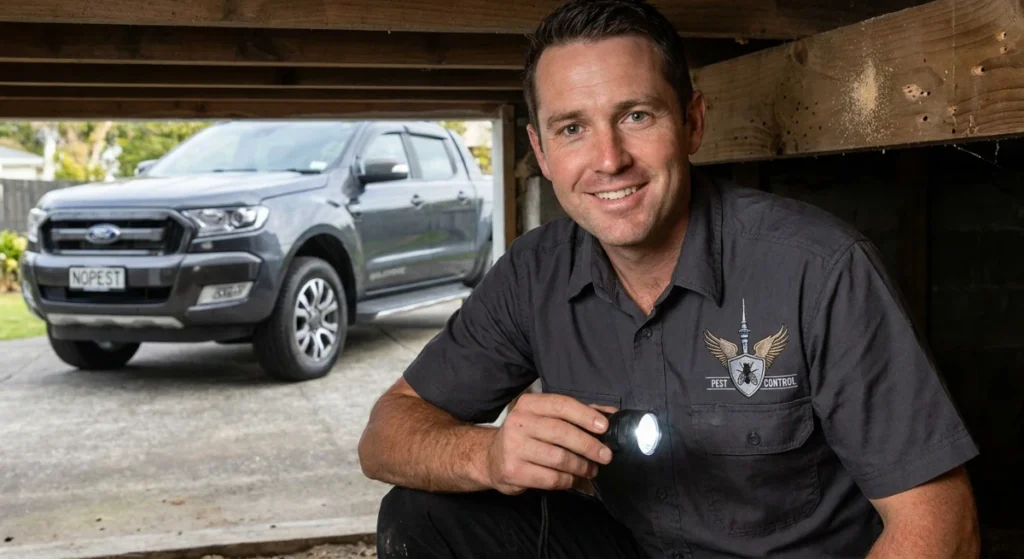
You need a qualified Urban Pest Management contractor to assess the site. We look for root-cause indicators that a general builder might miss. For example, we do not just look at the chewed wiring; we identify the structural entry points that allowed the rodents inside in the first place.
To help you gauge the severity of the situation, we have broken down the most common pests found during Auckland property inspections. This data will form the foundation of your negotiation strategy.
| Pest Type | Inspection Evidence | Structural Risk Level | Estimated Remediation (NZD) |
|---|---|---|---|
| Common House Borer | Fresh flight holes, light frass, weakened joists | High (Timber integrity) | $400 – $900+ (Treatment only) |
| Rodents (Rats/Mice) | Droppings, chewed wiring, damaged insulation | Medium (Fire risk/Hygiene) | $155 – $325+ (Exclusion extra) |
| Cockroaches | Egg cases, droppings in hot water cupboards | Low (Primarily hygiene) | $265 – $325 |
| Ants (e.g., Argentine) | Trailing lines, nests in wall cavities | Low (Nuisance/Hygiene) | $160 – $200 |
Never accept a vendor’s claim that borer damage is strictly “historic” without a certified second opinion. Installing new central heating or laying new carpet can rapidly accelerate dormant larvae, turning a supposedly old problem into an active infestation.
Core Strategies for Price Negotiation
Once you have the facts in hand, it is time to talk numbers. The most successful approach to negotiating property prices after a pest discovery relies on logic and documented evidence. You cannot demand a $20,000 price drop for a $300 cockroach treatment.
First, obtain a formal, written quote from a company that holds the New Zealand Certificate in Pest Operations (Level 3). This proves to the vendor that you are not just trying to lowball them. You are presenting a certified cost to remedy a legitimate defect.
If the pest issue has caused secondary damage—such as rats chewing through electrical wiring or borer compromising a load-bearing joist—you must also get quotes from a registered electrician or builder. Bundle these quotes together. This combined figure is your negotiation baseline.
Vendor Fixes vs. Price Reductions
When a defect is found, buyers generally have two options: ask the vendor to fix the problem before settlement, or ask for a reduction in the purchase price. In our professional experience, one of these options is vastly superior to the other.
We strongly advise asking for a price reduction. If you force the vendor to handle the pest control, they are financially incentivised to find the cheapest, fastest option available. They might hire an uncertified “spray jockey” or try to manage the problem themselves with hardware store bug bombs.
This leads to what we call the “DIY Cycle of Despair.” A surface spray might kill the visible pests for a few weeks, allowing the property to settle. But because the root cause—the structural entry points or the deep nesting areas—was ignored, the infestation will return shortly after you move in.
Instead of a lower purchase price (which slightly reduces your mortgage but leaves you out of pocket for the repair), negotiate a “cash credit” at settlement. This gives you the liquid funds to immediately hire a premium, certified pest expert to eradicate the problem properly.
Investment Properties and Legal Compliance
If you are purchasing the home as a rental property, the stakes are significantly higher. Under the Residential Tenancies Act, landlords must provide a property in a reasonable state of cleanliness, free from pests at the start of a tenancy. Failing to do so can result in costly Tenancy Tribunal disputes.
When negotiating property prices after a pest discovery on an investment asset, remind the vendor of these legal obligations. If there is an active flea infestation from the vendor’s pets, you cannot legally move tenants in until it is resolved. The cost of that delay should be factored into your offer.
For commercial properties, the regulations are even stricter. The Food Act 2014 and MPI standards demand zero-tolerance hygiene. If you are buying a building with a hospitality lease, a rodent issue is not just a nuisance; it is a critical business threat that warrants serious price renegotiation.

Post-Settlement: Securing Your Investment
Once the keys are in your hand and the negotiation is behind you, it is time to protect your new asset. The old way of doing things was waiting for pests to appear and then blasting them with toxic chemicals. That approach is dead.
Today, smart homeowners rely on Predictive Integrated Pest Management (IPM). This means we focus on structural entry-point exclusion, moisture control, and ongoing monitoring. We fix the gaps in the subfloor, trim back vegetation bridging to the roof, and apply zero-emission treatments that are rigorously tested for safety.
At Pest Control Auckland, we back our work with the “Silver Bullet Guarantee.” We do not just treat the symptoms; we eradicate the root cause. By investing the money you saved during negotiations into a proper, certified management plan, you ensure your home remains a safe, pest-free sanctuary for your family.
As temperatures drop, rodents aggressively seek shelter indoors. Consider setting up a seasonal protection plan immediately after settlement to prevent autumn and winter migrations into your newly purchased home.
Before hiring any company with your settlement credit, ensure they hold the New Zealand Certificate in Pest Operations (Level 3). This is your guarantee that they are legally qualified to handle advanced, root-cause eradication safely.