You are seeing them in the kitchen, trailing along the skirting boards, and probably finding them in the cat food bowl. Following a mild winter and a scorching summer, Auckland is currently experiencing a massive autumn ant surge. I have seen it all across the region, from Orewa down to Pukekohe.
Most folks panic, buy a hardware store bug bomb, and hope for the best. It does not work. To actually stop the problem, you need to target the root cause. We do not just spray surface chemicals and cross our fingers.
We find exactly how they are getting in, destroy the nest, and shut the door behind them. Dealing with Ant Infestations in Auckland: Identification & Control does not have to be a frustrating guessing game.
Key Takeaways
To stop ant infestations in Auckland, identification and control must focus on root-cause eradication. DIY sprays only kill worker ants, leaving the queen to breed. Professional predictive IPM targets structural entry points, utilizes zero-emission baits, and destroys multi-queen super-colonies like the invasive Argentine ant.
Identifying Your Enemy: Argentine Ants vs. The Rest
Not all ants are created equal. If you treat an Argentine ant invasion the same way you treat a few common black ants, you are going to lose. When dealing with ant infestations in Auckland, identification and control strategies must be matched to the specific species.
Argentine ants are highly aggressive. They do not just build a single nest; they build massive, interconnected super-colonies with multiple queens. They are a severe threat to our native biodiversity, known to attack native birds and skinks.
Because they spread so aggressively, you cannot rely on surface sprays. If you stress an Argentine ant colony with cheap chemicals, they often bud and split into multiple new colonies, making your problem ten times worse.
| Ant Species | Appearance | Nesting Habits | Threat Level |
|---|---|---|---|
| Argentine Ant | Honey-brown, 2-3mm long | Super-colonies, multi-queen, soil and structures | Extreme (Ecological & Structural) |
| Darwin Ant | Light brown, strong odour when crushed | Potted plants, loose soil, multi-queen | High (Invasive) |
| Black House Ant | Intensely black, 2-3mm long | Roof voids, wall cavities, decayed wood | Moderate (Nuisance) |
| White-Footed House Ant | Black with pale lower legs | Trees, wall voids, massive colony sizes | High (Hard to eradicate) |
Why Hardware Store Sprays Fail (The Cycle of Despair)
I see it every week. Homeowners spend hundreds of dollars on aerosol bug bombs and perimeter sprays. You spray the skirting boards, see a bunch of dead ants, and think you have won. You have not.
You only killed the foraging workers, which make up about 10% of the colony. The queen is still safe in the wall cavity, pumping out hundreds of eggs a day. This is the DIY cycle of despair.
Under the HSNO Act 1996, handling Class 9 ecotoxic substances requires strict certification. Randomly spraying toxic chemicals around your kitchen is not just ineffective; it poses severe risks to your children, pets, and local waterways.
To effectively manage ant infestations in Auckland, identification and control must rely on targeted, professional-grade baiting. We use MPI-approved, zero-emission treatments that workers carry directly back to the queen.
Scientific Control: The Predictive IPM Approach
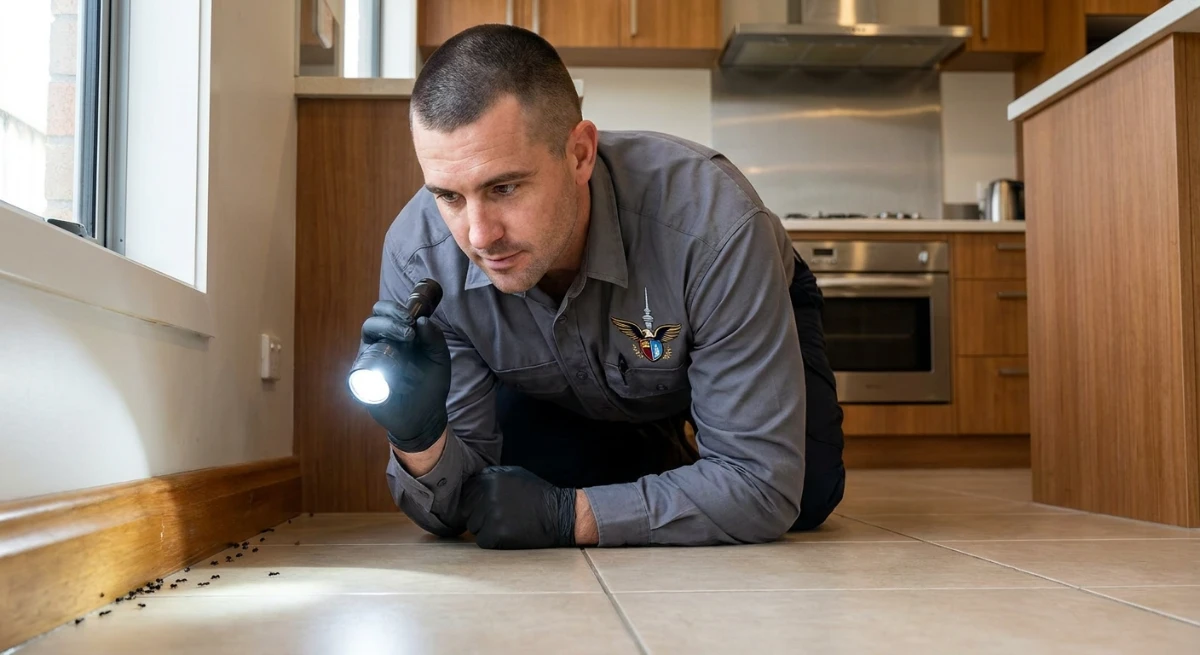
The era of spray and pray pest control is dead. Today, we use Predictive Integrated Pest Management (IPM). We assess environmental factors, locate structural entry points, and apply highly specific treatments.
Auckland is preparing to host the FAOPMA Pest Summit in July 2026, themed FutureProof: Smarter Pest Solutions. We are already implementing these cutting-edge, sustainable strategies across residential and commercial properties.
We use advanced non-repellent baits. The ants do not know they are consuming a control agent. They share it via trophallaxis (mouth-to-mouth feeding), effectively wiping out the entire colony from the inside out.
Once the colony collapses, we focus on exclusion. We tell you exactly where they were getting in—whether it is a weeping pipe, a crack in the foundation, or overhanging tree branches—so you can seal it up.
The Auckland Weather Factor
Auckland climate is a perfect breeding ground for pests. The combination of high humidity and sudden temperature drops drives ants indoors. Last year mild winter allowed colonies to survive without dying back.
This is exactly why we are seeing massive numbers this autumn. When the heavy rain hits, ants move out of the saturated soil and straight into your dry, warm wall cavities. You need a barrier that stops them before they cross the threshold.
The Biology of Eradication: Protein vs. Sugar Baits
Ants are smart, and their dietary needs change depending on the season and the colony growth phase. In spring and early summer, they crave protein to feed their growing larvae.
By autumn, the workers switch to a high-carbohydrate, sugary diet to store energy for winter. If you buy a sugar-based bait from the supermarket at the wrong time of year, they will walk right past it.
We utilize dual-action baits that cater to both nutritional needs. This ensures rapid uptake regardless of the season, forcing the workers to deliver the active ingredient straight to the queen.
Commercial Hospitality Compliance
If you run a cafe or restaurant in Auckland, ants are not just a nuisance; they are a direct threat to your Food Control Plan. Under the Food Act 2014, you cannot afford a failed health inspection.
We provide commercial biosecurity auditing and zero-emission treatments that keep you compliant with MPI standards. There are no toxic sprays near food prep areas, just discreet, highly effective baiting stations.
Auckland Strict Biosecurity Rules
Auckland Council takes invasive pests seriously. The Auckland Regional Pest Management Plan (RPMP) 2020-2030 enforces strict pathway management rules, particularly for the Hauraki Gulf Controlled Area.
You cannot legally transport infested soil, potted plants, or building materials to places like Waiheke or Great Barrier Island. If you have an Argentine ant problem, it is your legal responsibility to ensure it does not spread.
This is why relying on professional services for ant infestations in Auckland—identification and control included—is vital. We provide the necessary documentation to prove your property has been professionally managed and cleared.
- Identify the Source: We track the foraging trails back to the nest, even if it is deep underground.
- Targeted Eradication: Utilizing specialized baits tailored to the ants’ current dietary needs.
- Structural Exclusion: Sealing up the microscopic gaps that allow them inside your home.
Before we arrive, clear all pet food bowls, wipe down kitchen benches, and ensure no overhanging tree branches are touching your roofline.
Honest, Transparent Pricing
I do not believe in bait-and-switch pricing or forcing you to fill out a long form just to get a quote. You deserve to know exactly what things cost upfront.
For a standard 3-bedroom Auckland home, professional ant eradication currently ranges from $160 to $200. This includes our comprehensive inspection, targeted baiting, and structural advice.
| Service Type | Property Size | Estimated Cost (NZD) | Inclusions |
|---|---|---|---|
| Standard Ant Control | 1-3 Bedroom Home | $160 – $200 | Interior baiting, exterior perimeter check, structural advice. |
| Large Residential | 4+ Bedroom / Lifestyle | $220 – $280 | Comprehensive interior/exterior IPM treatment. |
| Auckland Winter Defense | All Residential | Subscription based | Year-round protection covering ants, rodents, and roaches. |
Under the Residential Tenancies Act, landlords are generally responsible for pest control if the infestation was present at the start of the tenancy or caused by structural flaws. Tenants are responsible if their lack of cleanliness caused the outbreak. We provide clear, impartial reports to satisfy Tenancy Tribunal requirements.
If you are struggling with ant infestations in Auckland, our identification and control methods provide the definitive solution. We stand by our work with the Silver Bullet Guarantee. If the ants come back within the specified warranty period, so do we. No arguments, no hidden fees.
Frequently Asked Questions

About the Author: Ronnie
Founder, Pest Control Auckland · Commercial & Residential Pest Expert · Certified Urban Pest Management Specialist
With years of experience in urban pest management across the region, Ronnie is the definitive expert to write about Ant Infestations in Auckland: Identification & Control. Having consulted for both residential homeowners and commercial hospitality venues, his scientific, root-cause approach ensures long-term eradication rather than temporary fixes.