Rats in the roof? Ants taking over the kitchen? We will find exactly how they are getting in, block the entry points, and clear them out completely.
That is the plain truth of how real pest management works. You do not need corporate jargon or fear-mongering; you need a straight-talking solution that actually fixes the problem.
Right now, in May 2026, Auckland is facing an unprecedented autumn pest surge. A remarkably mild winter followed by a scorching summer has created the perfect breeding environment across the region.
You might be tempted to grab a cheap bug bomb from the hardware store and hope for the best. But when you are dealing with resilient local pest populations, surface sprays simply do not cut it. We focus on root-cause eradication and structural exclusion.
Key Takeaways
Effective Advanced Pest Prevention & DIY Strategies for Auckland require structural exclusion, strict moisture control, and identifying precise entry points. While basic DIY methods handle minor insects, severe rodent infestations legally require certified professionals using Integrated Pest Management (IPM) for permanent, root-cause eradication.
The 2026 Auckland Pest Surge: Why Urban Homes Are Under Attack
The pest landscape in Auckland has shifted dramatically over the last twelve months. Following a massive late-2025 aerial 1080 drop, rat tracking in the Hūnua Ranges plummeted to an astonishing 1.3 percent.
While rural conservation areas are celebrating these eradication successes, the ecological displacement has pushed surviving rodent populations heavily into urban and suburban zones. This migration is clearly reflected in our daily callout data across West Auckland and the North Shore.
When temperatures dropped in early May, rats and mice actively sought warmth, shelter, and reliable food sources inside residential walls, sub-floors, and roof voids. This is not a problem you can ignore.
Mastering Advanced Pest Prevention & DIY Strategies for Auckland
Homeowners often search for Advanced Pest Prevention & DIY Strategies for Auckland after hardware store products fail. The truth is, effective DIY is not about buying stronger chemicals; it is about physical exclusion and environmental management.
If you have rats in the roof, throwing a cheap bait block into the manhole is a waste of time. They will eat it, die in your wall cavity, and leave you with a stench that lasts for weeks. You must stop them from getting inside in the first place.
Structural Exclusion Techniques
The foundation of true pest management is sealing the envelope of your home. Pests cannot infest what they cannot access.
- Seal Pipe Penetrations: Check under your sinks and behind your dishwasher. Use industrial silicone and stainless steel mesh to block any gaps around plumbing pipes.
- Install Door Sweeps: Cockroaches and mice frequently walk right under poorly sealed exterior doors. Install heavy-duty bristle sweeps on all entryways.
- Trim Overhanging Branches: Roof rats use tree branches as a highway straight to your gutters. Keep all vegetation trimmed at least two meters away from your roofline.
Moisture attracts pests. Ensure your sub-floor ventilation is completely clear of debris. Damp, poorly ventilated crawl spaces are the number one breeding ground for fleas and cockroaches in Auckland.
The Legal Limits of DIY Pest Control in NZ
Implementing Advanced Pest Prevention & DIY Strategies for Auckland requires a strict understanding of local biosecurity laws. You cannot simply deploy any trap or chemical you want on your property.
The HSNO Act 1996 strictly regulates the use of hazardous substances in New Zealand. If a treatment requires Class 9 ecotoxic substances, the operator must be a Qualified UPM Contractor holding a Level 3 certificate. This ensures the safety of our waterways and non-target species.
Furthermore, the Auckland Regional Pest Management Plan (RPMP) 2020-2030 enforces strict pathway management rules. This is particularly critical for protecting the Hauraki Gulf Controlled Area from accidental pest introductions.
If you use live-capture traps, New Zealand law dictates they must be physically inspected within 12 hours after sunrise every single day. Glue boards for rodents are also heavily restricted and often illegal for public use.
Professional Eradication vs. The Cycle of Despair
We see it every week. A homeowner spends hundreds of dollars on supermarket sprays, only to end up calling us when the infestation inevitably returns. We call this the “Cycle of Despair.”
Our approach goes beyond basic Advanced Pest Prevention & DIY Strategies for Auckland. We utilize MPI-approved, zero-emission treatments that are rigorously tested for efficacy and safety. We protect your children, your pets, and your sanity.
The industry is evolving rapidly. The upcoming FAOPMA Pest Summit arriving in Auckland in July 2026 highlights the global shift toward smarter, predictive Integrated Pest Management (IPM). We are already deploying these advanced, future-proof solutions across West Auckland.
The Auckland Winter Defense Plan
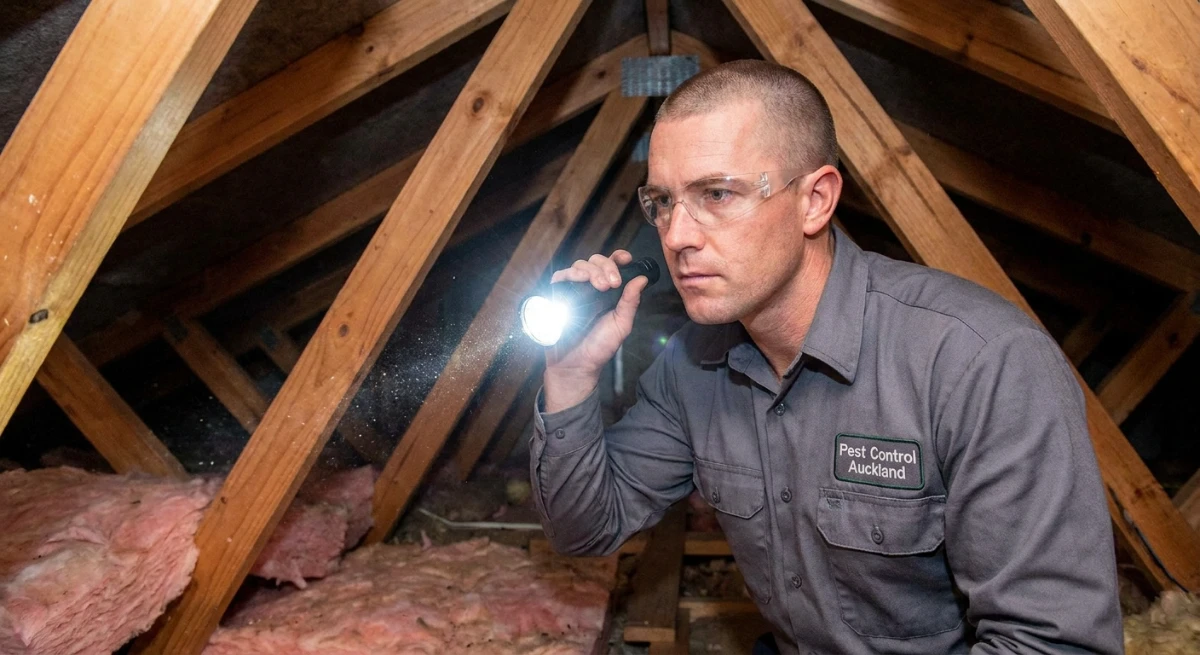
Instead of waiting for an infestation, we offer proactive seasonal protection. The Auckland Winter Defense package is an annual home protection plan that stops pests before they enter.
We back our work with the “Silver Bullet Guarantee.” If we treat your home and the pests return within the warranty period, we return to fix it. No arguments, no hidden fees.
Commercial & Landlord Compliance
Property managers and hospitality owners face immense pressure. Under the Residential Tenancies Act, landlords must provide a clean, pest-free home at the start of a tenancy. Disputes over who pays for pest control are common, but our transparent reporting satisfies Tenancy Tribunal requirements.
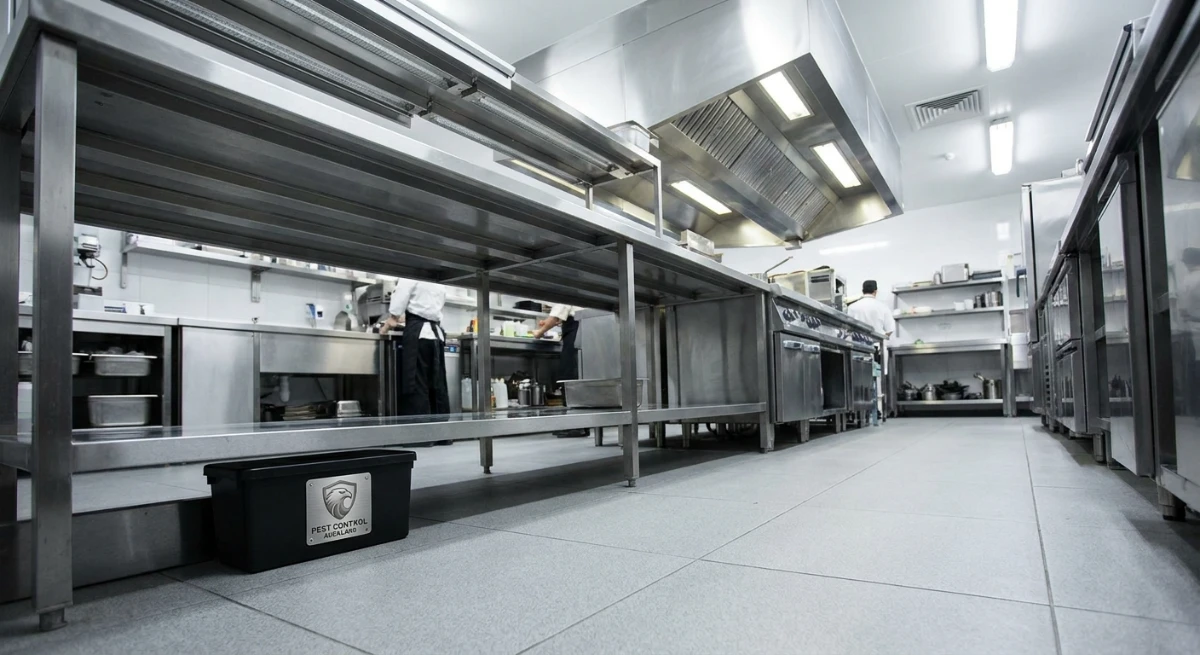
For commercial kitchens, a single rodent sighting can mean immediate closure under the strict enforcement of the Food Act 2014. You cannot afford to cut corners with budget exterminators who scatter toxic baits recklessly.
Hospitality businesses must ensure their pest management aligns with HACCP standards. Toxic rodenticide baits are strictly prohibited in sensitive food preparation areas. We use secure, non-toxic mechanical monitoring stations instead.
Transparent Pricing for Auckland
Historically, major corporate players have hidden their pricing behind high-friction quote forms. We believe in absolute transparency. You deserve to know exactly what you are paying for before a technician steps foot on your property.
Below is our standard pricing structure for a typical 3-bedroom home in Auckland. We focus on long-term value and effectiveness over cheap, temporary fixes.
| Pest Type | Standard 3-Bedroom Cost | Treatment Approach |
|---|---|---|
| Rodents (Rats/Mice) | $155 – $325 | Baiting, entry-point sealing, structural exclusion. |
| Cockroaches | $265 – $325 | Targeted gel baits, crack and crevice flushing. |
| Ants | $160 – $200 | Non-repellent perimeter treatments, nest eradication. |
| Bed Bugs | $215 – $265 per room | Intensive deep-harborage zero-emission treatment. |
Protected Wildlife (What We Don’t Do)
We are highly certified urban pest management specialists, but we respect New Zealand’s native ecosystem. We do not “exterminate” or “remove” protected wildlife under any circumstances.
If your issue involves native birds, geckos, skinks, or frogs, we assess these enquiries case by case. If we cannot help directly, we will guide you toward the right authority, such as the Department of Conservation (DOC), so you are not left guessing.
If you spot a strange imported insect, snake, or exotic spider, this is a major biosecurity concern. Do not attempt to kill it yourself. Report it immediately to the Ministry for Primary Industries (MPI) on 0800 80 99 66.
People Also Ask

About the Author: Ronnie
Founder, Pest Control Auckland · Commercial & Residential Pest Expert · Certified Urban Pest Management Specialist
With years of experience in urban pest behavior and biosecurity compliance, Ronnie is uniquely positioned to detail Advanced Pest Prevention & DIY Strategies for Auckland. Having consulted for both residential homeowners and strict commercial hospitality venues, his scientific, root-cause approach ensures long-term eradication rather than temporary fixes.